
I’ve Read 20+ Books on AI and LLM — Here Are My Top 5 Recommendations for 2026
My favorite books to learn AI and LLM Engineering in 2026

Hello guys, I’ve spent the past two years diving deep into the world of Artificial Intelligence and Large Language Models (LLMs).
From engineering systems that scale to understanding model internals and prompt optimization, I’ve gone through more than 20 books to truly grasp the fast-evolving AI landscape.
Some were theoretical, others highly practical, but only a few stood out as must-reads for anyone serious about building, deploying, or understanding AI systems in 2025.
If you’re an AI engineer, developer, researcher, or even an ambitious learner wanting to understand the shift toward LLM-driven applications, this list will save you countless hours of exploration.
These five books offer both the depth and practicality needed to navigate today’s AI ecosystem — from foundational understanding to hands-on implementation.
1. The LLM Engineering Handbook — Paul Iusztin & Maxime Labonne
This book is arguably the best hands-on resource for anyone who wants to build, fine-tune, and deploy LLMs efficiently.
Paul and Maxime have done an excellent job bridging the gap between theory and production engineering.
You’ll learn about prompt optimization, retrieval-augmented generation (RAG), function calling, model evaluation, and more — all with actionable examples.
I found this especially valuable for understanding the end-to-end lifecycle of LLM products and how to turn research models into production-ready systems.
Here is the link to get the book — The LLM Engineering Handbook

2. AI Engineering — Chip Huyen
Chip Huyen’s AI Engineering explores how modern AI applications are designed and scaled in real-world settings.
It’s a perfect follow-up if you’ve already learned the basics and want to understand infrastructure, data pipelines, and deployment challenges in the age of foundation models.
What I like most about this book is how Chip emphasizes engineering discipline — reproducibility, monitoring, and CI/CD for ML systems — something most books skip entirely.
Here is the link to get the book — AI Engineering

3. Designing Machine Learning Systems — Chip Huyen
Another brilliant work by Chip Huyen, this book focuses more on machine learning system design — from data collection and labeling to model deployment and maintenance.
It’s full of practical insights that align closely with what top tech companies expect in ML engineering roles.
If you’re preparing for AI/ML interviews or aiming to design robust ML infrastructure, this is the most actionable book to start with.
Here is the link to get the book — Designing Machine Learning Systems

4. Building LLMs for Production — Louis-François Bouchard & Louie Peters
This book is a practical guide to bringing LLMs into production environments safely and efficiently. It covers serving strategies, fine-tuning methods, vector databases, and integrating LLMs with existing applications.
What sets it apart is its focus on operational excellence — latency, cost optimization, and observability — topics rarely discussed in LLM literature but crucial for real-world success.
Here is the link to get the book — Building LLMs for Production
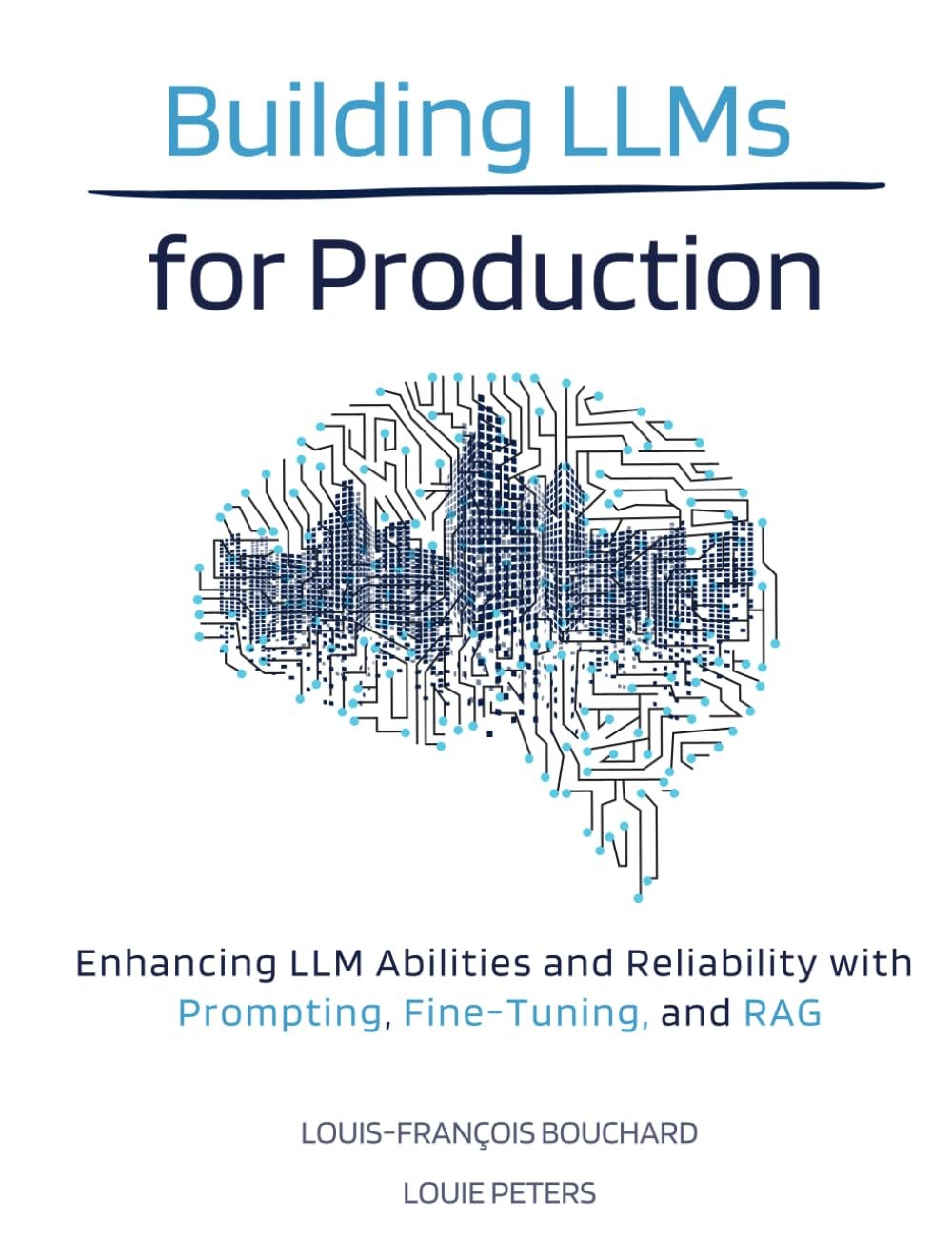
By the way, he also have a course based upon the book, if you want some active learning you can also combine his course with the book, here is the link
5. Build a Large Language Model (from Scratch) — Sebastian Raschka, PhD
Sebastian Raschka’s work stands out for its technical depth and clarity. This book walks you through every step of building a transformer model from scratch — tokenization, attention mechanisms, optimization, and fine-tuning.
If you’re a developer who wants to move beyond using APIs and truly understand how these models work, this book is a must-read. It’s one of the best hands-on guides to the inner workings of LLMs.
Here is the link to get the book — Build a Large Language Model (from Scratch)
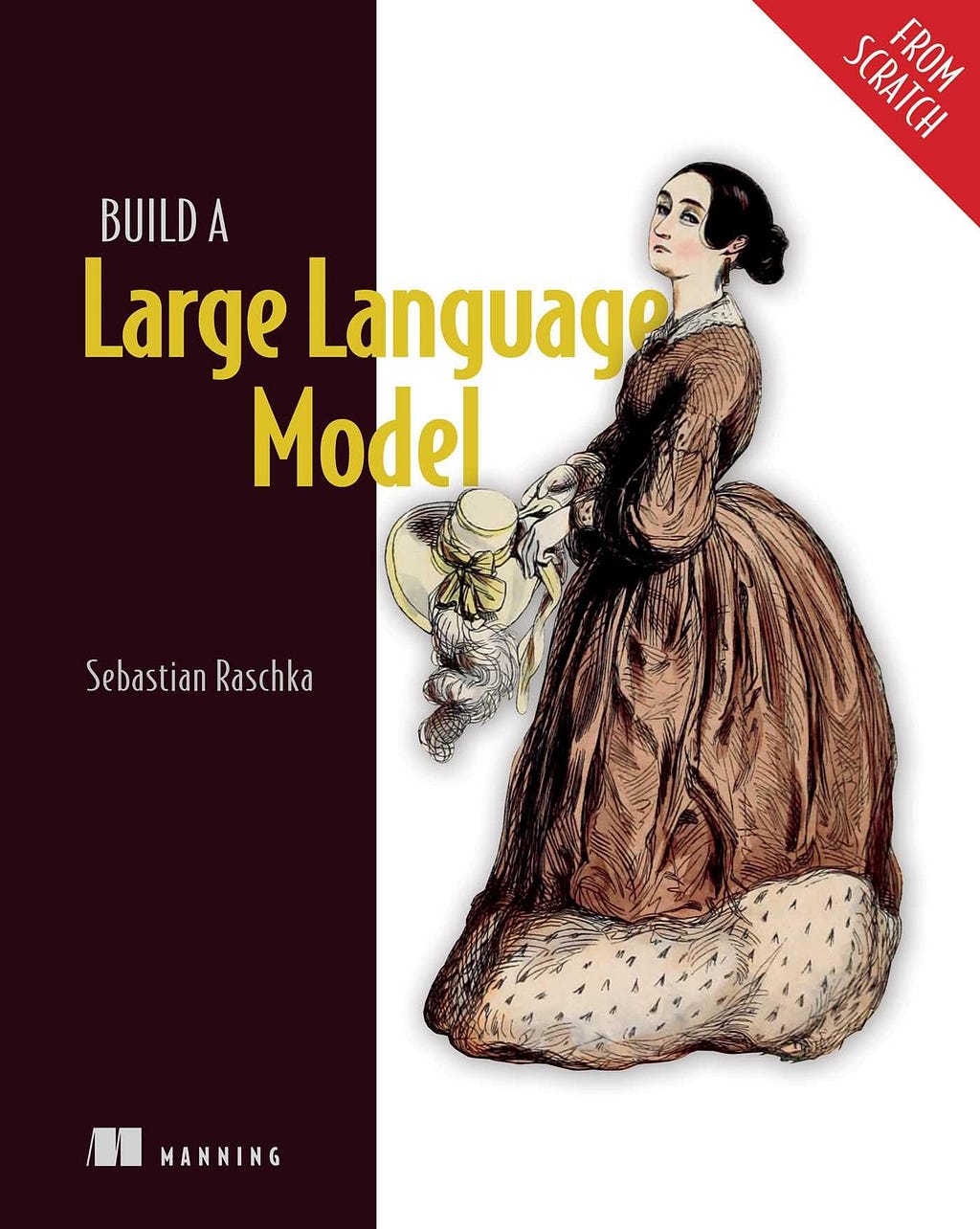
And, if you want, you can also combine this with this 10-Hours LLM Fundamentals (Video) for active learning.
10-Hours LLM Fundamentals (Video)
How I Choose These Books?
When selecting AI and LLM books, I look for three key things: practical relevance, technical depth, and author credibility.
Books written by practitioners who’ve built production systems tend to offer the most actionable insights.
I also favor those that include code samples, real-world deployment tips, and design considerations.
I avoid books that are overly academic or focused solely on theory — the AI world moves too fast for that.
The five titles above strike the right balance between understanding concepts and applying them effectively. They’ll remain valuable even as the technology continues to evolve.
Other Noteworthy Reads (Also Worth Checking Out)
While these didn’t make the top five, they’re still excellent resources depending on your focus:
- Hands-On Large Language Models: Language Understanding and Generation — Great for those who want guided implementations.
- Prompt Engineering for LLMs — Focused on mastering prompts and evaluation.
- Building Agentic AI Systems — A deep dive into agentic reasoning and AI autonomy.
- Prompt Engineering for Generative AI — Good for creative use cases and applied prompt design.
- The AI Engineering Bible — A broad overview for engineers building scalable AI systems.
- LLMs in Production — Covers best practices for productizing AI models.
LLMs in Production: From language models to successful products
Why Learn AI and LLM Engineering in 2026?
LLMs are reshaping every part of software engineering — from search to coding assistants, chatbots, and reasoning agents.
Understanding how to build, fine-tune, and scale these models gives you a massive competitive advantage.
The knowledge from these books goes beyond just model training — you’ll learn about vector databases, evaluation strategies, prompt design, and system orchestration, which are critical in today’s AI-driven applications.
If you want to future-proof your skills and stay relevant in 2025 and beyond, these books will help you build a strong foundation — from the mechanics of LLMs to the engineering mindset required to ship them at scale.
Though, if you prefer courses over books then you can also start with the Generative AI with Large Language Models on Coursera (offered by DeepLearning.AI & AWS), its a great course to build your foundational knowledge on AI and LL.
Generative AI with Large Language Models
That’s all in this list of my favorite books to learn AI and LLM engineering in 2026. Each of these recommendations is based on hands-on reading and practical application. I’ve used many of these insights in my own AI projects — and the difference they make is undeniable.
You can find all these books through their official links above. I’ve included my affiliate links for convenience; they help support my writing at no extra cost to you.
Start with one, but aim to read them all. The AI revolution isn’t waiting — and the best time to level up is now.
Other AI, LLM, and Machine Learning resources you may like
- Top 5 Courses to Prepare for AIF-C01 Exam in 2025
- 16 System Design Resources for Software Engineers
- How to Prepare for AWS Solution Architect Exam in 2025
- Top 5 Udemy courses to build AI Agents in 2025
- 7 Best Courses to learn AWS S3 and DynamoDB in 2025
- 10 Best Udemy Courses to learn Artificial Intelligence in 2025
- 5 Best Udemy courses to learn Midjourney in 2025
- 6 Udemy Courses to learn AWS Bedrock in 2025
- Top 5 Udemy Courses for AWS Cloud Practitioner Exam in 2025
- 5 Best Courses to learn AWS SageMaker in 2025
- 8 Udemy courses to learn Prompt Engineering and ChatGPT
- 5 Best Udemy Courses to learn Building AI Agents in 2025
- Top 5 Udemy Courses to learn Large Language Model in 2025
Thanks a lot for reading this article so far, if you like these AI and LLM Engineering books then please share with your friends and colleagues. If you have any feedback or questions then please drop a note.
P. S. — You can also combine this book with a course like LLM Engineering: Master AI, Large Language Models & Agents to get some hands-on experience on building RAG based chatbot and learning LLM by watching.
Top 5 Udemy Courses to Learn Large Language Models (LLMs) in 2025

I’ve Read 20+ Books on AI and LLM — Here Are My Top 5 Recommendations for 2026 was originally published in Javarevisited on Medium, where people are continuing the conversation by highlighting and responding to this story.
This post first appeared on Read More