
Coding patterns are the best way to prepare for coding interviews

Hello friends, Arrays are one of the most tested topics in coding interviews along with string and linked list.
Whether you’re preparing for product companies, startups, or FAANG-style interviews, array problems are guaranteed to show up, often combined with hashing, two pointers, sliding window, or prefix sums.
While most of us know this, I have seen a lot of programmers and developers struggle to solve common coding problems like the finding pairs which adds to a given number in array or moving all the zeros to one end of the array.
It’s not because lack of practice, its because lack of structured practice.
A lot of people blindly solve the problem and try to memorize the solution with the hope that one of those problem will show up on interview. Well, that works and sometime we do get lucky but that’s not the right way, especially if you are preparing for FAANG level interviews.
More often than not, FAANG questions are more lengthy and something you have not seen before, although the fundamental remains same but when you read the question, its hard to break it down and solve unless you are a genius or know patterns.
Instead of memorizing solutions, the key is to recognize patterns. Below are 10 essential array interview questions, along with the core idea, theory, and hints to help you solve them yourself.
If you want structured practice, platforms like ByteByteGo, AlgoMonster, Educative, and DesignGurus are excellent for learning these patterns step by step.
- System Design · Coding · Behavioral · Machine Learning Interviews
- Educative Unlimited: Excel with AI-Powered Learning
- All Courses
10 Must Know Array Questions for Coding Interviews
So, what are we waiting for? let’s start with the most popular patterns you will see on coding interviews, and these can also be used to solve string based problem because string is nothing but an array of characters.
1. Two Sum
Problem: Find two numbers that add up to a target. This is the most common array question I have seen on interviews. It was asked to me multiple times and I know few ways to solve it like Hashing or using Two pointer technique if array is sorted.
Core Pattern: Hashing
Theory:
Brute force is O(n²), but interviews expect O(n). The trick is to trade space for time using a hash map. You can also ask questions like is array is sorted? if its sorted then you can use two pointer pattern to solve the problem. Asking this kind of question also earn you respect and brownie points on interviewer’s eye.
Hint:
As you iterate, store each number in a map with its index. For each element x, check if target – x already exists.
2. Best Time to Buy and Sell Stock
Problem: Max profit from a single buy and sell. This is another question you will often see on investment banks like Barclays, Citi, JP Morgan, Goldman Sachs, and UBS interviews etc.
Core Pattern: Greedy + One Pass
Theory:
You don’t need to check all pairs. You just need to track the minimum price so far and compute profit at each step. This one is slightly tough though and you may need to practice Greedy patterns to get hang of it.
Hint:
Keep updating:
- minPrice seen so far
- maxProfit = max(maxProfit, currentPrice – minPrice)
3. Maximum Subarray (Kadane’s Algorithm)
Problem: Find the contiguous subarray with the largest sum. This question is really tough without pattern but becomes easy if you know what is Kadane’ algorith is.
Core Pattern: Dynamic Programming (Kadane’s)
Theory:
At each position, decide:
👉 Start a new subarray
👉 Extend the existing one
Hint:
If the running sum becomes negative, reset it to 0. Track the global maximum along the way.
This classic is explained very clearly in structured DSA courses on Udemy and Educative.
Master the Coding Interview: Data Structures + Algorithms
4. Contains Duplicate
Problem: Check if any value appears at least twice. This is a relatively easy pattern, especially if you know your data structure well.
Core Pattern: Hash Set
Theory:
Sorting works, but hashing is faster in interviews.
Hint:
Insert elements into a a set. If you ever see an element already present → duplicate found.
5. Product of Array Except Self
Problem: Return an array where each element is the product of all other elements.
Core Pattern: Prefix & Suffix Products
Theory:
Division is not allowed. You must compute:
- Product of all elements to the left
- Product of all elements to the right
Hint:
Do two passes:
- Left to right → store prefix product
- Right to left → multiply with suffix product
This pattern shows up often in AlgoMonster and DesignGurus guided problem tracks.
6. Merge Intervals (Array of Ranges)
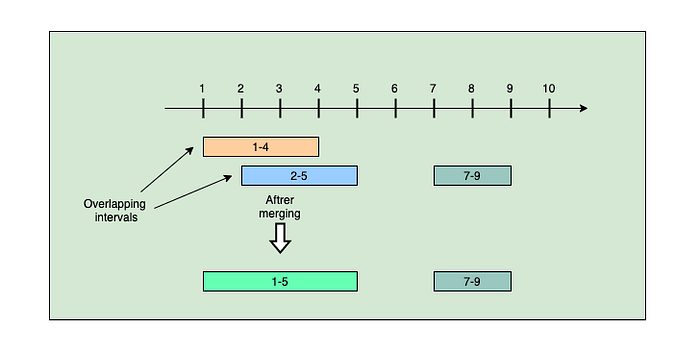
Problem: Merge overlapping intervals.
Core Pattern: Sorting + Greedy
Theory:
Sort intervals by start time. Then merge while traversing.
Hint:
If the current interval overlaps with the previous one, merge them by updating the end.
These types of problems also connect to real-world system concepts like scheduling and timelines — something platforms like ByteByteGo relate well to system design thinking.
7. Move Zeroes
Problem: Move all zeroes to the end while keeping order of non-zero elements.
Core Pattern: Two Pointers
Theory:
You don’t need extra space. Maintain a pointer for where the next non-zero should go.
Hint:
Traverse array, and whenever you see a non-zero, swap it with the left pointer and move the pointer forward.
8. Subarray Sum Equals K
Problem: Count subarrays whose sum equals K.
Core Pattern: Prefix Sum + Hash Map
Theory:
If prefixSum[j] – prefixSum[i] = k, then subarray (i+1 to j) sums to k.
Hint:
Store how often each prefix sum has appeared. For each new sum, check if sum – k exists.
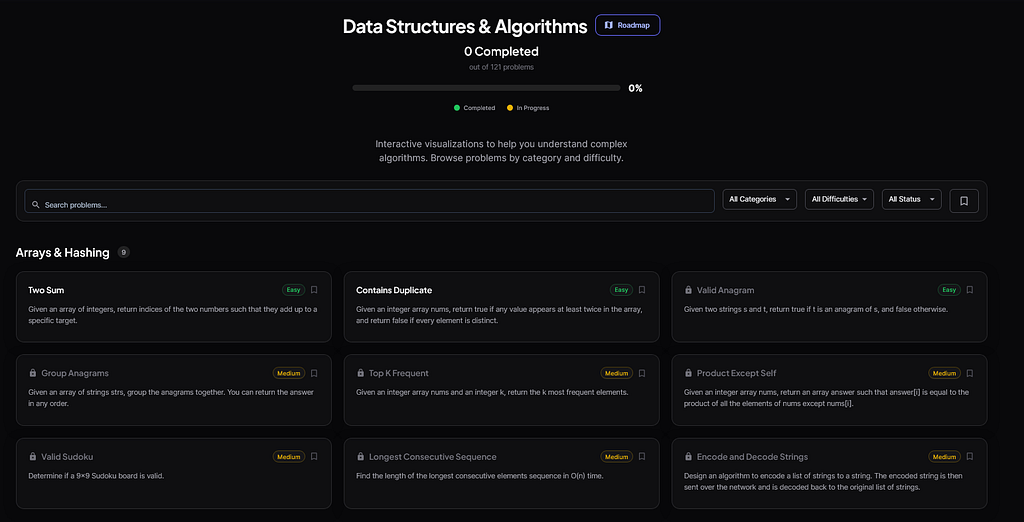
This pattern-heavy question is great practice on platforms like Codemia and BugFree.ai where debugging logic and edge cases are emphasized. You can practice DSA problems in Leetcode style but with better experience.
9. Find the Missing Number
Problem: Array contains numbers from 0 to n with one missing.
Core Pattern: Math or XOR
Theory Option 1 (Math):
Sum formula → n(n+1)/2 minus actual sum.
Theory Option 2 (XOR):
XOR all numbers from 0..n and XOR all elements in the array. The result is the missing number.
10. Trapping Rain Water
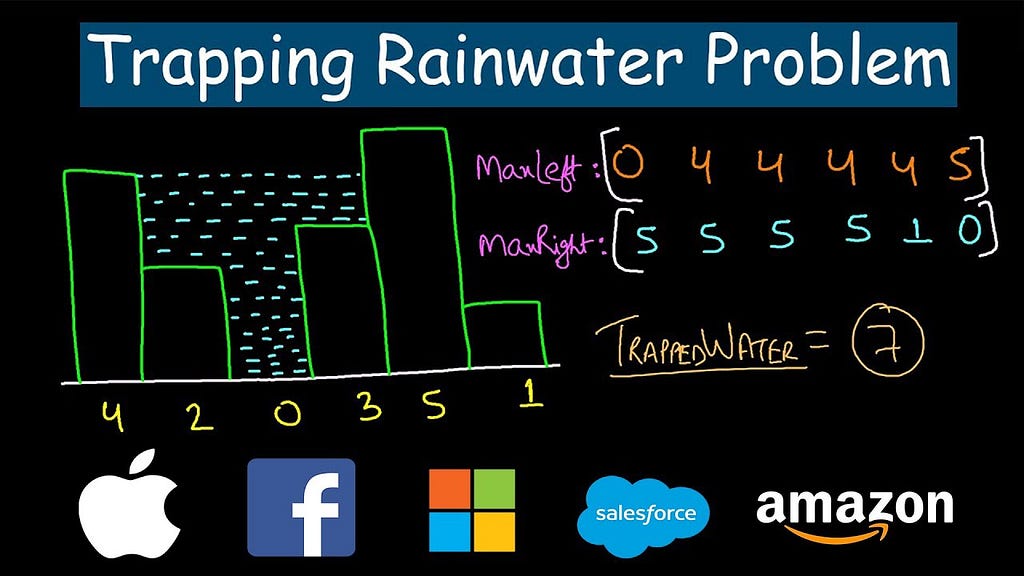
Problem: Calculate how much water can be trapped between bars. This one is the toughest problem I have seen regularly on interview and that’s why I have put it at last.
Core Pattern: Two Pointers OR Prefix Max Arrays
Theory:
Water at index i depends on:
min(max height on left, max height on right) - height[i]
Hint (Optimized Approach):
Use two pointers from both ends, maintaining leftMax and rightMax.
This is considered a tougher array problem and often appears in advanced prep tracks on Exponent and DesignGurus.
How to Get Really Good at Solving Array Problems?
It’s important to know theory like array is a data structure which provides fast search with O(1) time when you know the index. It’s elements are stored in memory contiguously and in some programming language like C and C++ you can access them more efficiently.
It’s also good to know that arrays are good for search but they are fixed length data structure and once created you cannot change the length which means you cannot add or remove elements.
If you do, you need to create a new array and copy elements, this is what many programming language do when they provide dynamic array like Java’s ArrayList.
Though, knowing theory and solutions isn’t enough — you need pattern recognition. Here are few things you can do to get better and solving array based problems:
1. Learn Patterns, Not Just Problems
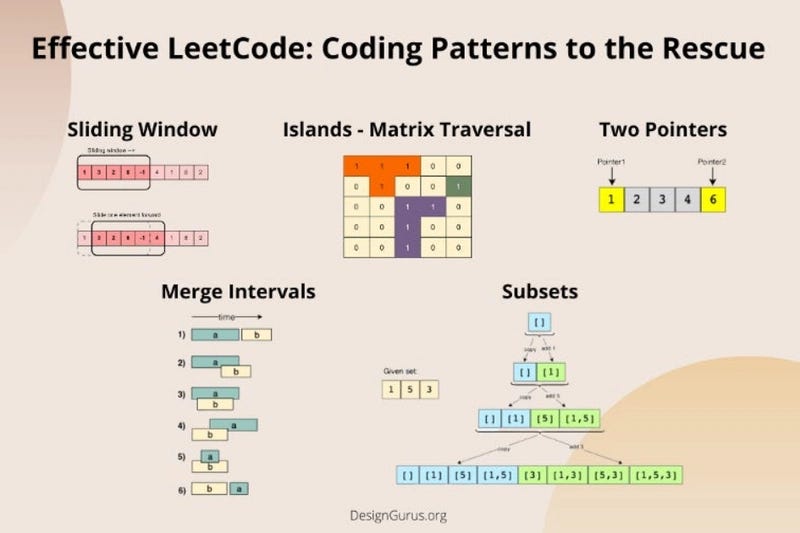
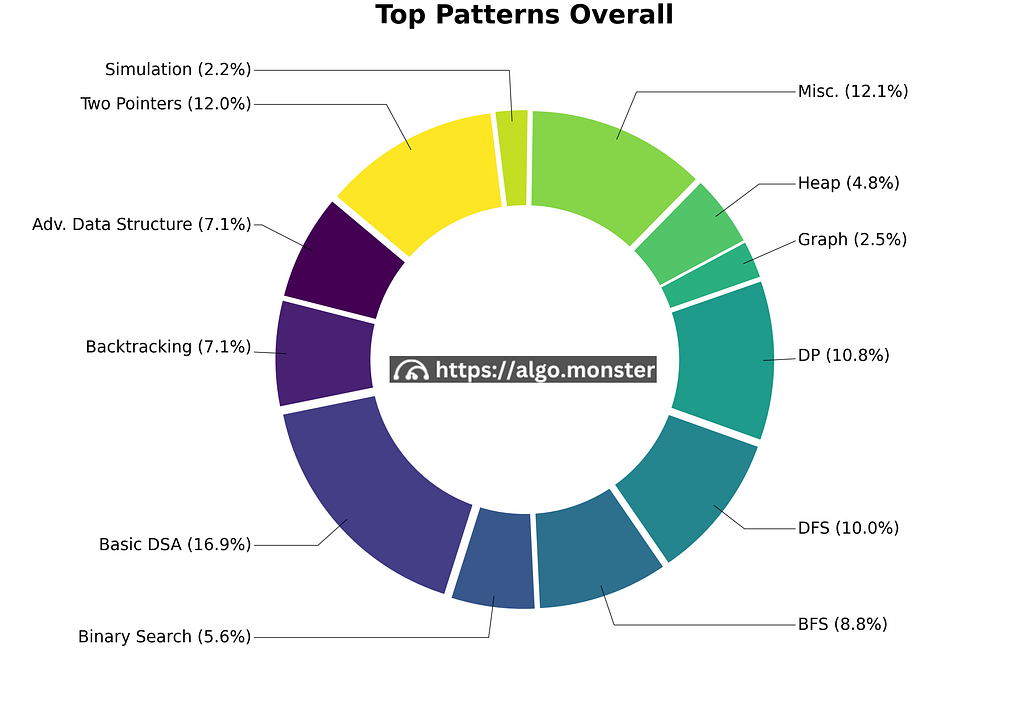
Learn patterns, as many as you can and also become good at recognizing patterns. If you need resource, AlgoMonster focuses heavily on teaching problem-solving patterns instead of random questions.
Here is a list of top patterns for coding interviews from Algomonster:
2. Strengthen Foundations
If you are new to array and DSA in general then just go through DSA courses on Educative and Udemy like Data Structures and Algorithms — Deep Dive Using Java which will help reinforce core data structure theory.
You can find more recommendations here, just choose one and stick to it until you have gone through it before jumping into another course.
I Tried 30+ Data Structures and Algorithms Courses: Here are My Top 5 Recommendations for 2026
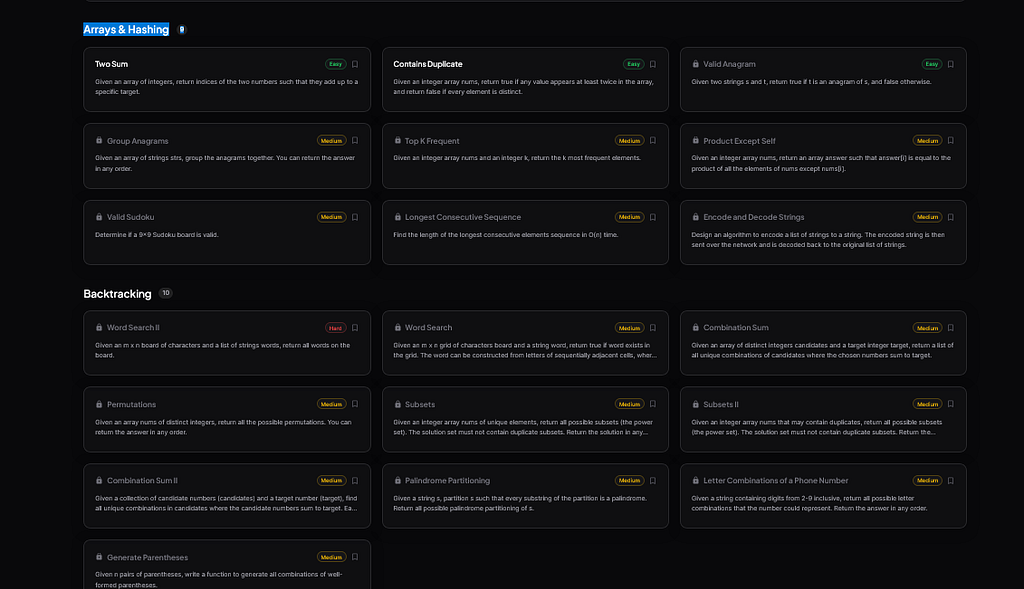
3. Practice Interview-Style Questions
There is no shortcut when it comes to preparing for coding interviews. You need to practice and practice hard. Though you can use platforms like LeetCode, Codemia, BugFree.ai, and Exponent simulate real interview-style thinking and debugging scenarios.
4. Connect to System Thinking
Strong DSA fundamentals also help in system design interviews — something ByteByteGo explains exceptionally well.
Final Thoughts
That’s all about the 10 most common array based interview question with patterns and hint. I have not given full code solution so that you can try it out yourself, the real benefit is when you try it out with out looking at the code.
You can still look at the hint, they will do if you can write code by following hints but you must do the real work, that is coding, writing your own code without asking ChatGPT and Copilot.
If you master these 10 array patterns, you’ll be able to solve hundreds of variations in interviews.
Focus on:
- Hashing
- Prefix sums
- Sliding window
- Two pointers
- Greedy and DP basics
Once these click, array questions stop feeling random — and start feeling predictable.
And that’s when interview prep gets a much less stressful
All the best with your interviews !!

10 Must-Know Array Coding Interview Questions (With Patterns, Hints, and Theory) was originally published in Javarevisited on Medium, where people are continuing the conversation by highlighting and responding to this story.
This post first appeared on Read More