
A lot of companies say they’re “AI-first” right now. Usually this equates to adding some tools, maybe shipping a feature using GenAI, or encouraging people to experiment with agent copilots.
That’s not what I mean.
Being AI-first goes beyond using AI tools. It’s about how work gets done across the entire company: when AI becomes part of the default way you think, build, and decide.
When that happens, engineering leadership changes in some real and sometimes uncomfortable ways.
Over the past 20+ years, I’ve led engineering teams through platform rebuilds, hypergrowth phases, and major industry changes. The AI boom has the potential to be the most disruptive innovation the dev world has ever seen, which underscores how important it is to get this transformation right.
Let’s walk through some of the biggest changes that are affecting my team at Scripta Insights, and the industry as a whole. I’ll then share some strategies for how leaders like yourself can position your teams for future success.
AI-first is an operating model, not a feature
The biggest shift I’ve seen is that AI stops being something engineering “owns” and starts behaving more like infrastructure. It shows up everywhere: marketing, operations, finance, HR. Suddenly, engineering leaders are pulled into conversations that have nothing to do with shipping product and everything to do with how the business runs.
That can be energizing. It can also be a lot.
You’re no longer just responsible for systems. You’re helping redesign workflows, decision-making, and sometimes entire roles. That’s powerful, but it also means the surface area of responsibility expands fast.
6 ways to build towards an AI-first engineering culture
Becoming AI-first involves turning thinking into action. Here are six steps you can start taking today:
Be transparent and explicit about your AI strategy
Most engineering leaders I talk to feel squeezed from both sides.
At the top, there’s pressure to “use AI everywhere,” often without a clear understanding of the tradeoffs, risks, or limits. At the team level, there’s a quieter tension: concern about job security, skill relevance, and whether the ground is shifting too fast.
This is where leadership really matters.
The teams handling this well are being very explicit: AI is not a replacement strategy. It’s a leverage strategy. It’s about amplifying good engineers, not erasing them. That message has to be articulated clearly and often, and backed up by how teams are staffed, evaluated, and supported.
Remember: Just because you can use AI doesn’t mean you should
One mistake I see a lot is treating AI like a hammer and assuming everything is a nail.
Strong teams are doing the opposite. They’re building simple mental guardrails:
- Does this improve quality?
- Does it improve understanding?
- Does it actually save meaningful time?
If the answer is no, they wait.
Speed without judgment creates messes faster. And once AI experimentation spreads organically, which it always seems to do, leaders also have to think about governance, security, and “shadow AI” long before it becomes a problem.
At Scripta, we allow people to bring in new AI tools to assist, but each goes through a security/privacy evaluation. We make sure we can put organizational controls in place.
We’re huge fans of new innovative ways to accomplish tasks. Still, as a company that also works with sensitive patient information, we have to make sure we’re aware of what our data is being used for, and make sure we’re abiding by the compliance frameworks we’ve set up.
Prioritize a new skillset: Building > coding
Development is being democratized, whether we like it or not.
AI has lowered the barrier to building things. Designers can prototype. PMs can script workflows. Executives can spin up tools.
That’s not a bad thing, but it does blur boundaries.
As a result, the value of engineering is shifting. Writing code is no longer a scarce resource. Here’s what is scarce: clear thinking, system design, and knowing what not to build.
The best engineers aren’t the ones typing fastest. They’re the ones who can evaluate output, spot bad assumptions, and shape systems that hold together over time.
Rethink how junior engineers grow
One thing that worries me: a lot of traditional “entry-level” engineering work is exactly the stuff AI is best at now.
Historically, that work was how people learned. Debugging. Refactoring. Writing boring but necessary code. If that disappears, we need new ways to help engineers develop real judgment.
At Scripta, we’re experimenting with AI-assisted apprenticeships, pairing junior engineers with seniors and using AI as a tool, not a shortcut. Their main goal is teaching juniors how to think, rather than simply aiming for speed.
If we don’t invest here, we’ll feel it later.
Reconsider how you hire new engineers
Interviews are changing. In many cases, candidates are allowed and even encouraged to use AI tools.
That’s intentional.
Whether someone can produce code from scratch under pressure isn’t what matters most anymore. The best candidates can ask good questions, recognize bad output, and explain tradeoffs. Those skills map much better to how real work gets done today.
Emphasize communication and documentation
AI has made it faster to build. It hasn’t made it easier to decide.
The hardest problems engineering leaders face now are about alignment: what to build, how systems fit together, and how to keep teams moving in the same direction while everything accelerates.
That’s why written communication, design docs, and clear decision-making matter more than ever. AI can help draft those things, but humans still have to make sense of them.
What does AI-first leadership really require?
At the end of the day, AI-first leadership goes beyond maximizing automation. The real goal is balance.
It’s about knowing when to move fast and when to slow down. When to trust the tools and when to trust people. When to push experimentation, and when to draw a line.
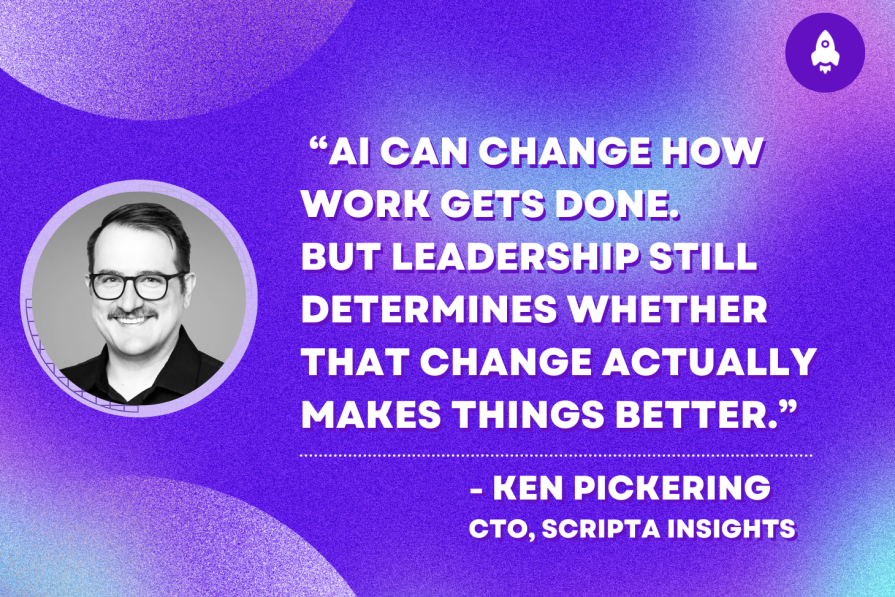
AI can change how work gets done. But leadership still determines whether that change actually makes things better.
The post What it actually means to be an AI-first engineering organization appeared first on LogRocket Blog.
This post first appeared on Read More