
These are the best Educative Grokking courses you can join to prepare for Coding interviews in 2026.

Let me be honest with you: I bombed my first two FAANG interviews.
Not because I didn’t know how to code — I had years of professional experience. I failed because I didn’t know how to think about problems under pressure. I was solving each problem from scratch, wasting precious interview minutes on things I’d essentially solved before.
That changed when I discovered Educative’s Grokking series and their Personalized Interview Prep Plan.
Over the past year I enrolled in 20+ coding interview courses on Educative. I completed the best ones, tracked which concepts actually showed up in interviews, and applied everything to real technical rounds at top companies.
Here are the 9 that genuinely made the difference.
Budget tip: All 9 courses are available on Educative’s Unlimited Plan — currently 50% off, which works out to just $17/month for 1200+ AI-powered courses. Best investment I made in my interview prep.
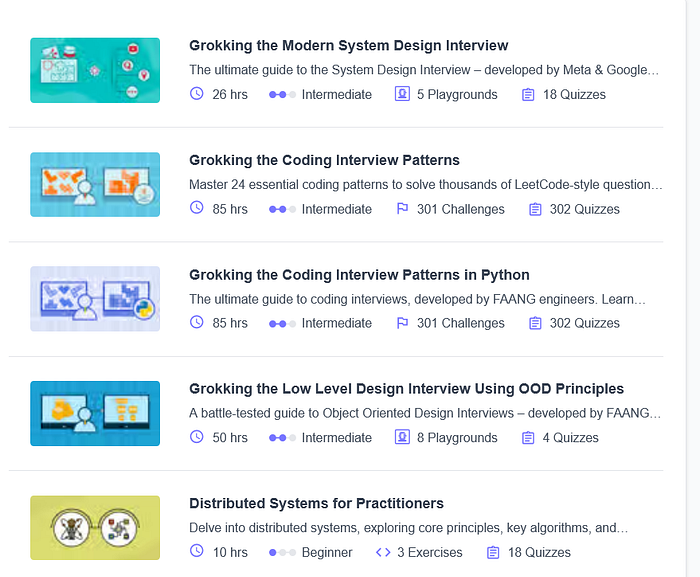
9 Best Educative Courses for System Design and Coding Interviews in 2026
Here are the 9 best coding courses you can join on Educative to prepare well for programming job interviews and essential topics like System Design, Data Structures and Algorithms, coding patterns etc.
1. Grokking the Coding Interview: Patterns for Coding Questions
Why it’s #1: The single most effective coding interview resource I’ve ever used.
This flagship course changed how I think about coding problems entirely. Instead of treating each problem as unique, it teaches you to recognize 16 fundamental patterns like sliding windows, two pointers, dynamic programming, and more, that underlie the vast majority of interview questions at top companies.
Why you should take this course:
- Learn to identify problem patterns and tackle them confidently
- Covers 150+ coding problems with detailed explanations and optimal solutions
- Teaches you to transition from brute force to optimal approaches systematically
My experience: The sliding window pattern alone helped me solve 12 different interview problems I’d previously struggled with. After completing this course, I started recognizing patterns in problems within seconds rather than minutes.
Best for: All developers — this should be the first Grokking course you take, regardless of experience level
Here is the link to join this course — Start Grokking the Coding Interview
2. Grokking Dynamic Programming Patterns for Coding Interviews
Why it’s essential: Dynamic programming is where most interview candidates give up — this course is why you don’t have to.
DP problems have a reputation for being impossibly difficult. This course strips that reputation away by showing you that DP is really just pattern recognition: knapsack, Fibonacci, palindromic subsequences, and a handful of others cover the vast majority of what interviewers actually ask.
Why you should take this course:
- Focuses on breaking down DP problems into simple, approachable subproblems
- Teaches a systematic approach that works across all DP question types
- Includes visual explanations that build genuine conceptual understanding
My experience: DP used to be my weakest topic — I’d panic the moment I saw a DP problem in an interview. After this course I actively looked forward to DP questions because I knew I had a framework for cracking them. That mindset shift alone was worth it.
Best for: Developers who struggle with DP, anyone targeting Google or Amazon where DP appears frequently
Here is the link to join this course — Start Grokking DP Patterns

3. Grokking Modern System Design for Software Engineers & Managers
Why it’s definitive: The most complete modern system design course available for interview preparation.
System design is where senior-level interviews are won or lost, and this course covers it comprehensively — distributed systems, data replication, eventual consistency, Microservices, cloud architectures, and the trade-offs between all of them. It’s not just theory; it teaches the reasoning behind design decisions.
Why you should take this course:
- Focuses on modern, cloud-based architectures actually used in production
- Covers system reliability, fault tolerance, and microservices in depth
- Teaches you to articulate trade-offs between design decisions clearly
My experience: The section on distributed systems trade-offs transformed how I answered system design questions. Instead of trying to design a “perfect” system, I learned to reason about constraints — and interviewers love that.
Best for: Mid-level and senior developers, engineering managers, anyone interviewing for Staff+ roles
Here is the link to join this course — Grokking Modern System Design

4. Deep Dive into System Design Interview
Why it’s powerful: The most thorough deep-dive into system design architecture for developers targeting senior roles.
While the Modern System Design course covers breadth, this learning path goes deep. It walks through distributed databases, caching strategies, load balancing, and detailed case studies that mirror exactly what top-tier companies ask in their system design rounds.
Why you should take this course:
- Explains core topics: distributed databases, load balancing, and caching strategies
- Includes detailed case studies that solidify concepts with real systems
- Perfect for mid-level to senior developers targeting challenging interview rounds
My experience: The case study format here is what makes it exceptional. Walking through how Uber, Netflix, or Twitter solved specific scale problems — and understanding why they made those choices — gave me a library of real examples to reference in interviews.
Best for: Senior developers, architects, anyone targeting Staff or Principal Engineer roles
Here is the link to join this course — Start Deep Dive System Design
5. Grokking the Principles and Practices of Advanced System Design
Why it’s practical: The best course for learning to design real systems step-by-step — URL shorteners, social feeds, chat apps.
This course bridges theory and practice by taking you through concrete system design examples from start to finish. It’s the course I recommend most to developers who understand the concepts but struggle to structure a complete design during a timed interview.
Why you should take this course:
- Step-by-step guidance for designing real-world systems under interview conditions
- Covers scalability, load balancing, and database sharding with practical examples
- Includes interactive diagrams and case studies for genuine understanding
My experience: The structured approach here — requirements → estimation → component design → scaling — gave me a repeatable framework I use in every system design interview. No more staring at a blank whiteboard wondering where to start.
Best for: Developers who know concepts but struggle to structure a full design, senior engineer interview candidates
Here is the link to join this course — Start Advanced System Design

6. Grokking the Low Level Design Interview Using OOD Principles
Why it’s unique: The best course for Low Level Design interviews — an often overlooked but increasingly common interview round.
LLD and OOD interviews test something different from system design: your ability to model real-world systems using classes, relationships, and SOLID principles. Parking lots, elevator systems, ATM machines — these problems test whether you can translate requirements into clean, maintainable code structure.
Why you should take this course:
- Specifically prepares you for Low Level Design interview rounds
- Covers common scenarios: parking lots, elevators, ATM machines, and more
- Teaches SOLID principles application with real interview examples
- Includes interactive exercises to solidify design concepts
My experience: I had completely neglected LLD preparation before this course. Companies like Amazon and Microsoft increasingly include LLD rounds, and this course is the most targeted preparation I found. The SOLID principles section directly improved both my interview answers and my day-to-day code.
Best for: Backend developers, Java/Python engineers, anyone targeting companies with explicit OOD interview rounds
Here is the link to join this course — Start Low Level Design OOD

7. Grokking the API Design Interview
Why it’s valuable: API design is a real interview round at many companies — and almost nobody prepares for it specifically.
Most developers can build APIs. Fewer can explain why they made specific design choices, how they’d handle versioning at scale, or what trade-offs exist between REST and GraphQL. This course teaches the vocabulary and frameworks to answer those questions confidently.
Why you should take this course:
- Provides a strong foundation in RESTful APIs and GraphQL for interview contexts
- Focuses on practical aspects: versioning, authentication, authorization
- Prepares you specifically for API design interview rounds with real-world examples
My experience: I had an API design round at a fintech company that I would have bombed without this preparation. The course gave me a clear framework for explaining design decisions — security considerations, rate limiting, versioning strategies — that impressed the interviewer significantly.
Best for: Backend developers, API engineers, full-stack developers targeting senior roles
Here is the link to join this course — Start Grokking API Design

8. Scalability & System Design for Developers
Why it’s critical: The most focused course on scalability — the topic that separates good system design answers from great ones.
Every system design interview eventually comes down to scale. How do you handle 10 million users? How do you maintain performance when traffic spikes 10x?
This learning path teaches the specific techniques — vertical and horizontal scaling, distributed databases, service-oriented architectures — that answer those questions concretely.
Why you should take this course:
- Teaches vertical and horizontal scaling techniques with practical applications
- Covers distributed databases and service-oriented architectures in depth
- Focuses on real-world scalability with techniques used in production systems
My experience: This course taught me to think in orders of magnitude — a skill that comes up in literally every system design interview. The practical applications section shows how real companies scaled their systems, which gave me credible examples to use in interviews.
Best for: Developers targeting senior and staff roles, anyone whose system design answers lack depth on scalability
Here is the link to join this course — Start Scalability & System Design

9. Machine Learning System Design
Why it’s the future: ML system design interviews are becoming standard at AI-forward companies — and almost no one prepares for them.
As machine learning moves from research to production, companies need engineers who can design scalable ML pipelines — not just train models. This course teaches exactly that: feature engineering, data pipelines, model deployment, and monitoring in production at scale.
Why you should take this course:
- Covers feature engineering, data pipelines, and model deployment end-to-end
- Teaches monitoring and maintaining ML systems in production at scale
- Essential preparation for ML engineers and AI-focused companies
My experience: The production ML section is the most unique content on this list. Every ML course teaches you to build models — almost none teach you to design the systems that serve them at scale. This course fills that gap completely and prepared me for interviews I had never seen resources for before.
Best for: ML engineers, data scientists moving to engineering roles, anyone targeting AI-first companies
Here is the link to join this course — Start ML System Design

Why Educative’s Grokking Series Works When LeetCode Grinding Doesn’t?
Most developers prepare for coding interviews by grinding hundreds of random LeetCode problems. The problem? You end up memorizing solutions, not learning how to solve new problems.
Educative’s approach is different. The Grokking courses teach patterns — reusable problem-solving frameworks that apply across dozens of problems.
When you see a new problem, you recognize the pattern and know exactly how to approach it.
Add in their interactive browser-based coding environment (no setup, no context switching), and you have the most efficient interview prep platform I’ve found.
The Personalized Interview Preparation Plan
One feature I didn’t expect to value as much as I do: Educative’s Personalized Interview Preparation Plan.
Unlike randomly grinding LeetCode problems, this AI-powered plan tailors preparation to your specific strengths, weaknesses, and target companies. It identifies your gaps, structures your study schedule, and provides AI-powered mock interviews that simulate real full-loop interview conditions.
If you want the most efficient path from where you are to interview-ready, this is the tool that makes it happen.
Here is the link to — Explore the Personalized Interview Prep Plan
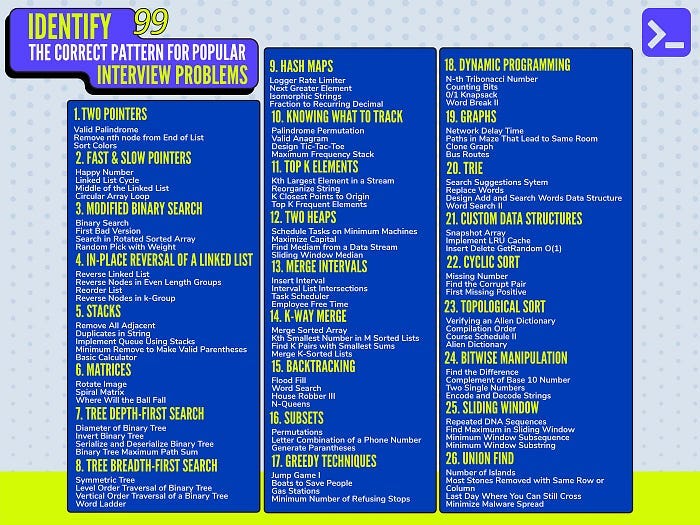
How to Get the Most Out of These Courses?
Educative is a large platform and it’s easy to get lost. Here are the four habits that made the biggest difference in my preparation:
Start with a structured plan.
Dedicate specific daily time blocks to learning and practice — consistency compounds faster than occasional marathon sessions.
Write every line of code.
Don’t read solutions passively. Write code for every problem even when the answer is provided. Active practice is the difference between retaining 20% and retaining 90%.
Attack your weakest areas first.
It’s tempting to practice what you’re already good at. Identify your weakest topics — DP, system design, LLD — and spend disproportionate time there.
Simulate real interview conditions.
Time yourself. Solve problems without looking at hints first. The pressure of a real interview is something you have to practice, not just prepare for intellectually.
Pricing: Best Value in Interview Prep
All 9 courses on this list are available on the Educative Unlimited Plan — currently 50% off at $17/month annually. That’s 1200+ AI-powered courses, the personalized prep plan, and AI mock interviews for less than most people spend on coffee.

Not ready to commit? They also offer a 7-day free trial — enough time to start Grokking the Coding Interview and decide for yourself.
Conclusion
That’s all about the 9 best Educative courses for coding interview preparation in 2026. These aren’t courses I skimmed — I completed them, applied the concepts in real interviews, and can personally vouch for the quality.
The Grokking series works because it teaches how to think about problems, not just how to solve specific ones. That difference shows up immediately when you face a problem you’ve never seen before in a live interview.
My recommended starting sequence: Begin with Grokking the Coding Interview Patterns for the foundation, add Grokking DP Patterns for the hardest topic, then layer in the system design courses based on your target role. Use the Personalized Prep Plan throughout to fill gaps efficiently.
Your next Google, Amazon, or Microsoft interview is winnable. These courses are how you win it.
Other System Design and Interview Resources you may like:
- Top 5 Places to Learn System Design and Software Design
- 5 System Design Cheat Sheets to Refer Before Interviews
- 16 Best Resources to Prepare for System Design Interview
- 100+ System Design Interview Questions and Problems
- Top 5 System Design YouTube Channels for Engineers
- My Favorite Software Design Courses for 2026
- 3 Places to Practice System Design Mock Interviews
- 20 System Design Interview Questions for Practice
- Is Designing Data-Intensive Applications Worth Reading?
If you found this helpful, join Educative now while the 50% discount is still active — and start your journey toward landing your dream job.
Educative Unlimited: Excel with AI-Powered Learning

I Tried 20+ Coding Interview Courses on Educative: Here Are My Top 9 Recommendations for 2026 was originally published in Javarevisited on Medium, where people are continuing the conversation by highlighting and responding to this story.
This post first appeared on Read More