
Is Bugfree.ai Really a good place to prepare for System Design Interview?
Hello friends, If you’re gearing up for system design interviews at FAANG or other top-tier tech companies, you’ve probably heard about Bugfree.ai.
A Leetcode style platform for practicing System Design interview questions, OOP Design questions and behavioral questions.
I recently spent several weeks testing this platform, and I want to share my honest experience with you.
Why I Started Looking for a System Design Practice Platform?
Like many developers, I’ve used platforms like ByteByteGo to learn system design concepts. The content was excellent for understanding the theory, but I felt something was missing — actual hands-on practice.
I needed something like LeetCode, but for system design.
A place where I could solve problems, get immediate feedback, practice under time constraints, and track my progress.
That’s when I discovered Bugfree.ai, which markets itself as “LeetCode for System Design.” After using it extensively, I can tell you what works and what doesn’t.
What Makes Bugfree.ai Stand Out?
Here are few key features or things which I really liked about bugfree.ai and these are also things which makes Bugfree.ai a good resource for System Design Interview preparation.
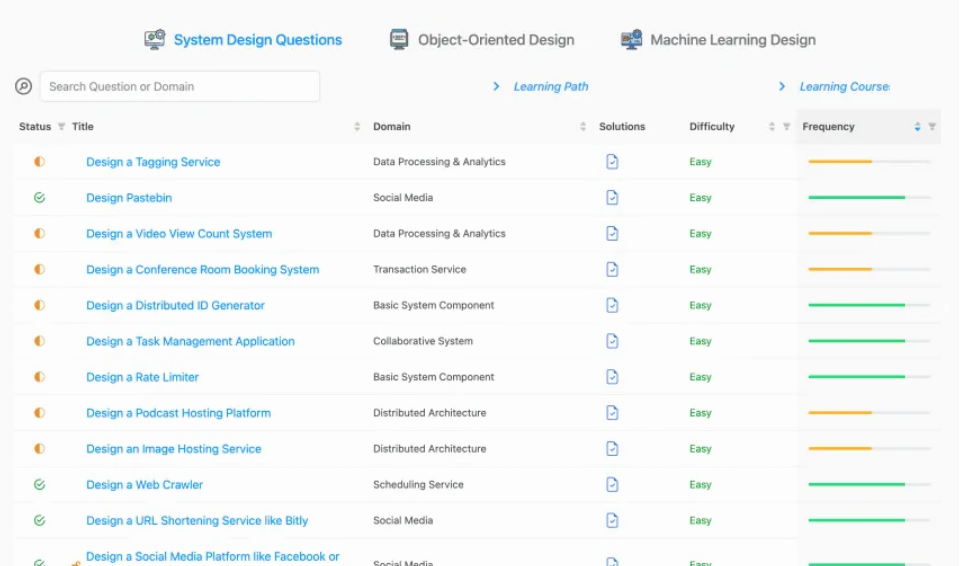
1. The System Design Question Bank (My Favorite Feature)
This is where Bugfree.ai truly shines. The platform offers over 150 system design problems covering everything from basic URL shorteners to complex distributed systems. What impressed me most:
- Real interview questions from companies like Google, Meta, Amazon, and Netflix
- Diverse problem categories: API design, high-consistency systems, job schedulers, ML pipelines, streaming systems, and more
- Regular updates that reflect current industry trends and actual interview questions
- Difficulty levels clearly marked so you can progress systematically
Unlike other platforms that give you 10–20 problems, this extensive question bank means you can practice different variations and truly master the patterns.
Here is the full list of System Design Interview problems you can practice on Bugfree.ai today:
2. LeetCode-Style Practice Environment
Here’s what I loved: just like LeetCode lets you solve coding problems in a structured environment, Bugfree.ai provides a similar experience for system design. You can:
- Practice under timed conditions (crucial for real interviews where you typically have 45–60 minutes)
- Submit your solutions and get evaluated
- Track your progress with scores and metrics
- Compete on leaderboards (yes, gamification actually motivated me!)
- Revisit problems to improve your solutions
This practice-first approach forced me to actually design systems rather than just passively reading about them. The time pressure helped me get faster at breaking down problems and communicating my designs clearly.
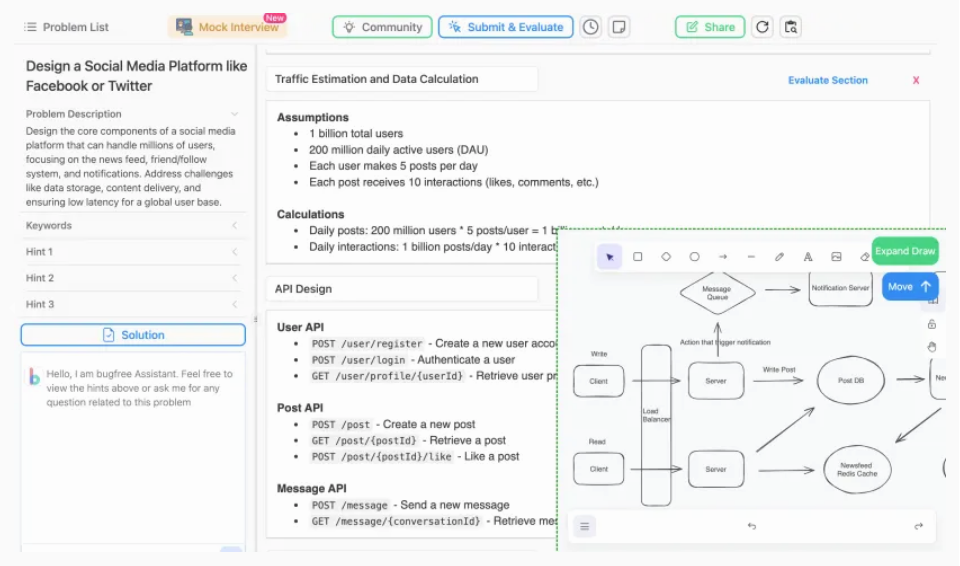
Here is one sample problem you can try out now
3. AI Code Review and Instant Feedback
The AI-powered feedback system is genuinely impressive. After submitting a system design solution, the AI provides:
- Detailed analysis of your architectural choices
- Feedback on diagrams and visual clarity
- Evaluation of your communication and explanation style
- Suggestions for improvement on scalability, reliability, and trade-offs
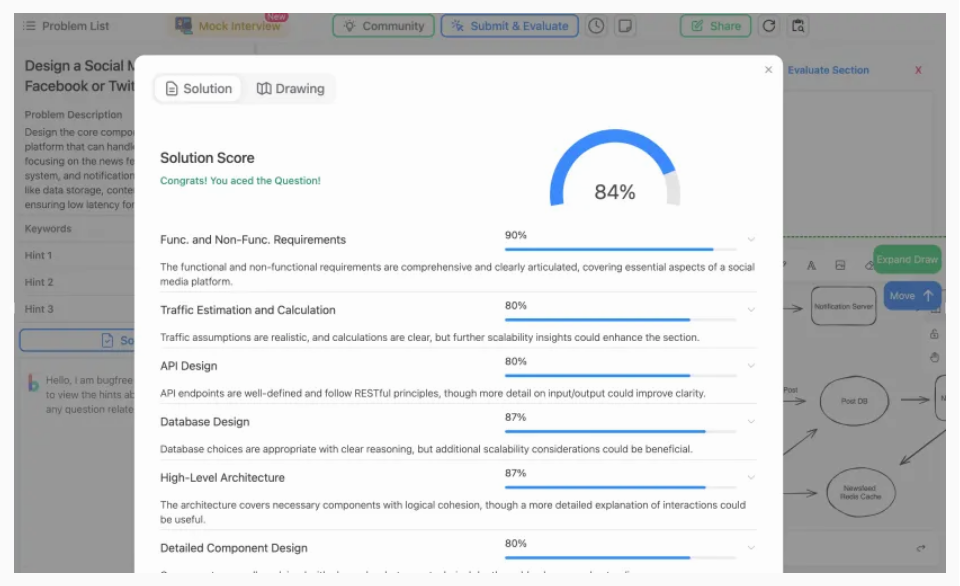
- Scores across multiple dimensions: architecture soundness, completeness, communication clarity
One specific example: I designed a notification system and completely missed discussing push vs. pull mechanisms.
The AI caught this immediately and explained why this consideration matters for scale. That kind of instant, specific feedback is hard to get elsewhere.
Here is how their solution scoring looks like:
4. The AI Mock Interview Experience
The AI-powered mock interviews deserve special mention. They simulate real interview scenarios by:
- Asking realistic follow-up questions based on your answers
- Probing deeper when you make claims without proper justification
- Challenging your design choices to see if you can defend them
- Adapting the conversation flow based on your responses
I found that practicing with the AI significantly improved not just my system design skills but also my ability to articulate technical concepts clearly — something that’s crucial in actual interviews.
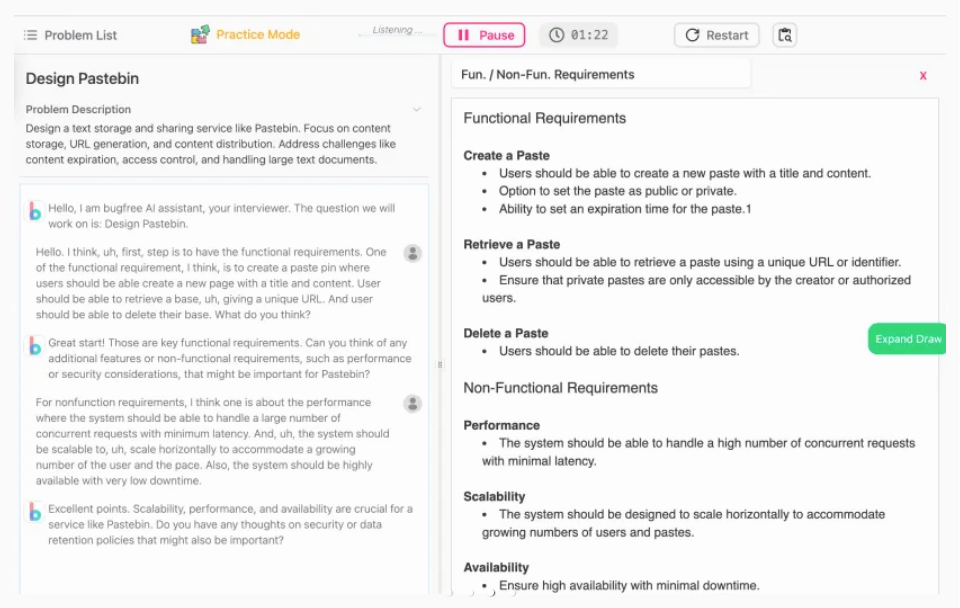
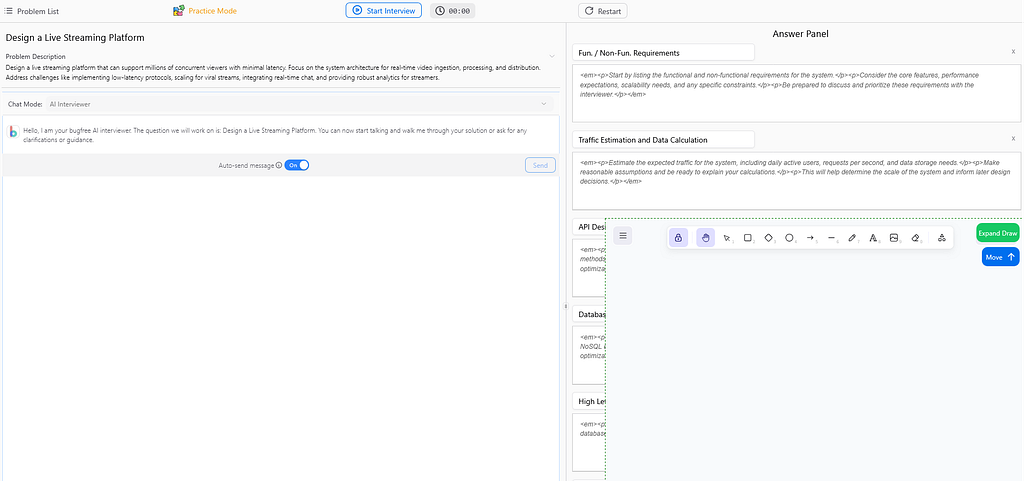
The good thing is that you can speak also, which makes the practice really useful because many software engineer struggle to articulate and explain their solution on interview. This practice will help them.
Here is how an AI mock interview setup looks like:
What I Learned From Using Bugfree.ai for System Design Interview Prep?
After weeks of practicing System Design and OOP Design problems on Bugfree.ai, here are the key improvements I noticed:
- Faster problem breakdown: I got much quicker at identifying requirements and constraints
- Better time management: The timed practice taught me to prioritize what matters most
- Stronger communication: Articulating trade-offs became more natural
- Pattern recognition: Started recognizing common system design patterns across different problems
- Confidence boost: Solving 50+ problems gave me genuine confidence for interviews
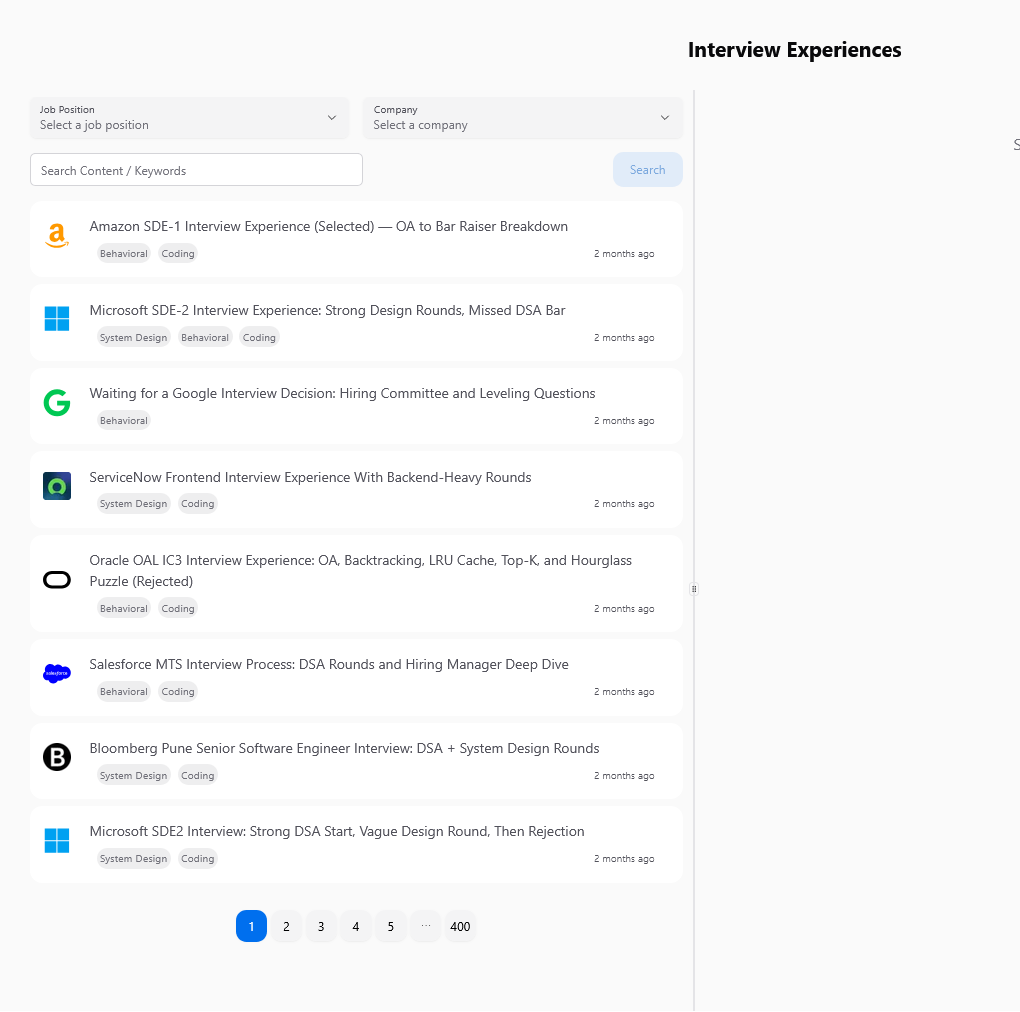
I also benefited a lot from interview experience shared by fellow community members like below:
What Could Be Better?
To be completely honest, there are a few areas where Bugfree.ai could improve:
1. Pricing Transparency
The pricing isn’t immediately clear on the website. Full access to AI mocks and detailed walkthroughs requires a paid subscription, which might be expensive for some learners compared to free resources.
2. No Human Mentorship
While the AI feedback is excellent, it can’t completely replace the nuance and empathy of a human mentor, especially for complex architectural discussions or career advice.
3. Limited Deep-Dive Content
If you’re looking for comprehensive architectural breakdowns and detailed case studies, platforms like ByteByteGo or DesignGurus.io offer more narrative-style instruction. Bugfree.ai is more practice-focused than theory-focused.
4. No DSA Practice
If you’re also preparing for coding rounds, you’ll need additional platforms. Bugfree.ai focuses exclusively on system design.
But overall, I like the platform, it has a lot many things which you may not find at other places.
I joined mainly for LeetCode style practicing of System Design problem but then I found OOP Design problem, behavioral problems, Machine Learning and Data Engineering problems, interview experience and much more.
If you are preparing for System Design interview, I highly recommend this platform.
Here is the link to explore — Join Bugfre.ai
Master System Design & Behavioral Interviews Like Leetcode
How Bugfree.ai Compares to Other Platforms?
If I have to compare Bugfree.ai with other platforms like ByteByteGo and DesignGurus, here are how I found them different:
1. Bugfree.ai
Best for: Hands-on practice, timed problem-solving, AI feedback
- 150+ system design problems with regular updates
- LeetCode-style practice environment with leaderboards
- AI-powered mock interviews with instant feedback
- Progress tracking and performance analytics
- Fully self-paced and available 24/7
- Missing: Live mentorship, deep theoretical content, DSA prep
Master System Design & Behavioral Interviews Like Leetcode
2. ByteByteGo
Best for: Visual learning and deep conceptual understanding
- Diagram-first approach that simplifies complex systems
- Excellent case studies on real-world systems (Twitter, YouTube, etc.)
- Great books and video content
- Missing: Interactive practice, timed exercises, submission review
System Design · Coding · Behavioral · Machine Learning Interviews
3. DesignGurus.io (Grokking Series)
Best for: Pattern-based learning approach
- Structured frameworks for common patterns (caching, rate limiting, etc.)
- Interactive lessons with quizzes
- Strong foundation building
- Missing: AI feedback, dynamic mock interviews, timed practice
Tech Interview Preparation – System Design, Coding & Behavioral Courses | Design Gurus
4. Educative.io
Best for: Beginner-friendly, guided learning
- Interactive scenarios with step-by-step walkthroughs
- Comprehensive topic coverage
- Good scaffolding for newcomers
- Missing: AI-driven feedback, real-time mocks, submission tracking
Grokking System Design Interview: Patterns & Mock Interviews
My Recommended Learning Strategy
Based on my experience, here’s what I’d recommend:
For Complete Beginners:
- Start with ByteByteGo or Educative.io to build foundational knowledge
- Move to DesignGurus.io to learn common patterns
- Then practice extensively on Bugfree.ai
For Intermediate Learners:
- Use Bugfree.ai for daily practice (aim for 1–2 problems per day)
- Supplement with ByteByteGo for topics you’re weak on
- Do AI mock interviews weekly
For Interview Crunch Time: Focus 80% of your time on Bugfree.ai — the timed practice and realistic mocks are invaluable when you’re close to interviews.
Is Bugfree.ai Worth It? My Verdict
Yes, absolutely — if you’re serious about acing system design interviews and value hands-on, timed practice with immediate feedback.
You’ll love Bugfree.ai if you:
- Are preparing for FAANG or senior engineering roles
- Learn best by doing rather than just reading
- Want to practice under realistic time constraints
- Need a large question bank to build confidence
- Appreciate gamification and progress tracking
- Want AI-powered feedback without scheduling live sessions
You might want alternatives if you:
- Are on a very tight budget (start with free YouTube content first)
- Prefer human mentorship and personalized coaching
- Need deep theoretical foundations before practicing
- Are looking for coding (DSA) practice as well
My Personal Results
After 6 weeks of consistent practice on Bugfree.ai:
- Completed 60+ system design problems
- Reduced my average problem-solving time from 75 minutes to 45 minutes
- Scored 85%+ on mock interview evaluations
- Felt genuinely prepared for real interviews
The combination of the extensive question bank, LeetCode-style timed practice, and AI feedback made a real difference in my preparation.
Final Thoughts
Bugfree.ai isn’t perfect, but it fills a genuine gap in the system design interview prep market. The ability to practice like you would with LeetCode for coding interviews — solving problems, getting scored, tracking progress — is exactly what I needed.
If you’re serious about system design interviews, I genuinely recommend giving it a try. The platform has helped me move from passively understanding concepts to actively solving problems under pressure, which is what interviews are really about.
Ready to Start?
You can try Bugfree.ai here:
Explore Bugfree.ai and Start Practicing →
For comprehensive preparation, consider combining it with:
- ByteByteGo for visual learning and conceptual depth
- DesignGurus.io for pattern-based frameworks
Other System Design Articles you may like:
- Top 5 Places to Learn System Design and Software Design
- Is DesignGuru’s System Design Course Worth It?
- ByteByteGo vs Bugfree.ai: Which One is Better?
- 10 Best Places to Learn System Design in 2026
- How to Prepare for System Design Interview in 2026
- 20 System Design Interview Questions for Practice
Good luck with your system design interviews! If you have any questions or want to share your experience with Bugfree.ai, feel free to drop a comment below.
P.S. — If you take away one thing from this review, make it this: start practicing actively, not just reading. Join Bugfree.ai, solve problems under time constraints, and get that hands-on experience. Your future interviewer-self will thank you.
Master System Design & Behavioral Interviews Like Leetcode

I Tried Bugfree.ai for System Design Interview Prep — Here’s My Honest Review was originally published in Javarevisited on Medium, where people are continuing the conversation by highlighting and responding to this story.
This post first appeared on Read More