
These are the best Udemy courses you can join to learn Large Language Models (LLMs) in 2026
As someone who’s been deep in the AI learning trenches for the past year, I’ve spent countless hours (and honestly, too much money) testing out Large Language Model courses on Udemy.
After completing over 20 different LLM courses, I want to share the 5 that actually delivered real value and helped me build practical AI skills.
Why I Went on This LLM Learning Journey?
When ChatGPT launched in late 2022, it completely changed my perspective on what’s possible with AI. Like many developers, I realized that understanding Large Language Models wasn’t just a nice-to-have skill anymore — — it was becoming essential.
But here’s the problem: there are hundreds of LLM courses on Udemy, and most of them promise to make you an “AI expert” in just a few hours.
After wasting time and money on courses that were either too basic, outdated, or just plain misleading, I decided to systematically evaluate as many top-rated LLM courses as I could find.
I wanted to find courses that would teach me:
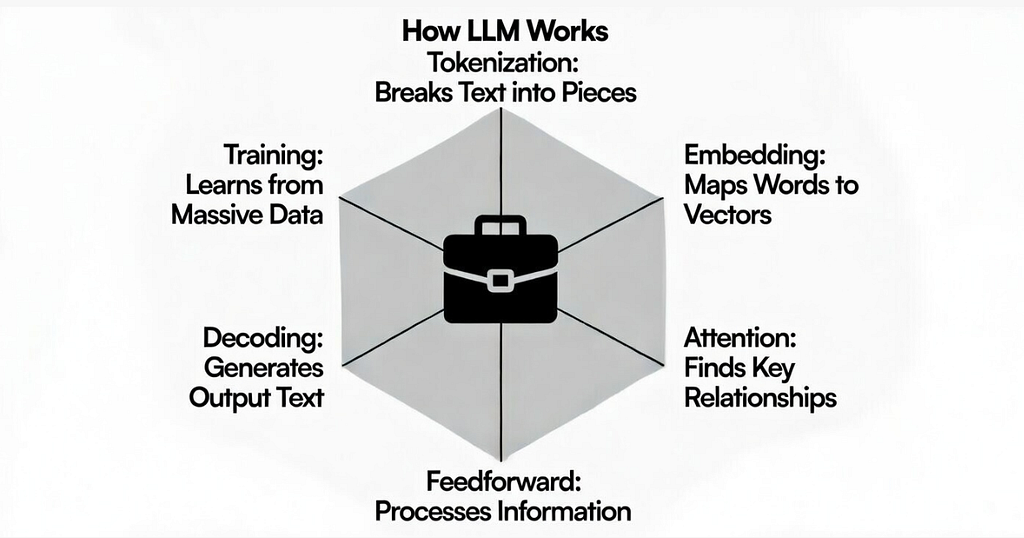
- How LLMs actually work under the hood
- How to build practical applications with tools like LangChain
- How to fine-tune models for specific use cases
- How to run LLMs locally for privacy and cost savings
- How to build AI agents that can automate complex workflows
After 6 months of intensive learning and building projects with these tools, here are the 5 courses that stood out from the crowd.
Before You Start: Do You Need ML Background?
Quick note: While some LLM courses assume you have machine learning or deep learning knowledge, others are designed for complete beginners.
If you’re new to ML, I’d recommend starting with Machine Learning A-Z: AI, Python & R + ChatGPT Prize [2026] by Kirill Eremenko. It gives you the foundational understanding that makes the LLM courses much easier to grasp.

That said, several of the courses I’m recommending are beginner-friendly and don’t require prior ML experience.
My Top 5 LLM Courses on Udemy (After Trying 20+)
Without any further ado, here are the 5 Udemy courses I recommend to anyone who wants to learn what is LLM, how they work and how to build, customize your own LLM in 2026
1. LLM Engineering: Master AI, Large Language Models & Agents
My Rating: 4.8/5 Instructor: Ed Donner What I Paid: $89.99 (currently on sale for much less) Time to Complete: ~15 hours of content, took me 3 weeks with projects
Why This Course Made #1 on My List
After trying multiple “comprehensive” LLM courses, this one by Ed Donner is the most well-rounded. What impressed me most was how it bridges theory and practice without getting lost in either extreme.
What You’ll Actually Learn:
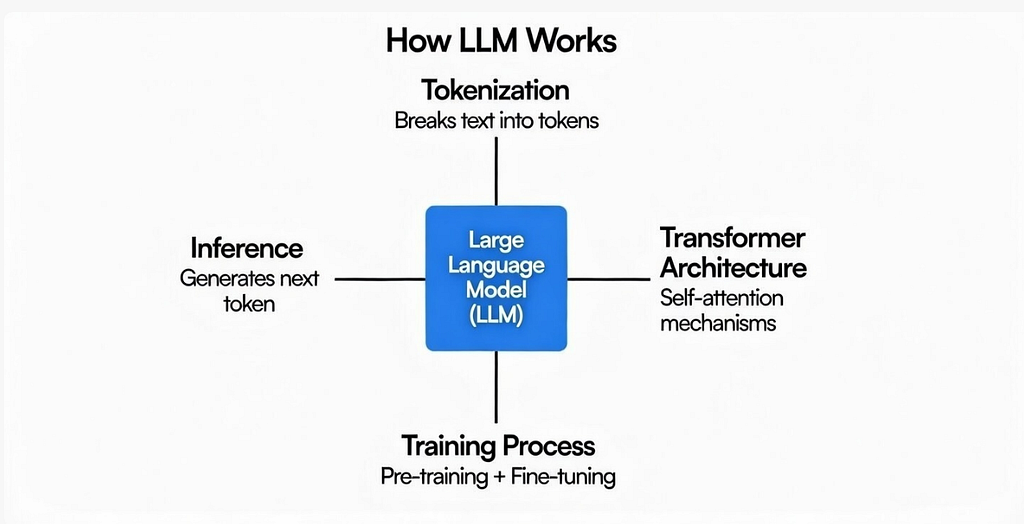
- The fundamentals of how LLMs work (transformers, attention mechanisms, tokenization)
- Hands-on experience with GPT, BERT, and other major architectures
- Fine-tuning pre-trained models using Hugging Face
- Building AI agents that can use tools and make decisions
- Practical deployment strategies for production applications
What I Built:
- A customer support chatbot that could access our company knowledge base
- A content generation tool that maintained consistent brand voice
- An AI agent that could research topics and compile reports
The Good:
- Ed’s teaching style is incredibly clear — — he breaks down complex concepts without dumbing them down
- The projects are actually useful (not just toy examples)
- Regular updates keep the content current with the fast-moving AI landscape
- Great balance of theory and hands-on coding
The Not-So-Good:
- Moves quickly — — might be challenging if you’re completely new to Python
- Some sections could use more practice exercises
Who Should Take This: If you only take ONE LLM course this year, make it this one. It’s comprehensive enough for beginners but deep enough for intermediate developers.
Here’s the link: LLM Engineering: Master AI, Large Language Models & Agents

2. LangChain- Develop LLM powered applications with LangChain
My Rating: 4.7/5 Instructor: Eden Marco (LLM Specialist) Time Investment: 12 hours of content, 2–3 weeks with practice
Why This Became My Go-To for LangChain
I tried 4 different LangChain courses before finding this one, and it’s hands-down the most practical and up-to-date. Eden Marco clearly uses LangChain in production, and it shows in how he structures the course.
What Makes This Course Different:
- Covers LangChain 0.3.0 (the latest version — — many courses are stuck on 0.1.x)
- Three complete end-to-end applications you’ll build
- Deep dive into chains, agents, document loaders, and memory management
- Real-world problem-solving approach (not just API demonstrations)
The Projects I Built:
- A RAG (Retrieval Augmented Generation) system for document Q&A
- An AI research assistant that could browse the web and synthesize information
- A multi-step workflow automation using agents and tools
What I Loved:
- Eden doesn’t just show you HOW to use LangChain — — he explains WHEN and WHY to use each component
- The course covers prompt engineering in depth (this alone was worth the price)
- Excellent coverage of LangChain’s memory systems
- Great debugging tips and common pitfalls
What Could Be Better:
- Assumes some familiarity with APIs and Python
- Could use more coverage of LangSmith for debugging
Perfect For: Developers who want to build production-ready LLM applications, not just proof-of-concepts.
Here’s the link: LangChain- Develop LLM powered applications with LangChain

3. Complete Generative AI Course With Langchain and Huggingface
My Rating: 4.6/5 Instructor: Krish Naik Time Commitment: 14 hours, took me about 3 weeks
Why This Course Is Great for Beginners
Krish Naik has a gift for making complex AI concepts accessible. I recommended this course to three friends who were new to AI, and all of them successfully completed it and built their first LLM applications.
What You’ll Learn:
- Comprehensive introduction to generative AI concepts
- Hugging Face ecosystem (Transformers, Datasets, Hub)
- Fine-tuning models for specific tasks (text classification, summarization, etc.)
- Building chatbots and content generation tools
- Deploying models using APIs and cloud platforms
My Favorite Parts:
- Krish’s teaching style is incredibly patient and thorough
- Great mix of Hugging Face and LangChain (two essential tools)
- Hands-on labs with real datasets
- Step-by-step deployment guidance
Real-World Application: Using skills from this course, I built:
- A sentiment analysis tool for customer reviews
- An automated content summarizer for our weekly reports
- A simple chatbot that could answer FAQs about our products
Minor Drawbacks:
- Sometimes moves a bit slowly (1.5x speed helped)
- Some sections feel like they’re covering two separate topics (Hugging Face vs. LangChain)
Ideal For: Complete beginners who want a gentle but comprehensive introduction to both Hugging Face and LangChain.
Here’s the link: Complete Generative AI Course With Langchain and Huggingface

4. Open-source LLMs: Uncensored & secure AI locally with RAG
My Rating: 4.7/5 Instructor: Arnold Oberleiter Time Required: 11 hours, 2–3 weeks with experimentation
The Game-Changer for Privacy-Conscious Developers
This course completely changed how I think about using LLMs. While everyone’s sending their data to OpenAI or Anthropic, Arnold shows you how to run powerful models locally, keeping your data completely private.
Why This Course Stands Out:
- Focuses on open-source models (Llama3, Mistral, Phi3, Qwen2)
- Running LLMs locally on your own hardware
- RAG (Retrieval Augmented Generation) with local vector databases
- Function calling without paid APIs
- Fine-tuning models with Google Colab (free!)
What I Built:
- A private “ChatGPT” that runs on my laptop
- A document Q&A system that never sends data to external APIs
- A local AI assistant with access to my company’s internal documents
The Breakthrough Moment: Learning about Groq’s LPU chip and how to use Ollama changed everything. I’m now running Llama-3–70B on my MacBook Pro, and it’s faster than I expected.
What I Loved:
- Privacy-first approach (perfect for sensitive business data)
- Covers the latest open-source models
- Great section on vector databases and embeddings
- No coding experience strictly required (though it helps)
The Challenges:
- You need decent hardware (at least 16GB RAM for smaller models)
- Some technical setup required
- Open-source models aren’t quite as capable as GPT-4 (yet)
Perfect For: Anyone concerned about data privacy, companies with sensitive information, or developers who want to avoid API costs.
Here’s the link: Open-source LLMs: Uncensored & secure AI locally with RAG

5. AI-Agents: Automation & Business with LangChain & LLM Apps
My Rating: 4.7/5 Instructor: Arnold Oberleiter Time Investment: 13 hours, 3–4 weeks with projects
The Future Is AI Agents (And This Course Teaches You How)
If there’s one trend I’m betting on for 2026, it’s AI agents. After taking this course, I automated so many repetitive tasks that I’m saving at least 10 hours per week.
What Makes This Course Essential:
- Comprehensive coverage of AI agent frameworks (AutoGen, LangChain, LangGraph, CrewAI, BabyAGI)
- Building agents that can use tools and make autonomous decisions
- Integration with both paid APIs and local models
- Business automation use cases (not just tech demos)
The AI Agents I Built:
- A content research agent that finds, analyzes, and summarizes industry news
- An email automation agent that drafts responses to common inquiries
- A lead research agent that gathers company information and contact details
- A local Microsoft Copilot alternative with vision capabilities
Why This Course Blew My Mind: I built an AI agent that can:
- Monitor industry news sources
- Identify relevant articles
- Summarize key points
- Draft LinkedIn posts about the news
- Save everything to my content calendar
All running automatically. No manual intervention.
What I Appreciated:
- Focus on practical business applications
- Coverage of multiple agent frameworks (helps you choose the right tool)
- Integration with Flowise for visual workflow building
- Works with both cloud APIs and local models
The Learning Curve:
- Agents can be unpredictable — — you need to learn prompt engineering
- Debugging multi-step agent workflows takes practice
- Some concepts build on previous courses
Best For: Developers and business professionals who want to automate complex workflows using AI agents.
Here’s the link: AI-Agents: Automation & Business with LangChain & LLM Apps

My Learning Path Recommendation
Based on trying 20+ courses, here’s how I’d recommend approaching LLM education in 2026:
For Complete Beginners:
- Start with Machine Learning A-Z to understand ML fundamentals
- Then take Complete Generative AI Course for a gentle introduction
- Move to LLM Engineering for comprehensive knowledge
For Intermediate Developers:
- Jump straight to LLM Engineering for the big picture
- Then specialize with LangChain Course
- Add AI Agents for advanced automation
For Privacy-Conscious Developers:
- Take Open-source LLMs first
- Then add LangChain Course for integration skills
Why Learning LLMs in 2026 Is a Career Game-Changer?
Let me be blunt: after trying 20+ courses and building dozens of LLM applications, I’m convinced that understanding Large Language Models is becoming as fundamental as knowing how to code.
Here’s what I’ve observed in the job market:
- AI Engineer roles have increased 300% in the past year
- Companies are desperate for developers who can actually build with LLMs (not just use ChatGPT)
- Salary premiums for LLM skills range from $20K-$50K above standard developer roles
- Freelance opportunities for AI automation are exploding
What I’ve Been Able to Do:
- Automated 60% of my routine work tasks
- Built internal tools that saved my company hundreds of hours
- Started a side consulting practice helping businesses integrate AI
- Increased my salary by 40% by switching to an AI-focused role
The revolution that ChatGPT started in 2023 is just getting started. The real winners will be the developers who know how to build practical applications, not just those who can prompt ChatGPT.
The Courses I Didn’t Recommend (And Why)
I want to be transparent about why these popular courses didn’t make my top 5:
“LLM Masterclass” courses (various instructors):
- Often superficial — — lots of ChatGPT API calls, not much depth
- Outdated quickly due to rapid changes in the field
- Too much focus on theory, not enough building
“Build 10 LLM Projects” courses:
- Projects were too similar to each other
- Lacked depth on any single topic
- More quantity than quality
“Zero to LLM Hero” style courses:
- Overpromised and underdelivered
- Assumed too much prior knowledge despite “beginner” label
- Poor code quality in examples
My Honest Tips After 6 Months of LLM Learning
- Don’t Just Watch — — Build
I made the mistake early on of completing courses without building my own projects. The learning didn’t stick until I started applying concepts to real problems.
2. Start With One Framework
Don’t try to learn LangChain, LlamaIndex, Haystack, and every other framework simultaneously. Master one (I recommend LangChain), then branch out.
3. Experiment With Local Models
Even if you plan to use paid APIs, understanding how to run models locally will make you a better LLM engineer. Plus, it’s fun!
4. Join the Community
The AI Discord servers and Reddit communities have been invaluable. Real-time help when you’re stuck is priceless.
5. Budget for API Costs
While learning, I spent about $50/month on OpenAI API credits. It’s worth it for experimentation, but be aware of the costs.
6. Keep a Project Journal
Document what you build and what you learn. I wish I’d done this from day one — — it would have saved me hours of re-learning.
The Bottom Line
After investing significant time and money testing over 20 LLM courses on Udemy, these 5 courses delivered the most value.
If you only take one course, start with LLM Engineering. It’s the foundation everything else builds on.
The AI revolution is here, and it’s moving fast. The developers who invest time learning LLMs now will have a massive advantage in the coming years.
Additional Learning Resources
If you want to go deeper, here are some resources I found helpful:
- 10 Best Udemy Courses to Learn AI in 2026
- 10 Free Data Science Courses for Beginners
- 5 Best Udemy Courses to Learn Computer Vision in 2026
- Top 5 Udemy Courses for Building AI ChatBots in 2026
- 7 Best Artificial Intelligence Courses for Beginners
- 10 Free Machine Learning Courses for Beginners
- Is Machine Learning Specialization by Andrew Ng worth it?
Happy Learning, and welcome to the AI revolution!
P.S. — — If you want to dive deeper into Deep Learning (which powers LLMs), check out Deep Learning A-Z 2026: Neural Networks, AI & ChatGPT Prize. Understanding neural networks at a deeper level will make you a much more effective LLM engineer.

I Tried 20+ LLM Courses on Udemy: Here are My Top 5 Recommendations for 2026 was originally published in Javarevisited on Medium, where people are continuing the conversation by highlighting and responding to this story.
This post first appeared on Read More