
These are the best AI Frameworks you can learn in 2026
The realization that changed my career: Building chatbots with ChatGPT’s API isn’t AI engineering.
I spent 3 months building simple LLM wrappers — question-answer bots that just sent prompts to GPT-4. I thought I was “doing AI.”
Then I interviewed at an AI startup. They asked: “Can you build autonomous agents that plan multi-step workflows, use tools, and coordinate with other agents?”
I couldn’t. I lost the opportunity. And I realized: I knew how to use AI. I didn’t know how to build AI systems.
That failure pushed me to learn real AI engineering. I tested 20+ frameworks — AutoGen, CrewAI, LangChain, LangGraph, Semantic Kernel, and more. I invested $400+ and 150+ hours building production agentic systems.
The transformation:
- Built 5 autonomous agent systems (job search automation, research assistant, code reviewer)
- Got hired as AI Engineer with 65% salary increase
- Now architect multi-agent systems serving enterprise clients
The difference: Going from “prompt engineer” to “AI systems engineer.”
In 2026, Agentic AI — systems where autonomous agents plan, reason, and coordinate — is becoming the standard. Companies don’t want chatbots. They want AI that takes action.
After testing 20+ frameworks, here are the 10 you need to know to build production agentic systems, with recommended courses for each.
Why Agentic AI Frameworks Matter in 2026?
The shift happening now:
Simple prompt → response interactions are becoming obsolete. The real value is in autonomous agents that:
- Plan multi-step solutions
- Use tools and APIs autonomously
- Coordinate with other agents
- Maintain memory and context
- Adapt strategies in real-time
Career reality:
AI Engineers who can only prompt: $80K-$120K AI Engineers who build agent systems: $150K-$250K+
The gap: Understanding frameworks that enable orchestration, tool integration, memory, and multi-agent coordination.
The 10 Essential AI Frameworks for 2026
Without any further ado, here are the top AI framework, particularly Agentic AI Frameworks you can learn in 2026:
1. CrewAI
Perfect for: Multi-agent team orchestration
Why it’s #1:
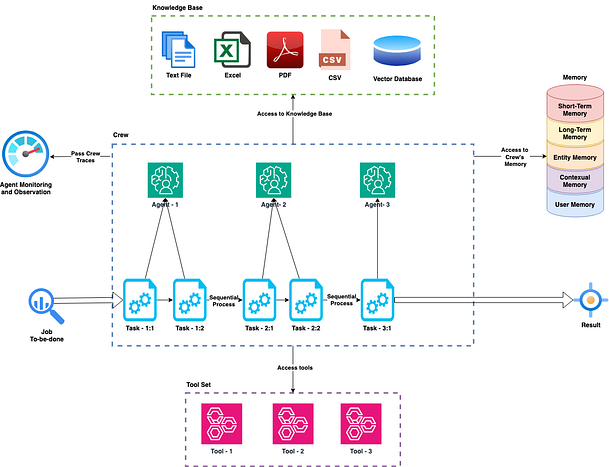
CrewAI makes building teams of specialized agents intuitive. Instead of one monolithic agent, you orchestrate multiple agents with specific roles working together.
What makes it powerful:
Team-Based Architecture:
- Define agent roles (researcher, writer, critic, coordinator)
- Agents work sequentially or in parallel
- Each agent has specialized capabilities
- Built-in task delegation
Real-World Use Cases:
- Content creation pipeline (research → outline → write → edit)
- Business automation (data gathering → analysis → reporting)
- Software development (planning → coding → testing → deployment)
Why it’s gaining traction:
Simpler than AutoGen for most use cases, more powerful than single-agent frameworks. The “crew” metaphor makes complex workflows intuitive.
My experience: Built a research assistant where 3 agents (searcher, analyzer, writer) produced comprehensive reports. What took me 8 hours manually now takes 20 minutes.
Learn it here: The Complete Agentic AI Engineering Course
2. LangGraph
Perfect for: Graph-based multi-agent workflows
Why it’s essential:
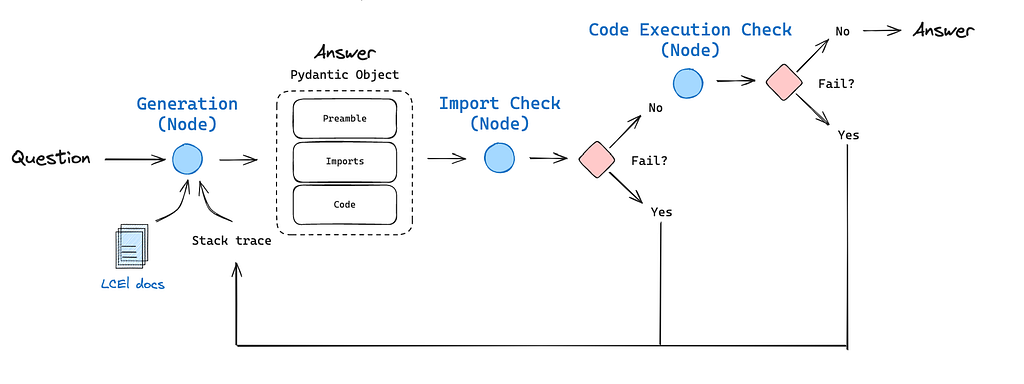
LangGraph lets you model complex agent workflows as graphs — perfect for systems where agents need conditional logic, loops, and complex state management.
Key capabilities:
Graph-Based Orchestration:
- Define agent interactions as nodes and edges
- Conditional routing between agents
- State persistence across interactions
- Loop and retry mechanisms
Advanced Features:
- Cycle detection in workflows
- Parallel execution paths
- Human-in-the-loop integration
- Checkpointing for long-running processes
When to use LangGraph:
- Complex workflows with branching logic
- Multi-step processes with dependencies
- Systems requiring state management
- Production systems needing reliability
Real application: I built a code review agent that routes issues to different specialized agents based on severity — critical bugs go to one path, style issues to another.
Why it matters: LangGraph builds on LangChain but adds autonomous decision-making. Agents don’t just follow scripts — they choose paths based on context.
Learn it here: LangGraph Mastery: Develop LLM Agents with LangGraph
3. AutoGen (Microsoft)
Perfect for: Enterprise-scale multi-agent systems
Why it’s powerful:
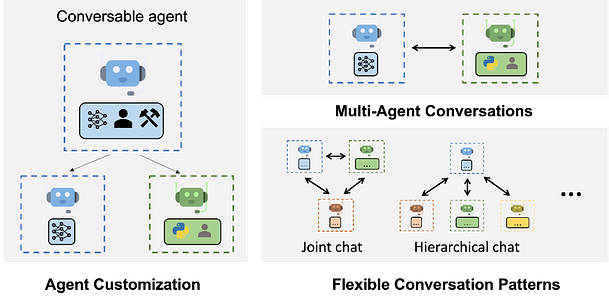
Microsoft’s production-ready framework for building scalable agent systems with sophisticated inter-agent communication.
Enterprise features:
Robust Architecture:
- Scalable multi-agent orchestration
- Advanced inter-agent communication protocols
- Built-in conversation patterns
- Production-grade error handling
Agent Types:
- AssistantAgent (LLM-powered)
- UserProxyAgent (human interaction)
- Custom agents with specific capabilities
Communication Patterns:
- Two-agent conversations
- Group chats with multiple agents
- Sequential workflows
- Reflection and critique loops
Why enterprises choose AutoGen:
Backed by Microsoft, designed for scale, extensive documentation, active community.
My use case: Built a customer support system with 5 specialized agents handling different query types. AutoGen’s group chat pattern made coordination seamless.
Learn it here: Building AI Agents & Agentic AI Systems via Microsoft AutoGen
4. LangChain
Perfect for: Tool-enabled LLM applications
Why it’s foundational:
LangChain pioneered the “chain” concept — connecting LLMs with tools, memory, and data sources. While newer frameworks specialize, LangChain remains essential.
Core capabilities:
Tool Integration:
- Connect LLMs to APIs, databases, search engines
- Custom tool creation
- Sequential and parallel tool use
- Error handling and retries
Memory Systems:
- Conversation memory
- Entity memory
- Vector store integration
- Long-term context management
Chains and Agents:
- Pre-built chains for common tasks
- Custom chain creation
- Agent executors with tool selection
- ReAct (Reasoning + Acting) pattern
Why it’s still relevant:
Most other frameworks build on top of LangChain. Understanding it gives you foundation for everything else.
Real impact: Used LangChain to connect a customer service bot to our CRM, knowledge base, and ticketing system. The bot now handles 60% of queries autonomously.
Learn it here: LangChain — Develop LLM Powered Applications with LangChain
5. Semantic Kernel (Microsoft)
Perfect for: Enterprise .NET/Python applications
Why it’s enterprise-ready:
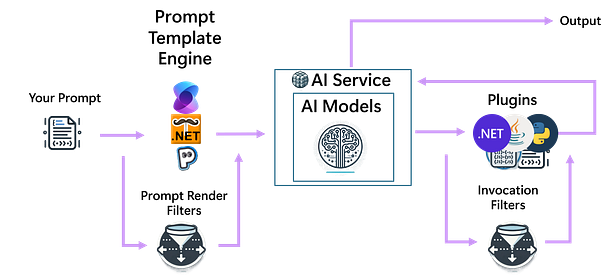
Microsoft’s tool-enabled LLM framework designed specifically for business applications. Integrates deeply with enterprise stacks.
Key strengths:
Enterprise Integration:
- .NET, Python, JavaScript support
- Function calling and semantic memory
- Planning and chaining mechanisms
- Azure integration out-of-the-box
Business-Focused:
- Structured workflows for enterprise processes
- Security and compliance built-in
- Scalable architecture
- Production monitoring
Planning Capabilities:
- Automatic workflow generation
- Goal decomposition
- Multi-step execution
- Dynamic replanning
Why choose Semantic Kernel:
If you’re building in enterprise environments, especially with Microsoft stack, this is your framework.
My observation: Companies using Azure heavily prefer Semantic Kernel for seamless integration with their existing infrastructure.
Learn it here: Mastering Semantic Kernel by Creating Projects
6. LlamaIndex
Perfect for: RAG and data-centric AI applications
Why it’s critical:
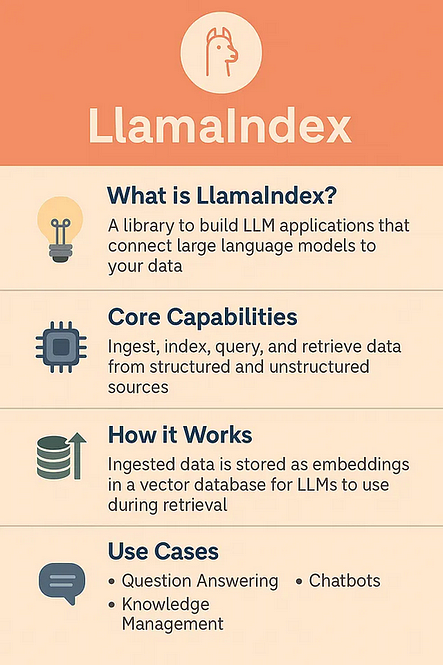
LlamaIndex specializes in connecting LLMs to your data — making it essential for applications that need to reason over private documents, databases, and knowledge bases.
Core capabilities:
Data Integration:
- Ingest documents, PDFs, databases, APIs
- Create searchable indexes
- Query optimization
- Semantic search
RAG (Retrieval-Augmented Generation):
- Reduce hallucinations
- Ground responses in your data
- Context-aware answers
- Citation and source tracking
Use Cases:
- Custom chatbots over company docs
- Search engines for private data
- AI agents accessing knowledge bases
- Question-answering systems
Why it matters:
LLMs don’t know your data. LlamaIndex bridges that gap. Every agent system that needs to access company information uses something like this.
My application: Built internal documentation assistant accessing 10,000+ pages. LlamaIndex made it possible to query our entire knowledge base accurately.
Learn it here: LlamaIndex Develop LLM Powered Apps (Legacy, V0.8.48)
7. Hugging Face Transformers Agents
Perfect for: Access to 100,000+ pre-trained models
Why it’s powerful:
Hugging Face provides the largest model hub — 100,000+ models for every AI task imaginable. Transformers Agents extends this into agentic workflows.
What you get:
Model Access:
- Text generation, classification, translation
- Image generation, recognition
- Audio processing
- Multi-modal models
Agentic Features:
- Tool-enabled agents using transformer models
- Complex workflow execution
- Model chaining
- Custom agent creation
Key advantage:
Instead of relying on OpenAI/Anthropic APIs, you can use open-source models — critical for privacy-sensitive applications or cost optimization.
Use cases:
- Running models on-premise
- Custom fine-tuned models
- Privacy-compliant AI systems
- Cost-effective at scale
My experience: Used Hugging Face models for a healthcare application where data couldn’t leave our servers. No way to do this with cloud APIs.
Learn it here: Learn Hugging Face Bootcamp

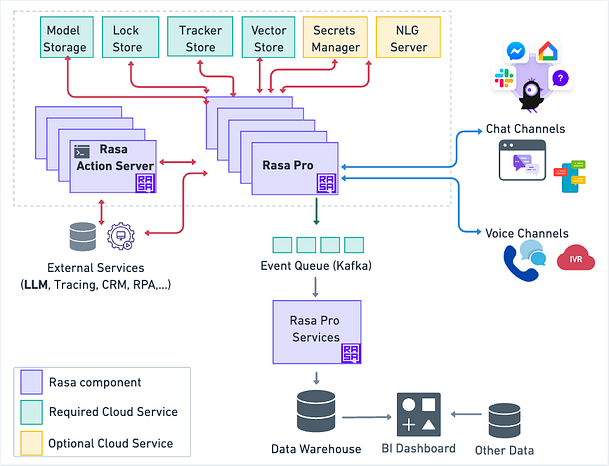
8. RASA
Perfect for: Enterprise conversational AI
Why it’s evolved:
RASA transformed from chatbot builder to full agentic conversational framework. It combines deterministic dialogue with LLM intelligence.
Hybrid approach:
Structured Dialogue:
- Consistent state management
- Predictable conversation flows
- Entity extraction and tracking
- Multi-turn conversations
LLM Integration:
- Dynamic responses when needed
- RAG for knowledge grounding
- Tool execution capabilities
- Contextual understanding
Enterprise features:
- Self-hosted (data stays internal)
- Customizable pipelines
- Multi-language support
- Integration with business systems
Why enterprises use RASA:
Control + Intelligence. Structured flows where needed, LLM flexibility where useful.
Use case: Customer service agents that maintain context across 20+ turn conversations while accessing multiple backend systems.
Learn it here: The Complete Course of Rasa Chatbot
9. Botpress
Perfect for: No-code/low-code agentic platforms
Why it’s accessible:
Botpress evolved into full agentic platform with visual workflow builder. Perfect for teams without heavy engineering resources.
Key features:
Visual Development:
- Drag-and-drop workflow creation
- No-code agent building
- Visual logic flows
- Easy integrations
Agentic Capabilities:
- Tool calling and API integration
- Multi-step workflow orchestration
- Vector store integration
- LLM-based decision making
Who uses Botpress:
- Non-technical teams
- Rapid prototyping
- Small businesses
- Agencies building for clients
The balance: Accessibility without sacrificing sophistication. Advanced features available when needed.
My observation: Companies use Botpress for MVP development, then migrate to code-based frameworks for scale if needed.

10. Atomic Agents
Perfect for: Decentralized multi-agent systems
Why it’s emerging:
Atomic Agents enables decentralized agent coordination — agents negotiate and coordinate without central authority.
Decentralized architecture:
Key concepts:
- Distributed agent networks
- Peer-to-peer communication
- Autonomous negotiation
- Scalable coordination
Use cases:
- Large-scale simulations
- Blockchain/Web3 applications
- Distributed computing
- Research collaborations
Why it matters:
As agent systems scale, centralized orchestration becomes bottleneck. Decentralized approaches enable massive scale.
Future-focused: Positioned for next generation of agent systems.
Learn it here: Build GenAI & Multi-Agent Systems Tools for Software Testing
How to Select AI Frameworks? Framework Selection Guide
For multi-agent orchestration:
- Simple teams: CrewAI
- Complex workflows: LangGraph
- Enterprise scale: AutoGen
For tool-enabled agents:
- Python/general: LangChain
- Enterprise/.NET: Semantic Kernel
For data-centric AI:
- Private data access: LlamaIndex
- Open-source models: Hugging Face
For conversational AI:
- Enterprise chatbots: RASA
- Rapid development: Botpress
For distributed systems:
- Decentralized coordination: Atomic Agents
Why This Matters in 2026
The AI shift:
Single-model interactions → Multi-agent orchestration Prompt engineering → Agent system architecture ChatGPT wrappers → Autonomous workflows
Career implications:
“I can use ChatGPT” isn’t a skill anymore. “I can architect multi-agent systems” is.
The opportunity: Most developers are still building simple LLM wrappers. Understanding these frameworks puts you years ahead.
The Bottom Line
After testing 20+ frameworks and building production agent systems, here’s my honest assessment:
Start with:
- CrewAI (via Complete Agentic AI) — Easiest entry
- LangChain — Foundation for everything
Then specialize:
- Advanced workflows: LangGraph
- Enterprise: AutoGen or Semantic Kernel
- Data access: LlamaIndex
Pro tip: Get Udemy Personal Plan ($30/month) if taking 3+ courses. Access to 11,000+ courses.

Don’t make my mistake: Don’t stay in “prompt engineer” territory. Learn to build agent systems.
The developers learning these frameworks now will be AI architects in 12–18 months. The gap is widening.
Start today. Your career trajectory depends on it.
All the best !!

I Tried 20+ AI Frameworks: Here are My Top 10 Recommendations for 2026 was originally published in Javarevisited on Medium, where people are continuing the conversation by highlighting and responding to this story.
This post first appeared on Read More