
Age verification has suddenly become the most heated topic in the Linux world and it’s not slowing down anytime soon.
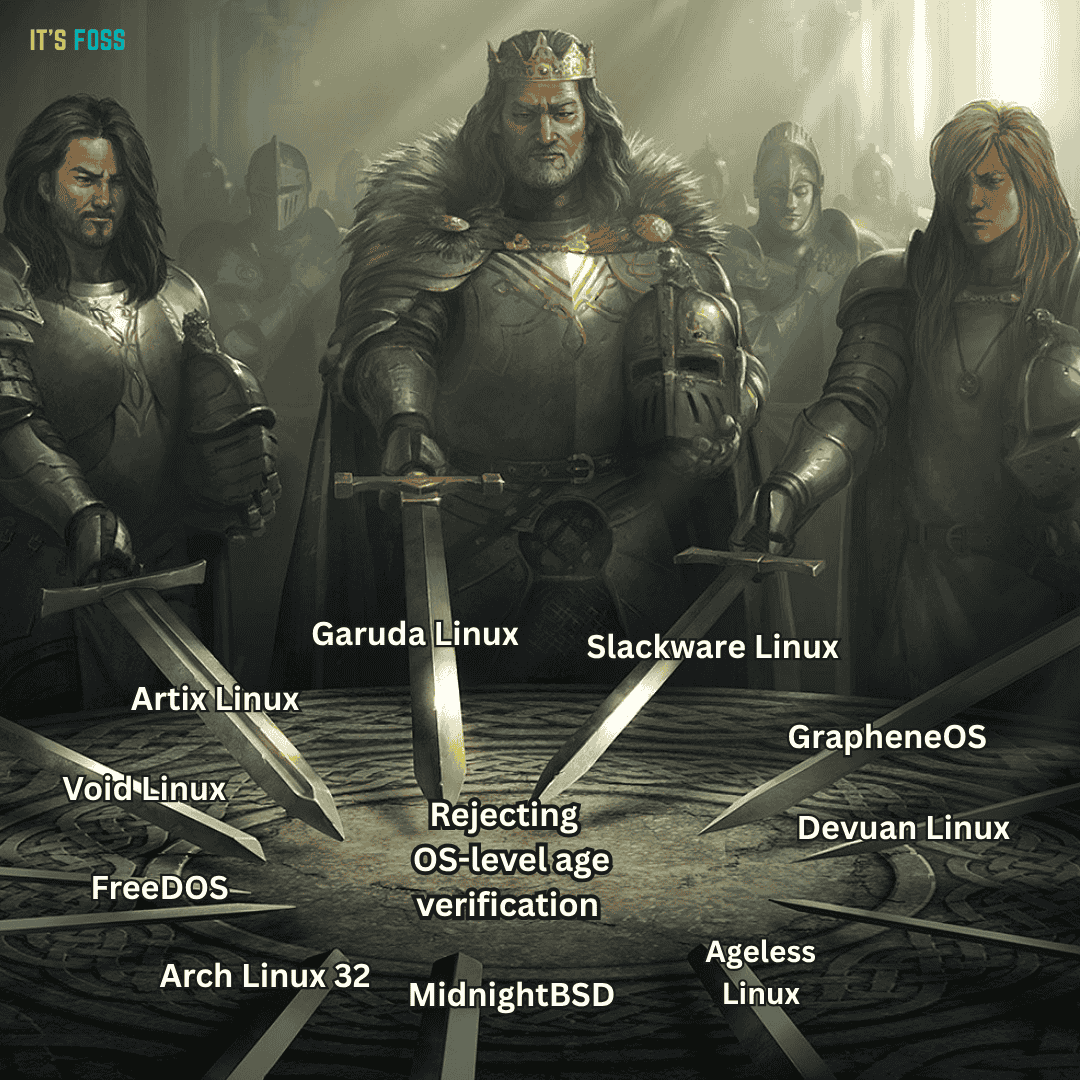
Distributions are already picking sides. Void and Garuda Linux have outright rejected the idea. The privacy-focused Android distro GrapheneOS isn’t entertaining it either. Meanwhile, Fedora is exploring whether an Apple-style API could be a compromise, though whether that satisfies anyone is another question.
Right in the middle of this, systemd introduced an optional birthDate field in its user records. On paper, it’s just metadata. In practice, it could become the foundation for age verification across Linux systemd and that’s exactly why it has triggered such a strong reaction.
What makes this situation more intense is the human side of it.
The developer behind the change has found himself at the center of the backlash. In our exclusive interview, he talks about the intent, the misunderstandings, and what it feels like to suddenly become the focus of one of the community’s most divisive debates.
And, in true open source fashion, the forks have already begun.
A new project, Liberated systemd, removes the birthDate field entirely. It’s currently more of a statement than a solution, a protest fork rather than something you’d realistically deploy but it shows just how strongly people feel about this direction.
This isn’t just another technical discussion. It’s about where Linux draws the line between compliance, privacy, and control.
And right now, that line is being tested.
Here are other highlights of this edition of FOSS Weekly:
- LibreOffice donation banner change.
- Germany backing the Open Document Format.
- Open source tools for improving docker workflow.
- Yazi file manager in action.
- A new crossword.
- And other Linux news, tips, and, of course, memes!
📰 Linux and Open Source News
LibreOffice is adding a donation banner to its Start Center in the upcoming 26.8 release. It will sit at the bottom of the screen, showing a short message and an image, and the plan is to display it after each update or once a month.
Germany’s new Deutschland-Stack, the country’s sovereign digital infrastructure framework, has named ODF and PDF/UA as the only permitted document formats for public administrations at every level, federal, state, and municipal.
Canonical has joined the Rust Foundation as a Gold Member, backing the organization with $150,000 a year. Given that Ubuntu 25.10 already shipped with Rust rewrites of sudo and Coreutils, the move formalizes what was already a clear strategic direction.
The Thunderbird team has launched public roadmaps covering Desktop, Mobile, and Services, all written in non-technical language and organized around goals rather than bug lists.
🧠 What We’re Thinking About
Two versions of the LiteLLM Python package, 1.82.7 and 1.82.8, were briefly live on PyPI before being pulled after researchers found a backdoor planted by the hacker group TeamPCP. The payload harvests SSH keys, cloud credentials, Kubernetes secrets, and environment files.
This is another instance where supply chain attacks targeted open source projects.
YOUR support keeps us going, keeps us resisting the established media and big tech, keeps us independent. And it costs less than a McDonald’s Happy Meal a month.
Support us via Plus membership and additionally, you:
✅ Get 5 FREE eBooks on Linux, Docker and Bash
✅ Enjoy an ad-free reading experience
✅ Flaunt badges in the comment section and forum
✅ Help creation of educational Linux materials for everyone
🧮 Linux Tips, Tutorials, and Learnings
If you’ve ever hit a full root partition while home sits half empty and wished Linux could just borrow space from where it’s available, Btrfs subvolumes are the answer. Unlike fixed partitions, subvolumes share a single storage pool and draw from the same free space as needed.
If you’ve been meaning to try a shell that doesn’t require hours of dotfile tweaking before it feels usable, Fish is worth a look. Syntax errors are highlighted in red as you type, commands autocomplete from history, and tab completion pulls descriptions straight from man pages.
I ran into an issue related to appimage and shared my experience in this troubleshooter.
If you use Docker heavily, these open source tools can help your container workflow.
📚 eBook bundle on AI
Inside this 20+ eBook library (partner link), you’ll gain expert insights from practical lessons like RAG-Driven Generative AI and the LLM Engineer’s Handbook.
Your purchase supports the World Central Kitchen organization.
👷 AI, Homelab and Hardware Corner
CZ.NIC has launched the Turris Omnia NG Wired, a fanless rack-mountable router running OpenWrt. This is an expansive device and it has come at a time when non-US made routers are being banned in the United States.
✨ Apps and Projects Highlights
Vykar is a new open source backup tool from the BorgBase team that does encrypted, deduplicated backups configured through a single YAML file.
📽️ Videos for You
It’s not every day you find a terminal tool that even non power users can enjoy. In this video, I showcase a terminal-based file manager that makes file navigation and search surprisingly fast.
💡 Quick Handy Tip
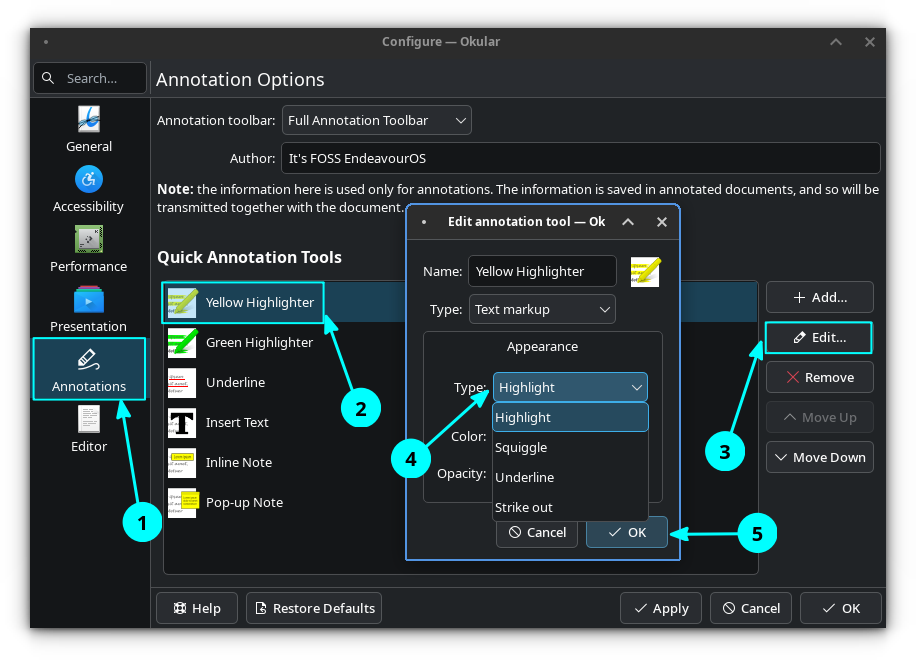
In Okular, you can change the highlighting style. Go to Settings -> Configure Okular. Here, in the “Annotations” tab, select the highlighter you want to tweak.
Now, click on the Edit button on the right, and under “Styles,” change the highlighter’s name, type, color, and opacity.
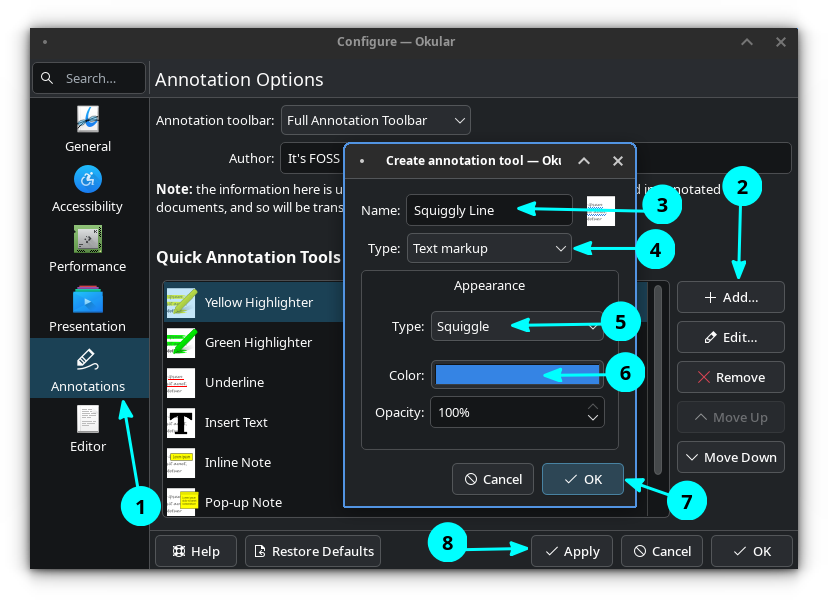
You can also use the Add button to create a new highlight style. Give it a name, configure its appearance and then click on Ok and Apply to set it.
🎋 Fun in the FOSSverse
A new crossword after ages; this one will test your knowledge of systemd ctl commands.
Meme of the Week: Brave heroes!🗿
🗓️ Tech Trivia: On March 28, 1986, computers made their debut in the fight against AIDS. A team at Roche Laboratories published a groundbreaking paper in Science magazine laying out the theoretical basis for the HIV protease molecule, one of the first times computational methods were used to study the virus.
🧑🤝🧑 From the Community: One of our FOSSers has started a thread on privacy-focused content creators worth following. If you have any suggestions, be sure to add them!

This article first appeared on Read More