
Is Google’s Cyber Security Certificate on Coursera Really Worth it?
Hello guys, if breaking into cybersecurity is on your radar for 2026, here’s some genuinely good news. Google has refreshed its widely popular Google Cybersecurity Professional Certificate to reflect where the industry is heading — including how AI is being used both by defenders and attackers. The updated curriculum is sharper, more practical, and more relevant to what employers are actually hiring for right now.
Cybersecurity was already one of the fastest-growing fields in tech. In 2026, with AI-powered threats becoming the norm and global regulatory pressure intensifying, the demand for skilled security professionals has gone up another notch. Companies are struggling to fill roles — and that gap represents a real opportunity for anyone willing to build the right skills.
This 8-course series, taught by industry experts at Google, covers everything from foundational security concepts to hands-on work with SIEM tools, Linux, Python automation, and incident response. It’s designed for people with no prior experience or degree in cybersecurity — and that’s not just marketing language. The program genuinely builds from the ground up.
In this review, we’ll walk through what you’ll actually learn, break down each of the eight courses, and give you a clear picture of whether this certificate is worth your time and money in 2026.
Worth noting: This is part of Google’s broader push into professional certification. It joins the Google Advanced Data Analytics Professional Certificate and Google Business Intelligence Professional Certificate as evidence that Google is serious about making career-relevant education accessible.
What Skills Will You Learn?
The Google Cybersecurity Professional Certificate teaches you how to protect networks, devices, people, and data from unauthorized access and cyberattacks. The curriculum spans threat identification, risk management, SIEM tooling, network security, and real-world incident response.
The program includes 170+ hours of instruction, hundreds of practice-based assessments, and portfolio-ready projects that simulate actual workplace scenarios — the kind of thing you can point to in a job interview.
Beyond security-specific knowledge, you’ll also develop proficiency in tools and languages that appear in virtually every cybersecurity job description:
- Python for automation and scripting
- Linux and the Bash command line
- SQL for database querying
- Intrusion Detection Systems (IDS)
- Security Information and Event Management (SIEM) platforms

Course-by-Course Breakdown
Here’s what you’ll work through across all eight courses in the program.
1. Foundations of Cybersecurity
The program opens with a well-constructed introduction to the cybersecurity landscape. Rather than dumping terminology at you, this course gives you context — why cybersecurity matters, how the field evolved in response to real attacks, and what an entry-level analyst actually does day to day.
Key things you’ll learn:
- How security attacks impact business operations
- Core responsibilities and skills of an entry-level cybersecurity analyst
- How past and present attacks shaped the development of the field
- The CISSP eight security domains
- Security frameworks, controls, and ethics
- Common tools used by cybersecurity analysts
With over 56,000 learners already enrolled, this is one of the most popular entry points into cybersecurity on Coursera. You can audit it for free, though you’ll need the full certificate enrollment or a Coursera Plus membership to earn a certificate.
Join here: Foundations of Cybersecurity
2. Play It Safe: Manage Security Risks
This course builds directly on course one, shifting focus from awareness to action. You’ll take a closer look at how cybersecurity professionals use established frameworks and controls to protect business operations — and how to think systematically about risk rather than reacting to threats one at a time.
You’ll work through risk management methodologies, learn to identify common threats and vulnerabilities, and understand how organizations structure their defenses. It’s a crucial bridge between theory and practice.
Join here: Play It Safe: Manage Security Risks
3. Connect and Protect: Networks and Network Security
You can’t defend what you don’t understand. This course gives you the network fundamentals that every security professional needs — how data moves, how systems communicate, and where attackers typically find their way in.
Key things you’ll learn:
- Structure and architecture of different computer networks
- How data is sent and received across networks
- Common network protocols and their security implications
- How to secure a network against intrusion tactics
- The differences between local networks and cloud environments
- System hardening techniques to reduce attack surface
Join here: Connect and Protect: Networks and Network Security

4. Tools of the Trade: Linux and SQL
This is where the program gets hands-on with the technical tools you’ll use in a real security role. Linux is the operating system that powers most of the infrastructure security professionals work with, and SQL is essential for querying logs, databases, and security event data.
By the end of this course, you’ll be able to:
- Explain the relationship between operating systems, applications, and hardware
- Navigate and manage file systems using Linux commands via the Bash shell
- Authenticate and authorize users through Linux command-line tools
- Understand how relational databases are organized
- Use SQL to retrieve and filter data from databases
- Apply joins to combine data across multiple tables
Join here: Tools of the Trade: Linux and SQL
5. Assets, Threats, and Vulnerabilities
Understanding how to classify and protect assets is core to any security role. This course walks through the full picture — what organizations are protecting, what threatens those assets, and how vulnerabilities get exploited. Crucially, it also teaches you to think like an attacker, which is how good defenders stay ahead.
Key things you’ll learn:
- Effective data handling and classification processes
- How encryption and hashing protect sensitive assets
- Authentication and authorization mechanisms
- How MITRE identifies and tracks common vulnerability exposures
- Analyzing attack surfaces to uncover risks
- Recognizing threat types: social engineering, malware, and web-based exploits
You’ll also work through threat modeling — a structured process for anticipating how attacks might unfold before they happen.
Join here: Assets, Threats, and Vulnerabilities

6. Sound the Alarm: Detection and Response
When something goes wrong — and in security, it will — your ability to detect it quickly and respond effectively is what limits the damage. This course is entirely focused on incident detection and response, which is the day-to-day work of a SOC analyst.
Key things you’ll learn:
- The full lifecycle of a security incident
- Tools used in documentation, detection, and incident management
- How to analyze network packets to identify anomalies
- Artifact investigation and verification techniques
- Containment, eradication, and recovery procedures
- How to read and analyze security logs
- Signature and log interpretation in IDS and NIDS tools
- SIEM query techniques for investigating security events
By the end of this course, you’ll have practical experience with both IDS and SIEM platforms — two tools that appear in virtually every cybersecurity analyst job description.
Join here: Sound the Alarm: Detection and Response

7. Automate Cybersecurity Tasks with Python
Automation has become a core skill for cybersecurity professionals. Manual processes don’t scale — and in a field where speed matters, being able to write Python scripts to automate repetitive security tasks is a genuine competitive advantage. This course introduces you to Python in a security context, starting from the basics and building toward real applications.
What you’ll learn:
- How Python is used in cybersecurity workflows
- Writing conditional and iterative statements
- Building reusable Python functions
- Working with strings, lists, and regular expressions
- Opening, reading, and parsing files with Python
- Writing clean, readable code — and debugging when things go wrong
Join here: Automate Cybersecurity Tasks with Python

8. Put It to Work: Prepare for Cybersecurity Jobs
The final course is the one that turns everything you’ve learned into a job search strategy. It’s more practical than it might sound — covering how to escalate incidents, communicate with stakeholders, operate ethically as a security professional, and navigate the job market effectively.
You’ll also write a resume and cover letter, practice for interviews, and learn how to engage with the broader cybersecurity community — including how to keep your skills current in a field that moves fast.
This is the course that bridges your new credentials with an actual job offer.
Join here: Put It to Work: Prepare for Cybersecurity Jobs

3 Strong Reasons to Join This Certificate in 2026
1. Employer Recognition That Actually Opens Doors
The Google Cybersecurity Professional Certificate isn’t just a credential for your LinkedIn profile — it’s recognized by a network of over 150 U.S. employers actively hiring for cybersecurity roles. That list includes American Express, Deloitte, Colgate-Palmolive, Mandiant (now part of Google Cloud), T-Mobile, and Walmart. Graduates can apply directly to these companies, which is a meaningful advantage in a competitive market.
2. Dual Credential: Google Certificate + CompTIA Security+ Prep
Completing this program also prepares you for the CompTIA Security+ exam — one of the most widely respected certifications in the industry. Walking into the job market with both credentials significantly strengthens your candidacy and demonstrates real depth of knowledge to employers.

3. Accessible Cost and Timeline
At roughly $39/month and completable in under six months with fewer than 10 hours per week, this is one of the most accessible routes into a high-paying technical career available today. No degree, no prior experience required — just the commitment to work through the material.
If you’re planning to take multiple Coursera programs, a Coursera Plus subscription at around $399/year gives you unlimited access to 7,000+ courses, specializations, and professional certificates — making it a smart investment if this isn’t the only credential on your roadmap.
What Learners Are Saying
The real-world feedback on this program is consistently positive. Here’s a sample of what past learners have shared:
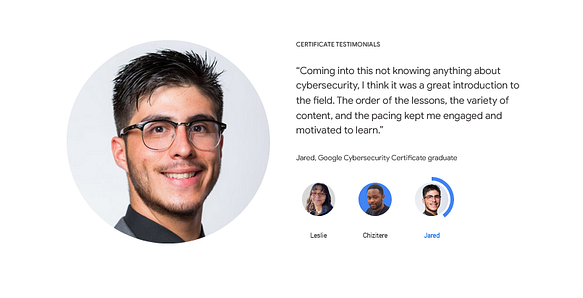
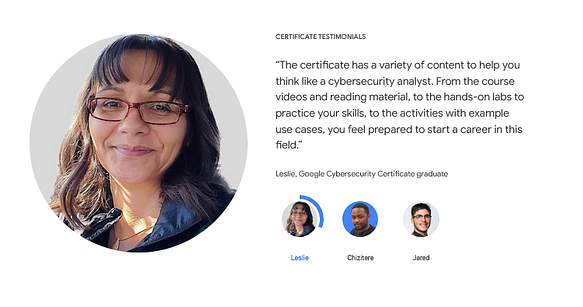
You can read more learner reviews directly here.
Final Verdict: Is It Worth It in 2026?
Yes — and the case for it is stronger now than it’s ever been.
The Google Cybersecurity Professional Certificate delivers professional-grade training from one of the world’s leading technology companies, at a price and time commitment that’s realistic for working adults.
The curriculum is practical, the portfolio projects are employer-ready, and the dual credential pathway with CompTIA Security+ gives you a meaningful edge in the job market.
Cybersecurity roles aren’t going away — they’re multiplying. If you want to position yourself for a career in one of tech’s most in-demand and recession-resistant fields, this certificate is one of the best places to start.

If you’re planning to take multiple Coursera courses or certifications, a Coursera Plus subscription at around $59/month gives you unlimited access to over 7,000 courses and projects — well worth it if you’re serious about building your skills systematically.

I Tried Google’s Cyber Security Certificate on Coursera? Is It Really Worth It? was originally published in Javarevisited on Medium, where people are continuing the conversation by highlighting and responding to this story.
This post first appeared on Read More