

I Tried 20+ Object Oriented Programming and Design Pattern Courses: Here Are My Top 10…
I Tried 20+ Object Oriented Programming and Design Pattern Courses: Here Are My Top 10 Recommendations for 2026
My favorite object oriented programming courses for developers

Hello friends, I spent the last several months systematically testing and reviewing over 30+ Object-Oriented Programming and Design Pattern courses across every major platform — — Udemy, Coursera, Educative, and more.
I built real projects, analyzed course structures, and evaluated instructor quality to cut through the noise.
Most OOP courses either stay too abstract without practical application, or rush through design patterns without explaining why they exist. But a handful? They’re genuinely exceptional.
Here are my top 10 picks that actually deliver real, production-ready OOP and design pattern skills in 2026.
Why Learn OOP Design Patterns in 2026?
Design patterns are tried-and-tested solutions to common programming problems. They’ve existed for decades but were made famous by the Gang of Four — — Erich Gamma, John Vlissides, Ralph Johnson, and Richard Helm — — in their landmark 1994 book, Design Patterns: Elements of Reusable Object-Oriented Software.
That book documented 24 design patterns that are reusable across virtually every software problem domain.
Originally written with C++ and Smalltalk examples, design patterns have since been adopted by almost every major programming language — — Java, C#, PHP, Python, JavaScript, and beyond.
Why they still matter in 2026:
- You’re already using them daily, whether you know it or not — — JDK itself uses Decorator in IO classes, Strategy alongside Comparable and Comparator, and more
- Knowledge of OOP design principles and GOF patterns is essential for writing cleaner, more maintainable code
- They’re a standard interview topic for experienced developer roles at top companies
- They give you a shared vocabulary to communicate design decisions clearly with your team
If you want to write code that lasts in production, understanding design patterns is non-negotiable.
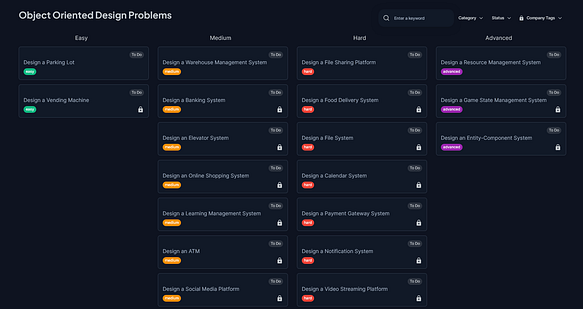
Preparing for OOP design interviews? Before diving into courses, I highly recommend checking out Codemia.io — — an interactive platform where you can practice OOP analysis and design problems like designing a Parking Lot or Vending Machine, similar to how LeetCode works for algorithms.
Top 10 Courses to Learn OOP Design Patterns in 2026
Without any further ado, here are the top courses you can join to learn Object Oriented programming and design patterns in 2026
1. Design Patterns by Kenny Wong — — Coursera
Best for: Intermediate and experienced developers who want university-grade depth
Offered by the University of Alberta and delivered by Kenny Wong, this is one of the most rigorous design patterns courses available anywhere. It goes well beyond listing patterns — — it teaches you how to extend object-oriented analysis and design by incorporating patterns to create robust, extensible applications.
This course is part of the Software Design and Architecture Specialization on Coursera — — a full curriculum covering software architecture and design from first principles.
What you’ll learn:
- When and how to apply established design patterns to solve common problems
- How to identify problematic software designs using a catalog of code smells
- Pattern application in Java and other OOP languages like JavaScript, C++, and Python
What sets it apart: The Capstone Project stands out — — you’ll redesign an existing Java-based Android application to implement a combination of design patterns, and examine a real Java codebase for code smell. That kind of applied, end-to-end experience is rare in online courses.
Here is the link to join this course — — Design Patterns on Coursera

Pro tip: Instead of joining Coursera courses individually, consider Coursera Plus — — a subscription giving you unlimited access to 10,000+ courses, specializations, and professional certificates.
2. Grokking the Object-Oriented Design Interview — — Educative
Best for: Engineers preparing for FAANG-level OOP design interviews
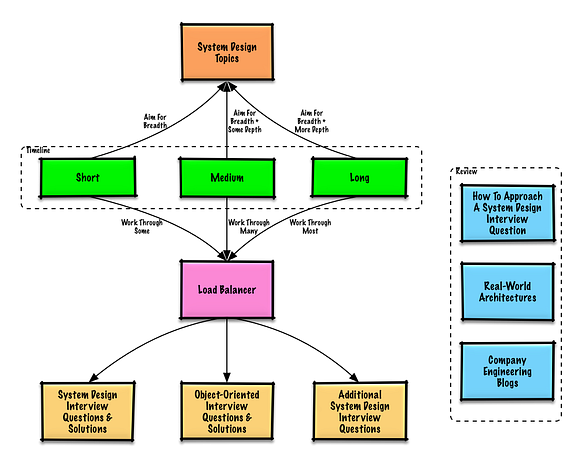
While not strictly a design patterns course, this is arguably the most important course on this list if you’re heading into interviews. Object-oriented design has always been a critical part of the software engineering interview process — — and most engineers struggle with it precisely because of how open-ended the problems are.
Designed by hiring managers from Google, Facebook, Microsoft, and Amazon, this course provides a thorough framework for handling OOP design scenarios under real interview conditions.
What you’ll learn:
- How to approach open-ended OOP design problems systematically
- A carefully curated set of case studies repeatedly asked at top tech companies
- How to handle ambiguity, tradeoffs, and design decisions in real time
What sets it apart: This isn’t a lecture course — — it’s a structured preparation system built by the people who actually run these interviews. The case studies are drawn directly from real interview questions at FAANG companies.
Here is the link to join this course — — Grokking the Object-Oriented Design Interview
3. Software Design Patterns: Best Practices for Software Developers — — Educative
Best for: Hands-on learners who want to write and run pattern code directly in the browser
This is an interactive coding course on Educative — — which means you don’t just read about design patterns, you implement them live in your browser without any local setup. That alone makes it uniquely accessible.
The course covers all three major categories: creational patterns, structural patterns, and behavioral patterns. For each one, you can experiment with the code immediately, see how it works, and understand the difference it makes.
What you’ll learn:
- All three types of GOF patterns with runnable code examples
- How each pattern changes the structure and maintainability of real code
- Pattern implementation from the ground up, not just theory
What sets it apart: The ability to run code directly in the browser removes every friction point between reading about a pattern and actually understanding it. No IDE setup, no configuration — — just immediate feedback.
Here is the link to join this course — — Software Design Patterns: Best Practices for Software Developers

If you find Educative’s interactive format valuable, an Educative Subscription gives access to 210+ courses for around $14.99/month — — excellent value for the hands-on learning experience.
Educative Unlimited: Excel with AI-Powered Learning
4. Design Patterns in Java — — Udemy
Best for: Java developers who want all 24 GOF patterns plus SOLID principles in one course
This is one of the most complete design pattern courses available on Udemy. It covers not just the full set of GOF patterns — — Command, Decorator, Adapter, Strategy, Proxy, Chain of Responsibility, Interpreter, and more — — but also the SOLID design principles that form the conceptual foundation underneath them.
The course is genuinely hands-on. The instructor demonstrates each pattern live in IntelliJ IDEA, and most demos are single-file, meaning you can download the lesson file and run it immediately in any IDE of your choice.
What you’ll learn:
- All 24 GOF design patterns with live implementation demonstrations
- SOLID principles and how they relate to pattern design
- Real-world examples for each pattern — — not contrived toy problems
Here is the link to join this course — — Design Patterns in Java

5. Java Design Patterns — — The Complete Masterclass — — Udemy
Best for: Experienced Java developers who want real-world, relatable pattern examples
Created by Paulo Dichone — — also known for his bestselling Java Masterclass — — this course tackles GOF design patterns with some of the most relevant, real-world examples I’ve seen in any design pattern course.
The Strategy pattern example alone is worth the price: Paulo uses it to design a Payment processing engine, which makes immediate intuitive sense. You need to process payments via Cash, Credit Card, Coupons, Bitcoin — — that’s exactly the kind of scenario Strategy was built for. Examples like this make the difference between patterns feeling academic and patterns feeling essential.
What you’ll learn:
- GOF design patterns including Visitor, Adapter, Decorator, Strategy, and more
- How to identify real-world scenarios where each pattern applies
- Practical implementation in Java with clean, readable examples
Here is the link to join this course — — Java Design Patterns — — The Complete Masterclass

6. Object-Oriented Design Problems at Codemia.io
Best for: Engineers who want hands-on practice with real OOP design problems
There’s a growing trend in technical interviews toward detailed object-oriented design questions — — design a Vending Machine, design a Parking Lot, design a Library Management System. These problems are notoriously difficult if you haven’t practiced them, and reading theory alone doesn’t prepare you.
Codemia.io fills this gap with an interactive, LeetCode-style platform for OOP and system design problems. You get the problem, you work through a solution, and you can reference ideal approaches to understand where your thinking diverged.
What you’ll learn:
- How to approach open-ended OOP design problems under interview conditions
- Common OOAD patterns in the context of real-world system design
- Practice across a wide variety of problems that actually appear in interviews
Here is the link to join — — Object-Oriented Design Problems at Codemia.io

7. From 0 to 1: Design Patterns — — 24 That Matter — — In Java — — Udemy
Best for: Beginners who want a thorough, accessible walkthrough of all 24 GOF patterns
This is a comprehensive course covering all 24 object-oriented design patterns from the GOF book, taught by instructors with real-world experience at Google and investment banks. That background shows — — they understand that design patterns aren’t intuitively obvious at first glance, and they invest real effort in breaking concepts down accessibly.
Like the best courses on this list, it pairs pattern instruction with OOP design principles, giving you the full picture rather than just a pattern catalog.
What you’ll learn:
- All 24 GOF patterns explained clearly from first principles
- OOP design principles as the conceptual foundation
- How to identify which pattern solves which problem in your own code
Here is the link to join this course — — From 0 to 1: Design Patterns — — 24 That Matter — — In Java

8. Experience Design Patterns In Java — — Udemy
Best for: Developers who want to understand both the advantages and trade-offs of each pattern
This course covers 20+ design patterns from the GOF book with a focus on genuine understanding, not just memorization. For each pattern, the course presents a clear problem the pattern solves, explains its advantages, and honestly discusses its disadvantages — — which is something many courses skip entirely.
The detailed Java lessons make each pattern concrete, and by the end you’ll have the ability to identify problems in existing code, select the appropriate pattern, and implement a cleaner solution.
What you’ll learn:
- 20+ GOF design patterns with clear problem-solution framing
- The advantages and disadvantages of each pattern — — not just the mechanics
- How to identify patterns you can apply to improve existing codebases
Here is the link to join this course — — Experience Design Patterns In Java

9. Basics of Software Architecture & Design Patterns in Java — — Udemy
Best for: Developers who want SOLID principles and design patterns taught together as a unified system
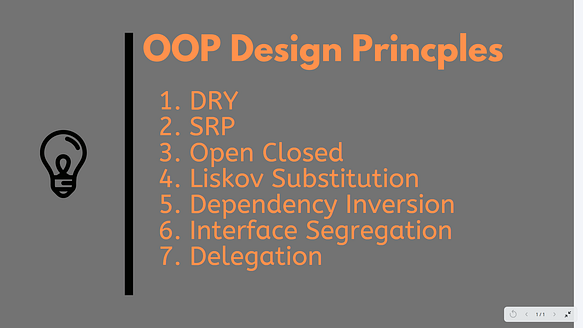
This course is structured in two deliberate halves. The first covers SOLID design principles — — Single Responsibility, Open-Closed, Liskov Substitution, and more — — with clear explanations of how each one helps you write better code. The second half covers design patterns, showing how patterns emerge naturally from those principles.
That structure matters. Understanding why patterns exist — — the principles they’re built on — — is what allows you to apply them correctly rather than cargo-culting solutions into problems they don’t fit.
What you’ll learn:
- SOLID principles and their practical impact on code quality
- How design principles lead naturally to design patterns
- How to identify which pattern applies to a given problem
Here is the link to join this course — — Basics of Software Architecture & Design Patterns in Java
10. Java Design Patterns and Architecture — — Udemy (Free)
Best for: Beginners who want a completely free starting point before committing to a paid course
If you’re new to design patterns and not yet ready to invest in a paid course, this free Udemy course is the best place to start. It covers the fundamentals of Java design patterns and architecture at no cost — — you just need a Udemy account to enroll.
It won’t take you as deep as the paid options on this list, but it gives you a solid conceptual grounding and helps you understand whether design pattern study is the right next step for your career.
What you’ll learn:
- Core Java design patterns explained clearly for beginners
- Foundational software architecture concepts
- Enough context to know which more advanced course to take next
Here is the link to join this free course — — Java Design Patterns and Architecture
The Learning Path I Recommend
If you’re a complete beginner:
1. Start with the free Java Design Patterns and Architecture course to build your foundation
2. Then take From 0 to 1: Design Patterns for comprehensive GOF coverage
3. Finish with Codemia.io to practice applying your knowledge to real problems
If you’re intermediate and targeting interviews:
1. Take Design Patterns by Kenny Wong on Coursera for rigorous conceptual depth
2. Work through Grokking the Object-Oriented Design Interview on Educative for interview-specific preparation
3. Practice daily on Codemia.io to sharpen your execution speed
If you’re experienced and want to level up your code quality:
1. Take Basics of Software Architecture & Design Patterns to understand the principles behind the patterns
2. Follow with Java Design Patterns: The Complete Masterclass for real-world application examples
3. Use the Educative interactive course to experiment with implementations hands-on
Final Thoughts
That’s all about the 10 best courses to learn Object-Oriented Programming and Design Patterns in 2026. These courses are a genuine investment in writing better, more maintainable code — — code that communicates intent clearly, handles change gracefully, and stands up in production.
After completing these courses, you’ll know what each pattern means, when to use it, and how to communicate design decisions confidently to your team. That combination is rare, valuable, and directly relevant to both day-to-day engineering and technical interviews.
Happy Learning!
P.S. — — If you want to start right now for free, go and join the Java Design Patterns and Architecture course on Udemy. It’s completely free and all you need is a Udemy account to get started.

I Tried 20+ Object Oriented Programming and Design Pattern Courses: Here Are My Top 10… was originally published in Javarevisited on Medium, where people are continuing the conversation by highlighting and responding to this story.
This post first appeared on Read More