
My favorite online resources to learn SQL and Database skills from scratch
Hello guys, a lot of people are saying that coding by hand era is over, AI is taking over every thing but let me tell you SQL is not going anywhere. In fact, in 2026 it’s more relevant than ever.
Every AI application, every data pipeline, every analytics dashboard, every backend system you’ll ever work with is sitting on top of a relational database that SQL queries.
If you work with data in any capacity — data analyst, data engineer, data scientist, backend developer, or BI professional — SQL fluency is non-negotiable.
The problem isn’t a shortage of SQL courses. The problem is the opposite: there are hundreds of them, and most of them teach the same basics in nearly identical ways.
I’ve been through more than 50 of them across DataCamp, Udemy, Coursera, edX, CodeCademy, Udacity, and Educative.io, and a dozen smaller platforms. Most are fine. A handful are genuinely excellent.
This article is about the handful.
Before we get into the list, I’ll say upfront: DataCamp is the best platform for learning SQL in 2026, and I’ll explain exactly why throughout this article. But first, let me give you the full picture of what’s available and where each course fits.
What Makes a Great SQL Course in 2026?
Before diving into recommendations, here’s the framework I used to evaluate every course I tested:
Interactivity — Can you actually write and run SQL in the course, or are you just watching someone else do it? Passive watching doesn’t build query-writing muscle memory. Active practice does.
Curriculum depth — Does the course cover just the basics, or does it progress to joins, subqueries, window functions, CTEs, and real-world query patterns?
Project quality — Are there real datasets and practical exercises, or just toy examples that don’t resemble actual work?
Career alignment — Does the course connect SQL to real job roles: data analyst, data engineer, data scientist?
Platform ecosystem — Can you continue learning on the same platform as your skills grow?
With that framework in mind, here are my top six online courses to learn SQL from scratch
The Top 6 SQL Online Courses for 2026
After testing, comparing, and working through dozens of SQL courses across every major platform, I’ve narrowed it down to six that are genuinely worth your time — and one platform that stands above the rest.
1. SQL Fundamentals Track — DataCamp
Platform: DataCamp | Format: Interactive, browser-based | Level: Beginner to Intermediate
If you are starting with SQL and want the most effective learning experience available in 2026, this is where you begin. Full stop.
The SQL Fundamentals track on DataCamp is not a single course — it’s a structured sequence of courses that builds your SQL skills progressively and systematically.
What makes it genuinely different from every other option on this list is the format: you write real SQL queries in a live, browser-based environment throughout every lesson.
No setup. No switching between a video and a separate SQL editor. You read a concept, you immediately apply it, you see the result. That loop of learn-apply-verify is what makes SQL actually stick.
The curriculum covers everything from SELECT statements and filtering to GROUP BY, joins, subqueries, and window functions — all with real datasets that reflect the kind of data you’d encounter in actual jobs.
The exercises are thoughtfully designed: they reinforce concepts without being repetitive, and the difficulty ramps appropriately.
DataCamp also tracks your progress, shows you exactly where your gaps are, and suggests what to study next. The platform is built for skill development, not just content consumption — and that distinction matters enormously when you’re trying to build a job-ready skill.
What you’ll learn:
- SQL fundamentals from scratch — SELECT, WHERE, ORDER BY, LIMIT
- Aggregate functions and GROUP BY patterns
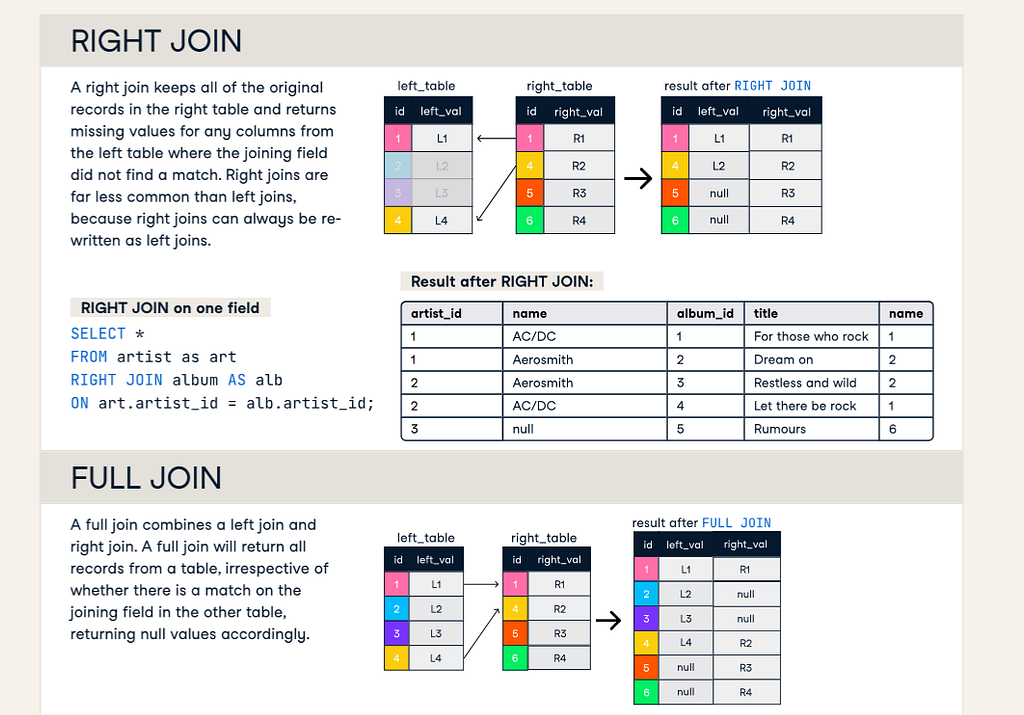
- Joining tables — INNER, LEFT, RIGHT, FULL, CROSS joins
- Subqueries and nested query patterns
- Window functions and analytical queries
- Real-world data querying across multiple datasets
Why it’s the best starting point: The interactive format produces better results than passive video watching. You build genuine query-writing fluency, not just familiarity with concepts.
And when you finish, you’re not starting from scratch on a new platform — DataCamp has an entire career ecosystem waiting for you (more on that below).
Here is the link to join — Start SQL Fundamentals on DataCamp
2. The Complete SQL Bootcamp — Udemy
Platform: Udemy | Format: Video-based | Level: Beginner to Intermediate
This is the gold standard for SQL beginners on Udemy, and it has earned that reputation over several years and hundreds of thousands of students. The bootcamp-style format is intense, comprehensive, and designed to take you from absolute zero to productive in SQL as quickly as possible.
The instructor’s enthusiasm is infectious. He explains every concept clearly with live coding demonstrations — you see exactly how to write queries and immediately understand why each part matters.
The course assumes no prior knowledge whatsoever. You literally start from “what is a database?” and progress to window functions and advanced analytics by the end.
If you prefer video-based learning and want a single, self-contained course to work through at your own pace, this is the best Udemy has to offer for SQL.
What you’ll learn:
- SQL fundamentals from absolute scratch
- Database creation and management
- SELECT statements and data filtering
- Joins — INNER, LEFT, RIGHT, FULL, CROSS, SELF
- GROUP BY and aggregate functions
- Subqueries and nested queries
- Advanced filtering and conditions
- CREATE, INSERT, UPDATE, DELETE operations
- Window functions and advanced analytics
- Database design principles
The honest limitation: Udemy’s format means you’re watching rather than doing for most of the course. You learn the concepts, but building true SQL fluency still requires you to practice on your own outside the course.
That’s why DataCamp’s interactive format has an edge for genuine skill development — but for sheer content quality and value, this Udemy course is hard to beat.
Here is the link to — Enroll in The Complete SQL Bootcamp on Udemy
3.Associate Data Analyst in SQL — DataCamp
Platform: DataCamp | Format: Interactive, career track | Level: Intermediate
Once you’ve built your SQL foundations, the natural next step depends on where you want to go. If your goal is a data analyst role, this career track is the most direct path available.
The Associate Data Analyst in SQL track is built around the actual responsibilities of a working data analyst: querying production databases, exploring and cleaning datasets, building reports, identifying trends, and communicating findings through data. It’s not just more SQL syntax — it’s SQL applied to the real workflows that data analyst job descriptions are written around.
This track is also aligned with DataCamp’s certification program, which means completing it puts you on a clear path to a credential that employers actually recognize.
In 2026, the DataCamp certification carries real weight in data hiring conversations — particularly for analyst roles at companies that use DataCamp for their internal training.
What you’ll learn:
- Intermediate to advanced SQL querying patterns
- Data cleaning and transformation in SQL
- Exploratory data analysis with SQL
- Reporting and aggregation for business intelligence
- Working with multiple related tables at scale
- Real-world analyst workflows and best practices
Why it matters: This track doesn’t just teach you SQL — it teaches you how a data analyst uses SQL. That framing changes everything about how you absorb and apply the material.
Here is the link to join this course — Start the Associate Data Analyst Track on DataCamp
4. SQL for Data Science — Coursera (UC Davis)
Platform: Coursera | Format: Video + graded assignments | Level: Beginner to Intermediate
This is the best SQL course on Coursera, taught by UC Davis through instructor Sadie St. Lawrence. It’s specifically designed for data science applications — if you’re working with data in a scientific or research context rather than a pure business analyst role, this is a strong choice.
The UC Davis framing gives it academic credibility, and Sadie St. Lawrence is a genuinely clear and organized instructor. The course covers SQL fundamentals through a data science lens, which means the examples and exercises are drawn from analytical and research contexts rather than business intelligence. It also introduces SQLite, which is useful for Python-based data science workflows.
Coursera’s graded assignments and peer review structure add accountability that self-paced video platforms sometimes lack. If you learn better with structured deadlines and formal feedback, this course’s format works in its favor.
What you’ll learn:
- SQL fundamentals for data analysis
- Querying databases and retrieving data
- Filtering and sorting data
- Aggregating and grouping data
- Joins for combining tables
- Subqueries and nested queries
- Creating and manipulating tables
- Data analysis patterns
- Real-world data science workflows
- Introduction to SQLite
Overall, this is an excellent course for the Coursera ecosystem and the data science context. For pure SQL skill development and career track alignment, DataCamp’s interactive tracks remain more effective. But if you’re already on Coursera or pursuing a certificate within a broader specialization, this is the course to choose.
Here is the link to join this course — Enroll in SQL for Data Science on Coursera
5. Learn SQL Nanodegree — Udacity
Platform: Udacity | Format: Project-based Nanodegree | Level: Beginner to Intermediate
Udacity’s Learn SQL Nanodegree takes a project-first approach that sets it apart from most SQL courses. Rather than working through isolated syntax exercises, you work on real database projects from the start — querying actual datasets, building reports, and drawing conclusions in the way a working analyst would.
The Nanodegree format means you also get mentor support and code review feedback, which is genuinely valuable if you’re making a career transition and want experienced eyes on your work. Udacity’s career services — resume reviews, LinkedIn feedback, project portfolio guidance — add further value for job seekers.
The trade-off is cost: Udacity Nanodegrees are significantly more expensive than individual course subscriptions like this Agentic AI nano-degree which I have taken recently.
If you have the budget and want the structure, mentorship, and credential, it’s worthwhile. If you’re cost-conscious, DataCamp’s career tracks cover comparable ground at a fraction of the price.
Why it stands out: The project-based structure produces portfolio work you can actually show to employers. Completing a Nanodegree project that involves querying and analyzing a real database is a more compelling portfolio piece than a course completion certificate.
Here is the link to — Explore the Learn SQL Nanodegree on Udacity
6. Associate Data Engineer in SQL — DataCamp
Platform: DataCamp | Format: Interactive, career track | Level: Intermediate to Advanced
If your ambitions go beyond data analysis into data engineering — building pipelines, designing schemas, managing databases, and architecting the infrastructure that analysts depend on — this is the track you want.
The Associate Data Engineer in SQL track covers SQL from an engineering perspective: database design, optimization, indexing, query performance, ETL patterns, and the kind of advanced SQL that powers production data infrastructure.
It’s a significant step up in technical depth from the fundamentals and analyst tracks, and it reflects the real skills that data engineering job postings ask for.
Data engineering is one of the fastest-growing roles in the technology industry in 2026. The combination of SQL depth and engineering context that this track provides is a genuine differentiator in a hiring market where most candidates have surface-level SQL knowledge and no understanding of the infrastructure layer.
What you’ll learn:
- Advanced SQL for data engineering workflows
- Database design and schema modeling
- Query optimization and performance tuning
- ETL and data pipeline patterns
- Working with large-scale datasets
- Data warehouse concepts and design
The big picture: This is where DataCamp’s ecosystem truly shines. You can start with SQL Fundamentals, progress to the Data Analyst track, and advance to the Data Engineer track — all on one platform, with your progress tracked and your skills building systematically. That end-to-end progression is something no other platform in this list offers.
Here is the link to join this course — Start the Associate Data Engineer Track on DataCamp
Why DataCamp Is the Best Platform for Learning SQL in 2026
After working through 50+ SQL courses across every major platform, the answer to “where should I learn SQL?” is clear: DataCamp.
Here’s why, in concrete terms:
Interactive learning that actually works. Every DataCamp course has you writing real SQL from the very first lesson. There is no passive watching period where you’re absorbing syntax without practicing it.
This is the single most important factor in whether a SQL course produces actual skill — and DataCamp gets it right in a way that video-based platforms fundamentally cannot.
A complete career progression. No other platform offers the SQL Fundamentals → Associate Data Analyst → Associate Data Engineer progression that DataCamp does.
You can move from absolute beginner to job-ready data engineer within a single platform, with a coherent curriculum that builds on itself. That kind of structured progression is rare and genuinely valuable.
Real datasets and real workflows. DataCamp’s exercises use datasets that reflect actual job contexts — business data, scientific data, financial data — not toy examples. You learn to query data the way you’ll query it at work.
Certification that employers recognize. DataCamp’s Associate certifications are used by companies as part of their hiring and internal training programs. A DataCamp SQL certification on your LinkedIn profile means something concrete in the 2026 data job market.
Cost efficiency. A DataCamp subscription gives you access to all three SQL career tracks — plus dozens of additional courses in Python, R, statistics, machine learning, and more — for a fraction of what you’d pay for individual courses elsewhere.
If you’re starting from scratch, begin with SQL Fundamentals. If you know where you’re headed, jump directly to the Associate Data Analyst or Associate Data Engineer track. Either way, DataCamp is the right platform.
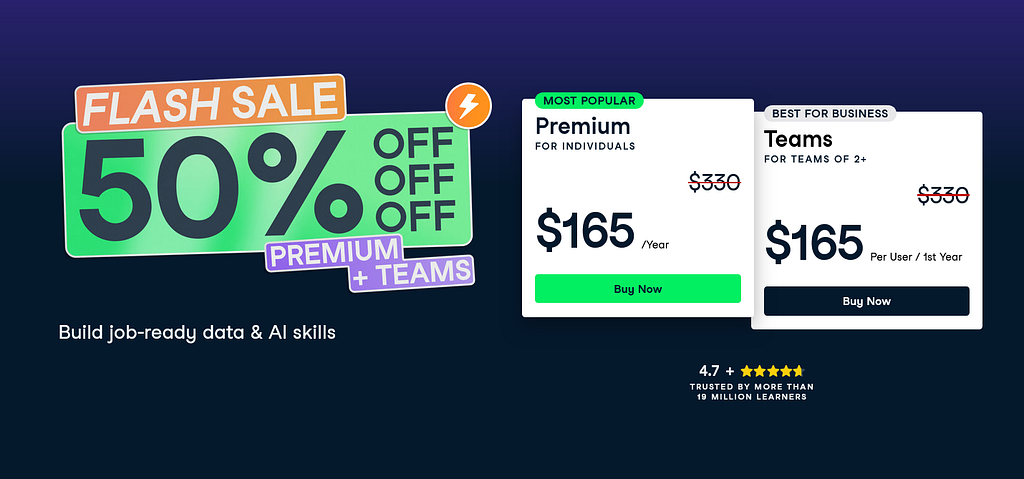
The great thing about Datacamp is that you can access to all of their courses by just getting one Datacamp premium subscription which cost around $25 but you can get now for just $12.40 on their NEW YEAR sale where they are offering 50% discount.
I generally recommend the premium plan because it is right-priced and you get access to all the essentials to grow your data skills like 650+ courses, 14 career tracks, 50+ skill tracks, unlimited practice challenges, and live code along. It cost around $25/month on an annual plan and it’s totally worth i
And, the best thing is that they are offering a SALE now where you can get the subscription plan for a big 50% discount.
Conclusion
That’s my honest assessment after testing more than 50 SQL courses across the internet: these six are the ones actually worth your time in 2026.
For the fastest, most effective path to SQL fluency and a data career, start with DataCamp. Their SQL Fundamentals track is where every serious SQL learner should begin, the Associate Data Analyst track is the best structured path to an analyst role, and the Associate Data Engineer track is the most comprehensive SQL-to-engineering program available on any platform.
The other courses on this list — Udemy’s Complete SQL Bootcamp, Coursera’s SQL for Data Science, and Udacity’s SQL Nanodegree — are all genuinely excellent in their own contexts and worth considering depending on your learning style and goals.
But if you’re asking which single platform to commit to for SQL in 2026, the answer is DataCamp.
Good luck — and keep writing queries.

I Tried 50+ SQL Courses: Here Are My Top 6 Recommendations for 2026 was originally published in Javarevisited on Medium, where people are continuing the conversation by highlighting and responding to this story.
This post first appeared on Read More