
Choice is one of the hallmarks of Linux, to the point that both “distro fever” and “distro fatigue” are alive in equal measure. Historically, Ubuntu has also been known the same. Different stroke for the wide range of folks who make Ubuntu their Linux home. Many of us see this wide selection of choices as a plus, and with good reason: we get to pick and choose our exact experience and tailor it to our needs.
Ubuntu’s flavour ecosystem has long reflected this ethos rather well: Don’t want GNOME? Use Kubuntu. Need something lighter? You can choose Xubuntu or Lubuntu. Need something more specialised? Take your pick of Edubuntu, Ubuntu Studio, and others. On paper, it’s the Linux philosophy of choice perfected.
But there comes a point where adding more official flavours stops feeling like a strength, and starts raising a more uncomfortable question: how many of these options still make sense as official Ubuntu projects? Because fewer official flavours is healthier than keeping an inflated list of under-resourced projects alive just for the sake of it. We need less scattering, and more mattering.
Choice itself isn’t the problem: clarity is

Before I continue, it’s important for me to clarify one thing: I’m not arguing against choice itself. I’m making a case for greater clarity. Choice properly *applied*, not just translated to availability. After all, choice is one of the very reasons we choose Linux over other options. We want the ecosystem within the ecosystem, and we’d be lost without this flexibility.
Ubuntu is still arguably the best-known Linux distribution outside the Linux community itself. For many people, it is the first distro they hear of, the first one they search for, and often the first one they install. That visibility matters, and it can carry almost anything to a higher echelon just by association. It also means Ubuntu has a different responsibility from smaller, newer, and more niche projects.
Without meaning, choice gets noisy
It’s important to understand that the problem isn’t that Ubuntu offers different flavours overall, but that some of these choices can be difficult to justify, maintain, and uniquely define over time. A newcomer landing on the Ubuntu Flavours page isn’t thinking about packaging work, release engineering, or maintainer burnout. They’re thinking something much simpler: Which one am I supposed to choose?
The more crowded that menu becomes, the more likely it is that the answer starts to feel murky, especially if the defining characteristics of any particular flavour are harder to distinguish from another. This doesn’t mean that Ubuntu should strip away all variety and become a one-size-fits-all distro. That would only violate the key foundation that’s made Ubuntu successful in the first place.
What it does mean, is that the official choices should “Just make sense” overall.
“Official” carries a greater set of expectations
When most users hear the word “official”, it introduces connotations and ideas that can’t (or at least shouldn’t) be easily ignored. This is where the conversation becomes less about desktop preferences and default apps, and more about polish, user experience, and sustainability.
An “official” Ubuntu flavour isn’t just a remix with its own logo and download page. Ubuntu’s own ”RecognizedFlavors” wiki page makes it clear that recognised flavours are expected to have maintainers, participate in the official release cycle, follow QA coordination and bug tracking, and must have developers with the right access and experience to help keep things working across the release cycle. That’s a lot more than building a custom ISO that some people might like.
Being blessed with “official status” is not a free ride
The same page also makes it clear that Canonical does not simply take care of everything for these official flavours. There are limits around testing, upgrades, packages outside the main Ubuntu images, along with broader support obligations. So while flavours benefit from the wider Ubuntu base, being official still comes with a real maintenance burden.
This matters because community resources aren’t infinite, no matter how large or passionate the community. There are only so many developers, packagers, testers, documenters, and maintainers actually doing the work that makes a distro possible, and some actually devote their time and investment to multiple projects at a time. Every additional official flavour draws from this limited pool of active contributors, and demands a greater collective attention.
Therefore, it’s about way more than just giving end users more options. It’s another project (or set of projects) that needs ongoing attention, another arena for upstreams to pay attention to, another release that needs to be kept healthy, and another experience that has to reflect the image of Ubuntu well. Once you look at it that way, just adding more flavours sounds way less appealing without adding the robust backing needed to make them possible.
Passion and enthusiasm don’t automatically become maintenance

One of the harder realities in open source is that a passionate user base does not automatically become a strong maintainer base. That’s not an indictment against users either; most people are genuinely better positioned to be good users than contributors, maintainers, packagers, developers, testers, documenters, or advocates. Even in dedicated communities, not everyone has the skills, time, or financial stability to support a project in those ways. This remains true when we talk about Ubuntu flavours as well.
A current example is Ubuntu MATE. In March 2026, project lead Martin Wimpress said his involvement in the project was coming to a close and asked for new maintainers to step up in his stead. Ubuntu MATE still has a clear identity and a loyal community, but loyalty isn’t the same thing as leadership or maintainership. The frank reality is that if too few people are able to carry the technical and organisational burden, even a respected official flavour can start to feel the strain. That tension is visible in the current release cycle too, with the Ubuntu 26.04 LTS release notes linking nine official flavour release-note pages rather than ten. Why? Because Ubuntu MATE is missing from the list.
It’s not just Ubuntu MATE either: the Lubuntu team has openly said it has less development manpower than before, while Ubuntu Unity says 26.04 is a regular release because key milestones were missed.
All told, the broader point is clear: adding more official flavours doesn’t magically create more maintainers. It just spreads limited labour across more projects, and as Ubuntu continues to spread its wings even further, that labour is not getting any lighter.
Some flavours clearly earn their place

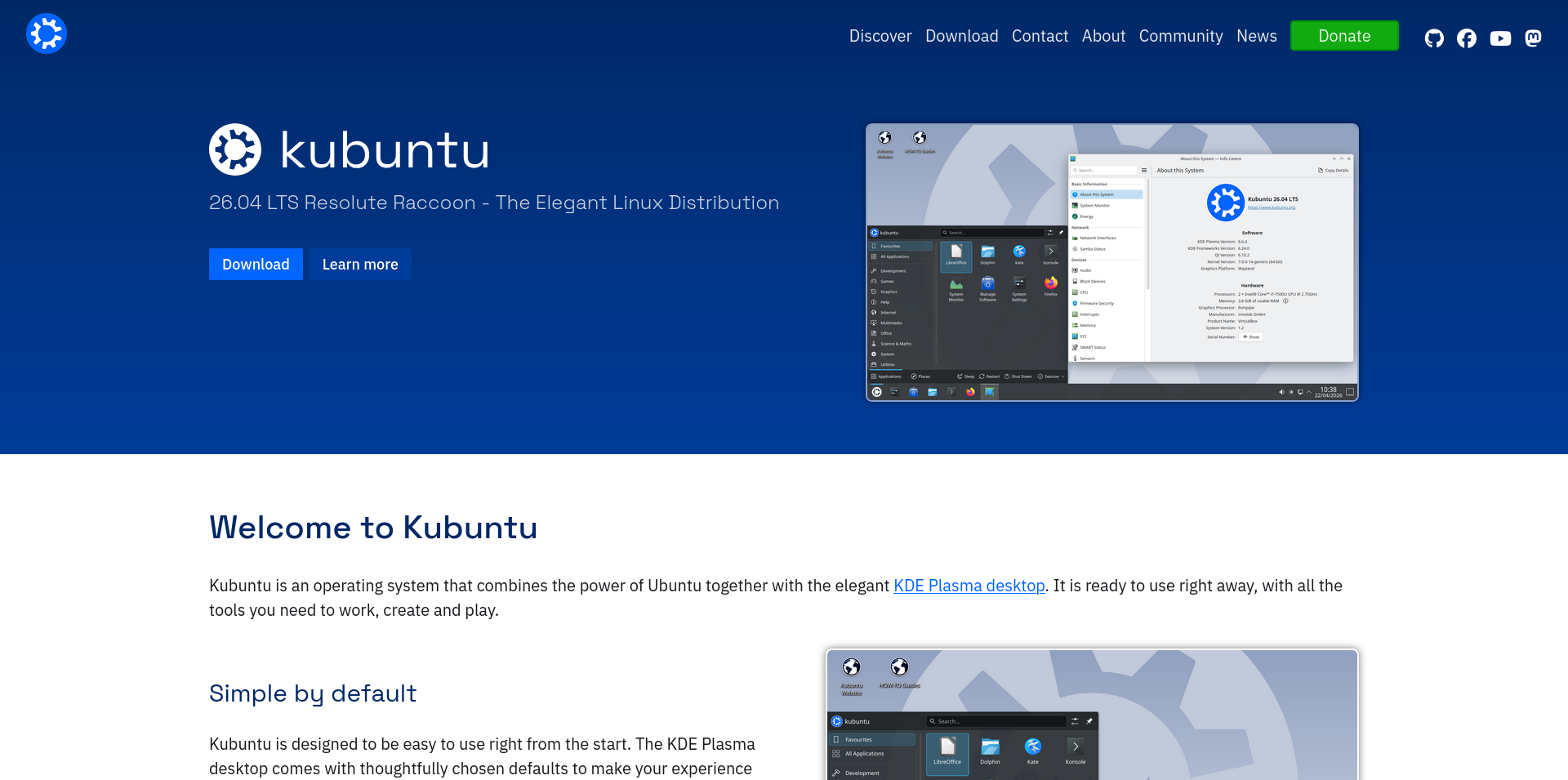
Another key point to acknowledge here is that not every flavour adds the same kind of value for users. Some have a very clear reason to exist, such as providing a streamlined experience for a popular desktop environment that would otherwise be diminished by mixing it into a standard Ubuntu desktop base. A few examples of these include Kubuntu (for KDE Plasma), Xubuntu (for XFCE), and Lubuntu (for LXDE). Edubuntu and Ubuntu Studio serve a different kind of need, but both clearly establish themselves as necessary based on their defined purposes.
Strong purpose at the core matters because maintaining a flavour isn’t getting easier. Ubuntu’s flavour teams must keep up with the parent distro’s changes and innovations, including installer changes, release engineering, and core infrastructural changes whether to the OS itself or to build systems and other “backroom” aspects of the distro. So while the loss of convenience for some users can be understandably frustrating, it’s important to remember that it’s a balance of choice versus the reality of making these choices possible.
And this is really the distinction Ubuntu as a whole is forced to care about: not whether a flavour can exist at all, but whether it still makes sense for it to become (and remain) official long term.
Ubuntu can’t be the lab for everything
Ubuntu has often served as a proving ground for the Linux desktop as a whole. To some degree, other distributions have caught up and even surpassed it in many ways (take Fedora, for instance), but this doesn’t change the fact that the historical framing still holds strong.
Ubuntu-based efforts have helped push things forward on the Linux desktop more than once, and projects like KDE Neon have shown how the Ubuntu base can be a solid foundation for showcasing where a desktop stack is heading. This history of experimentation and iteration without compromising stability and quality has been key to Ubuntu’s success, and is one of the reasons Ubuntu has been chosen as the base for projects like Mint, Zorin and others.
There must be boundaries
Ubuntu itself can’t be the long-term official home for every experiment, budding desktop environment, or project that once felt promising but no longer has the momentum or community investment to justify and sustain its titular brand. At some point, definition, focus, and purpose must take precedent over ideas and good intentions.
Ubuntu has long positioned itself around usability, polish, and accessibility, and the legacy must mean something in the long run. “Linux for human beings” only works as an ethos if official experiences carrying the Ubuntu name are a true reflection of that very concept.
A poorly maintained, lagging, or half-broken flavour isn’t a sign of openness. It’s a sign that the core idea may not be enough to carry the weight of its own success.
A smaller official line-up can actually be a stronger one
I don’t see Ubuntu’s shrinking official flavour list as bad news. If anything, it I see it like as a difficult, but necessary correction (just don’t call me Thanos, I don’t think he was right). A leaner, better-focused, better-supported line-up of official flavours is healthier than an extensive list held together by fatigue and goodwill. It’s better for users, because the choices are clearer and more likely to be finely polished. It’s better for maintainers, because their efforts aren’t being spread quite so thin.
Most importantly, it’s better for Ubuntu as a whole, because Ubuntu is as much a product and a brand as it is an idea. Besides, this is Linux, and there will always be remixes, spins, experiments, and community projects that blow our minds with what’s possible, even if they don’t always last as long as others. Choice isn’t going away, nor should it. But the official Ubuntu flavour list will only be better off not being the umbrella for everything.

This article first appeared on Read More