
My Best 6 Online Resources for Technical Interview Preparation for Software Engineers and Developers
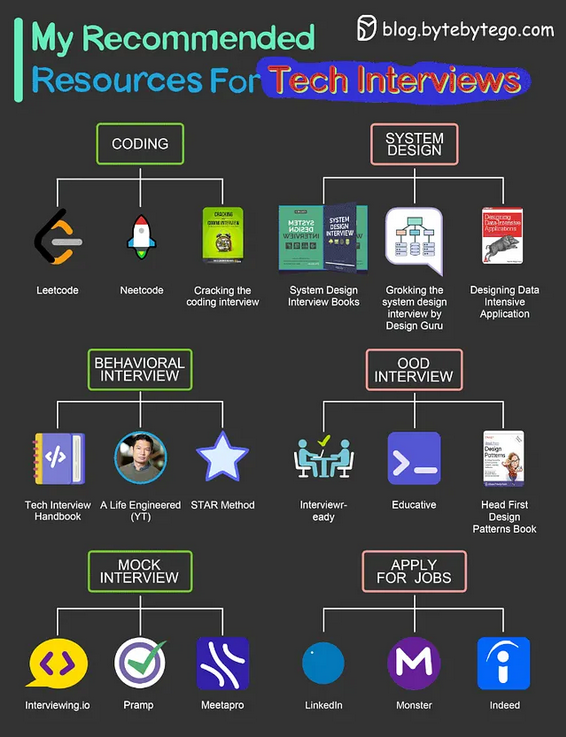
Hello friends, I’ve been preparing for tech interviews, reviewing interview resources, and helping developers crack FAANG and top-tier engineering roles for over a decade.
In that time I’ve gone through an embarrassing number of resources. Books, platforms, courses, mock interview services, YouTube channels, problem sets, paid bundles, free tier alternatives.
Most were useful in a narrow way. A handful were genuinely transformative. A few were polished packaging around hollow content.
What follows are the six categories of resources that actually move the needle — and within each, the specific tools and materials I’d actually spend money on in 2026. Reordered by what you should work on first, not by what gets the most affiliate clicks.
Why Most Interview Prep Fails?
Here’s the thing nobody says plainly: most candidates fail technical interviews not because they lack knowledge, but because they prepared the wrong things in the wrong order.
They grind 200 LeetCode problems without learning the underlying patterns, so they can’t solve problems they haven’t seen before. They study system design theory but never practice explaining it out loud to another person.
They learn OOP principles but can’t sketch a parking lot design under pressure. They spend three months on coding and show up to the behavioral round completely unprepared.
Good interview preparation is systematic. It covers every round you’ll face. And it builds skills in the right sequence — patterns before problems, concepts before design, knowledge before mock performance.
The six resource categories below map to exactly that sequence.
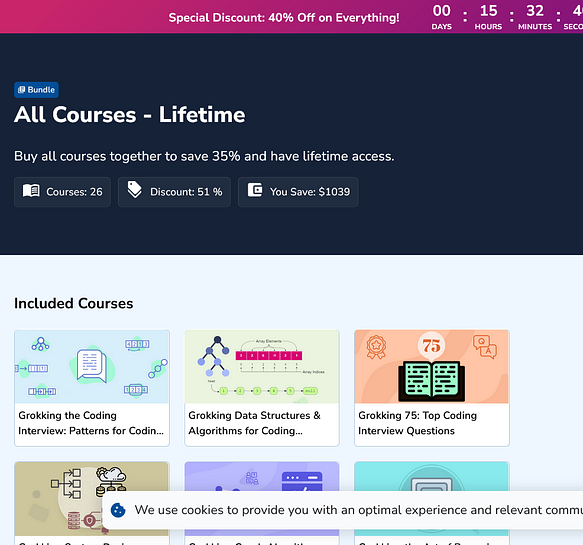
If you want a single starting point while you figure out the rest: DesignGurus.io covers system design, coding interview patterns, OOP design, and mock interviews all in one place. Their all-course bundle is one of the most complete interview prep investments available — use code GURU for 30% off.
The 6 Best Tech Interview Resource Categories for 2026
Without any further ado, here are the 6 best online resources, books, and courses you can take to better prepare for your technical interviews. These resources are tried and tested for software engineering and developer interviews.
1. Coding Interview Preparation — Build Pattern Recognition First
The single biggest mistake I see candidates make in coding interview prep is grinding problems without learning patterns. You can do 300 LeetCode problems and still freeze on a problem you’ve never seen — because you’ve been memorizing solutions, not building the mental model to derive them.
Fix that first. These are the resources that teach patterns properly:
- AlgoMonster — The best structured approach to learning coding interview patterns. Instead of just throwing problems at you, AlgoMonster teaches you the underlying patterns — sliding window, two pointers, tree traversal, dynamic programming frameworks — that apply across hundreds of different problems. Once you know the patterns, LeetCode becomes a lot less random.
- Educative-99 — A curated set of 99 coding interview questions mapped to 26 essential problem-solving patterns, with an in-browser coding environment so there’s zero setup friction. This is one of the best structured practice resources available if you want quality over quantity.
Educative-99 in Java: Accelerate Your Coding Interview Prep – AI-Powered Learning for Developers
- LeetCode — Still the standard. Use it for volume practice once you understand the patterns. Easy to medium problems build fluency; hard problems build confidence. Don’t start here — start with AlgoMonster or Educative-99 first.
- NeetCode — Free structured plan for working through LeetCode systematically. The NeetCode 150 is a well-curated subset that covers the most important patterns without burying you in noise.
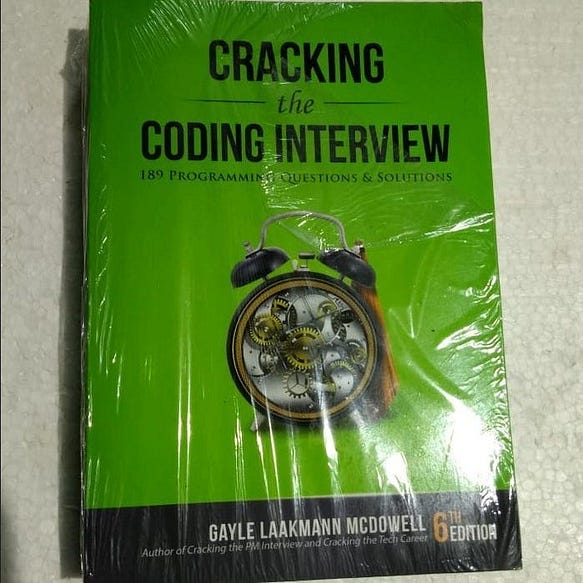
- Cracking the Coding Interview — Still worth reading in 2026. 189 programming questions and solutions, plus chapters on how to approach problems, evaluate your solutions, and handle the soft aspects of a live coding interview. The problem set is slightly dated for FAANG-level prep, but the approach chapters are timeless.
2. System Design — The Round Most Engineers Underprepare For
System design is where mid-level and senior candidates most commonly leave points on the table. It’s also the round where the gap between “studied it” and “can actually do it” is widest — because system design is a skill you build through practice, not just reading.
These are the resources that actually build the skill:
- Codemia.io — The closest thing to LeetCode for system design that exists. 120+ system design problems with editorial solutions and diagrams, organized by difficulty, covering distributed systems, storage, messaging, and more. If you want deliberate practice on real design problems — not just theory — this is where to go. The Agentic AI design section is particularly valuable for candidates targeting companies building AI products.
Codemia | Master System Design Interviews Through Active Practice
- System Design Interview Books by Alex Xu — The two-volume System Design Interview series from ByteByteGo is the most widely used system design reference in the industry. Volume 1 covers the foundational problems (URL shorteners, social feeds, chat systems); Volume 2 goes deeper on real-world architectures. Read these cover to cover.
- Grokking the System Design Interview — DesignGurus — The original structured system design course. Works through real-world scenarios step by step with a repeatable framework for approaching any design question. Pairs well with the ByteByteGo books.
https://medium.com/r/?url=https%3A%2F%2Famzn.to%2F3nXKaas
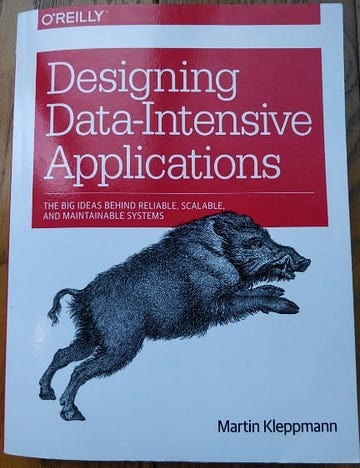
- Designing Data-Intensive Applications — Martin Kleppmann’s book is the most important book on distributed systems fundamentals available. It won’t teach you interview technique, but it will give you the deep understanding of replication, consistency, partitioning, and trade-offs that separates engineers who can reason about system design from those who’ve just memorised answers.
3. Object-Oriented Design — Underrated, Frequently Tested
OOD interviews get less attention than coding and system design rounds, but they show up frequently at mid-level and senior interviews — and candidates who haven’t prepared specifically for them often struggle. Knowing OOP principles is not the same as being able to sketch a clean parking lot or vending machine design under pressure.
- Codemia.io OOD Section — Codemia has built out an OOD section with structured problems: parking lot design, vending machine design, and more. Same LeetCode-style format as their system design section — problems with solutions and diagrams. The best place I’ve found for hands-on OOD practice.
- Grokking the Object-Oriented Design Interview — Educative — Interactive course walking through OOD interview problems with explanations of design patterns and class hierarchies. Good for understanding how to structure an OOD solution from the first principles.
- Head First Design Patterns — The most readable book on design patterns available. Understanding design patterns — Factory, Observer, Strategy, Decorator, and the rest — gives you a vocabulary and toolkit for OOD problems that makes improvised solutions look deliberate. Required reading if you haven’t done it already.

4. Mock Interviews — Where You Find Out What You Don’t Know
Reading about system design and actually defending a design in real time are completely different skills. The only way to develop the second is to practice it — with a real person, under real time pressure, with real feedback.
Most candidates skip mock interviews. Most candidates also underperform in the actual interview because they’ve never done the thing they’re being tested on.
- DesignGurus.io Mock Interviews — Mock interviews with ex-Facebook and Microsoft engineers specifically for system design and coding interviews. This is the highest-quality option if you want expert feedback from engineers who know exactly what interviewers at top companies are looking for. Worth the investment for senior-level prep.
- Codemia.io — Practice interviews with experienced engineers in a low-pressure environment. Recordings are available so you can review your own performance. One of the best places to build interview comfort before the real thing.
- Pramp / Exponent — Peer-to-peer practice interviews. Free to use, easy to schedule, and the experience of interviewing someone else teaches you as much as being interviewed does. The alternating interviewer/candidate format is genuinely valuable.
- Meetapro — Book sessions with domain experts for personalised feedback. Useful if you want targeted coaching on a specific interview type — system design, coding, or behavioral.
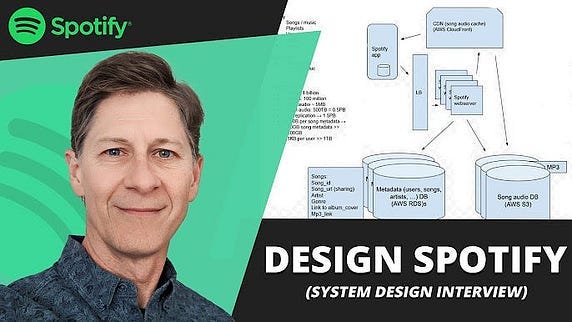
You can also get a feel for what strong system design performance looks like by watching mock interview recordings on YouTube before booking paid sessions.
5. Behavioral Interviews — The Round Everyone Takes for Granted
Behavioral interviews fail candidates who assume they can wing them.
The engineers who perform best in behavioral rounds prepare their stories in advance, structure them with a clear framework, and practice delivering them out loud until they sound natural rather than rehearsed. That takes actual work — not hours of it, but deliberate work.
- Tech Interview Handbook — Free, comprehensive, and the first place to go for behavioral interview preparation. Covers common questions, how to structure answers, what different companies are looking for, and how to prepare your stories systematically.
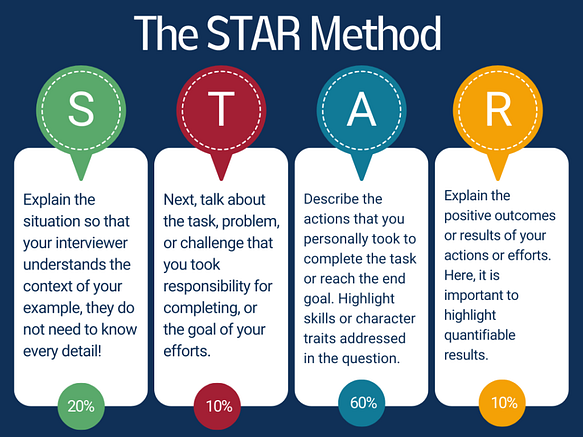
- STAR Method — Situation, Task, Action, Result. Every behavioral answer you give should follow this structure. It forces clarity, keeps answers appropriately concise, and makes your contributions specific rather than vague. Practise applying it to five or six real stories from your career before your first behavioral interview.
- A Life Engineered (YouTube) — One of the best YouTube channels for honest, practical advice on the tech job search and interview process from engineers who’ve actually worked at major tech companies. Especially useful for understanding what interviewers are actually evaluating.
6. Applying for Jobs — Turning Preparation Into Offers
Preparation without applications doesn’t produce offers. Once you’re ready — or close enough to ready — you need to be in the market actively.
- LinkedIn — Still the most important professional platform for tech roles. Keep your profile updated, engage with your network, and use the job board actively. A strong LinkedIn presence also gets you inbound from recruiters.
- Indeed — The broadest job search platform for volume. Good for finding roles across company sizes and locations that LinkedIn’s algorithm might not surface.
- Monster — Comprehensive listings with strong coverage outside the major tech hubs. Useful as a supplementary search tool alongside Indeed and LinkedIn.

Final Thoughts
Cracking a tech interview in 2026 is genuinely hard. The bar has risen, competition is global, and the spread of rounds — coding, system design, OOD, behavioral — means preparation has to be broad.
But it’s also more learnable than it’s ever been. The resources available today — from pattern-based coding courses to LeetCode-style system design platforms to mock interviews with senior engineers — give you everything you need to close the gap between where you are and where the offer is.
Start with coding patterns. Build your system design vocabulary. Practice out loud. Apply while you’re still preparing.
All the best with your next interview! 🚀
Other tech interview resources worth your time:
- Top 5 Places to Learn System Design and Software Design
- Is DesignGuru’s System Design Course Worth It?
- Is Exponent’s System Design Course Worth It?
- 10 Best Places to Learn System Design in 2026
- How to Prepare for System Design Interview in 2026
- Is ByteByteGo Worth the Hype?
- 3 Places to Practice System Design Mock Interviews
- Is Designing Data-Intensive Applications Book Worth Reading?
- 20 System Design Interview Questions for Practice
- Data Structures and Algorithms Cheat Sheet for Interviews
- The Complete Java Developer RoadMap
- My Favourite Software Design Courses for 2026
All the best for your System Design Interviews, if you have any doubts or questions, feel free to ask in the comments.
P. S. — If you just want to do one thing at this moment, go join ByteByteGo and start learning System Design concepts, you will thank me later. Make it a goal for the new year and you will surely be a better Software Engineer.
System Design · Coding · Behavioral · Machine Learning Interviews

I Tried 50+ Tech Interview Resources: Here Are My Top 6 Recommendations for 2026 was originally published in Javarevisited on Medium, where people are continuing the conversation by highlighting and responding to this story.
This post first appeared on Read More