
My favorite books to crack programming/software engineering/tech job interviews.
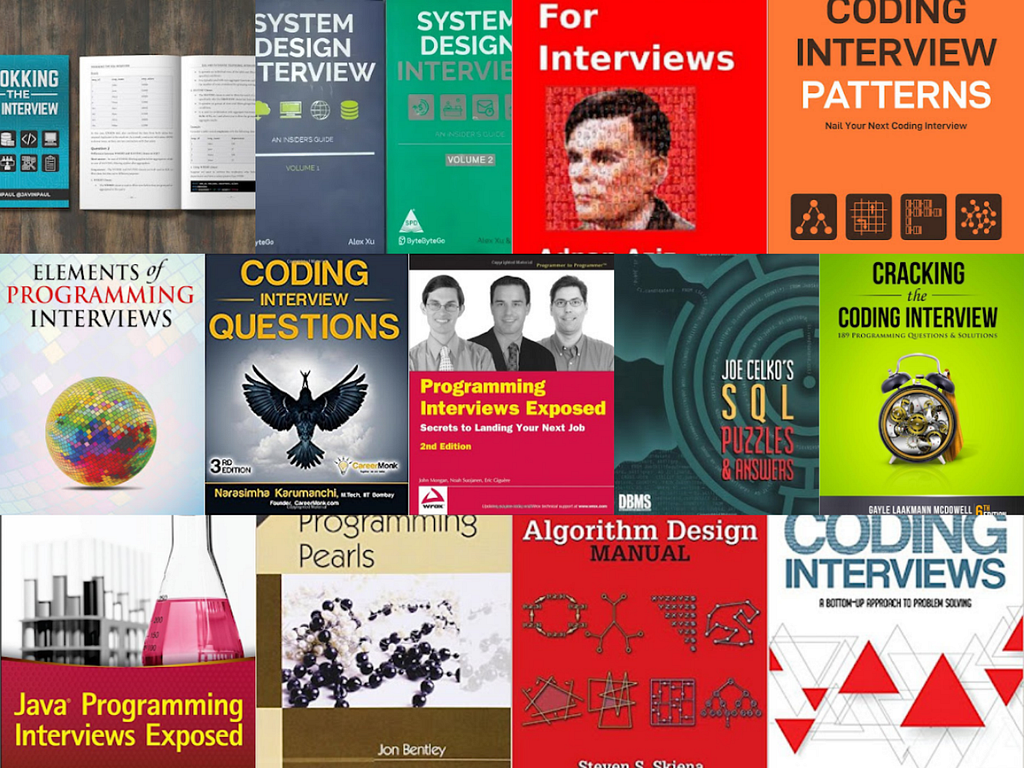
Hello everyone — over the years I’ve prepared for technical interviews at some of the most demanding companies in the industry, and I’ve read more interview prep books than I care to count. Most were forgettable. A handful were genuinely game-changing.
Here’s the honest truth about technical interview prep: you don’t need to read 20 books. You need to read the right ones — the ones that teach you how to think about problems, not just memorize solutions.
After going through 20+ programming interview books, these are the 10 I’d actually recommend. Whether you’re targeting FAANG, startups, investment banks, or service-based companies — this list covers every level and every role.
💡 If you want to combine books with active learning, ByteByteGo and Algomonster are two of my favorite resource to rely on. They are tried and tested by not just me but thousands of developers.
- System Design · Coding · Behavioral · Machine Learning Interviews
- AlgoMonster: The Most Structured Way to Prepare for Coding Interviews
My Top 10 Programming Interview Books for 2026
Without any further ado, here are my top books for programming and software engineering interviews in 2026:
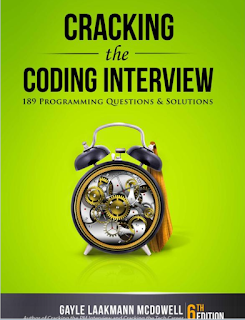
1. Cracking the Coding Interview by Gayle Laakmann McDowell
If there’s one book that every technical interview candidate should read, it’s this one. Period.
Cracking the Coding Interview has 189 carefully selected problems covering exactly the topics that come up in real interviews at Google, Apple, Microsoft, Amazon, and Facebook. The author worked at all of those companies and knows the interview process from the inside — which is why this book feels so much more relevant than generic algorithm textbooks.
It’s not just a problem set. It covers what to expect before you walk in the room: how to handle hints, how to talk through your thinking, how to handle questions you’ve never seen before. It teaches you to interview, not just to code.
If you can only pick one book from this entire list, make it this one. Then if you want to reinforce the learning with active practice, pair it with the Master the Coding Interview course by Andrei Neagoie on Udemy.
Best for: Everyone — juniors, seniors, career changers, people targeting any company at any level
Here is the link to → Get Cracking the Coding Interview
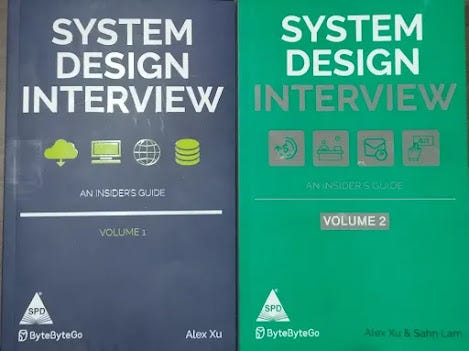
2. System Design Interview Vol. 1 & 2 by Alex Xu
System design is the round that trips up more candidates than any other — and for years, there was no good book dedicated to it. Alex Xu changed that.
These two volumes give you a structured, repeatable approach to system design questions: how to scope the problem, how to estimate scale, how to choose between SQL and NoSQL, how to handle the API Gateway, Load Balancer, Rate Limiter, and every other component that appears in real architecture discussions.
You’ll learn the key concepts like horizontal vs. vertical scaling, microservices vs. monolith, and how to reason through trade-offs out loud in a way interviewers respect.
Alex has also built ByteByteGo, where you can find the digital version of both books plus additional system design content. If you prefer digital content, it’s worth checking out — use discount code JALJAD for 10% off.
Best for: Mid-level to senior engineers, anyone who struggles with open-ended architecture questions
Here is the link to → Get System Design Interview Vol. 1 & 2
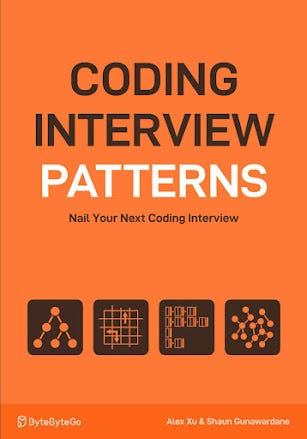
3. Coding Interview Patterns by Alex Xu
Alex Xu’s second entry on this list — and it earns its place independently.
Where Cracking the Coding Interview gives you breadth across 189 problems, Coding Interview Patterns gives you depth on the underlying patterns that make those problems solvable.
The two-pointer pattern for linked list problems. Fast and slow pointers for cycle detection. BFS and DFS for trees and graphs. Sliding window for substring and subarray problems.
Once you understand these patterns, you stop feeling lost when you see a problem you’ve never seen before — because you can identify which pattern applies and execute from there. The book includes 101 real interview problems with detailed solutions, 1,000+ diagrams, and explanations written as if you’re solving each problem in a live interview.
Pair this with the Grokking the Coding Interview: Patterns for Coding Questions course on DesignGurus.io for the interactive version.
Best for: Developers who want to build a mental model for solving new problems, not just memorize solutions
Here is the link to get this book → Get Coding Interview Patterns
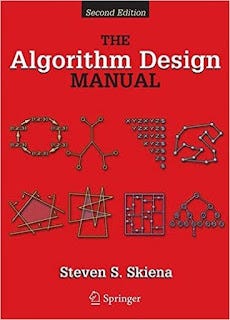
4. Algorithm Design Manual by Steven Skiena
If you’re going after the hardest engineering roles — Google, Meta, Apple, Amazon, Microsoft at the senior level — this is the book that separates serious candidates from the rest.
The Algorithm Design Manual doesn’t just give you problems to solve. It teaches you to think algorithmically — how to break down a new problem, recognize the underlying structure, and apply the right technique. The “war stories” sections show real problems Skiena encountered in practice and how algorithmic thinking solved them.
It’s not the most beginner-friendly book on this list, but it’s the most intellectually rewarding. If you find yourself struggling with hard problems you’ve never seen before, this book is what builds the instinct to figure them out.
Complement it with Grokking the Coding Interview: Patterns for Coding Questions on Educative, which teaches patterns like two-pointer, fast/slow pointer, merge intervals, and sliding window in an interactive format. If you plan to take multiple Educative courses, their subscription at ~$18/month (currently 50% off) is strong value.
Best for: Experienced engineers targeting top-tier companies, anyone who wants to get genuinely good at algorithms — not just pass interviews
Here is the link to Get Algorithm Design Manual
5. Elements of Programming Interviews
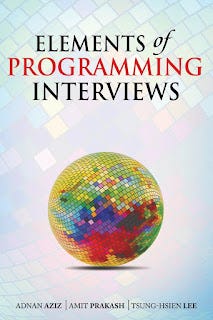
EPI sits in the same tier as Cracking the Coding Interview but with a different feel — more rigorous, more like a textbook, and with harder problems overall. It’s particularly strong for engineers preparing for Amazon, ThoughtWorks, and startups that run serious technical interviews.
The book covers coding, data structures, algorithms, and problem-solving in a format that’s deliberately comprehensive. If you’ve already worked through Cracking the Coding Interview and want to push further, EPI is your natural next step.
Available in Java, Python, and C++ versions, so you can work in your language of choice.
Best for: Engineers who’ve already done Cracking the Coding Interview and want to go deeper, candidates at startups and mid-size companies with rigorous technical bars
Here is the link to → Get Elements of Programming Interviews
6. Dynamic Programming for Coding Interviews
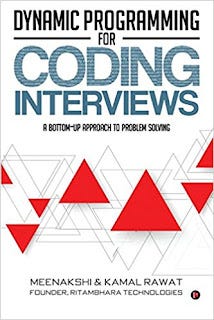
Dynamic programming is the topic that trips up more otherwise-qualified candidates than anything else — and most books treat it like an afterthought. This one makes it the whole focus.
Authors Meenakshi and Kamal Rawat do an excellent job of building your DP intuition from scratch, showing you how to recognize when a problem calls for dynamic programming and how to construct both the recursive and iterative solutions.
The Fibonacci series problem they use as a teaching example sounds trivial but the explanations they build from it extend cleanly to genuinely hard interview problems.
It’s one of the more readable technical books on this list — you won’t fall asleep halfway through.
If you want additional practice, check out these best dynamic programming courses on Udemy to reinforce what you learn here.
Best for: Anyone whose dynamic programming is a weak spot, engineers who keep getting stuck on DP problems in interviews
Here is the link to → Get Dynamic Programming for Coding Interviews
7. Programming Interview Exposed
One of the first interview prep books I ever read — and it still holds up as a solid foundational resource.
What I like about Programming Interview Exposed is the breadth: binary trees, linked lists, strings, SQL, networking, problem-solving, and puzzles all in one book. It’s not the deepest treatment of any single topic, but if you’re early in your prep and need a comprehensive overview of what to expect, this book delivers that efficiently.
If I had to choose between this and Cracking the Coding Interview for a first book, I’d pick Cracking the Coding Interview — it’s more current and more comprehensive. But if you’ve already worked through that one and want more coverage of breadth topics, this is worth picking up.
Pair it with these best System Design courses to round out your preparation.
Best for: Beginners building a complete picture of what technical interviews cover, candidates at service-based companies with broad technical assessments
Here is the link to → Get Programming Interview Exposed
Programming Interviews Exposed: Secrets to Landing Your Next Job
8. Coding Interview Questions by Narasimha Karumanchi
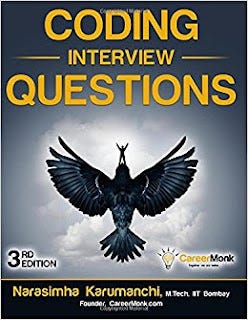
Narasimha Karumanchi is one of my favorite authors in the technical interview space — also the author of Data Structure and Algorithm Made Easy, which is one of the best DSA books for Java and Python programmers.
This one focuses specifically on coding interview questions drawn directly from real tech company interviews. What sets it apart is the quality of explanation: for each problem, Karumanchi walks through not just the solution but the time and space complexity, how to improve the initial approach, and what techniques you applied to get there. It builds analytical thinking, not just pattern matching.
If you want more problems after finishing Cracking the Coding Interview, this is the natural next book to pick up.
Best for: Anyone who wants more practice problems with high-quality solution explanations, candidates who want to deepen their time/space complexity intuition
Here is the link to → Get Coding Interview Questions
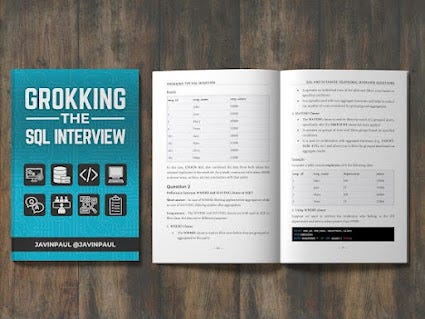
9. Grokking the SQL Interview
SQL is tested in more interviews than most developers expect — not just data engineering roles, but backend, full-stack, and software engineering interviews at banks, startups, and enterprise companies all include SQL rounds.
Grokking the SQL Interview covers everything that actually shows up: conceptual questions like the difference between UNION and UNION ALL, clustered vs. non-clustered indexes, and primary key vs. unique key — plus the query-writing problems like finding the 2nd highest salary or the Nth highest salary that are essentially standard now. It also covers joins, stored procedures, query optimization, window functions, and ranking functions like ROW_NUMBER, RANK, and DENSE_RANK.
Use discount code friends20 for 20% off on Gumroad.
Best for: Anyone with an upcoming SQL round, backend and full-stack developers who want to tighten up their SQL interview prep
Here is the link to → Get Grokking the SQL Interview
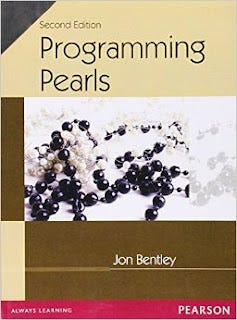
10. Programming Pearls by Jon Bentley
Old is gold — and this book proves it.
Programming Pearls is one of the oldest books on this list and also one of the most unique. It doesn’t teach you interview patterns or give you 200 practice problems.
It teaches you to think about computation differently — how to approach seemingly impossible problems and find elegant solutions by reasoning carefully about constraints and trade-offs.
The classic problem of sorting 1 million integers with very little RAM is still cited in senior engineering interviews today, decades after this book was written. That’s the kind of timeless, first-principles thinking Bentley develops here.
It’s not a replacement for any of the algorithm books above. It’s a complement — the book that shapes how you think when you hit a problem you’ve never seen and don’t know where to start.
Best for: Experienced engineers who want to sharpen their problem-solving instincts, anyone who enjoys reading about computing as a craft
Here is the link to → Get Programming Pearls
Bonus Resource: AlgoMonster
Not a book — but too good to leave off this list.
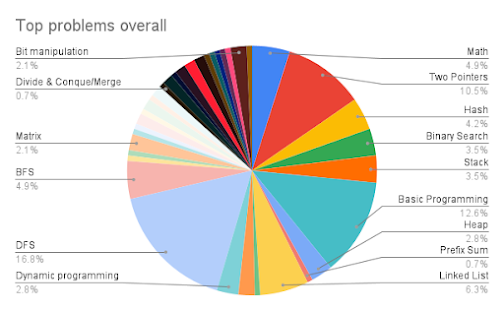
AlgoMonster was built specifically to help candidates crack FAANG interviews, and its approach is pattern-first rather than problem-first.
Instead of grinding hundreds of random LeetCode problems, you learn the 48+ core patterns (curated by Google engineers) and how to recognize which one applies to a new problem.
The platform includes 325+ lessons and problems with 678 illustrations.
If you combine one of the books above with AlgoMonster, your prep efficiency goes way up. Subscribe to AlgoMonster for $99 (69% off) and give your interview preparation a real edge.
AlgoMonster: The Most Structured Way to Prepare for Coding Interviews
How to Choose the Right Books for Your Situation?
If you’re a beginner: Start with Cracking the Coding Interview → Coding Interview Patterns → Programming Interview Exposed
If you’re targeting FAANG / top-tier companies: Cracking the Coding Interview → Algorithm Design Manual → System Design Interview Vol. 1 & 2 → Elements of Programming Interviews
If you have a SQL round: Add Grokking the SQL Interview to any path above
If Dynamic Programming is your weak spot: Dynamic Programming for Coding Interviews is a standalone fix — read it alongside whatever else you’re preparing with
If you want to think differently about hard problems: Add Programming Pearls to your list regardless of which other books you choose
Final Word
That’s all about the best books to crack programming job interviews. Though, You don’t need to read all 10 of these books. You need to read the right 3–4 for your situation and then actually practice.
Reading builds knowledge. Solving builds skill. The candidates who get hired aren’t the ones who’ve read the most — they’re the ones who’ve built enough understanding to think clearly under pressure, explain their reasoning, and adapt when a problem doesn’t match any template they’ve seen before.
Pick one book. Start today.
P. S. — If you just need one resource then I recommend you to join ByteByteGo and start learning System Design and Coding Interview concepts, you will thank me later. It’s one of the most comprehensive resource for tech interview covering both coding patterns and system design.
System Design · Coding · Behavioral · Machine Learning Interviews

I’ve Read 20+ Programming Interview Books: Here Are My Top 10 Recommendations was originally published in Javarevisited on Medium, where people are continuing the conversation by highlighting and responding to this story.
This post first appeared on Read More