
Tried and tested tips and framework to crack coding interviews
Hello everyone — if you’re preparing for coding interviews and feeling overwhelmed by the sheer volume of topics to cover, you’re not alone. Data structures, algorithms, system design, low-level design, behavioral rounds, company-specific prep — the list feels endless.
The good news: there’s a structured way through it. I’ve been preparing for and giving technical interviews for years, and I want to share a systematic approach that covers every topic that actually matters — without wasting time on things that don’t.
The job market is tough right now. A lot of talented people are looking for the same roles you are. But that’s not an excuse to be under-prepared — it’s a reason to be better prepared. This guide gives you exactly that.
💡 If you’re looking for a one-stop shop to prepare for coding interviews, ByteByteGo is a great place to start. They have amazing courses for coding patterns, OOP design, system design, dynamic programming, and more. Join their lifetime plan now and get 50% OFF
System Design · Coding · Behavioral · Machine Learning Interviews
The Complete Coding Interview Prep Guide for 2026
Without wasting anymore of your time, let’s jump into essential topics you need to prepare well for coding interviews in 2026. I have also shared useful resources like books and courses to master each topics:
1. Data Structures and Algorithms
DSA is the foundation of every technical interview — it gets tested at every company, at every level, in every format. If you’re rusty, or if you’re preparing from scratch, this is where to start.
If you’re a beginner: DSA requires more than 3 months of consistent, active practice. Don’t rush this phase. Build understanding, not just familiarity.
If you need a refresher: Start with the top interview question sets below and work through them systematically.
Key resources:
- AlgoMonster — pattern-first preparation curated by Google engineers. 48+ coding patterns, 325+ problems, 678 illustrations. Instead of grinding hundreds of random problems, you learn which pattern applies to each problem type. Subscribe here for $99 (69% off).
- Bugfree.ai — LeetCode-style practice for System Design problems. Great for bridging DSA and design prep.
- Educative-99 — available in both Python and Java. Teaches 26 key coding interview patterns with interactive, hands-on practice.
- Blind 75 — the curated list of 75 most important coding problems. Every serious candidate should work through these.
- Grind 75 — an updated, flexible version of Blind 75 that lets you customize the problem set by time available and topics.
- Practice your language’s standard library — whether C++ STL, Java Collections, or Python’s built-ins. Speed and accuracy in using your data structures library is essential for performing under time pressure.
Recommended books:
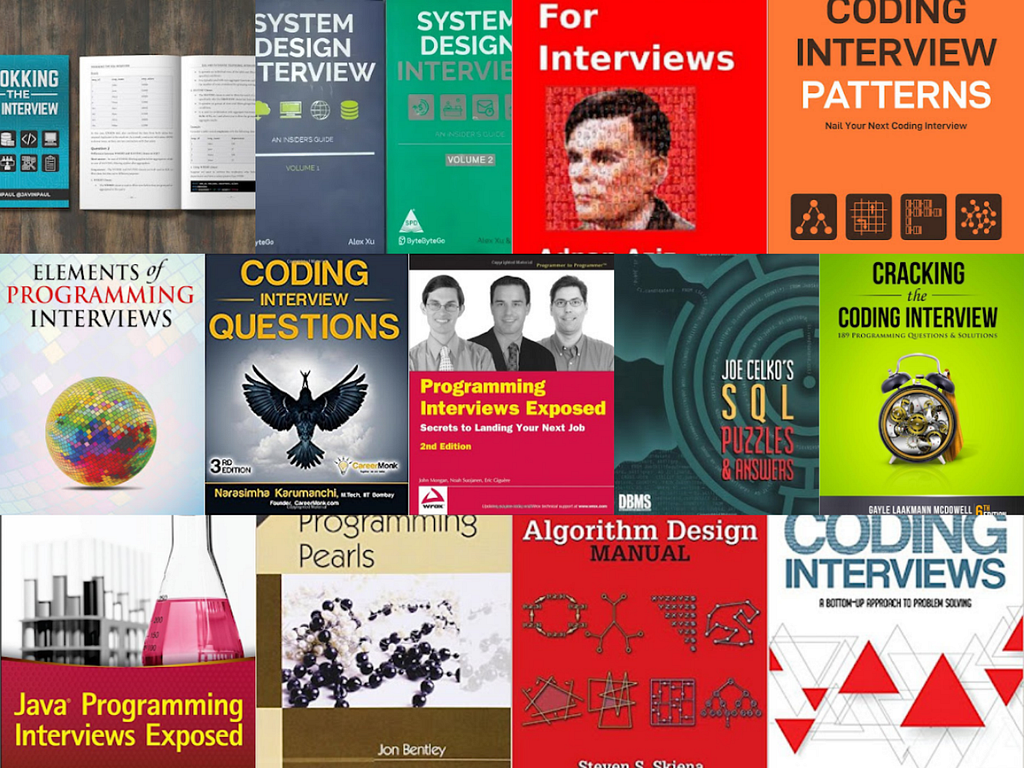
- Cracking the Coding Interview — the most widely used interview prep book. 189 problems covering every major topic.
- Coding Interview Patterns by Alex Xu — 101 problems with 1,000+ diagrams and pattern-based explanations.
- Elements of Programming Interviews — rigorous, comprehensive, excellent for FAANG preparation.
Recommended courses:
- Data Structure and Algorithms Analysis — Job Interview on Udemy — one of the best courses to build a solid DSA foundation for interviews.
- Master the Coding Interview by Andrei Neagoie on Udemy — excellent for connecting DSA to real interview performance.
- Grokking the Coding Interview: Patterns for Coding Questions on DesignGurus.io — the best interactive course for learning patterns.
If you’re preparing with Java, I’ve also shared Top 50 Java Programs from Coding Interviews which covers the most frequently asked Java-specific coding problems.
2. High Level Design (HLD) / System Design
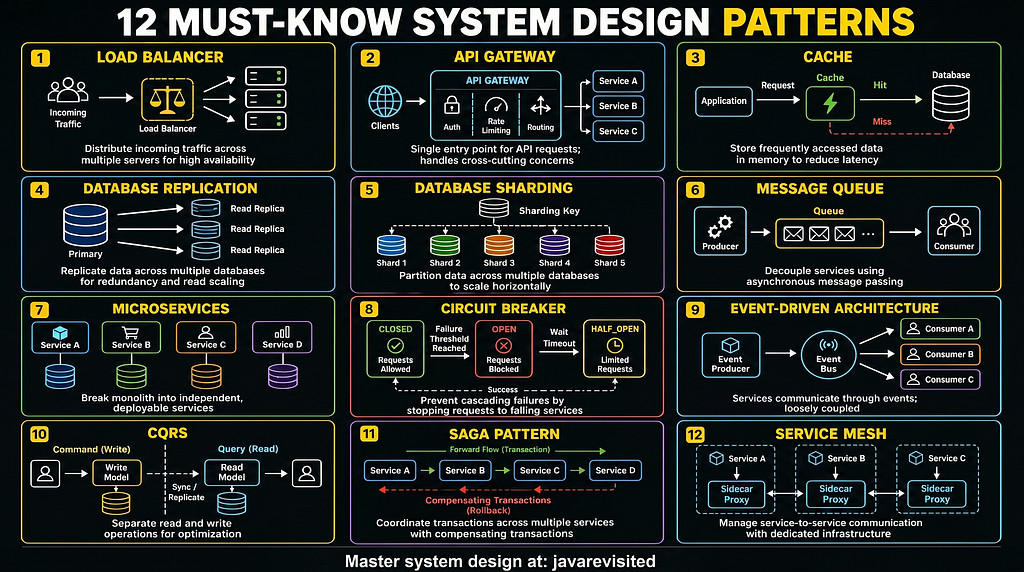
System design is the make-or-break round for mid-level and senior engineering roles. You’ll be asked to design systems like WhatsApp, YouTube, Twitter, or Uber — and it requires broad knowledge of distributed systems, databases, APIs, caching, and scalability patterns.
Most candidates either skip this or prepare randomly. Don’t be one of them.
Books:
- System Design Interview Vol. 1 & 2 by Alex Xu — the definitive books for system design preparation. Covers API Gateway, Rate Limiter, Load Balancer, Forward/Reverse Proxy, and the major design trade-offs you’ll face in interviews. Use discount code JALJAD at ByteByteGo for 10% off the digital version.
- Designing Machine Learning Systems by Chip Huyen — essential if your target roles involve ML or AI systems.
- Machine Learning System Design Interview — great companion for AI/ML engineering interviews.
Courses:
- System Design for Developers — ByteByteGo — Alex Xu’s own platform with visual, structured system design content.
- Grokking the System Design Interview on DesignGurus.io — the most popular system design course online.
- Best System Design Courses on Udemy — a curated list of the top Udemy options.
Practice:
- Codemia — practice system design problems in a LeetCode-style interface. One of the best tools available for active system design practice, not just passive reading.
- Mock interviews on Pramp or Exponent — real-time practice with another human is irreplaceable for system design. You need to practice explaining your reasoning out loud.
- Videos: Check out Top 8 YouTube Channels for System Design Interview Preparation for the best free video content.
Key topics to cover in HLD:
- Horizontal vs. vertical scaling
- SQL vs. NoSQL — when and why
- CAP theorem and consistency trade-offs
- Caching strategies (write-through, write-back, cache-aside)
- Message queues and event-driven architecture
- API design and REST vs. GraphQL
- Content delivery networks (CDNs)
- Database sharding and replication
3. Low Level Design (LLD) / Object-Oriented Design
Low-level design tests your ability to translate a real-world problem into clean, maintainable, extensible code — using object-oriented principles, design patterns, and SOLID principles. This round is common at companies like Amazon, Flipkart, and most product-focused startups.
Books and reading:
- Head First Design Patterns (2nd Edition) — the most beginner-friendly way to learn design patterns. Read the 2nd edition.
- Clean Code by Robert C. Martin — teaches you to write code that’s readable, maintainable, and interview-worthy.
OOP concepts to master:
- Abstract classes vs. interfaces
- Method overloading vs. overriding vs. method hiding
- Virtual methods and polymorphism
- SOLID principles — especially Single Responsibility and Dependency Inversion
- Composition vs. inheritance
Practice resources:
- Awesome Low-Level Design by Ashish Pratap Singh — one of the best free GitHub repositories for LLD problems, patterns, and solutions. Highly recommended. Also check out the AlgoMaster newsletter.
- Low-Level Design Playlist — lnkd.in/gkVZgK4b (credits to Soumyajit Bhattacharyay) — video solutions for LLD problems.
- Grokking the Object-Oriented Design Interview on DesignGurus.io — structured course covering real LLD interview problems.
Practice approach: Take a problem, set a 45-minute timer, and implement a complete solution. Then compare against a reference solution. Repeat until the time pressure feels natural.
4. CS Fundamentals
Most companies don’t explicitly test operating systems or networking in interviews — but they show up implicitly in system design discussions. A solid understanding of how computers actually work makes you a stronger candidate across every round.
What to cover:
- Operating Systems: Processes vs. threads, scheduling, memory management, deadlocks, virtual memory
- Networking: TCP vs. UDP, HTTP/HTTPS, DNS, load balancing, CDNs, WebSockets
- Databases: ACID properties, indexing, query optimization, normalization, transactions
- Computer Architecture: Cache hierarchy, concurrency primitives, I/O patterns
Resources:
- GateSmashers on YouTube — lnkd.in/gs6m5RQb — excellent free video coverage of OS, networks, and databases for interview prep.
- Best Operating System Courses for Beginners — curated list of the best OS courses online.
- SQL and Database Courses on Udemy — pick one that covers joins, indexes, window functions, and query optimization.
- Grokking the SQL Interview — use discount code friends20 for 20% off. Covers the conceptual and query-based SQL questions that appear in interviews.
5. Behavioral Interviews
The behavioral round is underestimated by technical candidates — and that’s exactly why it’s a differentiator. At companies like Amazon, behavioral interviews are structured, rigorous, and heavily weighted. Doing poorly here can cost you an offer even if your technical rounds were strong.
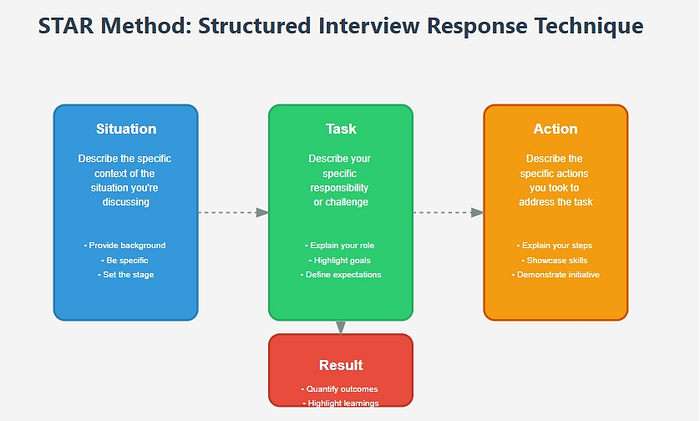
The STAR method:
- Situation — set the context briefly
- Task — what was your responsibility
- Action — what you specifically did (not “we”)
- Result — quantified impact where possible
Tips that actually make a difference:
- Prepare a detailed version and a short version of each story. Interviewers will ask you to expand or cut short depending on time.
- Keep each STAR section to 4–5 sentences. Rambling loses the interviewer.
- Have 8–10 stories that can be adapted to different questions (leadership, conflict, failure, success, collaboration, innovation).
- Research the company’s leadership principles or values before the interview — Amazon’s Leadership Principles, for example, are the explicit framework their behavioral round is built around.
Resources:
- Grokking the Behavioral Interview on Educative — free course that covers the full STAR methodology with example answers.
- Exponent’s Behavioral Interview Coaching — if you want live feedback on your behavioral answers from experienced interviewers.
6. Company-Specific Preparation
Generic interview prep gets you to the table. Company-specific prep wins you the offer. The last 2–3 weeks before your interview should be heavily focused on the specific company and role.
Tactics that work:
- LeetCode Premium — solve company-tagged problems for your target company. The Explore tab and Interview Assessment tab let you simulate phone screen and onsite rounds filtered by company.
- Explore tab: lnkd.in/g3_dHef4
- Interview Assessment by company: lnkd.in/g5Tq5rZi
- Glassdoor and Blind — read recent interview reports from candidates at your target company. What topics came up? What format did they use? How many rounds?
- Study the job description carefully — the skills listed are signals. If they mention distributed systems, go deeper on that. If they mention ML infrastructure, brush up on ML system design.
- Research recent engineering blog posts — companies like Netflix, Uber, LinkedIn, and Meta publish engineering blogs that reveal how their systems actually work. Reading these before an interview gives you concrete, relevant talking points.
- Codemia — practice system design problems in a structured, timed format — especially valuable for company-specific system design prep in the final weeks.
- Mock interviews on Pramp or Exponent — simulate the real interview environment. The pressure of performing for a real human is something you can only get comfortable with through practice.
- Codemia | Master System Design Interviews Through Active Practice
- Coaching and Mock Interviews for Your Tech Job – Exponent
Putting It All Together: A 3-Month Interview Prep Timeline
Month 1 — Foundations:
- DSA fundamentals: arrays, strings, linked lists, trees, graphs, sorting, searching
- Work through Blind 75 or Grind 75
- Read Cracking the Coding Interview
- Start behavioral prep — write your first 3–4 STAR stories
Month 2 — Depth and Design:
- Advanced DSA: dynamic programming, backtracking, graph algorithms
- Start system design: read Alex Xu Vol. 1, practice on Codemia
- LLD: read Head First Design Patterns, work through LLD problems with a timer
- Add 4–6 more behavioral stories
- CS fundamentals: OS, networking, databases
Month 3 — Company-Specific and Mock Interviews:
- Company-tagged problems on LeetCode Premium
- System design mock interviews on Pramp or Exponent
- Finalize behavioral stories — practice delivering them out loud
- Read engineering blogs of target companies
- Full interview simulations: coding + design + behavioral back to back
Final Thoughts
Cracking a coding interview in 2026 is harder than it was a few years ago — not because the questions have gotten fundamentally different, but because more talented, well-prepared candidates are competing for the same roles.
The answer isn’t to prepare more frantically. It’s to prepare more systematically. Cover every topic in this guide. Practice actively, not passively. Do mock interviews. Build your problem-solving instincts, not just your problem memorization library.
Good luck to everyone on their journey. You’ve got this.
P. S. — If you just need one resource then I recommend you to join ByteByteGo and start learning System Design and Coding Interview concepts, you will thank me later. It’s one of the most comprehensive resource for tech interview covering both coding patterns and system design.
System Design · Coding · Behavioral · Machine Learning Interviews
P.P.S. — If you’re still struggling with system design problems, start practicing with Codemia. Passive reading doesn’t build system design skills — active practice does.
Codemia | Master System Design Interviews Through Active Practice

How to Crack Coding Interviews in 2026: The Complete Step-by-Step Guide was originally published in Javarevisited on Medium, where people are continuing the conversation by highlighting and responding to this story.
This post first appeared on Read More