
My Favorite Udemy Courses to learn LLM Integration and Open API in 2026
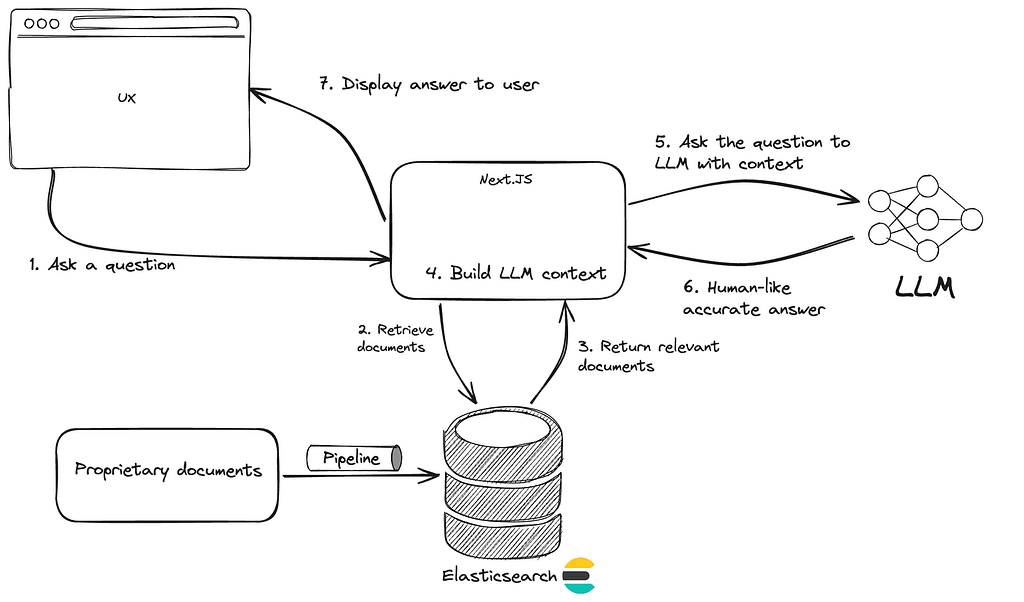
Hello friends, the ability to integrate large language models into real applications is one of the most valuable engineering skills in 2026.
Whether you’re building AI chatbots, document automation tools, agentic workflows, or next-generation search systems, knowing how to work with OpenAI’s API — and the ecosystem around it — gives you a direct path to products people actually want to use.
I’ve spent time going through 20+ LLM integration and OpenAI API courses on Udemy. Most cover the same introductory ground. A handful genuinely stand out — practical, hands-on, and current enough to reflect how the API actually works today rather than how it worked two years ago.
Here are the five I’d actually recommend in 2026.
New to AI? Before diving into API integration specifically, I’d recommend building your foundations first with Artificial Intelligence A-Z: Build 7 AI + LLM & ChatGPT on Udemy — it’s one of the best courses to get familiar with AI vocabulary and fundamentals before going hands-on with APIs.

5 Best LLM Integration and OpenAI API Courses on Udemy for 2026
Without any further ado, here are the best Udemy courses you can join to learn LLM Integration, particularly with OpenAI API:
1. Mastering OpenAI Python APIs: Unleash ChatGPT and GPT-4
Students: 24,158+ | Instructors: Colt Steele and Kevin Katz

This is the OpenAI API course I’d recommend first — and Colt Steele’s involvement is the main reason why.
Steele is one of the most consistently excellent instructors on Udemy, known for making complex technical topics genuinely engaging and building real projects throughout rather than just lecturing. This course lives up to that reputation. Where most OpenAI API courses teach you how to make a chat completion call and stop there, this one goes deep into the Assistants API and function calling — two of OpenAI’s most powerful tools for building autonomous, interactive AI systems.
The project variety is exceptional: you’ll build an embedding-powered recommendation algorithm, real AI agents that execute tasks, image generation tools with DALL-E, and a full audio transcription system with Whisper. These aren’t toy examples — they’re the building blocks of real production applications.
If you want to go beyond basic GPT-4 calls and build something that actually does things, this is where to start.
What you’ll learn:
- Assistants API and tool integration — OpenAI’s framework for autonomous agents
- GPT-4 fine-tuning and advanced prompt engineering techniques
- Long-form memory and function calling for stateful AI applications
- Generate and edit images using DALL-E 2
- Transcribe and translate audio using the Whisper API
- Build an embedding-powered recommendation algorithm from scratch
- Real AI agents that plan, use tools, and execute multi-step tasks
Best for: Developers who want to go deep on OpenAI’s most powerful APIs, anyone building production AI applications that need agents, memory, or multimodal capabilities
→ Join Mastering OpenAI Python APIs: Unleash ChatGPT and GPT-4
Mastering OpenAI Python APIs: Unleash ChatGPT and GPT4
2. Introduction to OpenAI API & ChatGPT API for Developers
Students: 103,613+ | Instructor: Valentin Despa
With over 103,000 students enrolled, this is the most popular OpenAI API course on Udemy — and that kind of social proof doesn’t happen by accident. If you’re newer to API integration and want a structured introduction that covers all of OpenAI’s main offerings without overwhelming you, this is the entry point.
What Valentin Despa does particularly well is breadth with clarity. You get GPT-4, Whisper, DALL-E, vector memory, function calling, and web deployment — all covered systematically and with enough practical depth to leave you able to actually build with each one.
The Postman sections are also underrated: being able to test and debug API calls outside of code is a genuinely useful skill that most OpenAI courses skip.
The course also includes modern approaches to building assistants with tools and vector memory — the patterns that are standard in production LLM applications in 2026.
What you’ll learn:
- GPT-3.5 and GPT-4 API integration with Python from scratch
- Vector databases for long-term agent memory
- OpenAI Tools and Function Calling — the modern way to build agents
- Speech-to-text transcription using the Whisper API
- Image generation with the DALL-E API
- Using Postman to test and debug OpenAI API calls
- Deploying chatbots to the web
- Managing API costs effectively in production
Best for: Developers new to OpenAI’s APIs, anyone wanting the broadest coverage of OpenAI’s toolset in a single structured course
→ Join Introduction to OpenAI API & ChatGPT API for Developers
Introduction to OpenAI API & ChatGPT API for Developers
3. AI Automation: Build LLM Apps & AI Agents with n8n & APIs
Students: 10,842+ | Instructor: Arnold Oberleiter
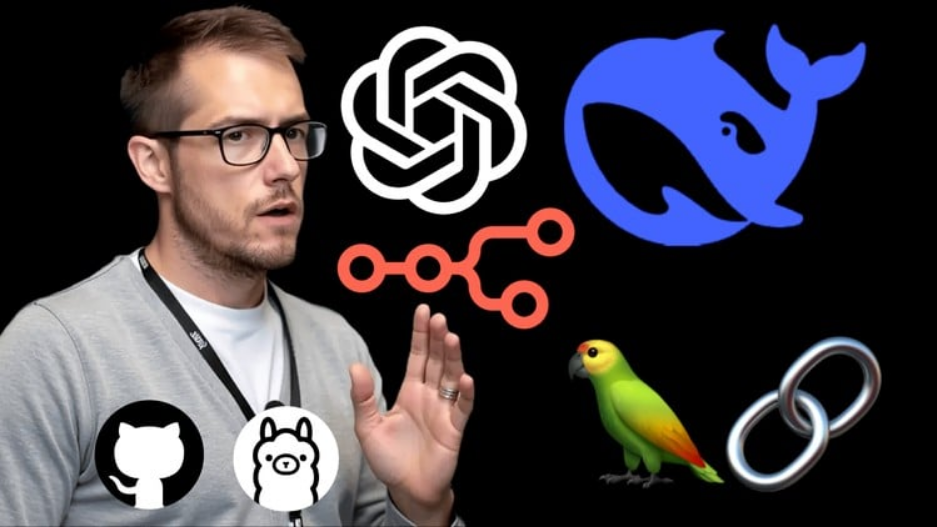
This is the most distinctive course on this list — and for a certain type of builder, the most valuable. Where the other courses focus on building with Python and OpenAI’s SDK directly, this one teaches you to build and deploy complex AI workflows using n8n alongside LangChain and OpenAI’s APIs.
Why does that matter? n8n is an increasingly popular workflow automation platform that lets you build agentic AI pipelines visually — connecting LLMs, APIs, databases, and services in ways that would take significantly more code to build from scratch.
In 2026, knowing how to combine programmatic and no-code/low-code approaches is genuinely a superpower for rapid AI product development.
The course also covers external LLM APIs beyond OpenAI — including DeepSeek and Groq — which is important as the LLM landscape diversifies. You’re not locked into one provider’s tooling.
What you’ll learn:
- Building and deploying AI agents and LLM workflows using n8n
- LangChain agents, memory, and tool integration
- Pinecone vector store integration for knowledge-grounded AI applications
- External LLM API integration: DeepSeek API, Groq API, and more
- Streamlit for rapid frontend UI around AI applications
- Building multi-tool AI applications that combine several APIs
Best for: Builders who want to create AI workflows quickly without writing everything from scratch, anyone interested in the growing n8n + LLM automation stack, developers building multi-API AI applications
→ Join AI Automation: Build LLM Apps & AI Agents with n8n & APIs
AI Automation: Build LLM Apps & AI-Agents with n8n & APIs
4. Generative AI: OpenAI API, DeepSeek, and ChatGPT in Python
Students: 3,832+ | Instructor: Lazy Programmer

This 10-hour course is the most commercially focused on this list — and that’s what makes it unique. Where most LLM integration courses teach you to build tools, this one teaches you to build monetizable AI products: SaaS applications with payment integration, user authentication, and the full product architecture needed to actually charge customers for an AI-powered service.
The inclusion of DeepSeek alongside OpenAI is also a forward-looking differentiator. In 2026, working AI engineers know how to switch between LLM providers based on cost, speed, and capability trade-offs. Learning the OpenAI API and DeepSeek API side by side gives you that provider flexibility from the start.
If you’re a developer who wants to go from “I can call the OpenAI API” to “I have a deployed, monetizable AI product,” this is the course that bridges that gap.
What you’ll learn:
- OpenAI API setup and usage with ChatGPT and GPT-4 in Python
- GPT-4 text generation and instruction tuning for production use cases
- DALL-E 3 for AI image generation in applications
- Whisper API for audio-to-text transcription workflows
- DeepSeek API integration alongside OpenAI — multi-provider flexibility
- SaaS architecture with payment integration and user authentication
- Building fully deployable, monetizable AI products from scratch
Best for: Developers who want to build and monetize AI SaaS products, engineers who want to learn multi-provider LLM integration (OpenAI + DeepSeek)
→ Join Generative AI: OpenAI API, DeepSeek, and ChatGPT in Python
Generative AI: OpenAI API, Gemini, DeepSeek, and ChatGPT
5. Master OpenAI API and ChatGPT API with Python
Students: 7,400+ | Instructor: Andrei Dumitrescu
Not everyone who needs to work with the OpenAI API is a senior developer — and this course is built with that reality in mind. Andrei Dumitrescu’s step-by-step approach keeps technical jargon to a minimum without sacrificing practical coverage, making it genuinely accessible for product managers, non-technical founders, and developers who are newer to Python or APIs in general.
What I like about this course as a final recommendation is the no-code platform coverage — not every AI integration needs to be hand-coded, and knowing how to connect GPT-4 to tools your team already uses is genuinely valuable. The course walks you through GPT-4, DALL-E, and Whisper with clear, working examples that translate directly to real use cases.
If the other courses on this list feel too fast or assume too much background knowledge, start here.
What you’ll learn:
- OpenAI API setup and authentication — no prior API experience needed
- GPT-4 text generation and conversational AI implementation
- DALL-E image generation with practical application examples
- Whisper API for speech-to-text in real applications
- Connecting OpenAI APIs with no-code platforms
- Building simple chatbots and text tools ready for real use
Best for: Complete beginners to APIs and LLMs, product managers and non-technical founders wanting hands-on AI integration knowledge, developers newer to Python who want a gentle on-ramp
→ Join Master OpenAI API and ChatGPT API with Python
Master OpenAI API and ChatGPT API with Python
How to Choose the Right Course for Your Situation?
If you’re an experienced developer who wants to build serious AI applications — agents, memory, multimodal features — start with Mastering OpenAI Python APIs (Colt Steele). It goes deepest on the APIs that matter most.
If you’re new to OpenAI’s ecosystem and want the broadest structured introduction, Introduction to OpenAI API & ChatGPT API for Developers (103K+ students) is the safest starting point.
If you want to build and ship AI workflows fast using visual tools alongside code, AI Automation with n8n & APIs is the most unique course on this list and the best for rapid AI product development.
If you want to monetize an AI product, Generative AI: OpenAI API, DeepSeek, and ChatGPT in Python is the only course on this list that teaches the full SaaS architecture you need to actually charge customers.
If you’re a beginner or non-technical, Master OpenAI API and ChatGPT API with Python is the gentlest on-ramp and the right place to start before moving to more advanced courses.
Want Even Faster Progress?
Pair any of these courses with hands-on projects:
- Build your own RAG-based chatbot using LLM Engineering techniques
- Fine-tune a model on your own dataset with RAG and vector DBs
- Deploy a real-world LLM app to the cloud for production use
For deeper LLM engineering foundations alongside these API courses, LLM Engineering: Master AI, Large Language Models & Agents is an excellent companion.
AI Engineer Core Track: LLM Engineering, RAG, QLoRA, Agents
Udemy Personal Plan — Is It Worth it?
If you plan to take more than one course from this list — which I’d recommend, since each one targets a different skill set — Udemy’s Personal Plan at ~$30/month gives you unlimited access to 15,000+ courses.
For AI engineers building skills across LLM integration, Python, cloud, and agent frameworks simultaneously, the plan pays for itself immediately.

You can also try it free for 7 days before committing.
Final Word
That’s all in this post guys. The OpenAI API ecosystem is one of the fastest-evolving areas in software development right now — but the core skills it requires are stable: knowing how to structure prompts, use function calling, manage context, integrate vector memory, and deploy reliably at scale. These five courses cover all of that, from beginner-friendly introductions to deep production-grade coverage.
Pick the course that matches where you are today. Build something real with it. The best way to learn LLM integration is to actually integrate.
Read smart. Build fast. Stay ahead.
P.S. — For hands-on RAG and LLM engineering experience alongside these API courses, LLM Engineering: Master AI, Large Language Models & Agents is the best companion course to add. It bridges the gap between knowing how to call the API and knowing how to build production LLM systems.
Online Courses – Learn Anything, On Your Schedule | Udemy

I Tried 20+ LLM Integration Courses on Udemy: Here Are My Top 5 Recommendations for 2026 was originally published in Javarevisited on Medium, where people are continuing the conversation by highlighting and responding to this story.
This post first appeared on Read More