
Every two years, Canonical puts out a Long Term Support release that gets five years of security updates, which can be stretched further with Ubuntu Pro. In between those LTS releases, Canonical ships an interim version every six months, and each one is supported for nine months.
Those releases don’t carry the same importance as an LTS, but that’s the point. They give Canonical room to test newer kernels, toolchains, and design changes with a smaller user base before those changes get baked into the next LTS.
The next one, Ubuntu 26.10, carries the codename “Stonking Stingray“, continuing the tradition of ordered alphabetical codenames after Resolute Raccoon (26.04).
Stonking is British slang for something impressively big or excellent, and a stingray is the flat-bodied, boneless fish that spends most of its time half-buried in sand near the seafloor (which is quite understandable seeing the state of this world).
If things go as planned, it will land on October 15, 2026, with a short support window that will close in July 2027.
⏱️Ubuntu 26.10 Release Schedule
Below is the release schedule as laid out by Canonical; do keep in mind that some of these dates might change if there are any regressions or other developmental hurdles.
| Milestone | Date |
|---|---|
| Ubuntu Testing Week (optional) | July 2, 2026 |
| Feature Freeze | August 20, 2026 |
| Ubuntu Testing Week (optional) | August 27, 2026 |
| Beta Release | September 24, 2026 |
| Kernel Freeze | October 1, 2026 |
| Release Candidate | October 8, 2026 |
| Final Release | October 15, 2026 |
Know that this is kind of a live blog where we will be adding new changes and handling any anticipated features as they appear. So, yeah, let’s see what’s coming with Ubuntu 26.10. 👇
Something for New Installations
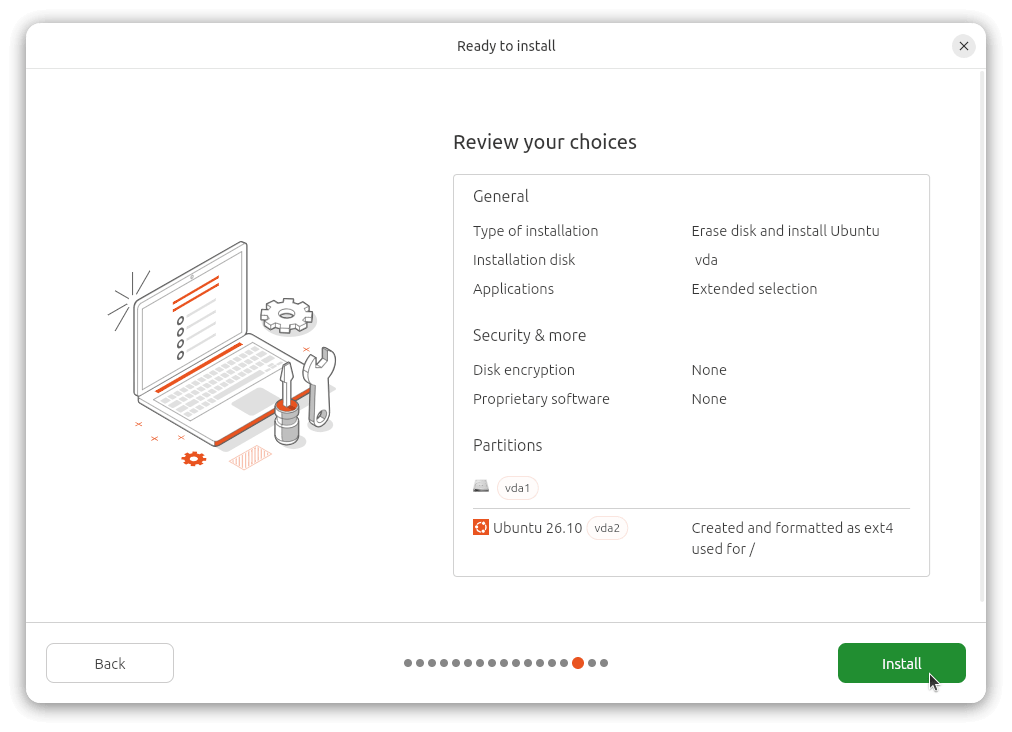
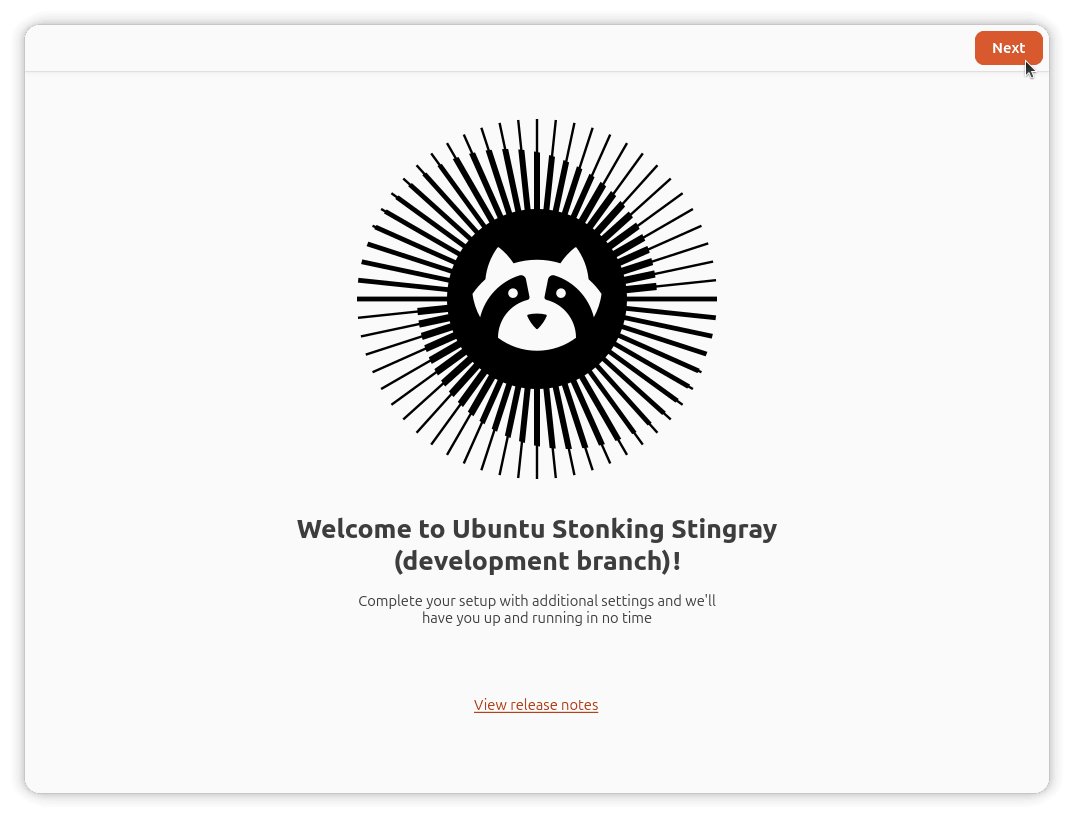
The typical installation and onboarding experience of Ubuntu.
Canonical is redesigning how Ubuntu gets installed, with a sharper focus on cutting down the complexity around partitioning and storage configuration. The new design is set to lean on safe defaults, guided workflows, and will be hiding advanced options behind a button (presumably) instead of throwing everything at you at once.
Alongside the installer, a new onboarding flow is in the works too. Instead of asking you to make every decision during setup, Ubuntu will move personalization and configuration into a dedicated first-boot experience after the system is already up and running.
Organizations deploying Ubuntu at scale will still be able to automate and configure these onboarding steps, just like they can with the current installer (pictured above).
Worth noting that both of these are explicitly aimed at Ubuntu 28.04 LTS. The design work is happening during the 26.10 cycle, but don’t expect the finished experience to show up fully baked in this release.
Linux Kernel 7.x
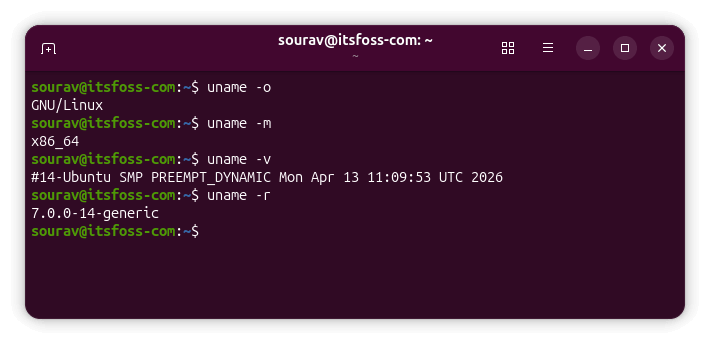
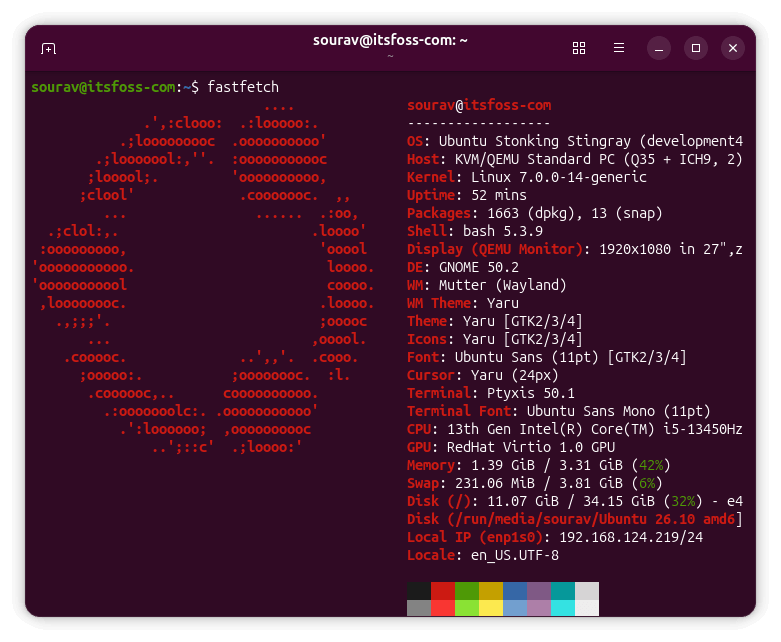
The Snapshot 2 build of Ubuntu 26.10 that I tested came with Linux kernel 7.0.0-14, but treat that as a temporary implementation rather than a final answer. Canonical changed its kernel selection policy back in 2024, opting to ship whatever upstream kernel version is the latest available at release freeze, even if it’s still in Release Candidate status.
That policy got extended further in 2025 to also track interim kernel versions during the development cycle itself through monthly snapshots, for better test coverage along the way.
That means the kernel version could easily shift between now and October. We have already covered what Linux kernel 7.0 itself brought to the table, so if you want the full rundown, that’s a good place to start.
A Major D-Bus Change
Ubuntu is finally swapping out dbus-daemon, the default D-Bus implementation it’s used since its very first release back in 2004, in favor of dbus-broker.
If you didn’t know, D-Bus is the messaging system your desktop relies on constantly, letting apps, background services, and the system itself pass messages back and forth. Anything from plugging in a USB drive to updating a notification badge runs through it.
Dbus-daemon has held up fine as the reference implementation for over two decades, but it has limits. Under heavy load, messages can vanish unexpectedly, and it queries message targets sequentially instead of all at once, which adds up to latency as the bus gets busier.
Dbus-broker addresses both by design, built around an asynchronous, event-driven architecture from the ground up, and it’s already the default on several other distros.
GNOME 51
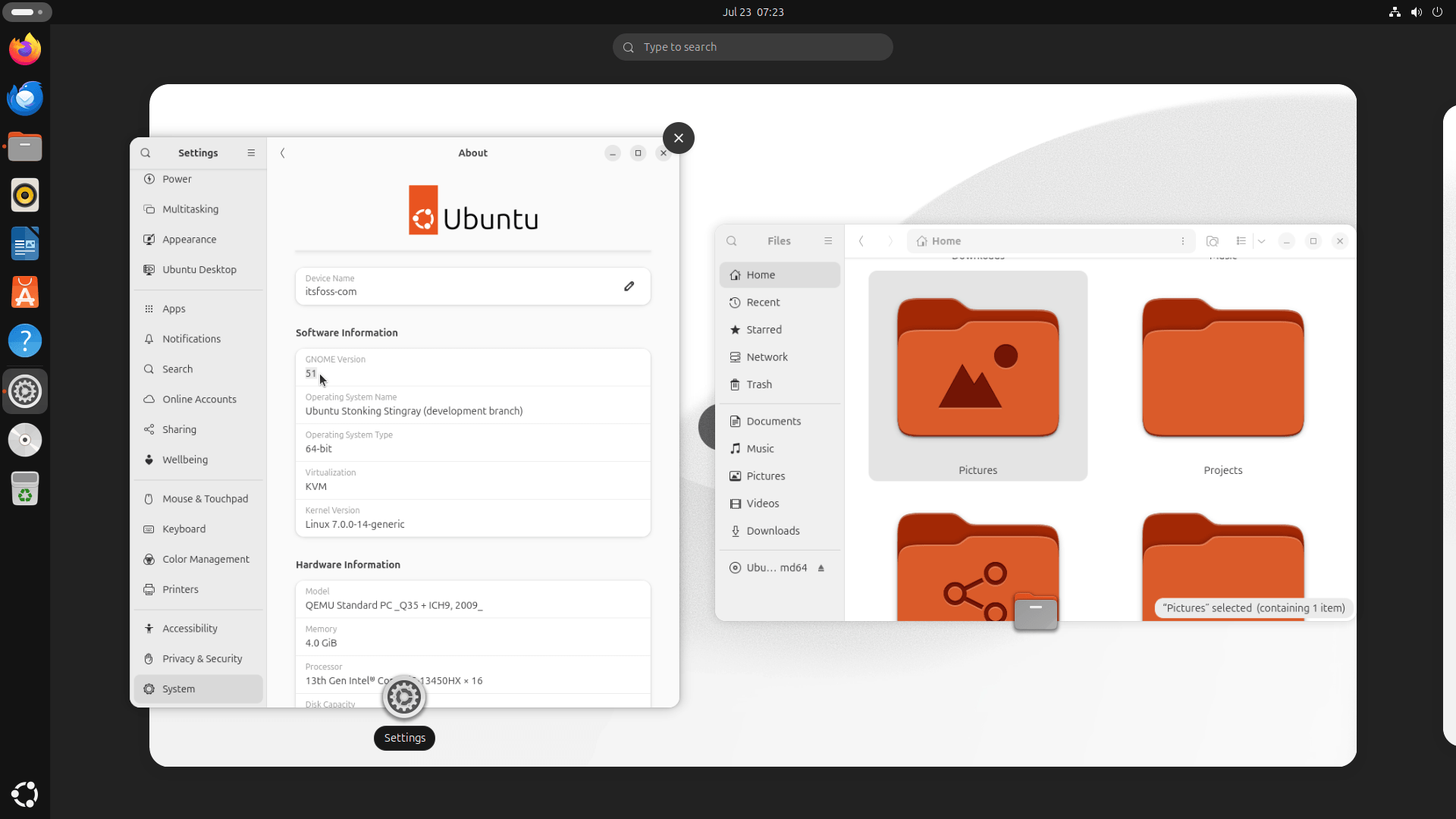
Ubuntu 26.10 is shipping with GNOME 51, the upcoming stable release from the GNOME project that’s scheduled to be out sometime in mid-September. We start with the Shell changes first, which has picked up many fixes that you will actually notice during daily use.
Screenshot selections now stretch cleanly to monitor edges instead of stopping short, the power-off dialog properly shows its “Install Updates” checkbox again, and the overview search box stops resetting its loading spinner every time you type a character.
It also swaps in custom sound effects instead of pulling from the system sound theme, saves and restores your monitor brightness across sessions, and only lights up the audio input icon in the top bar while your mic is actually recording.
The rest of the desktop environment picks up smaller but still visible changes.
The Settings app drops the “Windowing System” (Wayland ftw, I guess?) field from the About page and condenses system details into a single page. Similarly, Software now warns you before installing an app that’s already reached end-of-life, and Calendar got its internals rebuilt around GListModel for better performance and has picked up support for opening Teams meeting links directly.
Mutter, GNOME’s window manager, is dropping support for legacy NVIDIA drivers.
AI is Coming
If you remember, Canonical shared their plans to handle AI on Ubuntu back in April, when Jon Seager split things into two approaches. Implicit AI improves things you already use without you noticing, and explicit AI is the kind you’d actually summon on purpose.
The short version of it all was that everything would be local-first and built around open-weight models rather than forcing a cloud subscription onto users.
One of the earliest features under this new initiative is Myna, a local speech-to-text tool built around a simple push-to-talk flow. Hold a hotkey, speak, and the transcribed text lands wherever your cursor was sitting.
Recognition happens entirely on your machine through a sandboxed component called the Canonical Inference Snap, with different model sizes to match whatever hardware you’re running.
Ubuntu Certified Check
If you ever wondered whether your device was officially supported by Ubuntu, then you will like this one. The Settings menu is getting a simple way to check whether your machine is Ubuntu Certified.
Once live, it will show up inside the About page, where it will pull a certification status for your exact hardware model, checked against Canonical’s own database.
Results range from fully certified to certified for a different Ubuntu version, close to a certified model, not certified, or unable to check.
Package-Agnostic Approach
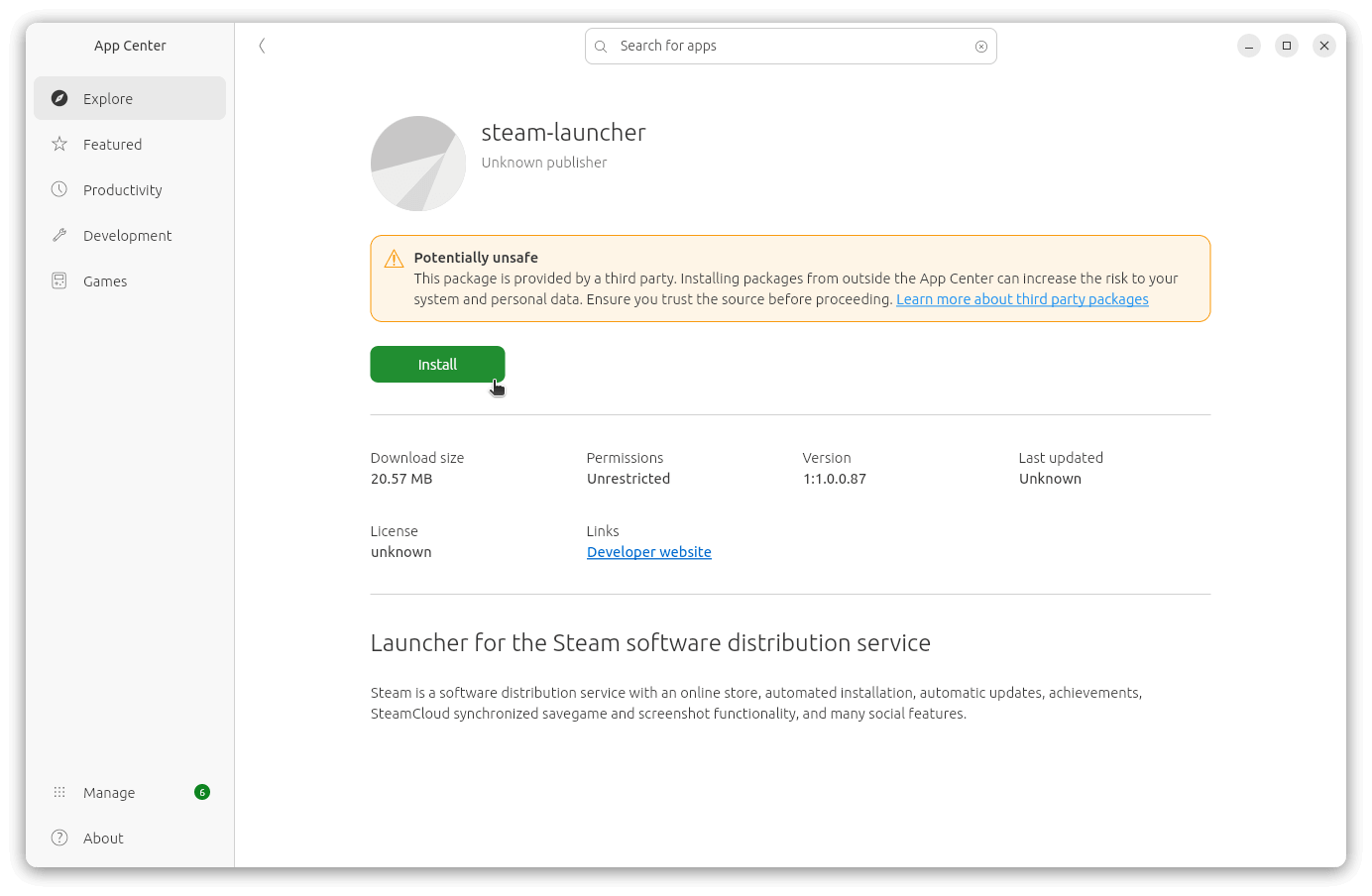
The App Center is getting rebuilt to handle apps consistently no matter which packaging format they come in, with unified search, ratings, categories, and metadata.
Earlier, when Canonical rebuilt Ubuntu’s software center into App Center for 23.10, it launched without the ability to install local DEB files at all. Double-clicking one either threw an error or left you staring at a spinner that never resolved.
That got fixed with an update to Ubuntu 24.04’s App Center months later.
Continued Rustification
Canonical is putting more weight behind memory-safe Rust rewrites, recently becoming a Gold Sponsor of the Trifecta Tech Foundation with a €40,000 yearly contribution.
Ubuntu’s already swapped coreutils, findutils, diffutils, and sudo for their Rust equivalents, with sudo-rs becoming the default in 25.10. Ntpd-rs is next in line, a Rust rewrite of the tools Ubuntu uses to keep system clocks synced.
The Trifecta funding is going toward catching ntpd-rs up to chrony on features like multi-threaded NTP servers and GPSd support, alongside AppArmor and seccomp hardening.
Although ntpd-rs is arriving in the testing archives for 26.10, it becoming the default is planned for next year, when Ubuntu 27.04 is introduced.
Miscellaneous Additions
And here are a bunch of smaller but important changes that deserve your attention now that you have scrolled so far. ☠️
- Continued push toward WCAG 2.2 AA accessibility compliance.
- New wallpapers, chosen through the usual community wallpaper contest, though Canonical hasn’t announced it yet.
- The full desktop experience for RISC-V, targeting RVA23-compliant hardware.
- Better driver management controls, with clearer metadata and maturity indicators for available drivers.
- Microsoft password and MFA authentication support through authd, with approval requests routed through Microsoft Authenticator.
- An experimental amd64v3 (x86-64-v3) package archive for testing performance gains on newer Intel and AMD CPUs.
- A proposed change to strip signed GRUB builds down to bare essentials for Secure Boot, dropping support for filesystems like Btrfs and ZFS in the process.
📥 Download Ubuntu 26.10
While the stable ISOs for this interim Ubuntu release are a few months out, you can take the snapshots for test runs on a virtual machine or a spare machine.
We don’t recommend installing such images on computers that are used daily or on production-sensitive deployments because these contain components that might break at any time.

This article first appeared on Read More