
ByteByteGo + Codemia.io = Better System Design Interview Prep
Hello guys, nowadays we are living in tough time for software developers, especially junior and mid level developers. With AI tools coding better than many developers, there is not much hope but still there are certain skills which gives developers an edge and System Design is one of those skills.
But, preparing for a system design interview is one of the toughest challenges for software engineers. Unlike coding interviews, where the solutions are often precise and testable, system design is open-ended.
You’re asked to design platforms like WhatsApp, Twitter, Spotify, URL shortener, or payment systems, and the evaluation is based on your ability to make trade-offs, structure scalable architectures, and communicate clearly.
This is all easier said then done and most of the candidate froze when asked to design a real world system on interview.
When I started my preparation journey, I quickly realized two things:
- Concepts and visuals matter — I needed a way to deeply understand distributed systems, caching, load balancing, consistency, and other fundamentals.
- Practice matters even more — It wasn’t enough to read; I had to apply concepts to real-world problems and practice under interview-like conditions.
That’s when I discovered the power of combining ByteByteGo with Codemia.io — a combination that turned out to be the secret weapon in cracking my 2025 system design interviews and getting 4 offers in relatively less time.
- System Design · Coding · Behavioral · Machine Learning Interviews
- Master System Design Interviews Through Active Practice
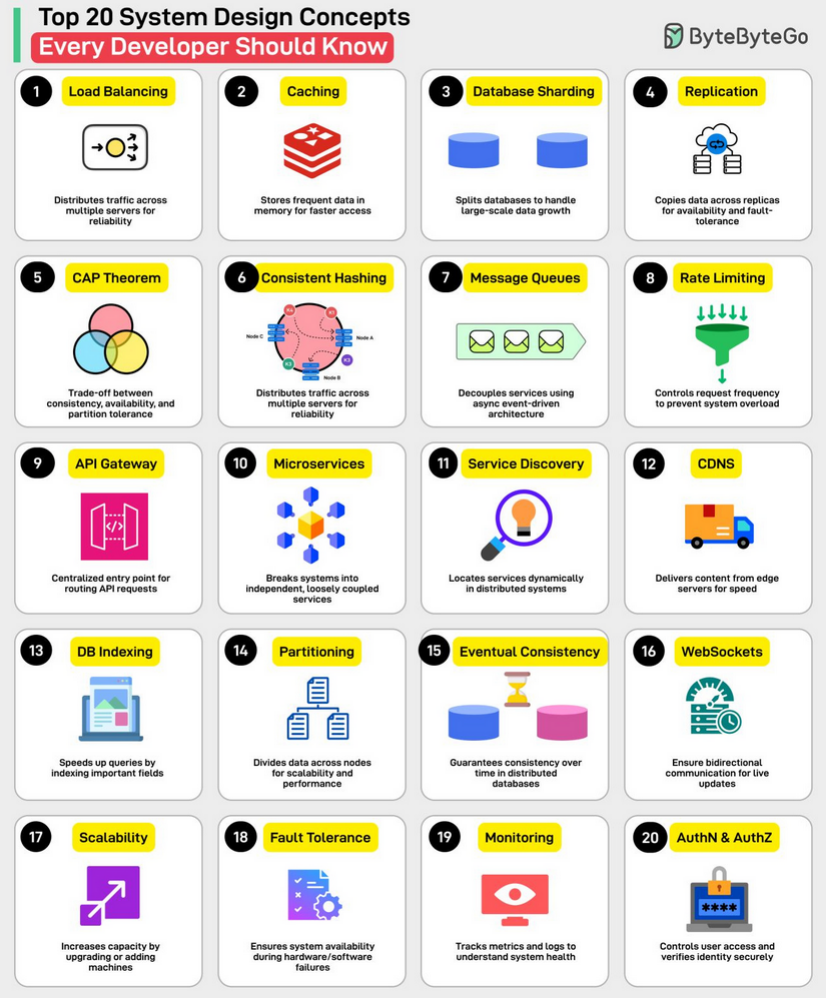
ByteByteGo: Visual Learning for Complex System Design
If you’ve ever struggled to follow a dry textbook on distributed systems, you’ll know how hard it is to retain concepts like sharding, CAP theorem, or event-driven architecture.
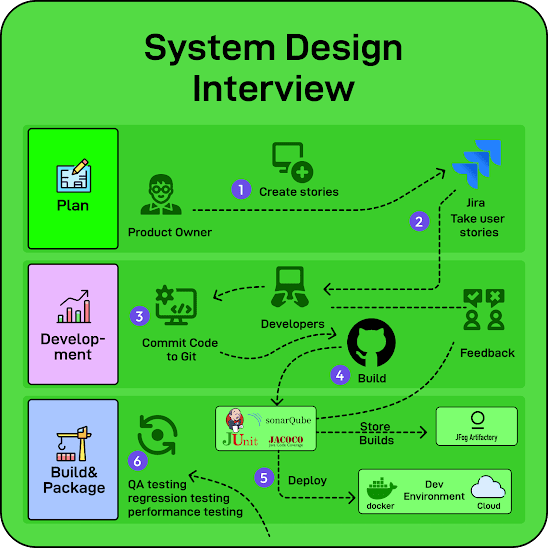
What makes ByteByteGo so effective is its industry-leading visual diagrams. Instead of endless theory, you get beautifully crafted illustrations that explain how real systems work:
- How Twitter handles millions of tweets per second?
- How Uber’s matching system works?
- How to build a scalable messaging queue?
The diagrams are so intuitive that they stick in your head long after reading. And in an interview setting, that’s gold — you’re able to sketch clear diagrams on the whiteboard and articulate trade-offs just like a senior engineer.
ByteByteGo’s content is curated and narrow but deep. It doesn’t distract you with unrelated topics — it focuses solely on system design, software architecture, and scalability.
That’s why it was my conceptual backbone throughout preparation.
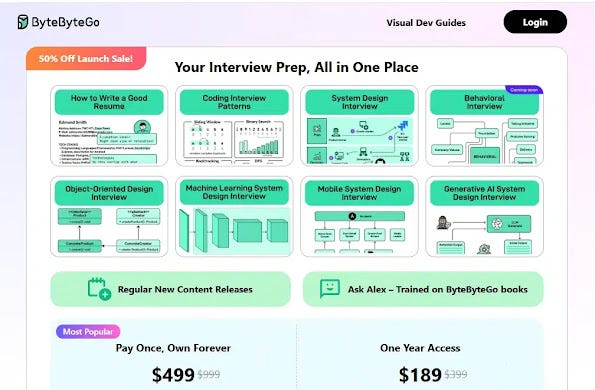
And, the great thing is that ByteByteGo is currently offering Lifetime Plan at 50% off.
If you’re serious about system design interviews, this is easily one of the best investments you can make and its also a rare deal because I have been using the platform for close to 4 years and I have never seen any discount barring one Black Friday a couple of years ago.
Here is the link — Join ByteByteGo lifetime plan with 50% discount
Use Codemia.io for Hands-On Practice With Real Interview Problems
While ByteByteGo sharpened my theoretical foundation, Codemia.io gave me the tools to put it into practice.
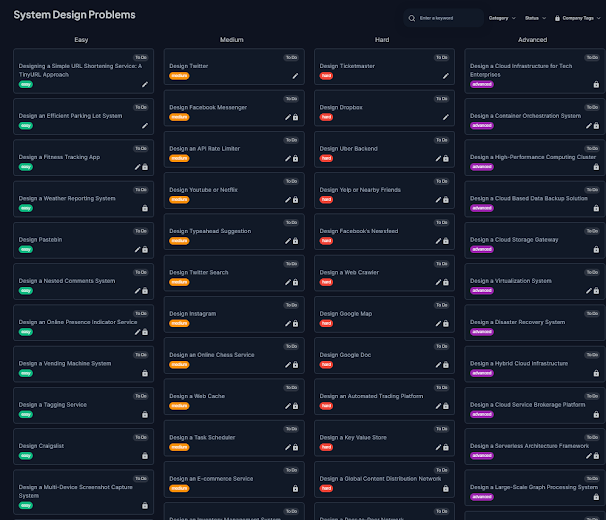
The platform is built specifically for system design interview prep and has a massive library of OOP and system design problems from top companies like FAANG and other leading tech firms.
Some of the features I found most useful:
- Practice mode with real-world problems (design Netflix, build a scalable payment system, etc.)
- AI-driven feedback to help you refine your answers and structure
- Step-by-step guides on approaching open-ended problems
- Progress tracking so you can see which areas need improvement
The best part? Codemia.io simulates the interview experience. You’re not just reading solutions — you’re building them, refining them, and learning how to communicate your design decisions.
This gave me the confidence to walk into my interviews and handle unexpected twists. Instead of freezing, I could lean on my practice reps from Codemia.io. They are also offering 50% discount now on their annual plans, good time to join.
Why the ByteByteGo + Codemia.io Combination Works?
The combination works because both ByteByteGo and Codemia.io complements each other.
- ByteByteGo = Clarity → I understood system design concepts through visual diagrams. Also ByteByteGo’s depth is un-parallel and now their knwoledge base has gone really big. You can find the diagram for all kind of System Design and Software architecture concepts there.
- Codemia.io = Application → Codemia’s real strength is their platform which allows you to practice real System Design interview question online. You can come up with solution, high level and low level diagrams and you can submit your solution for review with AI and experts. I practiced applying those concepts to real-world problems.
Together, they created the perfect prep loop: learn → apply → refine.
By the time I reached my final round interviews, I wasn’t just repeating memorized solutions — I was thinking like an architect. I could explain why I chose a certain database, how I’d handle scaling bottlenecks, and what trade-offs I’d accept.
The result? I cracked two FAANG-level offers in 2025. And honestly, I credit this preparation strategy — combining ByteByteGo for conceptual depth with Codemia.io for hands-on practice — as the turning point.
Conclusion
If you’re preparing for system design interviews in 2025, don’t make the mistake of relying on just theory or just practice. You need both.
- Use ByteByteGo’s Lifetime Plan (50% off here) to master concepts with world-class visuals.
System Design · Coding · Behavioral · Machine Learning Interviews
- Use Codemia.io to practice problems, simulate interviews, and build confidence.
Master System Design Interviews Through Active Practice
This combination doesn’t just help you crack interviews — it makes you a better engineer, capable of thinking about systems at scale.
Other System Design and Coding Interview and Resources you may like
- ByteByteGo vs Udemy? Which is better for System Design inteviews?
- 16 Best Resources for System Design Interview Prep
- Is ByteByteGo a good place for Coding interviews?
- 3 Free Books and Courses for System Design Interviews
- ByteBytego vs Exponent? which one is better?
- ByteByteGo 50% OFF? Should you Join?
- Is ByteByteGo a good place to learn Software Architecture?
- Should you join ByteByteGo to learn System Design?
- Is System Design Interview RoadMap by DesignGurus worth it?
- Is Exponent’s System Design Course worth it?
- Is OOP Design Interview — An Insider Guide worth it?
- Is Exponent Good Place for Coding Interview Prep?
- ByteByteGo vs Udemy? Which one is better for System Design?
- 6 Best System Design and API Design Interactive Courses
- Top 5 System Design YouTube Channels for Engineers
- How to prepare for DSA for coding interviews?
- Is DesignGuru’s System Design Course worth it
- Why AlgoMonster is best platform for DSA Prepration in 2025
- ByteByteGo vs NeetCode vs Educative? which one is better?
- DesignGurus.io Review 2025 — Is it worth it?
- 3 Places to Practice System Design Mock interviews
- Is Designing Data-intensive application book worth reading?
All the best for your Software Architecture learning journey, if you have any doubts or questions, feel free to ask in the comments.
P. S. — If you just want to do one thing at this moment, join ByteByteGo and start learning software architecture fundamentals and you will thank me later. It’s one of the most comprehensive resource for coding interview now.
System Design · Coding · Behavioral · Machine Learning Interviews

How I Combined ByteByteGo and Codemia.io to Crack System Design Interviews in 2025 was originally published in Javarevisited on Medium, where people are continuing the conversation by highlighting and responding to this story.
This post first appeared on Read More