

I’ve Read 20+ Books on System Design Interviews — Here Are My Top 5 Recommendations for 2026
I’ve Read 20+ Books on System Design Interviews — Here Are My Top 5 Recommendations for 2026
My favorite System Design books for Coding Interviews in 2026
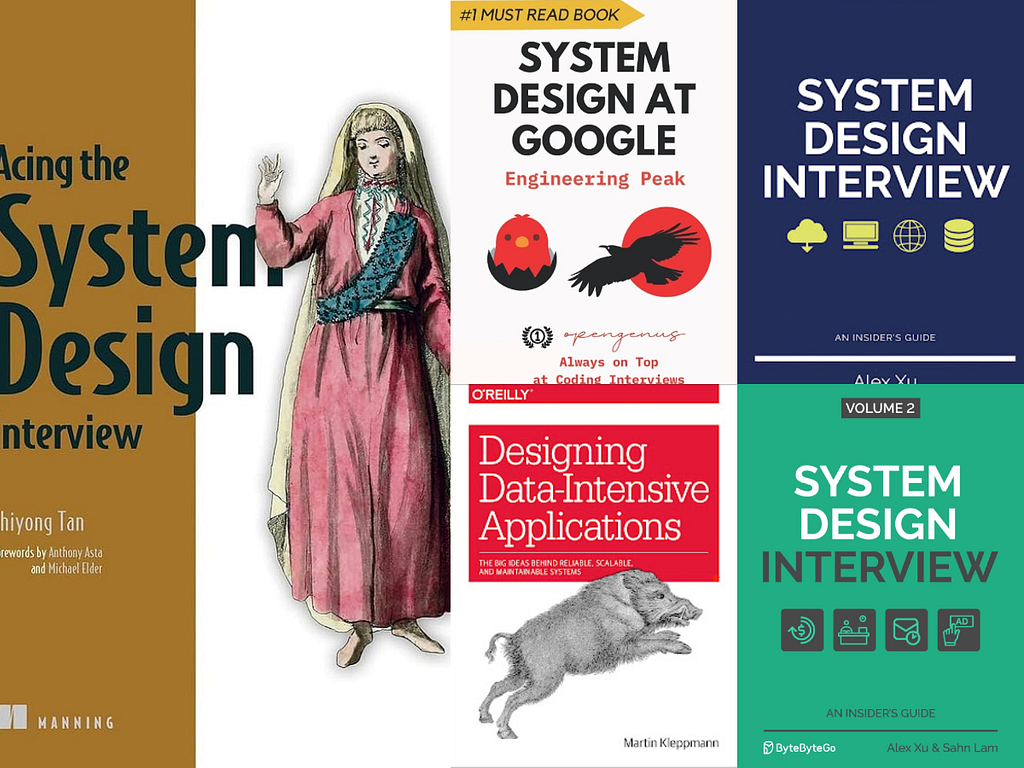
Hello guys, System design interviews have become the single most decisive stage of senior and staff-level engineering interviews. Whether you’re interviewing at FAANG, unicorn startups, or high-growth SaaS companies, your performance in the system design round often determines your final offer — or whether you get one at all.
Over the last few years, I’ve read over 20 books on system design, software architecture, distributed systems, and data-intensive systems. I originally started this journey to improve my own interview performance, but it eventually evolved into a habit — and now a passion.
Some books were transformational. Some were too theoretical. Some were painfully outdated. But a select few truly stand out — not just for interviews, but for becoming a better engineer.
Below are my top 5 system design books for 2026, carefully chosen based on clarity, interview usefulness, practical insights, and long-term relevance.
I’ve also included optional companion courses where relevant, including ByteByteGo, Codemia.io, Exponent, Educative, and Educative — useful if you prefer visual, interactive, or project-based learning.
Top 5 Books on System Design Interview for 2026
Without any further ado, here are the 5 best books you can read to prepare for System Design interviews in 2026. This include books on System Design, Software Architecture, as well as Machine Learning System Design.
1. System Design Interview — An Insider’s Guide (Vol. 1) by Alex Xu
Alex Xu — founder of ByteByteGo — completely changed how developers prepare for system design interviews. This book introduces a step-by-step, repeatable framework that instantly makes your interview answers more structured and confident.
What makes this book essential?
- A clear 4-step framework for any system design interview
- 16 real interview questions broken down from first principles
- 188+ visual diagrams that make complex systems easy to understand
- Realistic examples like URL shortener, news feed, YouTube, and Google Drive
- Deep but accessible explanations
If you’re only going to read one system design book, this is the one.
Though, If you want the fastest path to cracking system design interviews, you can also join ByteByteGo Platform, one of the best place to visually learn System Design and ML System Design concepts. They are also offering 50% discount now on their annual and lifetime plan, definitely worth it.
2. System Design Interview — An Insider’s Guide (Vol. 2) by Alex Xu & Sahn Lam
If Volume 1 gives you the fundamentals, Volume 2 takes you into advanced territory. This is an excellent continuation featuring more complex problems, deeper reasoning, and even more diagrams (300+).
What you get in this book:
- A refined 4-step design framework
- 13 interview problems with full end-to-end breakdowns
- Coverage of harder system design questions like:
- Proximity services
- Stock exchanges
- Real-time video processing
- Real-time collaboration apps
- Rich, detailed architectural diagrams
You can also pair this book with Codemia.io for some active practicing. Codemia.io is like Leetcode for System Design and you can solve popular System Design question online with drawing tools with AI assistance. They also have both AI and professional evaluator to check your solution.
They also have biggest collection of System Design questions from different companies. Pairing this book with Codemia.io gives you much needed repetition, pattern recognition, and confidence — especially for time-boxed interviews, and if this is not enough, they are also offering 60% discount now on their lifetime plan.
3. Machine Learning System Design Interview by Ali Aminian and Alex Xu
ML system design is the future — and one of the fastest-growing interview formats. This book bridges the gap between traditional system design and ML-specific architectures, introducing a 7-step ML system design framework that is extremely practical for interviews.
Highlights:
- A structured framework specifically for ML systems
- 10 full ML system design interview problems
- 200+ diagrams explaining ranking systems, recommender engines, visual search, and more
- Practical breakdowns of data pipelines, model serving, feature stores, and online inference
If your target roles involve AI, personalization, search, or recommendations, this book is invaluable.
You can also combine this book with Exponent for much needed mock interview preparation. This has helped me a lot while preparing for FAANG interviews in the past. They are also offering 70% discount now on their annual plan.
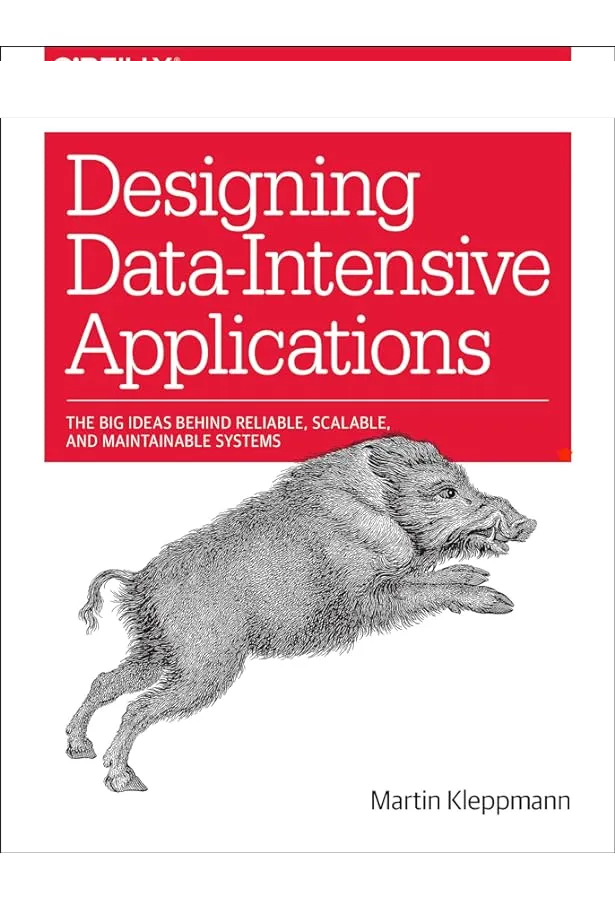
4. Designing Data-Intensive Applications (DDIA) by Martin Kleppmann
This is the most important system design book ever written — not specifically for interviews, but for mastering real-world distributed systems.
Every senior engineer should read DDIA at least once.
Why this book is legendary:
- Deep explanations of distributed systems
- Strong coverage of consistency, replication, partitioning, storage engines, streams
- Practical comparisons of real-world tools
- Clear architectural patterns grounded in actual systems
If you want to truly understand the systems behind Netflix, Kafka, Bigtable, DynamoDB, Elasticsearch, or Snowflake — this is the book.
It’s more advanced and theoretical than the others, but absolutely worth it and for active learning, you can also take System Design Interview Guide for Software Architecture course on Udemy to learn System design and Software Architecture in depth.
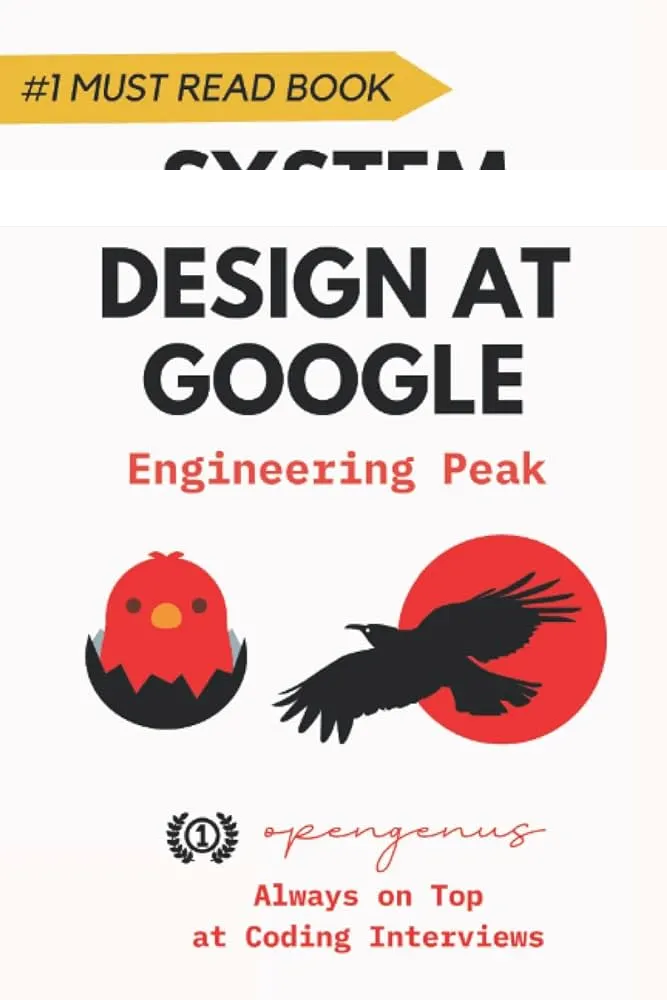
5. System Design at Google: Engineering Peak for Interviews
Although the Amazon rating is surprisingly low, this book contains excellent practical insights into real Google-scale systems.
The value lies in how it breaks down Google’s internal architecture patterns across:
- YouTube
- Google Search
- Google Maps
- BigQuery
- BigTable
- Dapper
- Hadoop
- And other planet-scale systems
If you want exposure to truly massive distributed systems, this book provides a highly technical, engineering-focused perspective.
Pairing it with a high-quality practice course like Grokking the Modern System Design from Educative.io can significantly boosts retention and help you prepare for interview faster.
Educative is also offering massive 50% discount now on their Premium Plus plan which give access to unlimited AI mock interviews. I highly recommend this website for interivew prep.
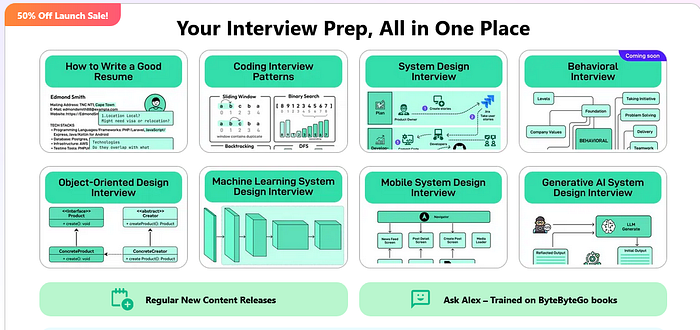
Bonus Recommendation: ByteByteGo (Highly Recommended)
While not a book, ByteByteGo has become the #1 visual learning platform for system design. Their diagrams are unmatched in clarity, and the weekly architecture breakdowns (Airbnb, Slack, Stripe, Discord, Uber, etc.) are extremely helpful for interviews.
If you want the fastest, most visual, and most industry-relevant way to learn system design, add ByteByteGo to your reading list.
The good thing is that they are also offering 50% discount on their annual and lifetime plan which means you can join them now for half price.
If you ask me, I recommend their lifetime plan because its one thing which you will need throughout your career and cost is just 3x annual plan so after 4th years its essential free.
Also Alex xu constantly update the course and he will be continuing to add more updated information which also means cost increase, by joining their lifetime plan you will get all those updates for free.
Here is the link to join — Grab the 50% OFF deal here
Conclusion
After reading 20+ books, these five consistently stand out because they offer:
- A disciplined framework for interviews
- Real-world architectural knowledge
- Hands-on examples and diagrams
- Practical thinking patterns you can use immediately
If you’re preparing for system design interviews in 2026 — or simply want to upgrade your engineering depth — start with these books. Add in ByteByteGo, Codemia.io, Exponent, and a couple of Udemy architecture courses, and you’ll be operating at a level far above most candidates.
Other System Design and Coding Interview and Resources you may like
- ByteByteGo vs Udemy? Which is better for System Design interviews?
- 16 Best Resources for System Design Interview Prep
- Is ByteByteGo a good place for Coding interviews?
- 3 Free Books and Courses for System Design Interviews
- ByteBytego vs Exponent? which one is better?
- ByteByteGo 50% OFF? Should you Join?
- Is ByteByteGo a good place to learn Software Architecture?
- Should you join ByteByteGo to learn System Design?
- Is System Design Interview RoadMap by DesignGurus worth it?
- Is Exponent’s System Design Course worth it?
- Is OOP Design Interview — An Insider Guide worth it?
- Is Exponent Good Place for Coding Interview Prep?
- ByteByteGo vs Udemy? Which one is better for System Design?
- 6 Best System Design and API Design Interactive Courses
- Top 5 System Design YouTube Channels for Engineers
- How to prepare for DSA for coding interviews?
- Is DesignGuru’s System Design Course worth it
- Why AlgoMonster is best platform for DSA Prepration in 2025
- ByteByteGo vs NeetCode vs Educative? which one is better?
- DesignGurus.io Review 2025 — Is it worth it?
- 3 Places to Practice System Design Mock interviews
- Is Designing Data-intensive application book worth reading?
All the best for your Amazon and FAANG job hunt journey, if you have any doubts or questions, feel free to ask in the comments and if you like these System design interview books and resources then please share, it will help others also.
P. S. — If you just want to do one thing at this moment, go and read System Design Interview — An Insider’s Guide (Vol. 1) by Alex Xu and start learning software architecture fundamentals and you will thank me later. It’s one of the best System design book for coding interview now.
System Design Interview – An insider’s guide

I’ve Read 20+ Books on System Design Interviews — Here Are My Top 5 Recommendations for 2026 was originally published in Javarevisited on Medium, where people are continuing the conversation by highlighting and responding to this story.
This post first appeared on Read More