

How to Use ByteByteGo to Crack System Design Interviews in 2026?
How to make best use of ByteByteGo courses and books to crack coding and system design interviews in 2026

Hello guys, System design interviews are often the most challenging part of the technical interview process at top tech companies like Google, Amazon, Meta, and Microsoft.
After helping hundreds of developers prepare for these interviews, I’ve discovered that ByteByteGo is one of the most effective platforms for mastering system design concepts.
In this comprehensive guide, I’ll show you exactly how to leverage ByteByteGo to ace your system design interviews, along with complementary resources that will give you an unbeatable edge.
Another great thing is that right now, ByteByteGo is offering huge 50% discount on their lifetime plan. This is insane as they rarely offer discount, os if you are still on the fence, now is the time to join.
Here is the link to get discount — 50% OFF on ByteByteGo Lifetime Plan
System Design · Coding · Behavioral · Machine Learning Interviews
Why System Design Interviews Are So Challenging?
Unlike coding interviews where you solve specific algorithmic problems, system design interviews test your ability to:
- Design scalable systems that handle millions of users
- Make trade-offs between consistency, availability, and partition tolerance
- Understand distributed systems concepts
- Communicate complex technical decisions clearly
- Think like a senior engineer
The problem? Most developers learn system design on the job, but you need these skills to get the job in the first place. That’s where ByteByteGo comes in.
System Design · Coding · Behavioral · Machine Learning Interviews
What Makes ByteByteGo Different?
ByteByteGo stands out from other system design resources because it’s created by Alex Xu, author of the best-selling “System Design Interview” books. The platform combines:
- Visual learning — Complex concepts explained through clear diagrams
- Real-world examples — Actual system designs from companies like Netflix, Uber, and Twitter
- Comprehensive coverage — From basics to advanced distributed systems
- Practical approach — Focus on what interviewers actually ask
Special Launch Offer: ByteByteGo is currently offering a 50% discount on their lifetime plan. This is a limited-time offer that gives you permanent access to all current and future content. Check out the lifetime plan here.

Don’t forget to use code JALJAD at checkout for an additional 10% discount!
My Step-by-Step Strategy Using ByteByteGo
Here is how I would go to prepare for my System Design and coding interview using ByteByteGo books and courses:
Phase 1: Build Your Foundation (Weeks 1–2)
Start with understanding the core concepts. ByteByteGo’s systematic approach makes this easy:
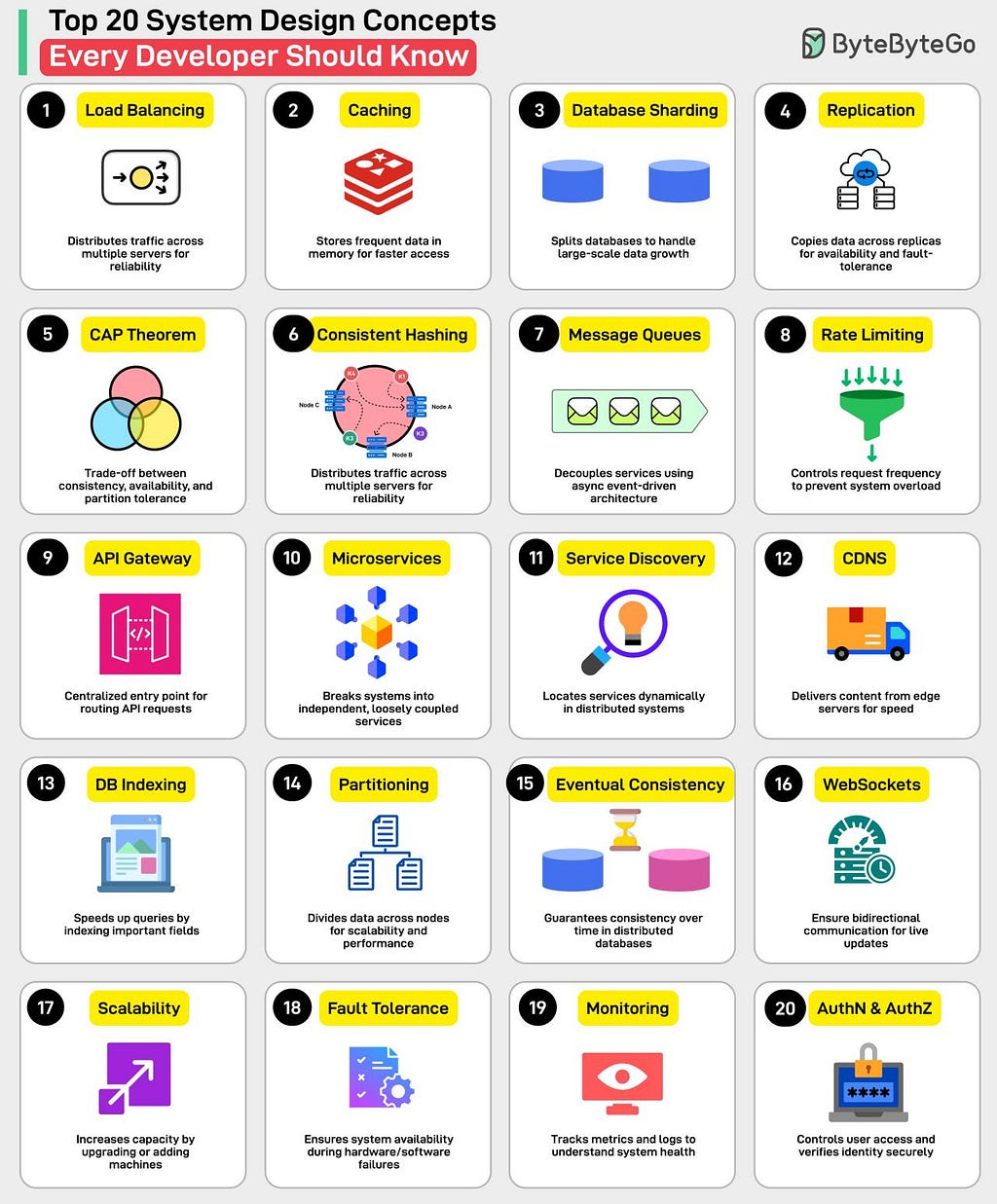
- Learn the fundamentals — Begin with scalability, load balancing, caching, and database sharding
- Understand trade-offs — Study CAP theorem, consistency patterns, and availability patterns
- Master key components — CDNs, message queues, API gateways, and microservices
The visual explanations on ByteByteGo make these abstract concepts concrete and memorable.
Phase 2: Study Real System Designs (Weeks 3–4)
This is where ByteByteGo truly shines. Work through their real-world system design examples:
- URL Shortener — Learn about hashing, database design, and analytics
- News Feed — Understand fanout, caching strategies, and ranking algorithms
- Video Streaming — Study CDN usage, adaptive bitrate streaming, and content delivery
- Video Recommendation System — Dive into ML system design
For each system, focus on:
- Why specific technologies were chosen
- How the system scales
- What trade-offs were made
- How to handle failures
Their visuals really makes it easy to understand complex system architecture like this one, you can see the full YouTube design tutorial here.

Phase 3: Master Specialized Topics (Weeks 5–6)
Depending on the role you’re targeting, dive into specialized areas:
For Machine Learning Engineers
ByteByteGo’s Machine Learning System Design course is invaluable. It covers:
- Visual search systems
- Recommendation engines
- Real-time prediction systems
- ML model deployment and monitoring
Complement this with the Machine Learning System Design Interview book for deeper insights.
Machine Learning System Design Interview
For AI/GenAI Roles
The Generative AI System Design Interview course is essential for 2026, covering:
- LLM integration patterns
- RAG (Retrieval Augmented Generation) systems
- AI safety and monitoring
- Cost optimization for AI systems
Also grab the Generative AI System Design Interview book for comprehensive preparation.
Generative AI System Design Interview
For Object-Oriented Design
Use ByteByteGo’s Object-Oriented Design course to master:
- Parking Lot Design
- Elevator System Design
- Library Management System
- Chess Game Design
The Object Oriented Design Interview book provides additional practice problems.
Object Oriented Design Interview: An Insider’s Guide
For Mobile Engineers
Check out the Mobile System Design Interview book which covers mobile-specific challenges like offline-first architecture and battery optimization.
Phase 4: Practice Coding Patterns (Ongoing)
Don’t neglect your coding skills while preparing for system design. ByteByteGo offers coding pattern exercises that help you:
- Recognize common problem patterns
- Solve problems more efficiently
- Connect coding and system design thinking
For deeper pattern mastery, get Coding Interview Patterns: Nail Your Next Coding Interview.
My Recommended Study Schedule
Week 1–2: Foundation
- 1–2 hours daily on ByteByteGo fundamentals
- Read Chapters 1–4 of System Design Interview Vol 1
- Take notes on key concepts
Week 3–4: Real Systems
- Study 2–3 system designs per week on ByteByteGo
- Practice explaining designs out loud
- Read corresponding chapters in System Design Interview Vol 2
Week 5–6: Specialization
- Focus on role-specific content
- Practice with peers or on Exponent
- Review weak areas
Week 7–8: Mock Interviews
- Do full mock interviews
- Time yourself (45 minutes per design)
- Get feedback from experienced engineers
Membership and Pricing – Exponent
Essential Books to Complement ByteByteGo
While ByteByteGo provides excellent visual learning, these books offer deeper insights:
- System Design Interview — An Insider’s Guide (Vol 1) — The foundational text that started it all. Essential for every developer.
- System Design Interview — An Insider’s Guide: Volume 2 — Advanced topics and more complex systems.
- Designing Data-Intensive Applications — The deep-dive technical reference for understanding distributed systems at a fundamental level.
These books work perfectly alongside ByteByteGo:
- ByteByteGo for visual learning and quick review
- Books for deep understanding and reference. While content is available on website, I generally like to read paper books.
System Design · Coding · Behavioral · Machine Learning Interviews
Pro Tips for Using ByteByteGo Effectively
Here are few tips to make the most of ByteByteGo for effective preparation:
1. Don’t Just read — Practice Drawing
After reading a ByteByteGo explanation, close it and try to redraw the system diagram from memory. This reinforces learning.
2. Focus on Communication
System design interviews test communication as much as technical knowledge. Practice explaining ByteByteGo’s designs in your own words.
3. Understand the “Why”
Don’t just memorize designs. Understand why each component exists and what happens if you remove it.
4. Create Your Design Templates
After studying multiple systems, create your own templates for:
- Data-heavy applications
- Real-time systems
- Read-heavy vs write-heavy systems
- Social networking features
Common Mistakes to Avoid
You can get better not just doing the right thing but also avoiding mistakes and not doing wrong things. Here are few things you can take note during real System Design interview.
Mistake 1: Jumping to Implementation Too Quickly
Start with requirements gathering and high-level design before diving into details.
Mistake 2: Over-Engineering
Not every problem needs microservices and Kubernetes. Use ByteByteGo’s examples to understand when simpler solutions work.
Mistake 3: Ignoring Non-Functional Requirements
Always discuss scalability, reliability, and performance. ByteByteGo emphasizes these aspects in every design.
Mistake 4: Not Asking Clarifying Questions
In real interviews, you must clarify requirements. Practice this even when studying alone.
Why the ByteByteGo Lifetime Plan Is Worth It?
ByteByteGo’s lifetime plan is currently 50% off — this is genuinely the best investment you can make in your career for several reasons:
- Continuous Updates — Alex Xu constantly adds new content based on latest interview trends
- Career-Long Resource — System design knowledge is useful throughout your entire career, not just for interviews
- Multiple Interview Cycles — Most people interview multiple times in their career. Lifetime access means you’re always prepared.
- Team Access — Many developers share insights with their teams, making everyone better
At the current 50% discount, plus the additional 10% off with code JALJAD, this is an incredible deal.
Get ByteByteGo Lifetime Access with 50% OFF

Real Success Stories
I’ve seen developers transform their interview performance using this approach:
- Sarah, Senior Engineer at Meta: “ByteByteGo’s visual approach finally made distributed systems click for me. Combined with the books, I felt confident in every interview.”
- Michael, ML Engineer at Google: “The Machine Learning System Design content on ByteByteGo was exactly what I needed. The interviewer was impressed with my structured approach.”
- Priya, Staff Engineer at Amazon: “I used ByteByteGo to refresh my knowledge after 5 years. The lifetime access meant I could take my time and really master each concept.”
Your Action Plan
Here’s what to do right now:
- Sign up for ByteByteGo — Use code JALJAD for 10% off on top of existing 50% OFF.
- Get the lifetime plan while it’s 50% off — This is a limited-time offer
- Order System Design Interview Vol 1 — Start reading while you explore ByteByteGo
- Schedule your study time — Block out 1–2 hours daily for the next 8 weeks
- Join study groups — Learn with others preparing for similar interviews
Additional Resources
Depending on your target role, consider these specialized resources:
- AI/ML Focus: Machine Learning System Design Interview book
- GenAI Roles: Generative AI System Design Interview book
- Coding Prep: Coding Interview Patterns
- OOP Design: Object Oriented Design Interview book
- Deep Technical Foundation: Designing Data-Intensive Applications
Final Thoughts
System design interviews don’t have to be intimidating. With ByteByteGo’s visual approach, Alex Xu’s comprehensive books, and consistent practice, you can master these interviews.
The combination of ByteByteGo’s platform and the complementary books creates a complete learning system:
- Visual learning from ByteByteGo
- Deep understanding from the books
- Practical application through practice problems
- Community support through discussions
Remember, the 50% lifetime plan discount won’t last forever. This is your chance to invest in a resource that will serve you throughout your entire engineering career.
Start your ByteByteGo journey today →
System Design · Coding · Behavioral · Machine Learning Interviews
Don’t forget to use code JALJAD for an extra 10% discount!
Thanks for reading this article so far. If you like these System Design resources and platforms then please share them with your friends and colleagues. If you have any questions or feedback, then please drop a note.

How to Use ByteByteGo to Crack System Design Interviews in 2026? was originally published in Javarevisited on Medium, where people are continuing the conversation by highlighting and responding to this story.
This post first appeared on Read More