

Top 10 Frameworks Java Developers Should Learn in 2026
These are 10 frameworks Java developers can learn in 2026 to boost their career and skills with resources.
Hello guys, the Java ecosystem continues to evolve rapidly, driven by cloud native architectures, microservices, AI powered applications, and modern frontend demands.
While Java itself remains stable, the frameworks around it define how effectively developers can build, scale, and maintain real world systems.
If you want to stay competitive in 2026, here are the top 10 frameworks every Java developer should seriously consider learning, along with why they matter.
10 Best Framework for Java Developers to learn in 2026
Without any further ado, here are the top 10 framework and libraries a Java developer should learn in 2026, I have also shared resources like online courses and books which you can use to learn them.
1. Spring Boot
Spring Boot remains the most important framework in the Java world. It simplifies application configuration, enables rapid development, and is the backbone of most enterprise Java systems today.
In 2026, strong knowledge of Spring Boot, including auto configuration, dependency management, and production readiness features, is still essential.
And, if you need a resource, I recommend heck Master Spring Boot 3 & Spring Framework 6 with Java by In28Minutes on Udemy and Spring Start Here: Learn what you need and learn it well book.

2. Spring Cloud
As microservices remain dominant, Spring Cloud continues to be a key framework for building distributed Java systems. It provides tools for service discovery, configuration management, resilience, and inter service communication.
Understanding Spring Cloud helps you design systems that scale and recover gracefully. If you need a resource, Building Scalable Java Microservices with Spring Boot and Spring Cloud course on Coursera is a good one to start with.

3. Quarkus
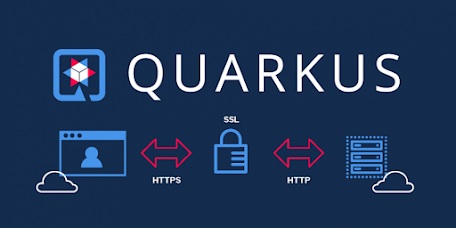
Quarkus is designed for cloud native and container first Java applications. It offers fast startup times and low memory usage, making it ideal for Kubernetes and serverless environments.
Java developers targeting modern cloud platforms should learn Quarkus in 2026. If you need a course, Starting with Quarkus on Udemy is a great resource to start with.
4. Micronaut
Micronaut focuses on performance and efficiency by avoiding runtime reflection and heavy proxies. It is particularly popular for microservices and serverless workloads.
Learning Micronaut helps Java developers build lightweight applications that start fast and consume fewer resources. If you need a learning resource, you can checkout Introduction to Micronaut (Free Course) on YouTube.
https://medium.com/media/4509b0f9d3c1b5111d6443b31a52326a/href
5. Hibernate and JPA
Hibernate and JPA remain foundational for data access in Java. Beyond basic CRUD operations, developers should understand performance tuning, caching strategies, and advanced mappings.
Mastering Hibernate helps avoid common performance and scalability issues in enterprise applications. For learning Hibernate, I recommend Spring & Hibernate for Beginners (includes Spring Boot) course as well as High Performance Java Persistence bundle by Vlad Mihalcea.

6. Apache Kafka
While not a traditional framework, Apache Kafka is essential for building event driven systems. Java developers should learn how to produce and consume events, design event schemas, and build reliable messaging pipelines.
Kafka knowledge is highly valued in data intensive and distributed systems. For learning Kafka I highly recommend Kafka series courses by Stephen Marek on Udemy.
6. Event Driven Architecture and Kafka Streams
Event driven systems are everywhere. Apache Kafka, along with Kafka Streams, is a core framework for building scalable, asynchronous architectures.
Java developers should know how to design event pipelines, handle failures, and process real time data reliably. If you need resources, I suggest The Complete Microservices & Event-Driven Architecture course on Udemy along with above course on Kafka.

7. LangChain4j
LangChain4j is quickly becoming a key framework for building AI powered Java applications. It enables integration with large language models, embeddings, vector databases, and retrieval augmented generation workflows.
Java developers working on AI features should learn this framework in 2026 and if you want to learn AI and LLM Engineer, I recommend to read AI Engineering by Chip HuyenandThe LLM Engineering Handbook by Paul Iusztin and Maxime Labonne, both of them are great books and my personal favorites.

And, if you need courses, I have shared best LangChain courses here
7 Best Udemy Courses to Learn LangChain and LangGraph in 2025
8. Spring AI
Spring AI brings AI capabilities directly into the Spring ecosystem. It simplifies working with LLMs, embeddings, and AI models while aligning with familiar Spring patterns.
For Spring developers, this is one of the easiest ways to add AI driven features to Java applications. For learning Spring AI, I highly recommend Spring AI: Beginner to Guru course by John Thompson on Udemy.

9. Apache Flink
Apache Flink is a powerful framework for stream processing and real time analytics. Java developers working with data intensive applications, fraud detection, monitoring, or AI pipelines will benefit greatly from learning Flink in 2026.
If you need resources, there are not many option but this one is a good one — Apache Flink | A Real Time & Hands-On course on Flink on Udemy. Highly recommended.

10. Full Stack Java with React and Next.js Integration
Modern Java developers are increasingly expected to understand the full stack. While React and Next.js are not Java frameworks, learning how to integrate Java backends with modern frontend frameworks is a valuable skill.
Understanding authentication flows, API contracts, and server side rendering helps Java developers build end to end systems and when it comes to learning, I recommend Become a Java Full Stack Developer with React & Spring Boot course on Udemy. Madan Reddy has done a great job with this course.

Final Thoughts
In 2026, Java developers need more than traditional enterprise frameworks. Cloud native design, event driven systems, and AI integration are shaping the future of Java development.
Focus on mastering Spring Boot first, expand into cloud native frameworks like Quarkus and Micronaut, invest in event streaming and AI frameworks, and develop full stack awareness.
This combination will keep your Java skills relevant and in high demand for years to come.
And, if you want to improve your System Design skills then I also recommend you to join ByteByteGo, one of the best place to level up your system design and coding interview skills.
Other System Design and Coding Interview and Resources you may like
- ByteByteGo vs Udemy? Which is better for System Design interviews?
- 16 Best Resources for System Design Interview Prep
- Is ByteByteGo a good place for Coding interviews?
- 3 Free Books and Courses for System Design Interviews
- ByteBytego vs Exponent? which one is better?
- ByteByteGo 50% OFF? Should you Join?
- Is ByteByteGo a good place to learn Software Architecture?
- Should you join ByteByteGo to learn System Design?
- Is System Design Interview RoadMap by DesignGurus worth it?
- Is Exponent’s System Design Course worth it?
- Is OOP Design Interview — An Insider Guide worth it?
- Is Exponent Good Place for Coding Interview Prep?
- ByteByteGo vs Udemy? Which one is better for System Design?
- 6 Best System Design and API Design Interactive Courses
- Top 5 System Design YouTube Channels for Engineers
- How to prepare for DSA for coding interviews?
- Is DesignGuru’s System Design Course worth it
- Why AlgoMonster is best platform for DSA Prepration in 2025
- ByteByteGo vs NeetCode vs Educative? which one is better?
- DesignGurus.io Review 2025 — Is it worth it?
- 3 Places to Practice System Design Mock interviews
- Is Designing Data-intensive application book worth reading?
All the best for your Amazon and FAANG job hunt journey, if you have any doubts or questions, feel free to ask in the comments.
P. S. — If you just want to do one thing at this moment, join ByteByteGo and start learning software architecture fundamentals and you will thank me later. It’s one of the most comprehensive resource for coding interview now.
System Design · Coding · Behavioral · Machine Learning Interviews

Top 10 Frameworks Java Developers Should Learn in 2026 was originally published in Javarevisited on Medium, where people are continuing the conversation by highlighting and responding to this story.
This post first appeared on Read More