

10 Key Trends In Java And Spring Boot Technologies
Dear Readers, In this article, I will share 10 key trends in Java and Spring Boot that may contribute to the growth of Java and Spring Boot in 2026.
It demonstrates how AI, cloud-native apps, performance enhancements, and modern architectures are transforming backend development. You’ll learn how these trends make applications faster, safer, and easier to scale — helping you stay ahead in backend engineering.

1-AI-Driven Spring Boot Development
AI has now been integrated with IDEs like IntelliJ, VS Code, and many other IDEs as well. You can download the GitHub Copilot plugin in your IntelliJ, and by using your GitHub Copilot login credentials, you can ask Copilot to make any changes in your code. You can use Copilot to generate boilerplate code, configuration files (YAML, DTOs), and unit tests.
The main goal is to reduce repetitive work so developers can focus on solving real business problems.
//AI-PROMPT: Generate a Spring Boot REST controller for a ‘Customer’ entity
The above prompt will generate CustomerController class without any manual intervention. And this reduces the development time and increases productivity.
2-The Rise of JVM Serverless Runtimes
With GraalVM native builds, Java is now a strong choice for serverless apps. Spring Boot functions start almost instantly, can scale down to zero very quickly, and help reduce cloud costs. This makes Spring Boot a smart and efficient option for building event-driven cloud applications.
gcloud functions deploy my-spring-function — gen2 — runtime=java17 — entry-point
The above command deploys a Java function to the cloud. When built as a native app, it starts very fast, making it perfect for serverless use cases.
3-GraalVM Native Images Go Mainstream
GraalVM will be widely used to convert Java apps into native code. This makes applications start much faster (within milliseconds) and use much less memory. Because of this, Spring Boot will compete strongly with other programming languages like Go and Rust, especially for serverless apps and microservices. Native Docker images will become the common way to deploy applications.
mvn spring-boot:build-image -Pnative
The above Maven command uses Spring Boot’s native option to build a fast, lightweight native app and package it directly into a container image.
4-HTTP/3 & QUIC Become the API Standard
QUIC and HTTP/3 will become the standard for API communication. They make connections faster and reduce delays, giving 20–30% quicker API responses. This is especially helpful for mobile and IoT apps running on unstable networks. New servers will support HTTP/3 by default and automatically fall back to HTTP/2 for older clients.
server.http3.enabled=true
A simple configuration property in a Spring Boot `application.properties` file that enables HTTP/3 support, allowing the application to serve requests over the faster QUIC protocol.
5-The Rise of the ‘Modular Monolith 2.0’
After using microservices a lot, many teams are moving back to well-structured modular monoliths. This keeps deployment simple while still maintaining clear boundaries like microservices. Tools such as Spring Modulith help by enforcing module separation, tracking events between modules, and auto-creating architecture diagrams, making complex systems easier to manage.
package com.ecommerce.product;
@SpringBootApplication(scanBasePackages = "com.ecommerce.*")
In a modular monolith, different business domains (e.g., ‘product’, ‘payment’, ‘shipping’) are organized into distinct packages within a single application that promotes code cohesion and loose coupling.
6-Advanced Event-Driven Architectures with NATS, Pulsar & Redpanda
The need for fast, real-time systems is increasing the use of modern event platforms like NATS, Pulsar, and Redpanda. They deliver very low latency, reliable message storage, and cloud-friendly design. These tools help build scalable, resilient, and responsive event-driven systems, going beyond traditional message queues.
Connection nc = Nats.connect("nats://localhost:4222");
nc.publish("orders.new", orderJson.getBytes(StandardCharsets.UTF_8));
A code snippet showing how a Java application can connect to a NATS server and publish an event to the ‘orders.new’ subject. This is fundamental to event-driven communication.
7-Virtual Threads Become the Default
Virtual threads, introduced with Project Loom, will become the default way Java runs tasks. They are very lightweight and managed by the JVM, allowing one application to handle millions of requests easily. Developers can write simple, blocking code that still performs like high-performance reactive code. This is one of the biggest performance improvements in Java in the last 20 years.
try (var executor = Executors.newVirtualThreadPerTaskExecutor()) {
executor.submit(() -> handleRequest(req));
}
The above Java code creates an executor that starts a new virtual thread for each submitted task. This pattern makes it easy to handle a massive number of concurrent operations without exhausting system resources.
8-API Security Shifts to Zero-Trust and Continuous Authentication
Static API keys are being replaced by a Zero-Trust security approach. In this model, no user or device is trusted by default. Access is checked continuously based on things like device status, user behavior, and location. When combined with mTLS and automatic key rotation, this creates much stronger protection against modern security threats.
{
"action": "allow",
"condition": "identity.score > 75 && device.is_compliant == true"
}
A conceptual security policy in JSON format. Access is granted only if the user’s continuously calculated identity score is high and their device meets security compliance standards.
9-Multi-Cloud & Cloud-Agnostic Deployments with Crossplane
To avoid being locked into one cloud provider, many teams are adopting multi-cloud strategies. Tools like Crossplane let teams manage cloud infrastructure using Kubernetes in a single, unified way. This makes it easy to create and manage resources like databases and message queues across AWS, GCP, and Azure, even in complex hybrid setups.
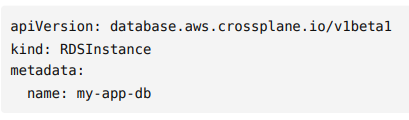
This is a Kubernetes-style YAML file used by Crossplane to define an AWS RDS database. Crossplane handles creating and managing the database, so teams don’t need to deal with cloud-specific details.
10-JVM Observability 2.0: From Reactive to Proactive
Monitoring is shifting from fixing problems after they happen to preventing them early. Technologies like eBPF make it possible to safely monitor and debug systems in production with very low overhead. OpenTelemetry will automatically collect detailed insights without changing code. This data can be used by AI to predict issues in advance and even fix problems automatically, changing how DevOps teams work.

This command uses bpftrace to monitor all “write” system calls made by Java apps. It gives deep system-level insights without slowing down the application.
Conclusion
The future of Java and Spring Boot is changing fast. To stay competitive, teams need to adopt these new trends. Start by trying tools like GraalVM, Spring Modulith, and NATS. Plan how to use them in your systems for 2026 and beyond. Review your current applications to see where you can improve performance, scalability, or security — such as using virtual threads or Zero-Trust security. Most importantly, train your development and DevOps teams so they’re ready for the next generation of backend development.
Clap 👏 and add a comment if you liked this article.
Reference — https://www.linkedin.com/feed/update/urn:li:activity:7407032420119760896/

10 Key Trends In Java And Spring Boot Technologies was originally published in Javarevisited on Medium, where people are continuing the conversation by highlighting and responding to this story.
This post first appeared on Read More