

10 Essential Skills Every Software Engineer Should Learn in 2026
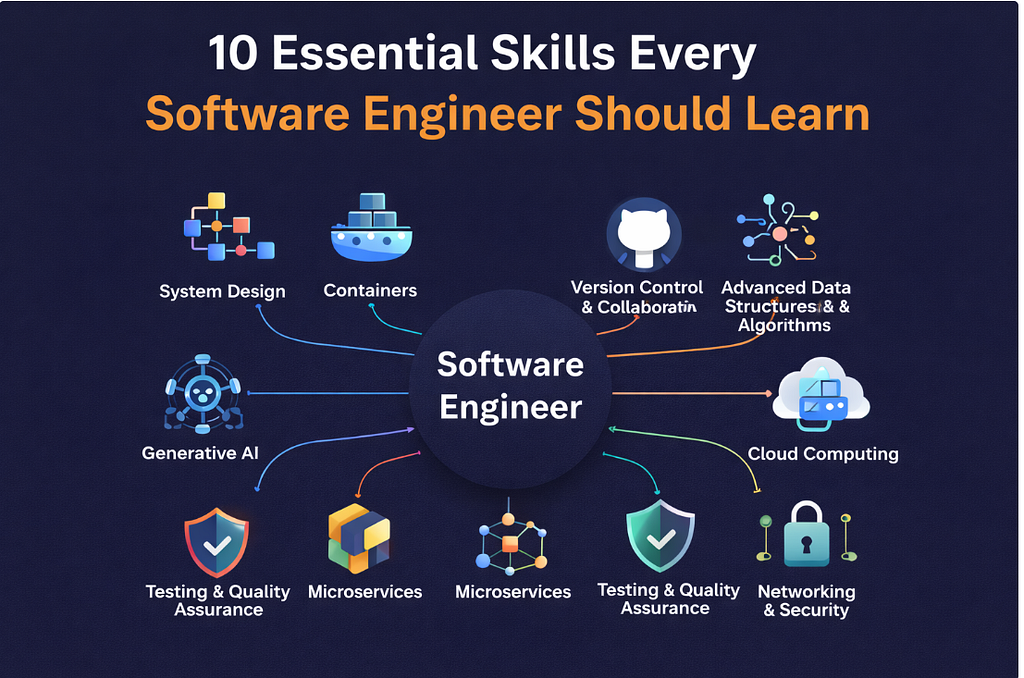
10 technical skills every software engineer can learn in 2026 with resources.
Hello guys, the tech landscape evolves rapidly. What was cutting-edge last year might be table-stakes today. If you want to stay competitive, advance your career, and command top salaries in 2026, you need to master specific skills that employers desperately want.
I’ve spent time analyzing job postings, talking to hiring managers at top tech companies, and evaluating what separates mid-level engineers from senior engineers.
The result? These 10 skills will define your career trajectory in 2026.
10 Essential Tech Skills Software Engineers should Learn in 2026
Without any further ado, here are the key tech skills you can learn or improve in 2026 to give your career a boost and make yourself more employable in current market.
1. System Design & Distributed Systems Architecture
Why It Matters: System design is the ultimate skill separator. It’s what determines if you can handle complex problems at scale, and it’s the gatekeeper for senior roles and high salaries.
Companies like Google, Meta, Amazon, and Netflix won’t hire senior engineers without strong system design skills. Being able to architect scalable, fault-tolerant systems is non-negotiable.
What You’ll Learn:
- Designing systems that scale to millions of users
- Trade-offs between consistency and availability
- Database sharding, caching, and load balancing
- Microservices architecture patterns
- Real-world system design case studies (Twitter, Uber, Netflix, etc.)
Recommended Resource:
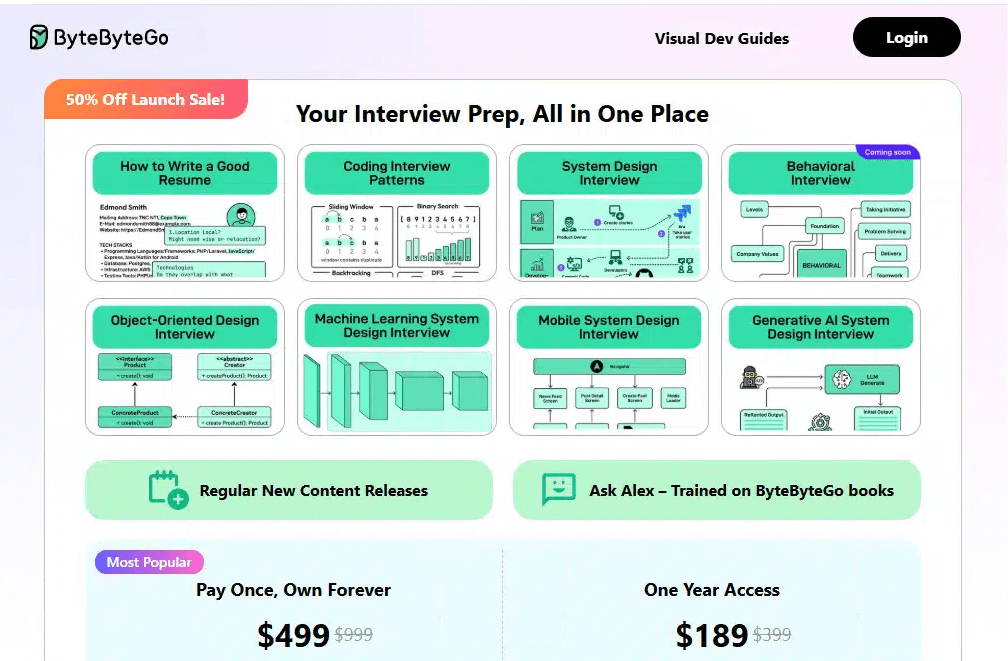
ByteByteGo System Design Course
ByteByteGo is the #1 resource for system design learning. Alex Xu’s visual diagrams make complex concepts stick immediately. The course covers real systems from companies you know and breaks down how they actually work. They are also offering 50% discount now on lifetime plan which is what I have got and I recommend the same as it provides best value.
Why: Visual learning is unmatched for system design. When you’re in an interview, you’ll recall these diagrams perfectly.
Here is the link to join this course — ByteByteGo System Design Course (50% discount)
2. Advanced Data Structures & Algorithms
Why It Matters: You’ll never stop doing algorithm problems. They appear in every coding interview at top companies. But more importantly, understanding algorithms deeply makes you a better engineer — you write more efficient code and spot performance bottlenecks immediately.
What You’ll Learn:
- Advanced data structures (graphs, tries, segment trees, disjoint sets)
- Dynamic programming patterns
- Graph algorithms (BFS, DFS, Dijkstra, Floyd-Warshall)
- Time and space complexity analysis
- Pattern recognition for solving problems efficiently
Recommended Resource:
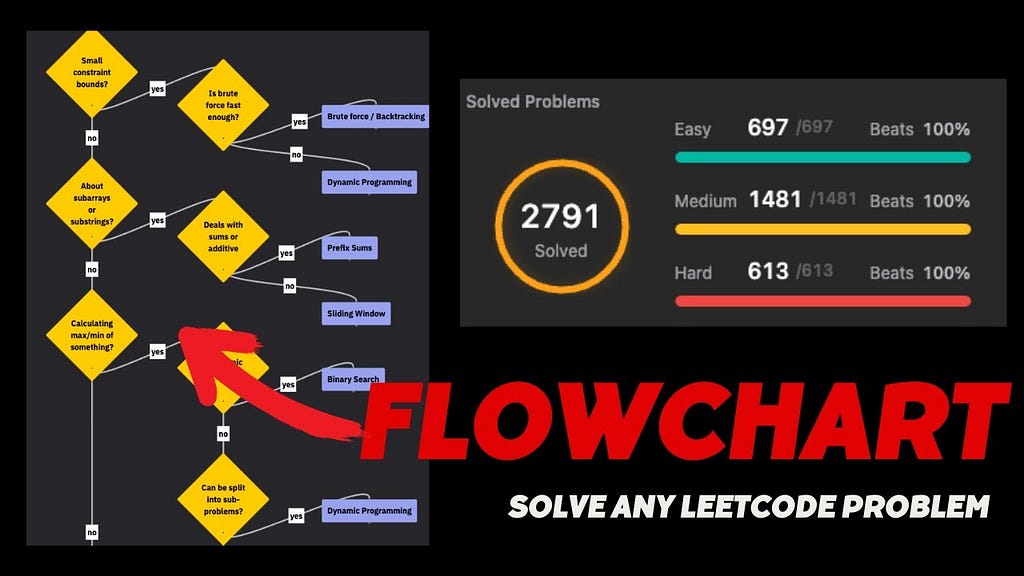
AlgoMonster teaches patterns, not random problems. Instead of grinding 500 LeetCode problems, you learn 15–20 patterns that solve hundreds of problems. At 50% off lifetime access, you’re paying once and getting algorithms mastery forever.
Why: Pattern-based learning is exponentially more efficient than brute-force grinding. You’ll spend less time practicing but retain more knowledge.
Here is the link to get discount — AlgoMonster Lifetime Plan (50% OFF)
3. Cloud Architecture (AWS/GCP/Azure)
Why It Matters: Cloud is no longer optional — it’s essential. Every company is moving to cloud. If you can’t design and deploy cloud-native applications, you’re limiting your career severely.
Senior engineers need to understand cloud-native architecture, serverless computing, containerization, and infrastructure-as-code.
What You’ll Learn:
- Cloud service models (IaaS, PaaS, SaaS)
- AWS/GCP/Azure core services
- Cloud-native architecture patterns
- Serverless computing (Lambda, Cloud Functions)
- Cost optimization and security best practices
Recommended Resource:
Udacity Cloud Developer Nanodegree
Udacity’s cloud programs are comprehensive and project-based. You’ll build real cloud infrastructure, not just watch videos. The hands-on projects give you resume-worthy work.
Why: Cloud is where the money is in 2026. Engineers with strong cloud skills earn 30–40% more.
Here is the link to join this course — Udacity Cloud Developer Nanodegree

Alternative: Coursera Cloud Computing Specializations from major cloud providers
4. Kubernetes & Container Orchestration
Why It Matters: Kubernetes has become the standard for deploying containerized applications at scale. DevOps, backend engineers, and even frontend engineers increasingly need Kubernetes knowledge.
Understanding K8s separates engineers who can handle complex deployments from those who can’t.
What You’ll Learn:
- Docker containerization fundamentals
- Kubernetes architecture (pods, deployments, services)
- StatefulSets, DaemonSets, and Jobs
- Networking and storage in Kubernetes
- Helm, ConfigMaps, and Secrets management
- Deploying and scaling real applications
Recommended Resource:
Kubernetes for the Absolute Beginners — Hands-on
Look for comprehensive Kubernetes courses on Udemy that focus on practical deployment, not just theory. When Udemy has sales (which they always do), grab a course for $10–15.
Why: K8s knowledge adds significant value to your profile and opens doors to DevOps and platform engineering roles.
Here is the link to join this course — — Kubernetes for the Absolute Beginners —Hands-on

5. API Design & REST/GraphQL Mastery
Why It Matters: Every software engineer builds APIs or works with APIs daily. Designing good APIs is an art. Poor API design causes problems for years. Companies need engineers who can design elegant, scalable, maintainable APIs.
What You’ll Learn:
- REST API design principles and best practices
- HTTP methods and status codes (the right way)
- API versioning and backward compatibility
- GraphQL fundamentals and when to use it
- API security and rate limiting
- Documentation and developer experience
Recommended Resource:
Grokking the API Design Interview (Educative.io)
In this course, you will design APIs for well-known systems such as YouTube, Stripe, and Zoom, understanding how these APIs integrate into the larger product ecosystem.
Why: Great API design is a superpower. Companies pay premium salaries for engineers who understand this deeply.
Here is the link to join this course — Grokking the API Design Interview
6. Database Design & Optimization
Why It Matters: Slow databases kill applications. Understanding database design, indexing, query optimization, and when to use which database is critical.
Senior engineers are expected to diagnose database performance issues and design efficient data models. This skill separates junior engineers from competent professionals.
What You’ll Learn:
- Database design principles and normalization
- Indexing strategies and query optimization
- SQL performance tuning
- NoSQL vs. SQL trade-offs
- Sharding and replication
- Transaction semantics and ACID/BASE properties
- Monitoring and profiling databases
Recommended Resource:
High-Performance SQL and Java Courses
Vlad Mihalcea’s courses on database performance are legendary in the Java community, but the concepts apply universally. His deep dives into database optimization are worth every penny.
Why: Database skills directly impact application performance and user experience. This expertise commands respect and higher salaries.
Here is the link to join this course — High-Performance SQL and Java Courses
7. Microservices & Event-Driven Architecture
Why It Matters: Monoliths are dying. Microservices and event-driven architecture are how modern companies build scalable systems. If you only know monolithic architecture, you’re behind the curve.
What You’ll Learn:
- Microservices architecture principles
- Service communication (synchronous vs. asynchronous)
- Event-driven architecture patterns
- Message queues (Kafka, RabbitMQ, AWS SQS)
- Distributed transactions and saga patterns
- Service mesh and observability
- Handling failures and eventual consistency
Recommended Resource:
The Complete Microservices & Event-Driven Architecture (udemy)
This course is ideal for developers who want to learn event-driven microservices and understand how to build systems that can scale effectively.
Why: Every major company is moving toward microservices. This is non-negotiable in 2026.
Here is the link to join this course — — The Complete Microservices & Event-Driven Architecture

8. Security & Privacy Engineering
Why It Matters: Security breaches are increasingly common and expensive. Companies need engineers who can design secure systems from the ground up, not patch vulnerabilities after the fact.
Security knowledge is a multiplier on your value. It’s also increasingly required for senior roles.
What You’ll Learn:
- Common vulnerability patterns (OWASP Top 10)
- Authentication and authorization (OAuth, JWT, SSO)
- Encryption and cryptography basics
- Secure coding practices
- API security and threat modeling
- Compliance requirements (GDPR, HIPAA, SOC 2)
- Security testing and penetration testing basics
Recommended Resource:
Security Engineering on Educative
Educative’s interactive security courses let you practice in a safe environment. You’ll understand real vulnerabilities by exploiting them safely.
Alternative: Security Courses on Udemy
Why: Security skills make you invaluable and open doors to specialized, higher-paying roles.
9. AI/ML & LLM Integration
Why It Matters: AI is reshaping every industry. As a software engineer, you don’t need to be a data scientist, but understanding how to integrate AI/ML models into production systems is increasingly essential.
LLMs are the hottest topic in tech right now. Engineers who can build with LLMs are in enormous demand.
What You’ll Learn:
- Machine learning fundamentals (not deep math, practical concepts)
- Integrating ML models into applications
- LLM APIs and prompt engineering
- Building with ChatGPT, Claude, and other models
- Vector databases and embeddings
- Fine-tuning and deployment
- Handling ML model latency and costs
Recommended Resource:
AI Engineering: Building Applications with Foundation Models
Read the book first for fundamentals. Then follow with LLM Engineer’s Handbook for production guidance.
Alternative: Coursera AI for Everyone
Why: AI is the future of tech. Engineers with AI skills will have the most opportunities and highest salaries.
10. Observability, Monitoring & Debugging at Scale
Why It Matters: When systems are distributed and complex, observability becomes critical. You can’t rely on simple logging anymore. Senior engineers need to understand distributed tracing, metrics, and log aggregation.
The ability to debug production systems is what separates good engineers from great ones.
What You’ll Learn:
- Logging best practices (structured logging, log aggregation)
- Metrics collection and monitoring
- Distributed tracing and correlation IDs
- Alerting and incident response
- Using monitoring tools (Prometheus, Grafana, ELK stack, DataDog, New Relic)
- Performance profiling and debugging
- Cost optimization through observability
Recommended Resource:
Observability Engineering (O’Reilly Book)
Combined with Educative DevOps Courses that cover monitoring and observability tools.
Alternative: Frontend Masters DevOps Courses (for full-stack observability)
Why: Observability is what separates chaos from control in production. Engineers with strong observability skills keep systems running and catch problems before they become disasters.
Why These 10 Skills Matter in 2026
The tech industry in 2026 is shaped by three forces:
- Scale — Systems must handle massive load. System design and distributed systems are non-negotiable.
- AI — AI is reshaping what’s possible. Understanding how to build with AI is essential.
- Complexity — Modern systems are incredibly complex. Observability, security, and debuggability are critical.
Engineers who master these 10 skills will:
- Advance to senior/staff engineer roles
- Earn 40–80% more than peers without these skills
- Have unlimited job opportunities
- Feel confident tackling any technical challenge
Your Learning Path for 2026
Start immediately:
- Pick 2–3 skills from this list that align with your role
- Grab the recommended course/resource
- Dedicate 30 minutes daily to learning
- Build projects to apply what you learn
Priority order:
- System Design — Most valuable for interviews and senior roles
- Cloud Architecture — Required by 90% of companies
- Kubernetes/Containers — Modern deployment standard
- Database Design — Fundamental skill
- API Design — Touches every engineer’s work
- Microservices — Where the industry is headed
- Observability — Keeps systems healthy
- Security — Always increasingly important
- AI/LLM Integration — The future (but not urgent)
- Advanced Algorithms — Needed for interviews
Special Offer: New Year Learning Deals
Most resources I’ve recommended have deep discounts available right now:
- ByteByteGo: 50% off + extra discounts on lifetime plans
- Udacity Nanodegrees: 50% off comprehensive programs
- Coursera Plus: 40% off for unlimited access to 10,000+ courses
- Educative Premium: 55% off with full access to 1,200+ courses
- ZTM Academy: 66% off with unlimited course access
- Udemy: 80%+ off individual courses (always on sale)
- Frontend Masters: Special year-end pricing
These deals expire within days. Lock them in now before prices return to normal in January.
Final Thoughts
The engineers earning $200K+ in 2026 aren’t just good coders — they’re T-shaped professionals. They have depth in core skills (like system design, cloud, or database optimization) and breadth across multiple domains.
These 10 skills represent the breadth modern engineers need. Choose 2–3 to develop deep expertise in, and spend 2026 becoming expert-level.
Your career in 2027 will thank you for the investment you make in 2026.
Start learning today. Your future self will be grateful.

10 Essential Skills Every Software Engineer Should Learn in 2026 was originally published in Javarevisited on Medium, where people are continuing the conversation by highlighting and responding to this story.
This post first appeared on Read More