

Why ByteByteGo Is Still the Best System Design Investment in 2026 (And How I’d Use It Today)
Why ByteByteGo Is Still the Smartest Investment for System Design Interviews in 2026
Hello guys, If you’re serious about cracking system design interviews in 2026, you already know this:
LeetCode alone is not enough.
Companies now evaluate:
- How you handle ambiguity
- How you scale systems
- How you reason about trade-offs
- How you prevent production failures
- How you design ML / GenAI systems
And this is exactly where ByteByteGo stands out.
Earlier, I have shared my detailed review of ByteByteGo on System Design interview preparation and In this article, I will share why they are still the best system design investment you can make and whether their new lifetime access plan and annual plan with 50% off is worth it or not to make ByteByteGo as part of your interview prep journey.
Let’s break down whether ByteByteGo is actually worth it — and why it has become one of the most trusted names in technical interview prep.
System Design · Coding · Behavioral · Machine Learning Interviews
What Makes ByteByteGo Different From Other Platforms?
Most system design resources either:
- Dump theory without structure
- Show random diagrams with no context
- Or focus only on FAANG-style “celebrity” problems
ByteByteGo, created by Alex Xu, an ex FAANG engineer, follows a structured framework that mirrors real interviews:
- Clarify requirements
- Define scope
- High-level architecture
- Data modeling
- API design
- Scaling strategy
- Bottlenecks & trade-offs
- Deep dive discussion
This structured approach trains your thinking — not just your memory.
But the best thing about ByteByteGo is their highly visual and explanatory diagrams which makes learning complex System Design topics very easy.
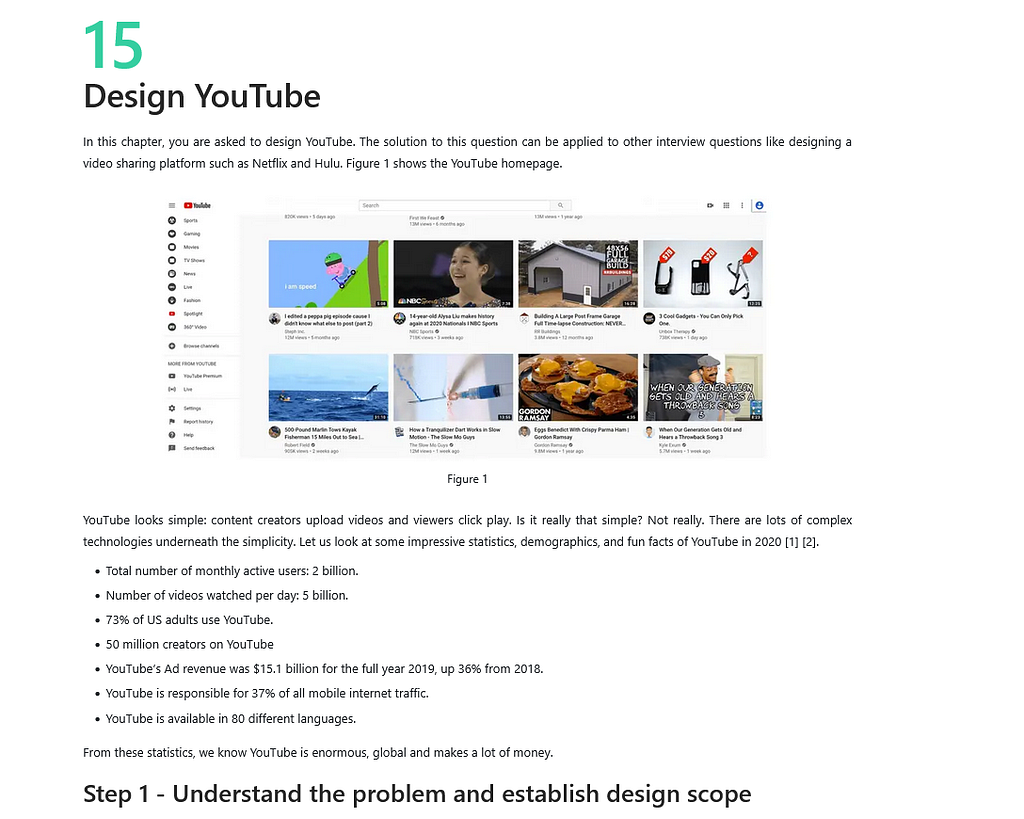
Here is one such example of how to design YouTube, a popular System Design interview question.

Start With These Free System Design Lessons
Before paying anything, try these free resources.
1. How to Design YouTube
This lesson walks through:
- Video upload pipeline
- Metadata storage
- CDN usage
- Chunked uploads
- Scaling storage
- Video recommendation hints
You’ll understand why large media systems require a completely different mindset than CRUD apps.
Here is the link to go through this free lesson — How to Design YouTube
2. Scale From Zero To Millions of Users
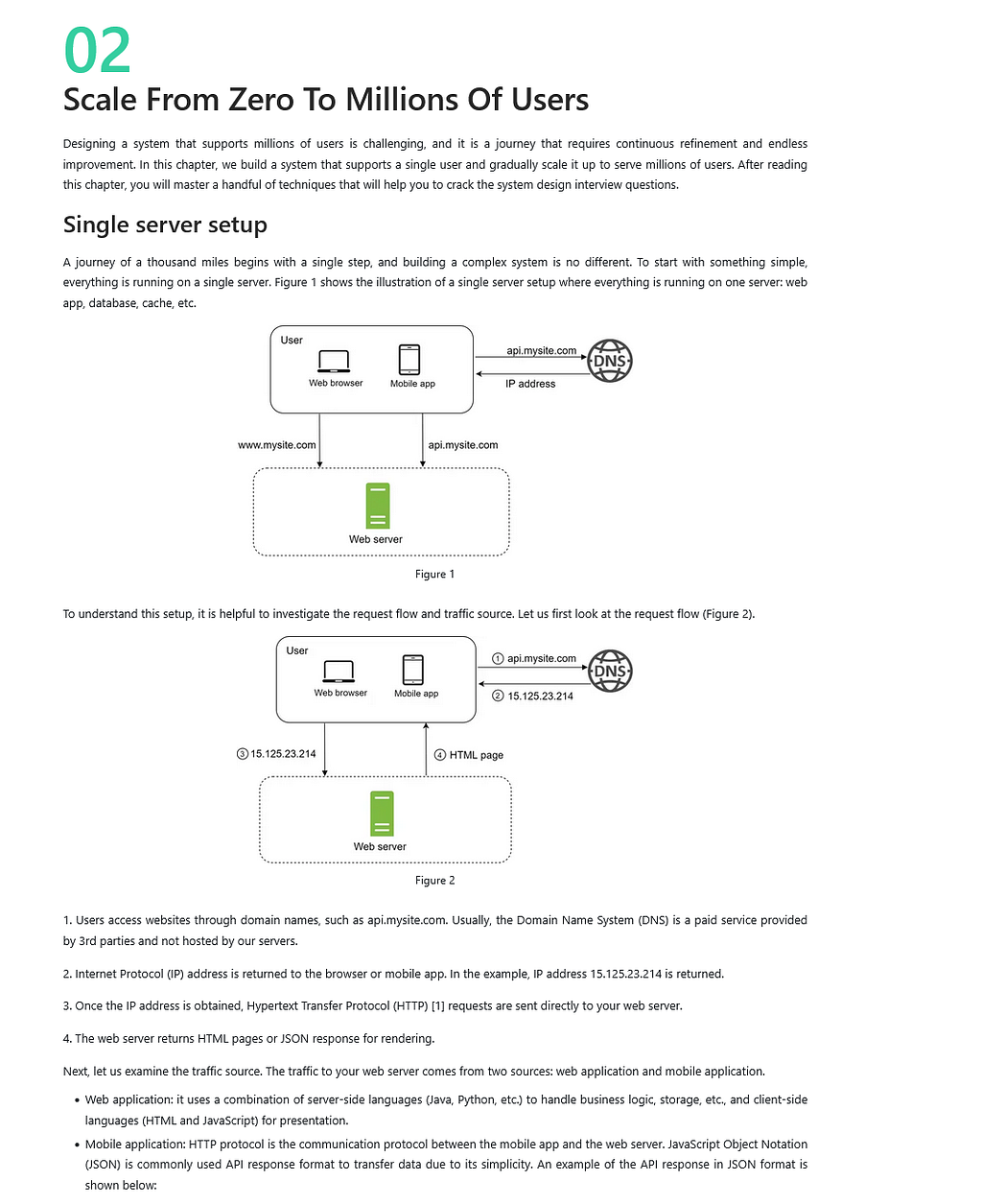
This is foundational lesson and very important for all kind of developers whether you know system design or not.
It explains:
- Vertical vs horizontal scaling
- Load balancers
- Read replicas
- Database sharding
- Caching layers
If you don’t understand scaling progression, senior interviews become very difficult.
Here is the link to explore — Scale From Zero To Millions of Users
3. A Framework For System Design Interviews
This lesson teaches how to structure answers clearly on System Design interview.
Many candidates fail not because of knowledge — but because they ramble.
This fixes that.
Here is the link to go through it — A Framework For System Design Interviews

Coding Patterns (Why This Matters More Than You Think)
System design interviews are often paired with coding rounds.
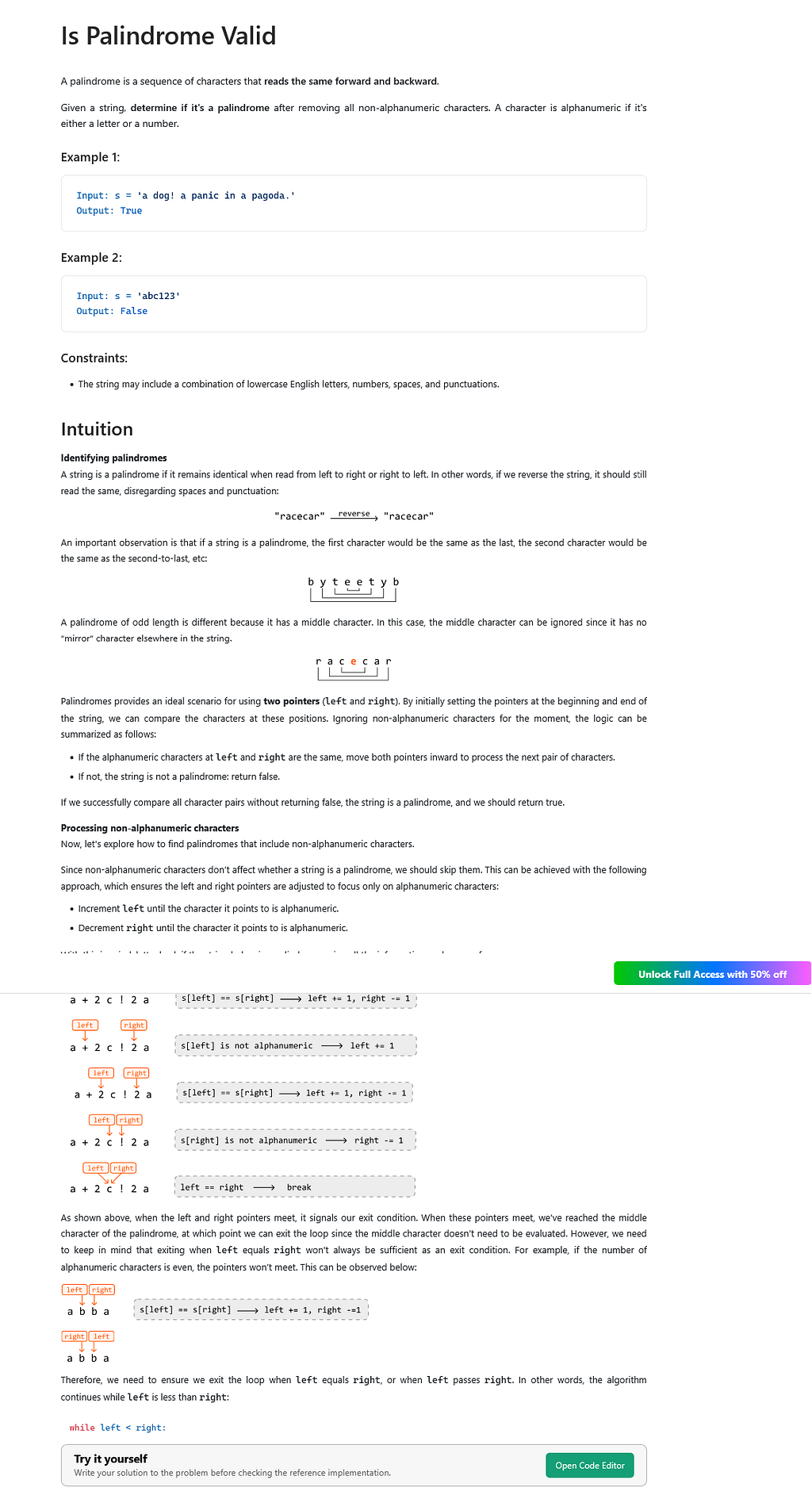
ByteByteGo’s structured coding patterns section is extremely underrated:
Instead of solving 500 random problems, you learn reusable patterns.
For example:
Pattern-based learning is far more efficient than brute force memorization.
I highly recommend you to checkout these lessons, they are extremely detailed and well structured
Machine Learning System Design (Massive 2026 Advantage)
Very few engineers prepare for ML system design properly.
This gives you a huge edge.
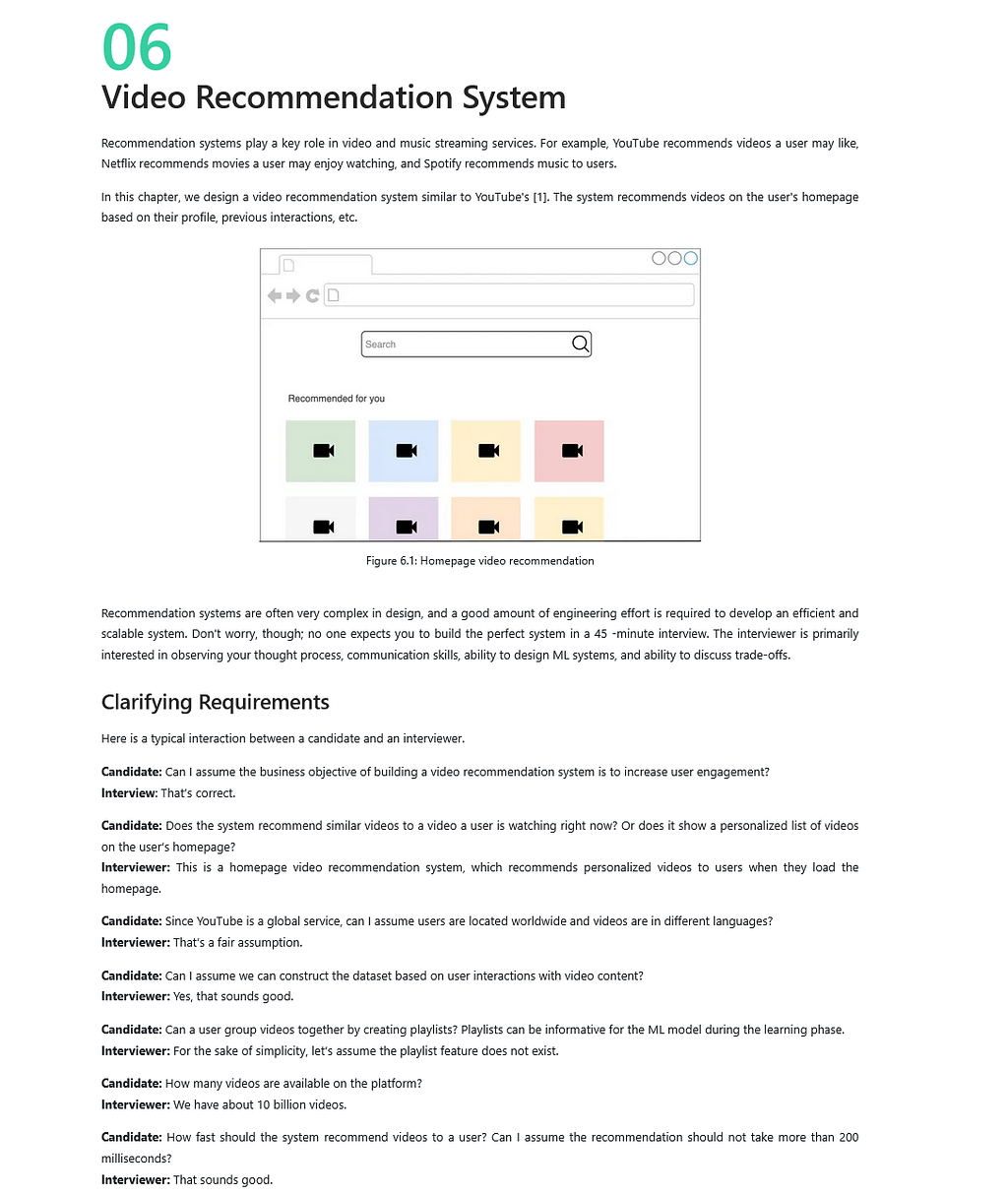
Video Recommendation System
You’ll learn:
- Offline vs online pipelines
- Feature engineering systems
- Ranking models
- Serving architecture
Here is the link to explore further — Video Recommendation System
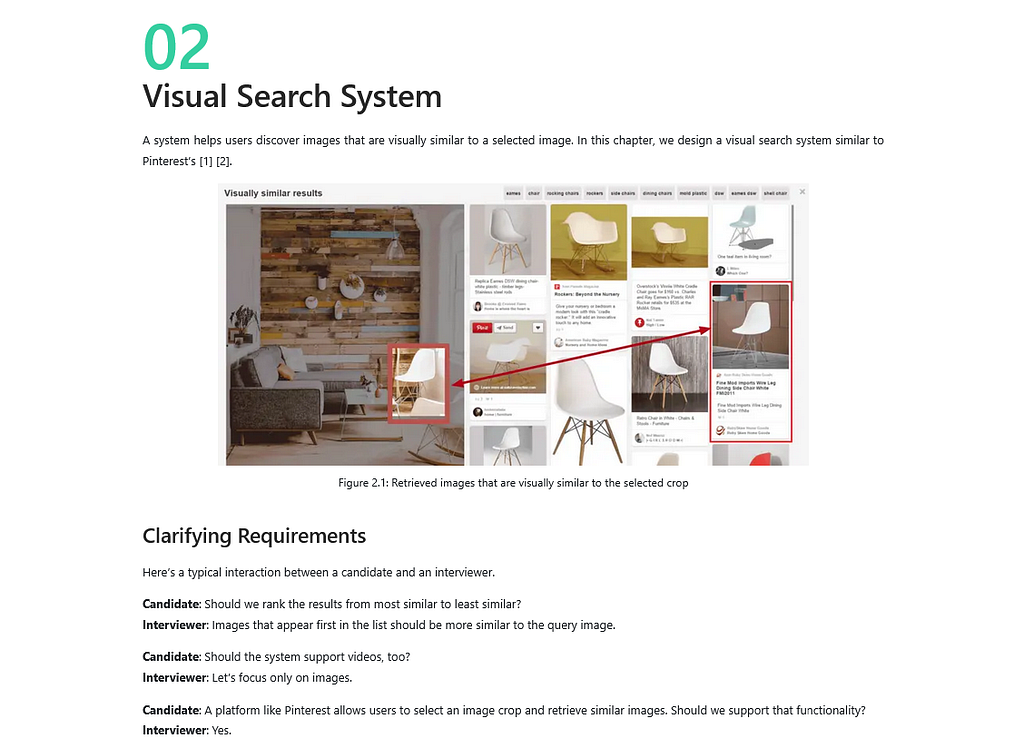
2. Visual Search System
This covers:
- Embeddings
- Vector databases
- Indexing strategies
- Retrieval vs ranking
If you’re targeting senior or staff roles, this matters a lot.
Here is the link to free lesson — Visual Search System
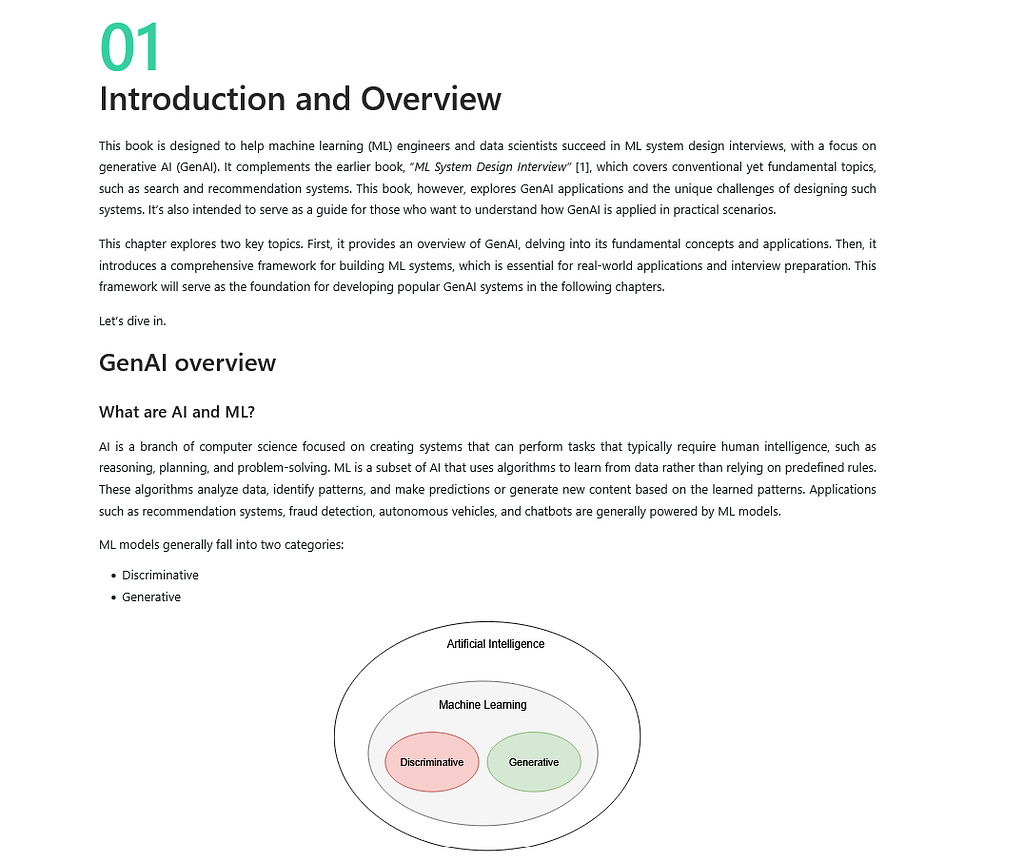
Generative AI System Design (The Future)
AI-native companies now expect candidates to understand:
- LLM serving architecture
- Prompt engineering
- Vector search
- Caching inference
- Scaling GPU workloads
Start here:
This is one of the most future-proof investments you can make.
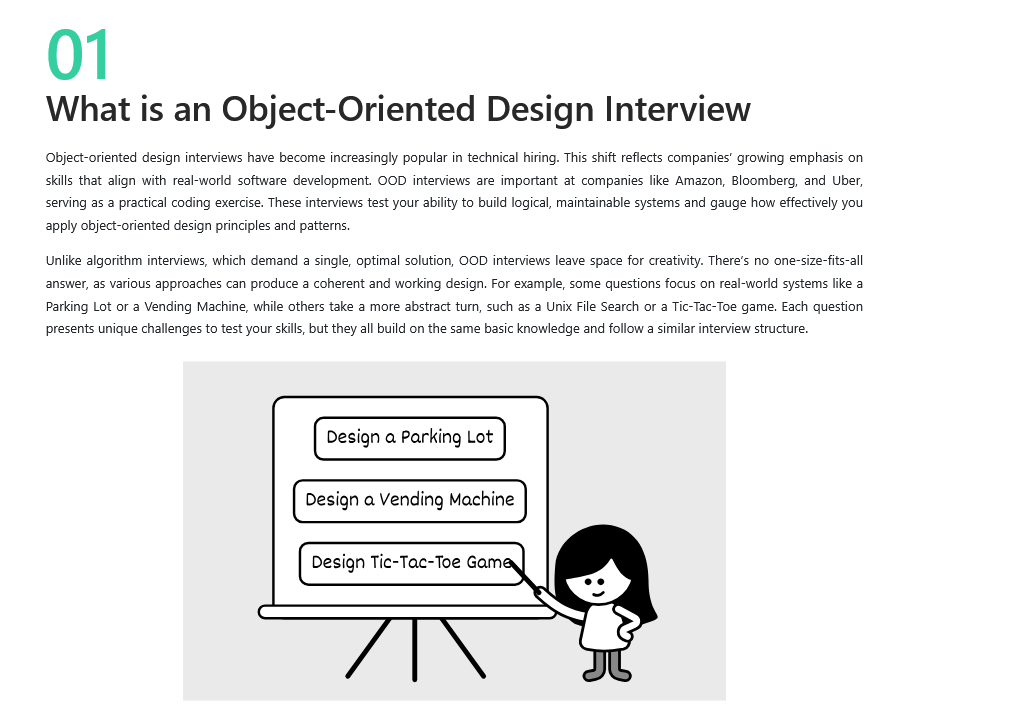
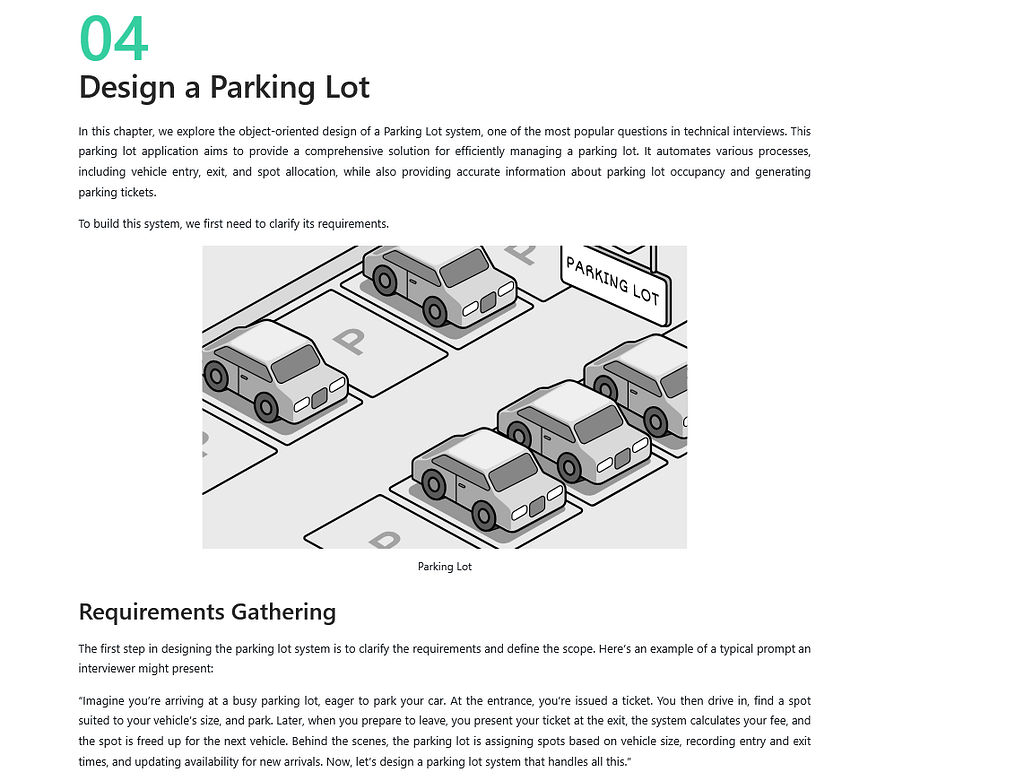
Object-Oriented Design (Senior-Level Interviews)
Many engineers underestimate OOD interviews.
Big mistake.
OOD tests abstraction skills, class modeling, and maintainability thinking — which are critical for senior engineers.
Here are a couple of free lessons from ByteByteGo course you can take to level up your OOP Design skills.
The Books That Complement ByteByteGo
ByteByteGo is built by Alex Xu, who also wrote:
1. System Design Interview — An Insider’s Guide
System Design Interview – An insider’s guide
2. System Design Interview — An Insider’s Guide: Volume 2
System Design Interview – An Insider’s Guide: Volume 2
He also expanded into:
- Machine Learning System Design Interview
- Generative AI System Design Interview
- Object Oriented Design Interview: An Insider’s Guide
- Mobile System Design Interview: An Insider’s Guide
For deeper distributed systems theory:
Why I Recommend the Lifetime Plan
Because system design mastery is not a 2-week sprint.
It’s a long-term skill.
With:
- Structured video lessons
- Visual diagrams
- Coding patterns
- ML & GenAI coverage
- OOD modules
- Regular updates
It becomes a complete interview preparation ecosystem.
Here is the link to join — 50% OFF on ByteByteGo Annual Plan
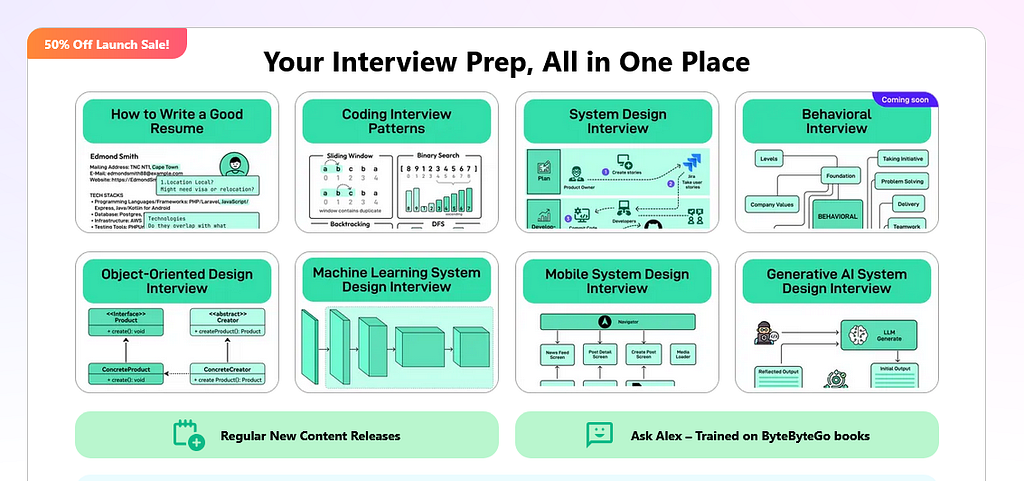
Use code JALJAD for 10% additional discount.
Final Thoughts
In 2026, system design is no longer optional for senior engineers.
If I had to prepare again today, I would combine:
- ByteByteGo structured courses
- Alex Xu’s books
- Practice explaining architectures clearly
- Deep trade-off analysis
System design is not about memorizing diagrams.
It’s about structured thinking under ambiguity.
And that’s what ByteByteGo teaches exceptionally well.
System Design · Coding · Behavioral · Machine Learning Interviews

Why ByteByteGo Is Still the Best System Design Investment in 2026 (And How I’d Use It Today) was originally published in Javarevisited on Medium, where people are continuing the conversation by highlighting and responding to this story.
This post first appeared on Read More