

I Tried 20+ Vibe Coding Courses on Udemy: Here Are My Top 10 Recommendations for 2026
My favorite Udemy courses to learn Vibe coding in 2026
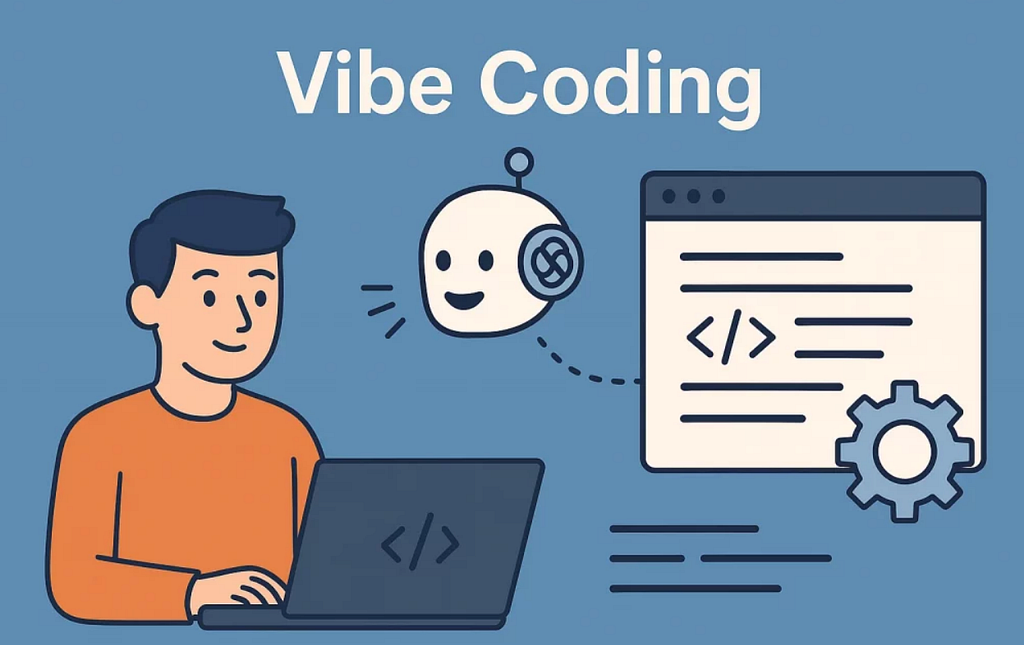
Hello friends, Vibe coding is everywhere now. With AI writing code faster than any human can write, it was obvious that the days of human coding is over and in this AI era, learning Vibe coding and other usage of AI is essential for survival.
And, its not different for me either. In last year and half, I have tried multiple courses, tutorials and YouTube video to learn Vibe coding better. I have spent more than $1000 and 100+ hours testing Vibe Coding courses from different platforms like Udemy, Coursera, Educative, and Udacity
And here’s what shocked me: most courses completely miss the point of Vibe Coding.
They either treat it like glorified no-code (just click buttons!) or assume you need to be a senior developer first (defeating the entire purpose). Neither approach works.
But when you find the right course? The difference is staggering. What used to take me 2 weeks to build now takes 2 hours. I’m not exaggerating.
For context: I’ve built 12 functional apps in the past 3 months using Vibe Coding — everything from a SaaS dashboard to an internal automation tool to a mobile app prototype. None of them required me to write more than 20% of the code manually.
That’s the power of Vibe Coding when you actually understand it.
What Is Vibe Coding? (And Why Everyone’s Talking About It)
Term coined by Andrej Karpathy, Vibe Coding represents a fundamental shift in software development.
Here’s the simple version: Instead of writing code line-by-line, you describe what you want in plain English. AI handles the implementation.
Example:
- Old way: Write 200 lines of React components, state management, API calls, error handling…
- Vibe Coding: “Build a social media dashboard with user authentication and post analytics”
The AI generates the code. You review, refine, and ship.

This isn’t no-code. You’re still building real applications with real code. You’re just operating at a higher abstraction level — focusing on architecture and product, not syntax and boilerplate.
The difference? Vibe Coding makes you 5–10x faster.
The 10 Best Vibe Coding Courses on Udemy (Ranked by Real Results)
After testing 20+ courses, here are the ones that actually deliver on the Vibe Coding promise. They not just cover concepts and technique but also popular AI coding tools like Claude Code, GitHub Copilot, Cursor, Replit etc.
1. Vibe Coding: AI-Driven Software Development and Testing
Perfect for: Developers who want production-grade Vibe Coding skills (2,500+ students)
This is the gold standard. Best-selling for a reason.
What makes it exceptional:
- Build applications from scratch using AI agents (Cursor, Windsurf, GitHub Copilot, Lovable)
- Turn ideas into working prototypes in hours, not weeks
- AI-guided debugging and code refinement strategies
- Version control and maintainable project structure
- Testing workflows that actually work with AI-generated code
The killer feature: This course teaches you to ship production apps, not toy projects. The testing and debugging sections alone are worth the price.
Real-world impact: After this course, you’ll understand when to trust AI output and when to intervene. That judgment is what separates amateurs from professionals.
Here is the link to join this course — Vibe Coding: AI-Driven Software Development and Testing

2. The Complete AI Coding Course (2026) — Cursor, Claude Code
Perfect for: Building full-stack apps from idea to deployment (4,400+ students)
This course walks you through the entire lifecycle — not just building, but shipping.
Comprehensive coverage:
- Web development fundamentals (just enough to understand and prompt AI)
- Building web apps with AI assistance
- Building mobile apps with AI assistance
- Deployment workflows using Cursor AI, Claude Code, ChatGPT, and more
Why it works: Most courses stop at “look, we built something!” This one teaches deployment, scaling considerations, and maintenance strategies.
Critical for: SaaS builders, side project creators, and anyone building MVPs fast.
Here is the link to join this course — The Complete AI Coding Course (2026) — Cursor, Claude Code

3. Cursor AI Beginner to Pro: Build Production Web Apps
Perfect for: Deep-diving into Cursor AI for professional development
One of the highest-rated new courses on Udemy — and it deserves the hype.
What you’ll master:
- Leveraging AI to accelerate development workflows (not just code generation)
- Building and deploying full-stack Next.js apps
- Drizzle ORM and Neon PostgreSQL for data modeling
- Authentication, authorization, and billing with Clerk
- Production-ready patterns and best practices
The paradigm shift: This course teaches you to think in AI-first architecture. You design systems knowing AI will write most of the implementation.
Real value: You’ll build apps with real authentication, real databases, real payment processing — not toy demos.
Here is the link to join this course — Cursor AI Beginner to Pro: Build Production Web Apps
4. Cursor Course: FullStack Development with Cursor Vibe Coding
Perfect for: Indie hackers building micro-SaaS (9,500+ students)
This is THE course for solo developers building and launching products.
What you’ll learn:
- Develop full-stack SaaS applications in minutes (not weeks)
- Cursor IDE and Cursor AI best practices
- Prompting strategies for coding excellence
- v0 by Vercel and shadcn UI integration
- Next.js and Windsurf workflows
- Vercel deployment pipelines
Why indie hackers love it: The course is optimized for speed. Build, test, deploy, iterate — fast.
Critical insight: You’ll learn to ship imperfect v1s and iterate with AI assistance, rather than spending months on a perfect v1 that never launches.
Here is the link to join this course — Cursor Course: FullStack Development with Cursor Vibe Coding

5. The Complete Vibe Coding for Non-coders Guide
Perfect for: Total beginners, creatives, product managers
No coding background? No problem. This course is your entry point.
What you’ll master:
- Building fully functional apps with Windsurf, Lovable, and Cursor
- Writing effective natural language prompts
- Navigating Vibe Coding platform interfaces
- Using prompt templates for rapid development
- MVP creation and rapid prototyping
The magic: You’ll build real apps without writing traditional code. The course teaches you to think like a developer without becoming one.
Perfect for: Founders validating ideas, designers building prototypes, PMs creating demos.
Here is the link to join this course — The Complete Vibe Coding for Non-coders Guide
6. GitHub Copilot Beginner to Pro — AI for Coding & Development
Perfect for: Mastering the most widely-used AI coding tool (95,000+ students)
GitHub Copilot is probably already in your IDE. But are you using it right?
What you’ll learn:
- Generating code from libraries without documentation
- Auto-generating unit tests and documentation
- Advanced prompting for complex logic
- Integration with existing codebases
- Productivity patterns that 10x your output
Why it matters: Copilot is the standard. Every company uses it. Mastering it makes you immediately more productive anywhere.
Real insight: Most developers use 10% of Copilot’s power. This course unlocks the other 90%.
Here is the link to join this course — GitHub Copilot Beginner to Pro — AI for Coding & Development

7. Vibe Coding: Use AI & Python to Automate and Prototype Ideas
Perfect for: Building personal tools and automation scripts
Pure practical value — create tools that save you hours every week.
What you’ll build:
- Email automation systems
- Spreadsheet processors
- Web scrapers and crawlers
- Transcription tools
- Voice cloning applications
- Personal productivity apps
The ROI: You’ll finish with 5–10 custom tools that automate tedious work. The time savings are immediate and measurable.
No coding required — AI handles the implementation while you focus on what you want to build.
Here is the link to join this course — Vibe Coding: Use AI & Python to Automate and Prototype Ideas
8. Learn AI Application Development with Lovable 2.0
Perfect for: Non-technical founders and designers
Lovable is the most approachable Vibe Coding platform. This course maximizes it.
Comprehensive coverage:
- Lovable 2.0 platform mastery
- Supabase integration (auth, storage, database)
- Payment processing with Stripe
- GitHub integration workflows
- Building web and mobile apps without code
Why founders love it: Ship MVPs in days to validate ideas before hiring developers.
The secret: You’ll learn to build production-ready apps that can scale, not just prototypes.
Here is the link to join this course — Learn AI Application Development with Lovable 2.0
9. Vibe Coding from Scratch: Learn to “Code” Using AI
Perfect for: Beginners wanting hands-on project experience
Project-based learning at its finest. Build real things from day one.
What you’ll master:
- Building REAL applications in minutes without writing code
- Structured prompting for AI code generation
- Responsible and ethical AI usage
- Working with Cursor, Windsurf, Bolt, and v0
- Debugging AI-generated code
Why it works: The course emphasizes learning by building, not passive watching.
Critical for: Visual learners who need to see results to stay motivated.
Here is the link to join this course — Vibe Coding from Scratch: Learn to “Code” Using AI
10. MCP Crash Course: Complete Model Context Protocol in a Day
Perfect for: Understanding the architecture behind Vibe Coding
Want to go from user to expert? You need to understand MCP.
Deep technical coverage:
- Model Context Protocol (MCP) theory
- MCP servers and clients
- MCP tools, resources, and prompts
- Security considerations
- Real-world implementation patterns
Why it matters: Understanding how LLMs communicate with your apps makes you exponentially more effective at Vibe Coding.
Career value: This knowledge positions you as an expert, not just a tool user.
Here is the link to join this course — MCP Crash Course: Complete Model Context Protocol in a Day
BONUS: Vibe Coding FullStack with Spring Boot, React Using Junie
Perfect for: Java developers and enterprise teams
Bring Vibe Coding to enterprise stacks.
What you’ll learn:
- Building full-stack apps with Spring Boot and React
- Advanced workflows for best results
- Best practices for coding agents
- Enterprise-grade patterns
Why enterprises care: Modernize legacy stacks without rewriting everything.
Here is the link to join this course — Vibe Coding FullStack with Spring Boot, React Using Junie
My Recommended Learning Path
Here is my learning path based upon your experience level. You can choose the one which matches with your skill and experience.
Complete Beginner (No Coding Background):
- The Complete Vibe Coding for Non-coders Guide
- Vibe Coding from Scratch
- Build 2–3 small projects
- Move to Learn AI Application Development with Lovable 2.0
Developer Leveling Up:
- Vibe Coding: AI-Driven Software Development and Testing
- The Complete AI Coding Course (2026)
- MCP Crash Course for deeper understanding
Indie Hacker / Solo Founder:
- Cursor Course: FullStack Development
- Cursor AI Beginner to Pro
- Ship your product!
Automation & Productivity:
- Jump straight into Vibe Coding: AI & Python Automation
The Investment That Pays for Itself
Real talk about costs:
These courses range from $10–50 during sales (which happen constantly on Udemy).
The math:
- Time to learn Vibe Coding through trial and error: 50–100 hours
- Time with structured courses: 15–25 hours
- Time saved on your first project: 20–40 hours
ROI: These courses pay for themselves on your first real project.
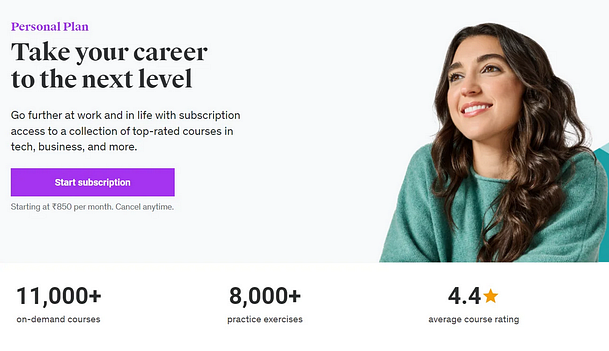
Pro tip: Taking multiple courses? Get the Udemy Personal Plan for $30/month. Access 11,000+ courses. Do the math — it’s worth it after just 2 courses.
You can also try for free for 7 days to get a feel of it.
Prerequisite: Foundation Course
Before diving deep into Vibe Coding, I recommend understanding basic ML/AI concepts:
Machine Learning A-Z: AI, Python & R + ChatGPT Prize [2026] by Kirill Eremenko
This gives you context for how AI understands your prompts and why certain approaches work better.

The Hard Truth About Vibe Coding
After building 12 apps and testing 30+ courses, here’s what I’ve learned:
Vibe Coding is not magic. It’s a skill that requires practice, pattern recognition, and understanding.
But once you get it? The productivity multiplier is real. 5–10x faster development isn’t marketing hype — it’s my actual experience.
The developers who dismiss Vibe Coding as “just no-code” or “for non-programmers” are missing the point entirely.
Vibe Coding isn’t replacing developers. It’s creating a new class of super-productive developers who can ship in days what used to take months.
These courses teach you to be in that group.
Additional Resources
Highly Recommended Books:
Related Articles:
Final Thoughts
Vibe Coding isn’t the future — it’s the present.
The question isn’t whether you should learn it. The question is: how quickly can you adapt before your competition does?
I spent 40+ hours and $300 testing courses so you could skip the mediocre ones and go straight to what works.
Pick one course that matches your current level. Finish it. Build something. Then come back for the next one.
Don’t try to take them all at once. Master one approach, apply it to a real project, then expand your toolkit.
The developers who adapt to Vibe Coding in 2026 will have a 6–12 month head start on everyone else. That advantage compounds.
All the best with your learning and Vibe coding journey.
P.S. — Bookmark this list. Share it with developer friends who are still writing everything from scratch. They’ll thank you when they’re shipping 10x faster.

I Tried 20+ Vibe Coding Courses on Udemy: Here Are My Top 10 Recommendations for 2026 was originally published in Javarevisited on Medium, where people are continuing the conversation by highlighting and responding to this story.
This post first appeared on Read More