

I Tried 30+ Frontend Masters Courses: Here Are My Top 5 Recommendations
My favorite web developer courses on Frontend Masters
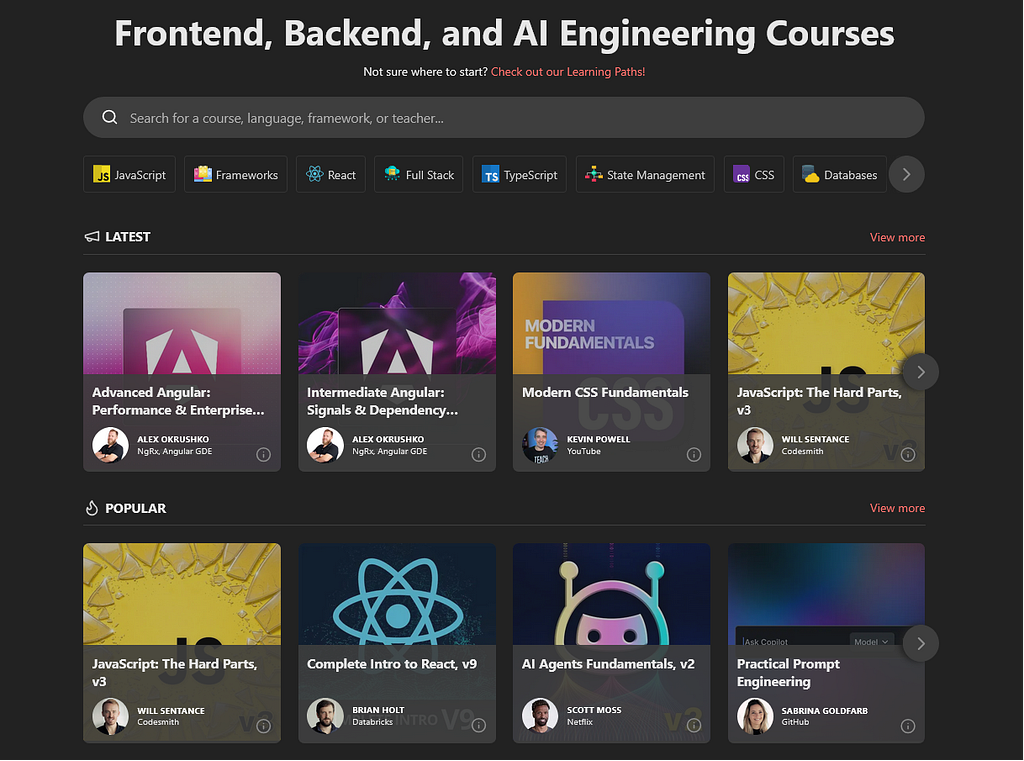
Hello friends, over the past few months, I went deep into Frontend Masters, one of the best places to learn frontend, backend, and AI Engineering skills online.
Not one or two courses. Not just the popular ones. But more than 30 courses across JavaScript, TypeScript, React, system design, performance, and even career-focused topics.
Why? Because in 2026, the problem isn’t lack of resources. It’s too many resources.
When every course claims to be “complete,” “advanced,” or “production-ready,” it’s hard to know which ones are actually worth your time — especially if you’re balancing a full-time job.
Some courses were excellent. Some were good but niche. A few were overrated.
In this article, I’ll share:
- The 5 courses that genuinely improved my skills
- Who each course is best for (beginner, intermediate, senior)
- What makes them stand out from typical tutorial content
- And which ones you can safely skip
If you’re trying to level up as a frontend engineer — without wasting months on mediocre content — this list will save you serious time.
The 5 Frontend Masters Courses Worth Your Time (Ranked by Impact)
Without any further ado, here are the top web development courses frontend and fullstack developers can join in Frontend Masters, one of the best place to learn web development online.
1. Complete Intro to React, v9
Perfect for: Anyone serious about modern frontend development
Taught by: Brian Holt (Microsoft)
This is the definitive React course. Not “a good React course” — THE React course.
What makes it exceptional:
Brian Holt doesn’t waste your time. He assumes you’re smart and treats you like a professional developer who needs to ship production code, not build toy apps.
Comprehensive coverage:
- Core React concepts: JSX, state, props, lifecycle methods
- Modern React: Hooks, Context API, custom hooks
- Performance optimization techniques
- Server-side rendering with Next.js
- Testing React applications
- Real-world architecture patterns
Why it’s #1 on my list:
Most React courses teach you React syntax. Brian teaches you how to think in React — the mental models that separate React beginners from React experts.
The course includes building a complete application from scratch, including:
- Complex state management
- API integration
- Routing
- Authentication patterns
- Production deployment
Real impact: After this course, I rewrote a legacy jQuery codebase in React and cut the bundle size by 60% while adding features. The performance patterns alone saved us months of optimization work.
Who should skip it: Absolute beginners with no JavaScript experience. Take the JavaScript course first (it’s #2 on this list).
Here is the link to join this course — Complete Intro to React, v9
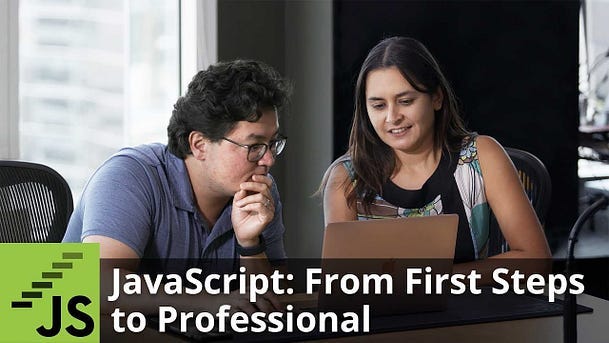
2. JavaScript: From First Steps to Professional
Perfect for: Building unshakeable JavaScript fundamentals
Taught by: Anjana Vakil
If you think you know JavaScript, this course will humble you. In the best way.
Comprehensive journey:
- JavaScript fundamentals (variables, functions, control flow)
- Data structures and manipulation
- Object-oriented programming in JS
- Functional programming concepts
- Closures and prototypes (finally explained clearly)
- Asynchronous JavaScript (callbacks, promises, async/await)
- ES6+ features and modern syntax
- DOM manipulation and browser APIs
What sets it apart:
Anjana doesn’t just teach syntax — she teaches the why behind the what. You’ll understand:
- Why closures work the way they do
- When to use map vs forEach vs reduce
- How the event loop actually works (not just “it’s async”)
- The prototype chain (clearly, finally)
The magic: The course uses live coding and interactive exercises that force you to think through problems, not just copy code.
Real impact: I rewrote interview prep notes after this course. Concepts I’d memorized became concepts I understood. My team lead noticed the difference in code reviews.
Progression path: Do this before the React course. The JavaScript foundation makes everything else easier.
Here is the link to join this course — JavaScript: From First Steps to Professional
3. The Last Algorithms Course You’ll Need
Perfect for: Acing technical interviews and writing efficient code
Taught by: ThePrimeagen (Netflix)
This course has a bold title. It delivers.
Comprehensive algorithm coverage:
- Big O notation (actually explained intuitively)
- Search algorithms (linear, binary, and beyond)
- Sorting algorithms (quicksort, mergesort, heapsort)
- Recursion and backtracking
- Trees and tree traversal
- Graphs and graph algorithms
- Dynamic programming
- Linked lists, stacks, queues
- Advanced data structures (heaps, tries)
What makes it different:
ThePrimeagen teaches algorithms the way experienced engineers think about them — not as academic exercises, but as tools for solving real problems.
The approach:
- Understand the problem pattern
- Identify the data structure that fits
- Implement efficiently
- Analyze time and space complexity
No whiteboard handwaving. No skipping the hard parts. Just clear explanations and lots of code.
Real impact: Passed Google L4 interviews after this course. The pattern recognition training was invaluable — I recognized problem types immediately and knew which approach to use.
Who benefits most: Anyone interviewing at FAANG or wanting to write more efficient code. If you’re self-taught and never took CS algorithms, this fills that gap.
Here is the link to join this course — The Last Algorithms Course You’ll Need

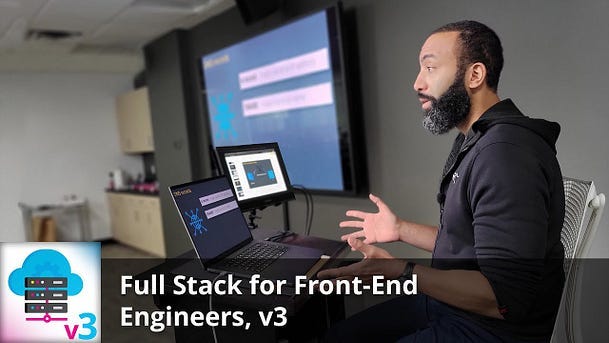
4. Full Stack for Front-End Engineers, v3
Perfect for: Frontend devs who want to understand the whole stack
Taught by: Jem Young (Netflix)
This course bridges the gap between “I can build UIs” and “I can ship complete applications to production.”
What you’ll learn:
- Backend fundamentals for frontend engineers
- Node.js and Express server setup
- Database design and management (SQL and NoSQL)
- Authentication and authorization patterns
- RESTful API design
- Server deployment (VPS, cloud platforms)
- DevOps basics (CI/CD, monitoring, logging)
- Performance optimization (caching, load balancing)
- Security fundamentals (HTTPS, CORS, XSS prevention)
Why frontend devs need this:
Understanding the backend makes you:
- Better at API integration
- Able to debug full-stack issues
- Capable of building side projects end-to-end
- More valuable on teams (you speak both languages)
- Able to design better frontend architectures
The practical difference:
Jem teaches you to think about the entire request lifecycle — from user click to database query to rendered response. That systems thinking elevates your frontend work.
Real impact: Built and deployed 3 side projects as full-stack apps. Understanding the backend helped me design better state management in React and optimize API calls.
Career value: Went from “frontend developer” to “full-stack developer” on my resume. Salary negotiation went better than expected.
Here is the link to join this course — Full Stack for Front-End Engineers, v3
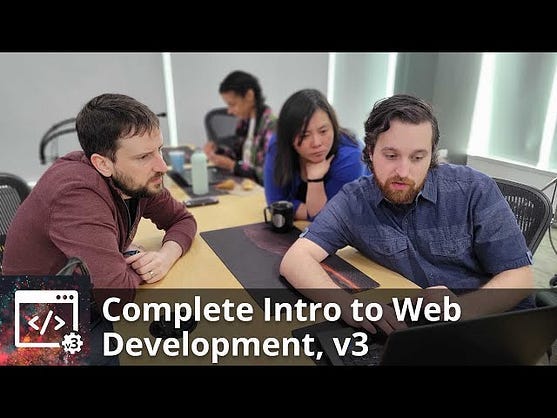
5. Complete Intro to Web Development, v3
Perfect for: Absolute beginners starting from zero
Taught by: Brian Holt (Microsoft)
If you’re new to coding, start here. This is the gentlest, most effective introduction to web development I’ve found.
Comprehensive foundation:
- HTML fundamentals and semantic markup
- CSS basics, flexbox, grid
- JavaScript from scratch
- DOM manipulation
- Form handling and validation
- Responsive design principles
- Version control with Git
- Modern development tools and workflows
- Building real projects from scratch
What makes it special:
Brian assumes zero prior knowledge but doesn’t treat you like you’re incapable. He explains why things work, not just what to type.
The teaching approach:
- Clear explanations without jargon
- Incremental complexity (nothing feels overwhelming)
- Immediate practice after every concept
- Real projects that build on each other
- Common mistakes addressed proactively
Project-based learning: You’ll build multiple projects, each introducing new concepts while reinforcing previous ones.
Real impact: Recommended this to a friend switching careers from teaching. Six months later, she’s a junior developer. She credits this course for making everything click.
Who should take it: Anyone starting web development from zero. Also great for backend devs who want to understand frontend properly.
Here is the link to join this course — Complete Intro to Web Development, v3
What Makes Frontend Masters Different?
After trying 30+ courses across multiple platforms, here’s what sets Frontend Masters apart:
1. Instructor Quality These aren’t professional course creators — they’re working engineers at Microsoft, Netflix, Stripe, and similar companies. They teach what they use daily.
2. Technical Depth Courses don’t dumb things down. They respect your intelligence and teach you to think like an engineer, not just copy code.
3. Practical Focus Every course includes real projects and production patterns, not toy examples.
4. Current Content Courses get updated regularly. React v8 course uses the latest React features, not outdated patterns.
5. No Fluff Instructors get straight to the point. No 10-minute intros or meaningless pep talks.
Here is the link to join — Join today and save 17% on your yearly membership
The Investment Calculation
Frontend Masters Annual Membership: $390/year (with current 17% discount)
Let’s do the math:
- 200+ courses available
- That’s less than $2 per course
- Average course is 4–6 hours of dense, high-quality content
- Compare to: $50–100 per course on other platforms
Real-world ROI:
- My salary increased $15K after leveling up with these courses
- Passed technical interviews I would have bombed before
- Built 6 side projects that would have taken 3x longer
- Avoided months of debugging by understanding fundamentals properly
Time value:
- One week of confused Googling = $1,000+ in lost productivity
- One well-taught course = clarity that lasts your entire career
- The investment pays for itself with your first raise
👉 Join today and save 17% on your yearly membership
Courses I Tested But Didn’t Make the Top 5
Still good, just not essential for most developers:
These courses are excellent for specific use cases but didn’t make my top 5 because they’re more specialized:
- TypeScript courses (great if you need TS, but not foundational)
- Framework-specific courses beyond React (Vue, Svelte, Angular)
- Advanced algorithm courses (beyond interview prep)
- Specialized topics (Web Assembly, WebGL, etc.)
My criteria for the top 5:
- Broadest applicability
- Highest ROI for career impact
- Exceptional teaching quality
- Comprehensive coverage
- Immediate practical value
The Downsides
Frontend Masters isn’t perfect, it also have downsides:
1. Price: $390/year is expensive compared to Udemy’s $10 sales. But you get what you pay for.
2. Learning Curve: Courses move fast. You’ll need to pause, practice, and rewatch sections. That’s actually good — it means you’re learning properly.
3. No Hand-Holding: Instructors assume you’re motivated and will do the work. If you need constant encouragement, this isn’t for you.
4. Density: These aren’t “watch while browsing Twitter” courses. You need focused attention.
Is it worth it? If you’re serious about web development as a career, absolutely. If you’re casually curious, probably not.
Final Thoughts
After testing over 30 courses on the platform, I can tell you this: Frontend Masters is different from other learning platforms.
Not because it has more courses (it doesn’t). Not because it’s cheaper (it definitely isn’t). But because the quality bar is consistently higher than anything else I’ve found.
Here’s the thing most reviews won’t tell you: Frontend Masters courses aren’t for passive learners. They’re dense, technically rigorous, and taught by actual practitioners who’ve built production systems at scale.
You won’t find much hand-holding. You will find instructors like Brian Holt (Microsoft), Jem Young (Netflix), and other engineers who’ve shipped code that serves millions of users.
I’ve taken courses on Udemy, Pluralsight, LinkedIn Learning, and Coursera. Frontend Masters is the only platform where I consistently finish courses thinking “I wish I’d known this years ago.”
Quick note: Frontend Masters is currently offering 17% off their annual plan. At $390/year for 200+ courses, it’s the best value in web development education. The sale ends soon — don’t sleep on it.
Your career will thank you.
P.S. — I tested these courses over 6 months while working full-time. The time investment was worth it. Share this with developer friends who are serious about leveling up.

I Tried 30+ Frontend Masters Courses: Here Are My Top 5 Recommendations was originally published in Javarevisited on Medium, where people are continuing the conversation by highlighting and responding to this story.
This post first appeared on Read More