

How ByteByteGo Helped Me Master System Design for FAANG Interviews
Why ByteByteGo is the best place for System Design questions Interview preparation.
Let me be brutally honest with you.
After 8 years as a software engineer, building applications that serve millions of users, I walked into my first Meta system design interview and completely bombed it.
The question was simple: “Design YouTube.”
I knew how to code. I’d built microservices. I understood databases and caching. I’d even read books about distributed systems.
But when the interviewer asked me to design YouTube, I panicked.
I started talking about databases. Then jumped to caching. Mentioned load balancers randomly. Drew some boxes and arrows that didn’t make sense. Forgot to discuss scalability until the interviewer prompted me.
I failed.
Not because I lacked technical knowledge. I failed because I didn’t know how to structure and articulate system design solutions.
That’s when I discovered ByteByteGo, and it completely transformed how I approached system design interviews.
Here’s how this platform took me from randomly discussing technical concepts to systematically designing scalable systems, and ultimately passing interviews at Meta, Amazon, and Google.
1. I Realized System Design Interviews Are Different
Most engineers (including me) misunderstand what system design interviews test:
What I thought they tested:
- Technical knowledge (databases, caching, load balancers)
- Architecture buzzwords (microservices, event-driven)
- Latest technologies (Kubernetes, Kafka)
What they actually test:
- Structured thinking and communication
- Ability to handle ambiguity
- Trade-off analysis
- Scalability reasoning
- Problem decomposition
The harsh reality: Knowing technology isn’t enough. You need to know how to design systems systematically and articulate your thinking clearly.
Random preparation wasn’t working:
- Read system design books (too theoretical)
- Watched YouTube videos (too fragmented)
- Reviewed blog posts (inconsistent quality)
- Hoped to figure it out in the interview
This approach failed me spectacularly.
That’s what ByteByteGo fixed for me.
System Design · Coding · Behavioral · Machine Learning Interviews
2. Visual Diagrams Made Complex Concepts Crystal Clear
When I first started using ByteByteGo, the visual diagrams were a game-changer.
Before ByteByteGo:
Reading about load balancers:
“A load balancer distributes incoming network traffic across multiple servers…”
My brain: “Okay, traffic goes to servers somehow… I guess?”
Reading about CDNs:
“Content Delivery Networks cache static content at edge locations closer to users…”
My brain: “Edge locations? Caching? How does this actually work?”
After ByteByteGo:
Seeing the visual diagram:
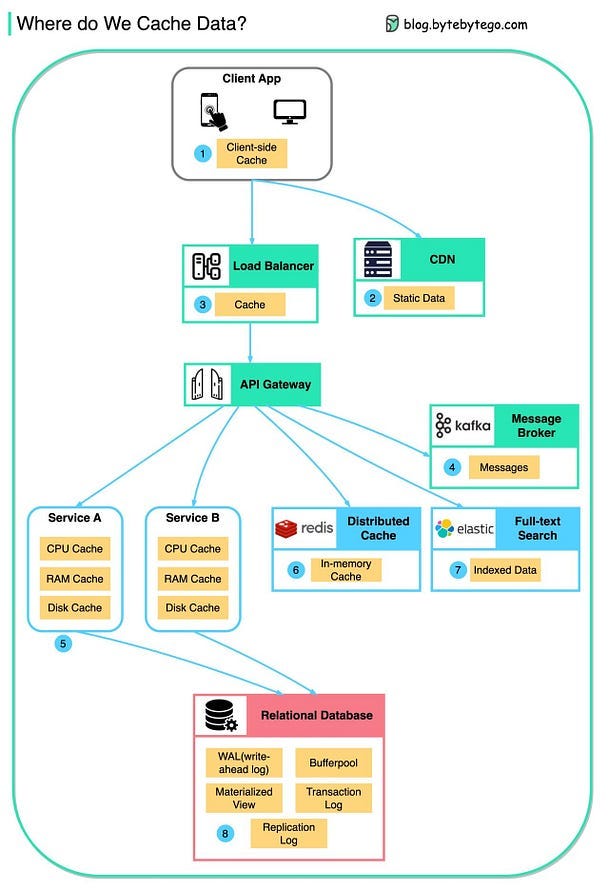
Every concept came with clear, professional diagrams showing:
- How components connect
- Data flow through the system
- Request/response patterns
- Failure scenarios
- Scaling strategies

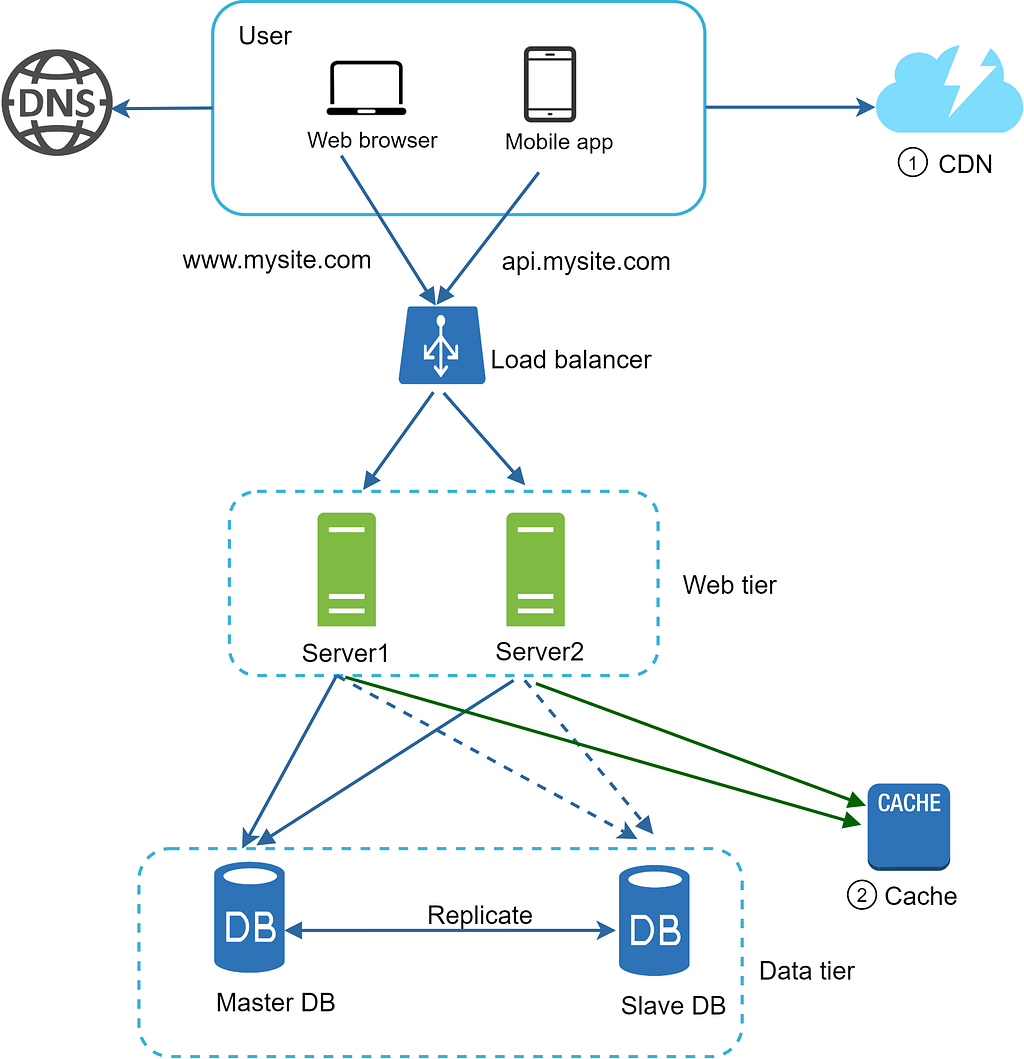
Example: How to Scale From Zero to Millions of Users
Instead of abstract text, I saw:
- Single server → Multiple servers with load balancer
- Database replication (primary-replica)
- Cache layer addition
- CDN integration
- Data center distribution
The diagrams showed me exactly what to draw in interviews.
Why This Mattered:
In system design interviews, you spend 60% of the time drawing architecture diagrams. ByteByteGo’s visual approach taught me:
- How to draw clean, professional diagrams
- Which components to include
- How to show data flow
- Where to place each component
- How to annotate trade-offs
My experience: After studying ByteByteGo’s diagrams, my interview drawings became so clear that interviewers often said, “Your diagrams are exceptionally clear.”
3. Real-World Case Studies Connected Theory to Practice
Theory is useless without understanding how real companies solve problems at scale.
ByteByteGo’s case studies showed me how actual systems work:
Design YouTube
The YouTube case study taught me:
Video Upload Pipeline:
- How video encoding works
- Transcoding for multiple resolutions
- Storing videos in object storage
- CDN distribution strategy
Video Streaming:
- Adaptive bitrate streaming
- Chunk-based delivery
- CDN optimization
- Bandwidth management
Recommendations:
- Collaborative filtering
- Content-based recommendations
- Hybrid approaches
- Real-time vs. batch processing
What I learned: The problem isn’t just “store videos” — it’s handling uploads at scale, transcoding efficiently, streaming globally, and recommending content intelligently.
Design a Chat System
The chat system case study showed:
Real-time Messaging:
- WebSocket vs. long polling
- Message queue architecture
- Read receipts and typing indicators
- Offline message delivery
Group Chat Complexity:
- Message fanout patterns
- Read status aggregation
- Notification strategies
- Database sharding
Why case studies mattered:
When an interviewer asks “How would you handle 1 billion daily active users?” — you can reference how actual systems like WhatsApp, Facebook Messenger, and WeChat solve this.
My interview experience:
Interviewer: “Design a notification system like Facebook’s.”
Me: “Based on how Facebook handles billions of notifications daily, I’d use a message queue architecture with priority lanes…”
The interviewer’s eyes lit up. Real-world context resonated immediately.
4. Structured Framework Taught Me How to Approach Any Problem
ByteByteGo’s framework gave me a systematic 4-step approach:
Step 1: Understand the Problem and Establish Design Scope (3–10 minutes)
What I learned to ask:
- What features need to be supported?
- How many users? (Daily active users, concurrent users)
- What’s the expected traffic? (Read vs. write ratio)
- What are the latency requirements?
- What’s the scale? (Storage, bandwidth)
Before ByteByteGo: Interviewer: “Design Twitter.” Me: “Okay, so we need users to post tweets…” (starts designing immediately)
After ByteByteGo: Interviewer: “Design Twitter.” Me: “Let me clarify the requirements first. Are we focusing on the newsfeed, posting tweets, or both? What’s the expected DAU? What’s the read-to-write ratio? Are we supporting media uploads?”
This questioning showed I understood real systems don’t exist in a vacuum.
Step 2: Propose High-Level Design and Get Buy-In (10–15 minutes)
The template I learned:
- Draw the high-level architecture
- Identify key components (load balancer, app servers, databases, cache, CDN)
- Explain data flow
- Get interviewer agreement before deep-diving
Example: YouTube high-level design
Components:
- API Gateway → Application Servers
- Video Storage (Object Storage)
- Metadata Database (SQL)
- CDN for video delivery
- Recommendation Engine
- User Database
The key: Don’t deep-dive yet. Get agreement on the overall approach.
Step 3: Design Deep Dive (10–25 minutes)
What ByteByteGo taught me to cover:
- Data model design
- API design
- Scalability strategies
- Database choices (SQL vs. NoSQL)
- Caching strategies
- Load balancing
- Failure scenarios
- Monitoring and alerting
The framework was invaluable:
Instead of randomly discussing topics, I had a checklist of what to cover.
Step 4: Wrap Up (3–5 minutes)
Final discussion points:
- System bottlenecks
- Potential improvements
- Error scenarios
- Monitoring strategy
- Next steps if building this
The structured approach eliminated my biggest problem: not knowing what to discuss when.
5. Problem-Solution Format Taught Me to Structure Answers
ByteByteGo didn’t just show solutions — it showed how to arrive at solutions.
The Problem-Solution Pattern:
Every design problem followed this pattern:
1. Functional Requirements
- What the system must do
- Core features
- User interactions
2. Non-Functional Requirements
- Scalability needs
- Latency requirements
- Availability targets
- Consistency requirements
3. Capacity Estimation
- Storage calculations
- Bandwidth calculations
- QPS (Queries Per Second)
- Memory requirements
4. API Design
- REST endpoints
- Request/response formats
- Error handling
5. Database Schema
- Table structures
- Relationships
- Indexing strategy
- Sharding approach
6. High-Level Design
- Component diagram
- Data flow
- Key technologies
7. Detailed Design
- Deep-dive into critical components
- Trade-off discussions
- Scalability solutions
8. Identifying Bottlenecks
- Where the system might fail
- How to optimize
- Monitoring approach
This structure became my interview template.
In interviews, I would literally follow this pattern:
“Let me start with functional requirements… Now let’s discuss capacity estimation… Here’s my API design… Let me propose a high-level architecture…”
Interviewers loved the structured approach. It showed I could think systematically about complex problems.
6. Coverage of FAANG-Asked Topics Saved Me Months
ByteByteGo covered exactly what gets asked in FAANG interviews:
System Design Problems I Practiced:
- Design YouTube — Video streaming, recommendations, uploads
- Design a Chat System — Real-time messaging, WebSockets, group chat
- Design Instagram — Image uploads, newsfeed, followers
- Design Twitter — Timeline, tweets, trending topics
- Design Uber — Geolocation, matching, real-time tracking
- Design Netflix — Video streaming, CDN, recommendations
- Design TinyURL — URL shortening, redirection, analytics
- Design News Feed — Facebook/LinkedIn feed generation
- Design Search Autocomplete — Trie, ranking, caching
- Design Web Crawler — Distributed crawling, politeness, deduplication
Every problem I studied appeared in at least one interview.
Company-Specific Patterns I Noticed:
Meta/Facebook:
- Social network features (newsfeed, messaging, notifications)
- Real-time systems
- Heavy focus on scale (billions of users)
Google:
- Search-related systems
- Distributed systems
- Map-reduce patterns
- Scalability at extreme scale
Amazon:
- E-commerce systems
- Inventory management
- Recommendation engines
- Payment processing
Netflix:
- Video streaming
- Content delivery
- Recommendation systems
- A/B testing
Knowing company patterns helped me prepare targeted answers.
7. Beyond System Design: OOP, ML, and Gen AI Coverage
What surprised me about ByteByteGo was the comprehensive coverage beyond just system design.
Object-Oriented Design
OOP Design interview preparation taught me:
Classic OOD Problems:
- Design a Parking Lot
- Design an Elevator System
- Design a Library Management System
- Design a Chess Game
- Design an ATM
What I learned:
- SOLID principles in practice
- Design patterns (Factory, Singleton, Observer, Strategy)
- Class diagrams and relationships
- Extensibility and maintainability
Why this mattered:
40% of senior engineer interviews include OOD questions. Most candidates skip this preparation and fail.
My interview experience:
Interviewer: “Design a parking lot system.”
Me: (Thanks to ByteByteGo) “Let me identify the main entities: ParkingLot, ParkingSpot, Vehicle, Ticket, ParkingRate… Here’s the class diagram… Now let me show you how to handle different vehicle types using polymorphism…”
Result: Passed with strong feedback on OOD skills.
Machine Learning System Design
ML System Design prepared me for AI/ML roles:
Topics Covered:
- Video Recommendation System
- Visual Search System
- Ad Click Prediction
- Feed Ranking
- Fraud Detection
What I learned:
- Feature engineering at scale
- Model training pipelines
- A/B testing frameworks
- Online vs. offline learning
- Model serving architecture
- Monitoring ML systems
For AI/ML engineer roles, this was invaluable.
Generative AI System Design
Gen AI System Design covered the hottest interview topic in 2026:
Topics:
- RAG (Retrieval-Augmented Generation) architecture
- LLM deployment strategies
- Prompt engineering systems
- Vector database integration
- Fine-tuning pipelines
- AI agent orchestration
Why this mattered:
In 2026, EVERY tech company asks about Gen AI. Having structured knowledge about LLM systems gave me a massive advantage.
Coding Patterns
ByteByteGo’s Coding Patterns complemented system design:
Patterns covered:
- Two pointers
- Sliding window
- Binary search
- Tree traversal
- Dynamic programming
- Backtracking
The integration was perfect:
- Morning: Practice coding patterns
- Afternoon: Study system design
- Evening: Review and connect concepts
8. The Curriculum Structure Optimized My Preparation
ByteByteGo’s structured curriculum removed all guesswork from preparation.
My 8-Week Preparation Plan:
Weeks 1–2: Fundamentals
- Scaling from zero to millions
- System design interview framework
- Basic components (load balancers, caches, databases)
- CAP theorem and consistency models
Weeks 3–4: Classic System Design Problems
- Design YouTube
- Design a Chat System
- Design Instagram
- Design Twitter
Weeks 5–6: Advanced Topics
- Distributed systems patterns
- Data-intensive applications
- Microservices architecture
- Event-driven systems
Week 7: Specialized Topics
Week 8: Mock Interviews & Review
- Practice with friends
- Record myself explaining designs
- Review weak areas
- Polish communication
The structured approach meant I never wondered “What should I study today?”
Why ByteByteGo Worked When Everything Else Failed
Traditional Approach (What I Tried First):
- Read system design books (too theoretical, couldn’t visualize)
- Watched YouTube videos (fragmented, inconsistent quality)
- Read blog posts (random topics, no structure)
- Hoped to figure it out during interviews (failed spectacularly)
ByteByteGo’s Visual + Structured Approach:
- Visual diagrams made complex systems understandable
- Real-world case studies connected theory to practice
- Structured framework gave me a systematic approach
- Problem-solution format taught me how to structure answers
- Comprehensive coverage prepared me for any question
- Expert guidance from Alex Xu (Google, Twitter, Apple veteran)
The difference is like reading about swimming vs. watching someone swim with clear instruction.
My Honest Recommendation
If you’re serious about system design interviews at top tech companies, you need:
✅ Visual learning with professional diagrams
✅ Real-world case studies
✅ Structured problem-solving framework
✅ Comprehensive topic coverage
✅ Expert guidance from industry veterans
✅ Practice problems with detailed solutions
ByteByteGo provides all of this in one platform.
Is it worth the investment?
Absolutely yes if you’re targeting:
- FAANG companies
- Senior engineer positions
- Staff/Principal engineer roles
- AI/ML engineer positions
- Architect positions
The salary difference between passing and failing one system design interview is $100,000-$300,000+
Who Should Use ByteByteGo?
Perfect for:
- Software engineers preparing for senior+ roles
- Developers targeting FAANG companies
- Anyone who failed system design rounds
- Engineers wanting to become better architects
- Visual learners who struggle with text-only resources
- Self-taught developers filling knowledge gaps
Also valuable for:
- Technical leaders wanting to improve architecture skills
- Engineering managers conducting interviews
- Solution architects staying current
- Anyone building large-scale systems
Start Your System Design Mastery Today
Stop preparing randomly and hoping for the best.
Start learning systematically with proven frameworks and visual guidance.
One diagram at a time. One problem at a time. One successful interview at a time.
Action Steps:
- Visit ByteByteGo and explore free content
- Check the framework — see how systematic it is
- Review YouTube design — experience the visual approach
- Try chat system design — practice the methodology
- Use code JALJAD for 10% discount
- Start your preparation with a structured plan
Begin your ByteByteGo journey here
System Design · Coding · Behavioral · Machine Learning Interviews
The Difference Between Random Preparation and ByteByteGo
Random Preparation:
- Read scattered blog posts
- Watch random YouTube videos
- Hope to remember everything
- Panic when asked unfamiliar questions
- Struggle to structure answers
- Fail to communicate clearly
ByteByteGo Systematic Approach:
- Follow structured curriculum
- Learn from visual diagrams
- Practice with real problems
- Recognize patterns in new questions
- Structure answers with proven framework
- Communicate like a senior engineer
The difference is hoping vs. knowing you’re prepared.
All the best for your system design interviews!
Remember: The difference between a senior engineer and a staff engineer often comes down to system design skills.
Invest in yourself. Your future self will thank you.
Start mastering system design with ByteByteGo today

How ByteByteGo Helped Me Master System Design for FAANG Interviews was originally published in Javarevisited on Medium, where people are continuing the conversation by highlighting and responding to this story.
This post first appeared on Read More