

Meet Kit, your companion for a new internet era
The web shouldn’t feel like it’s working against you. Yet so much of it now is designed to pull you off course: endless feeds, pop-up windows and content that looks credible until it isn’t. Staying focused and trusting your next click takes more effort than it should.
Firefox is here to help you navigate the web on your own terms. That means a browser built for people: one that doesn’t sell your data, that’s open and optional with AI and that isn’t owned by billionaires.
And as we enter a new internet era – one shaped by AI and a web that’s harder to trust – Kit is our way of making our support visible, a companion that brings some warmth and familiarity when you’re browsing with Firefox.
Where you’ll see Kit
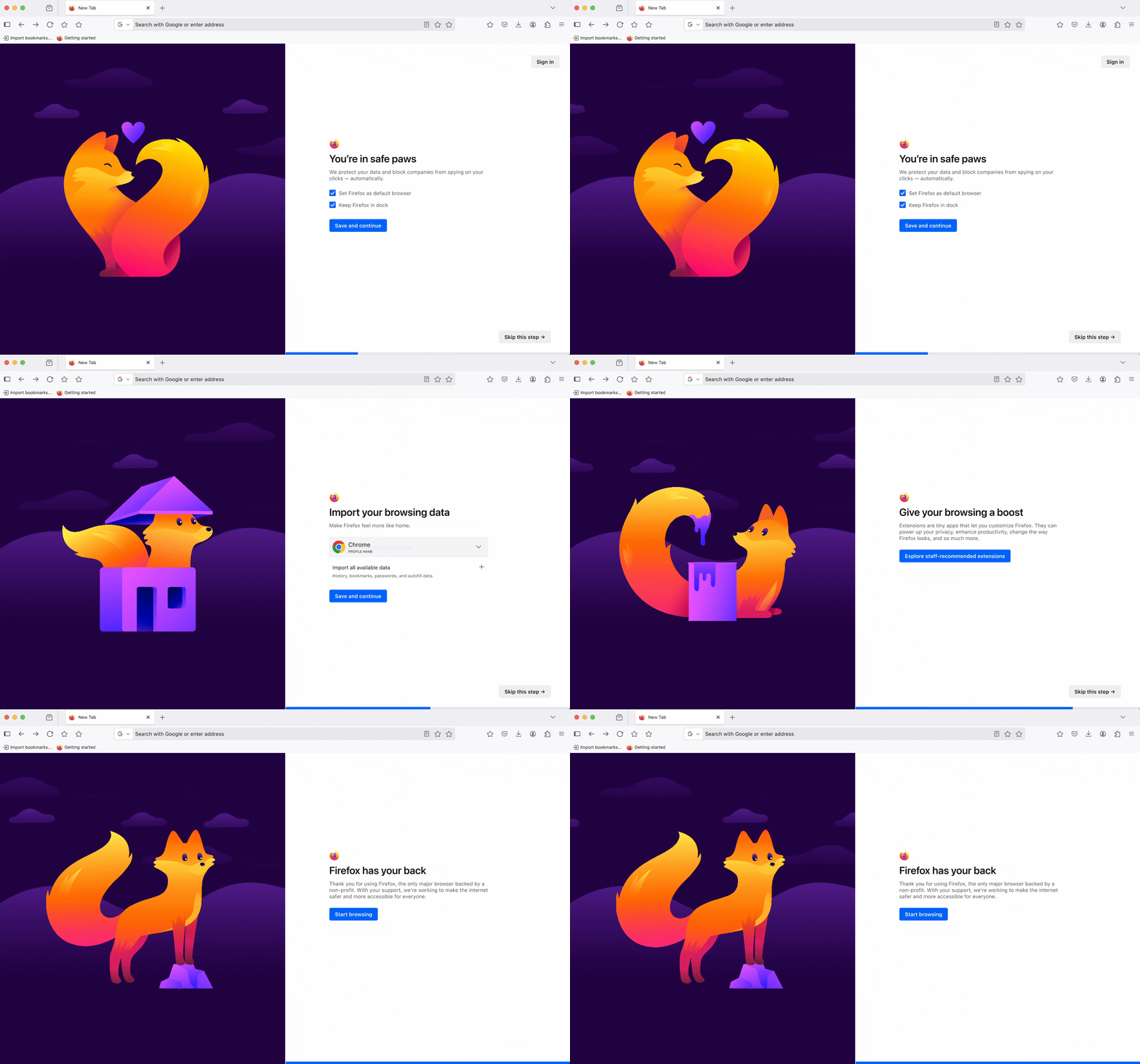
In Firefox, Kit may appear in moments that are meant to feel welcoming or encouraging: when you’re getting started, discovering a new feature or hitting a small win (like when you’ve successfully made a setting change).
You’ll also see Kit outside the browser, like on our product website, the blog, across social media and in campaigns. If you want, you can set Kit as your new tab wallpaper (bottom right corner: Customize > Firefox). You may even spot Kit in the real world at our community events.
Kit is a companion, not a commentator. They’re not here to deliver punchlines. Kit shows up as a small signal that Firefox is working for you, then steps back so you can keep moving.
How we made Kit
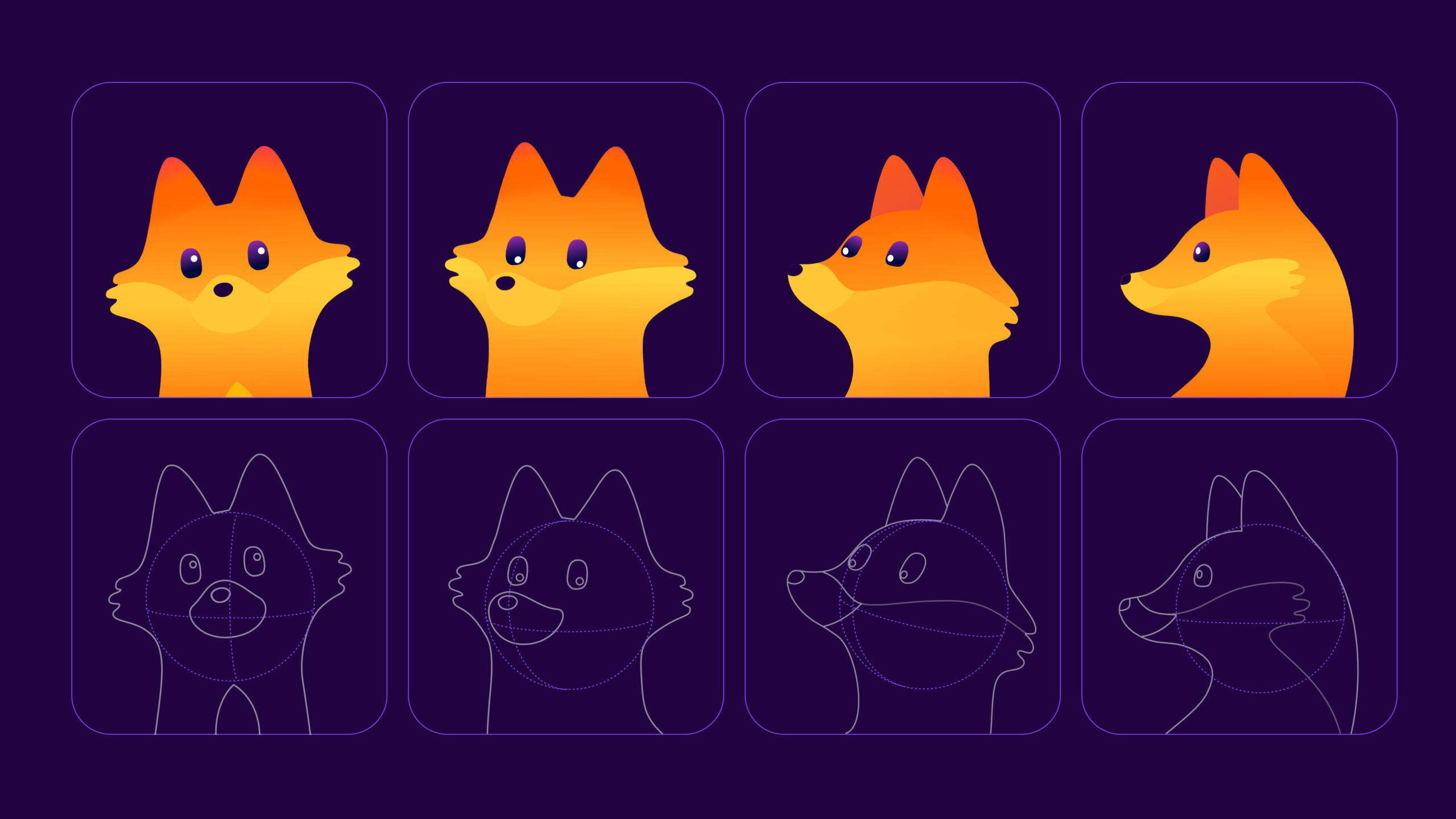
To bring Kit to life, we partnered with creative agency JKR and illustrator Marco Palmieri. We chose JKR because they’ve helped iconic character brands evolve for modern audiences, and we needed collaborators who could build a companion with range – not just a mascot.
Marco helped shape Kit’s personality through the kind of craft that only comes from drawing characters for a living. He started the way he always does: with a pencil. “I tend to stay away from the computer at the beginning,” he said. “I want as few obstacles as possible between me and what I’m trying to see.”
From there, the work moved into Illustrator, where Kit could be refined through many rounds of iteration. Two decisions shaped Kit along the way.
First: the tail. It isn’t just a signature detail. It’s part of Kit’s personality, helping carry motion and emotion even in still moments.
Second: no mouth. We wanted Kit to feel expressive without tipping into “talking cartoon” territory. So expression lives in the eyes, posture and body language instead.
Our teams explored how literal Kit should be to the Firefox logo. Fox proportions mattered, but so did making something new. At one point, we asked ourselves whether or not Kit should look more like a red panda (leading to a brief detour into red panda references).
In the end, we agreed that Kit isn’t a fox nor a red panda. Kit is a Firefox, its own creature — with attributes from both a fox and a red panda, and perhaps a little fire magic.
Marco wants Firefox fans to meet Kit with curiosity. “I hope that they would want to look,” he said. “Not just glance and move on, but feel like there’s a little character here you might actually want to get to know.”
Kit was created by a team of people, not generated by AI. And Kit isn’t an AI assistant or a chatbot. Kit came from hundreds of small choices — tail flicks, textures, gradients, proportions — made deliberately, then refined until the character felt right to what Firefox stands for.
More fire. More fox.
The web can feel like it’s trying to wear you down: pulling at your attention, keeping you stuck with defaults and asking for more than it should. That’s why Firefox exists, and why the internet needs it. Firefox has your back. And we hope Kit helps make that promise visible, with conviction where it matters and lightness when it helps.
You deserve a browser that respects your humanity, agency and privacy — one that’s built for people, not profit. The internet as it should be.

Get Firefox on desktop and mobile
Download now
The post Meet Kit, your companion for a new internet era appeared first on The Mozilla Blog.
This article first appeared on Read More