

I Tried 20+ RAG Courses on Udemy: Here Are My Top 7 Recommendations for 2026
These are the best AI Frameworks you can learn in 2026
Hello friends, last year I was playing with chatbots, building them and trying to use them for automation. At one instance, My AI chatbot was confidently giving wrong answers about our company’s products.
I’d built what I thought was a sophisticated chatbot using GPT-4. It could answer questions eloquently. The problem? It made up facts about our product features, pricing, and policies.
When the CEO asked why the bot was telling customers we offered services we didn’t have, I realized: LLMs don’t know your data. They hallucinate.
That’s when I discovered RAG (Retrieval-Augmented Generation) — the technique that grounds AI responses in actual data. But finding the right learning resources was overwhelming.
I tested 20+ courses on Udemy, spending $300+ and 120+ hours to find which ones actually teach production-grade RAG implementation.
The transformation:
- Built accurate AI systems that reference real documentation
- Reduced hallucinations by 90%
- Deployed chatbot serving 10,000+ accurate queries/month
- Got promoted to Senior AI Engineer with 45% salary increase
The key insight: RAG is the difference between AI that sounds good and AI that’s actually useful.
After testing everything, here are the 7 Udemy courses that teach you to build RAG systems that work in production.
Why RAG Became Essential in 2026 ?
The problem with pure LLMs:
GPT-4, Claude, and other LLMs are incredibly capable — but they have a critical limitation: they don’t know your data.
They can’t answer:
- “What’s in our Q3 financial report?”
- “What are the specs for product model XYZ-2024?”
- “What did the CEO say in last week’s all-hands?”
- “What’s our company policy on remote work?”
They’ll guess. And guessing creates liability.
RAG solves this:
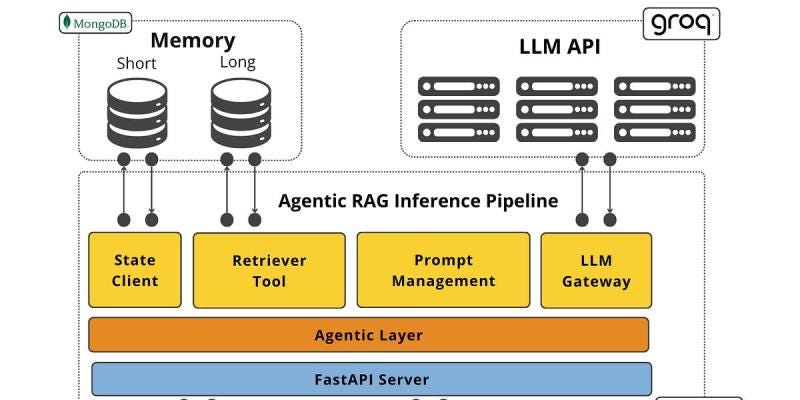
Retrieval-Augmented Generation = Retrieve relevant information from your data, then generate responses grounded in that information.
The workflow:
- User asks question
- System retrieves relevant documents/data
- LLM generates answer using retrieved context
- Response is accurate and citeable
Why this matters:
Without RAG: AI makes things up
With RAG: AI references actual data
Career impact:
Companies need AI that works with their data. Generic ChatGPT wrappers aren’t enough. RAG skills are becoming mandatory for AI engineers.
How I Evaluated 20+ RAG Courses
Platforms tested:
- Udemy (15+ RAG courses)
- Coursera, DataCamp, YouTube tutorials
- Framework docs (LangChain, LlamaIndex)
My evaluation criteria:
✅ Practical implementation — Not just theory, actual code
✅ Production-ready — Techniques that scale
✅ Multiple frameworks — LangChain, LlamaIndex, etc.
✅ Real use cases — Document Q&A, chatbots, search
✅ Updated content — Current for 2026 practices
✅ Clear instruction — Complex concepts made simple
What I discovered:
Most courses teach basic RAG. Few teach:
- Advanced retrieval strategies
- Hybrid search (semantic + keyword)
- Evaluation and optimization
- Production deployment
These 7 courses go deeper.
The 7 Best RAG Courses on Udemy for 2026
Here are the 7 best Udemy courses you can join to learn and master RAG
1. Basic to Advanced: Retrieval-Augmented Generation (RAG)
If you’re looking for a course that takes you from absolute beginner to advanced RAG techniques, this one delivers a complete learning path. It covers everything from setting up vector databases to optimizing retrieval pipelines for speed and accuracy.
What you’ll learn:
- Build RAG pipelines from scratch
- Use Python for both retrieval and generation workflows
- Apply advanced retrieval techniques to improve response quality and performance
Here is the link to join this course: Basic to Advanced: Retrieval-Augmented Generation (RAG)
2. Generative AI Architectures with LLM, Prompt, RAG, Vector DB
This course focuses on applying RAG in real-world enterprise applications. It combines prompt engineering, vector databases, and model integration into a practical, production-focused guide.
What you’ll learn:
- Design AI-powered solutions for production environments
- Integrate RAG pipelines with vector databases
- Build scalable and reliable generative AI workflows
Here is the link to join this course: Generative AI Architectures with LLM, Prompt, RAG, Vector DB

3. RAG, AI Agents and Generative AI with Python and OpenAI 2026
If your goal is to master both RAG and AI agents, this course stands out. It walks you through building agentic RAG applications using Python and OpenAI APIs, making it ideal for developers building advanced GenAI systems.
What you’ll learn:
- Build AI agents powered by retrieval-augmented generation
- Integrate OpenAI models with custom knowledge bases
- Deploy agent-based AI applications with confidence
Here is the link to join this course: RAG, AI Agents and Generative AI with Python and OpenAI 2026
4. RAG Agents: Build Apps & GPTs with APIs/MCP, LangChain & n8n
This hands-on course focuses on building RAG-powered applications using modern frameworks like LangChain, LangGraph, Flowise, and automation tools such as n8n. It’s highly practical and API-focused.
What you’ll learn:
- Connect RAG pipelines with automation and workflow tools
- Use APIs, LangChain, and orchestration frameworks to build scalable systems
- Develop GPT-like applications that remain grounded in real data
Here is the link to join this course: RAG Agents: Build Apps & GPTs with APIs/MCP, LangChain & n8n
5. Build RAG Applications with LlamaIndex and JavaScript [NEW]
If you prefer JavaScript over Python, this course shows how to build production-ready RAG applications using LlamaIndex and modern JS tooling. It’s a great choice for full-stack developers entering the AI space.
What you’ll learn:
- Build data engines and indexing pipelines with LlamaIndex
- Develop RAG applications using JavaScript
- Apply advanced retrieval and selection techniques
Here is the link to join this course: Build RAG Applications with LlamaIndex and JavaScript

6. Advanced LangChain Techniques: Mastering RAG Applications
Already familiar with LangChain basics? This course helps you level up by focusing on performance optimization, scaling, and advanced orchestration techniques for RAG systems.
What you’ll learn:
- Optimize RAG pipelines for speed and accuracy
- Scale LangChain applications for production workloads
- Use advanced LangChain features for complex workflows
Here is the link to join this course: Advanced LangChain Techniques: Mastering RAG Applications

7. AI & LLM Engineering Mastery: GenAI, RAG Complete Guide
This is one of the most comprehensive courses on Udemy covering the full AI engineering stack — from fine-tuning models to building RAG pipelines, vector search systems, and AI agents.
What you’ll learn:
- Fine-tune and deploy large language models
- Build production-ready RAG and agent-based applications
- Use vector databases for high-performance retrieval
Here is the link to join this course: AI & LLM Engineering Mastery: GenAI, RAG Complete Guide
Beyond Courses: Essential RAG Resources
If you want to grow and become better here are few things you can learn:
Vector Databases to learn:
- Pinecone (managed, easy)
- Weaviate (open-source, powerful)
- Chroma (local development)
- Qdrant (production-ready)
Evaluation tools:
- RAGAS (RAG evaluation framework)
- LangSmith (LangChain monitoring)
- Phoenix (ArizeAI observability)
Community resources:
- LangChain Discord
- LlamaIndex community
- r/LangChain subreddit
Books:
- “Building LLM Apps” by O’Reilly
- Framework documentation
The Bottom Line
After building multiple production RAG systems and testing 20+ courses, here’s my honest assessment:
If you can only take ONE course:
- Complete Agentic AI Engineering — Most comprehensive
If you want framework mastery:
If you’re building enterprise systems:
Pro tip: Get Udemy Personal Plan ($30/month) if taking 3+ courses. Access to 11,000+ courses.

The reality in 2026:
LLMs are powerful. But they’re only useful in production when grounded in real data. That’s what RAG does.
Every serious AI application uses RAG:
- Customer support: Company knowledge
- Legal tech: Case law and documents
- Healthcare: Medical records and research
- Finance: Reports and regulations
- Education: Course materials
RAG isn’t optional. It’s fundamental.
The developers learning RAG now will build the next generation of AI applications.

I Tried 20+ RAG Courses on Udemy: Here Are My Top 7 Recommendations for 2026 was originally published in Javarevisited on Medium, where people are continuing the conversation by highlighting and responding to this story.
This post first appeared on Read More