

I Created the System Design Interview Course I Wish Existed
Why Most System Design Courses Fail — And What I Built Instead
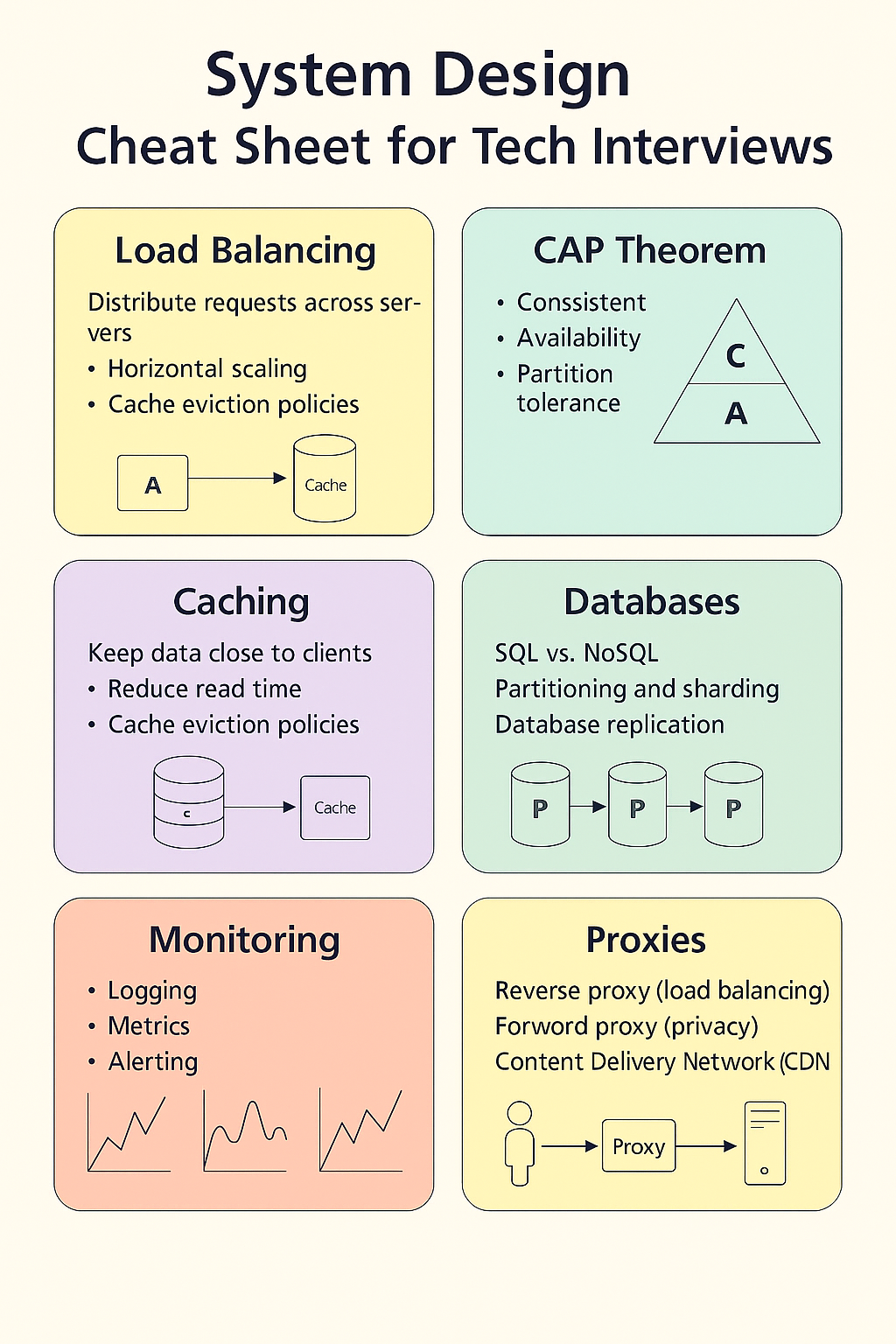
Hello guys, System Design interviews have become one of the biggest hurdles for software engineers aiming to join top tech companies or move into senior roles.
Many developers spend months preparing data structures and algorithms, only to struggle when they reach the system design round.
Not because they lack knowledge, but because system design tests something very different: your ability to make architectural decisions under uncertainty.
While there are many great resource to prepare for System design interviews like ByteByteGo, Design Guru, Exponent, Educative, Codemia.io, Bugfree.ai and Udemy which have many great System design courses, there is not a single one to test your System design knowledge in pressure situation.
That’s exactly why I created a new course: System Design Interview Mastery 2026: Mock Tests, Tradeoffs
System Design Interview Mastery 2026: Mock Tests, Tradeoffs
This is a quiz style, practice test course which you can use to test your System Design knowledge both theory and application part.
While there are many courses which teaches you System Design and also provides practice problems, I didn’t find any quiz style courses which you can use on the go to test you knowledge so I created one.
I hope this will help you further solidify your knowledge and better understand system design because it include really testing questions on how you will use different system design tools you have to achieve both functional and non-functional requirements.
For the next 5 days, you can get this course as well as all my course for just $9.9 each using coupon code LAUNCH or LAUNCH2026
Here is the link with discount — System Design Interview Mastery 2026: Mock Tests, Tradeoffs (for $9.9 on Udemy)

Why System Design Is So Hard?
This is one of the most asked question by my readers, while most developers already know the basic concepts:
- caching
- load balancing
- microservices
- databases
- message queues
But in interviews, you’re not asked to define these terms.
Instead, you’re asked questions like:
“Design a scalable notification system.”
“How would you handle millions of requests per second?”
“What tradeoffs would you make between consistency and availability?”
At that point, memorized definitions don’t help. What matters is your ability to:
- reason about scale
- choose between multiple valid architectures
- and explain tradeoffs clearly
This is where most candidates struggle — and often fail.
I have tried to address that problem by creating practice test which not only test your knowledge of System Design basics and key concepts but also how you apply them on critical situation.
For example, You need to handle millions of concurrent connections. What should you use? Thread per request, Event-driven architecture, Batch processing, or Blocking IO?
This kind of question stimulate your mind and encourage it to think through whatever you know and build your system design skills that will not only help you on interview but also on your day to day software development work.
For the next 5 days, you can get this course as well as all my course for just $9.9 each using coupon code LAUNCH or LAUNCH2026
Here is the link with discount — System Design Interview Mastery 2026: Mock Tests, Tradeoffs (for $9.9 on Udemy)

What Makes This System Design Course Different?
As I said, there are many system design courses and online platforms like ByteByteGo, Design Guru, Exponent, Educative, Codemia.io, and Bugfree.ai. Most of them are theory-heavy and focus on explaining concepts one by one.
This course takes a completely different approach.
Instead of just teaching theory, it focuses on practice and decision-making, because that’s what interviews actually test.
You will learn through:
- 250+ real-world, decision-based questions
- Full-length mock tests that simulate real interviews
- Scenario-based problems that force you to choose between alternatives
- Detailed explanations that focus on tradeoffs, not just final answers
This makes the learning experience much closer to a real interview environment.
Here is a sample question to get you going:
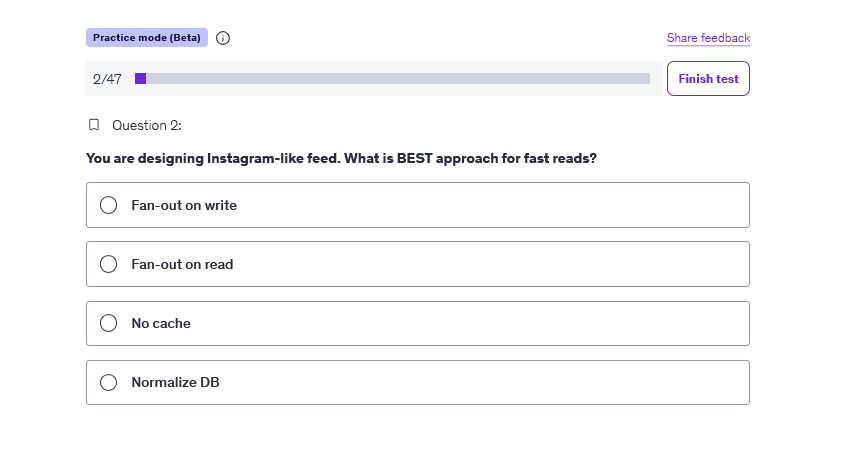
What do you think? Which one is the best suitable for the job?
For the next 5 days, you can get this course as well as all my course for just $9.9 each using coupon code LAUNCH or LAUNCH2026
Here is the link with discount — System Design Interview Mastery 2026: Mock Tests, Tradeoffs (for $9.9 on Udemy)
System Design Interview Mastery 2026: Mock Tests, Tradeoffs
What You’ll Practice in This Course?
The course covers all the major areas that appear in system design interviews.
Caching Strategies
You’ll learn how to choose between:
- cache-aside
- write-through
- TTL strategies
- eviction policies
And more importantly, you’ll practice deciding when caching is actually beneficial and when it introduces unnecessary complexity.
Databases and Storage Design
You’ll tackle questions involving:
- SQL vs NoSQL decisions
- indexing strategies
- sharding and partitioning
- replication and fault tolerance
These are core topics in almost every system design interview.
System Scalability
You’ll practice reasoning about:
- horizontal vs vertical scaling
- bottlenecks in distributed systems
- and how to scale services safely without breaking consistency or performance.
Microservices and API Design
The course includes scenarios where you must:
- design APIs
- split monoliths into microservices
- and reason about service boundaries and communication patterns.
Messaging Systems and Event-Driven Architecture
You’ll work with:
- queues
- Kafka-style streaming systems
- event-driven communication
These are critical for designing resilient, scalable architectures.
Consistency and Reliability
Modern distributed systems often require choosing between strong and eventual consistency. You’ll practice making these decisions based on real-world constraints rather than theory.
Load Balancing, CDN, and Rate Limiting
These topics frequently appear in system design rounds, especially when discussing high-traffic systems and reliability patterns.
For the next 5 days, you can get this course as well as all my course for just $9.9 each using coupon code LAUNCH or LAUNCH2026
Here is the link with discount — System Design Interview Mastery 2026: Mock Tests, Tradeoffs (for $9.9 on Udemy)
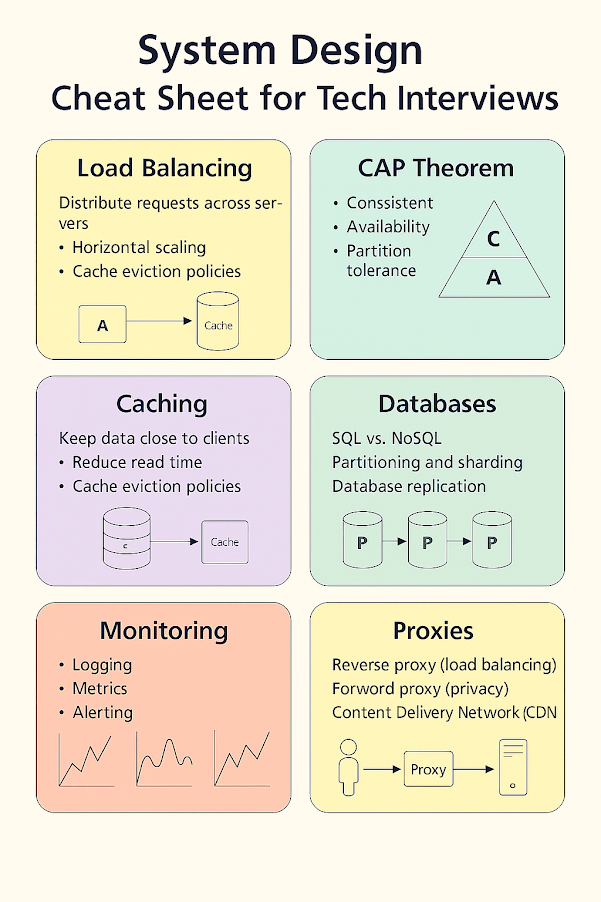
Learn Through Real Interview Scenarios
One of the biggest gaps in system design preparation is the lack of realistic practice.
Reading about system design is not the same as solving problems under pressure.
That’s why every question in this course is designed to:
- simulate real FAANG-style interviews
- test your architectural judgment
- and push you to think in tradeoffs rather than memorized patterns
You won’t just learn what tools exist — you’ll learn when and why to use them.
Full-Length Mock Tests
One of the most valuable parts of this course is the inclusion of full-length mock exams.
These are timed and structured to simulate real interview conditions. They help you:
- build confidence
- improve speed in decision-making
- and identify weak areas before your actual interviews.
Each question comes with high-quality explanations so you can understand not just what was correct, but why other options were wrong.
Here is the link to take this practice test — Join Now for $9.9
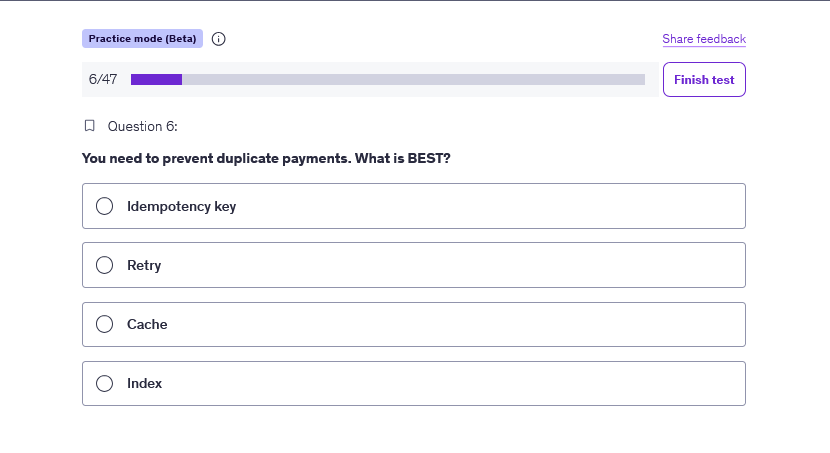
From Learning Concepts to Applying Them
Many developers already understand system design concepts at a theoretical level. The real challenge is applying that knowledge in ambiguous situations.
This course bridges that gap by guiding you through:
- understanding the problem
- identifying constraints
- evaluating multiple solutions
- and justifying the final architecture
By repeatedly practicing this process, you’ll start thinking like a senior engineer — which is exactly what interviewers are evaluating.
Who Should Take This Course?
This course is especially useful for:
- Software engineers preparing for system design interviews
- Developers targeting FAANG or other large tech companies
- Backend and full-stack engineers who want to improve architectural thinking
- Senior developers who want to strengthen their understanding of scalability and distributed systems
- Java developers and other backend engineers looking to expand into system architecture
If you’ve ever felt that you understand system design but still struggle to answer interview questions confidently, this course was designed for you.
For the next 5 days, you can get this course as well as all my course for just $9.9 each using coupon code LAUNCH or LAUNCH2026
Here is the link with discount — System Design Interview Mastery 2026: Mock Tests, Tradeoffs (for $9.9 on Udemy)
Final Thoughts
System design is one of the most important skills for software engineers as they progress in their careers. It influences not just interviews, but also how you build scalable, reliable systems in real-world projects.
If you want to move beyond memorizing concepts and start thinking in terms of architecture, scalability, and tradeoffs, this course will give you the structured practice needed to get there.
And if you’re currently preparing for system design interviews, practicing with realistic, decision-based questions can make a significant difference in your confidence and performance.
Thank you for your support and I hope it will help you with your next System design interview.
Other System Design and Coding Interview and Resources you may like
- 16 Best Resources for System Design Interview Prep
- Is DesignGuru’s System Design Course worth it
- Why ByteByteGo is the best website for Coding interview in 2026?
- Why AlgoMonster is best platform for DSA Prepration in 2026
- Is Exponent’s System Design Course worth it?
- Is OOP Design Interview — An Insider Guide worth it?
- Is Exponent Good Place for Coding Interview Prep?
- 6 Best System Design and API Design Interactive Courses
- Top 5 System Design YouTube Channels for Engineers
- How to prepare for DSA for coding interviews?
- 3 Places to Practice System Design Mock interviews
- ByteBytego vs Exponent? which one is better?
- 10 Best Places to Learn System Design in 2026
- My Favorite Software Design Courses for 2026
- ByteByteGo vs NeetCode vs Educative? which one is better?
- DesignGurus.io Review 2026 — Is it worth it?
- Is ByteByteGo a good place for Coding interviews?
- 3 Free Books and Courses for System Design Interviews
- Should you join ByteByteGo to learn System Design?
- Is System Design Interview RoadMap by DesignGuru worth it?
- ByteByteGo 50% OFF? Should you Join?
- 10 Reasons to Learn System Design in 2026
- Is Designing Data-intensive application book worth reading?
All the best for your Coding Interviews, if you have any doubts or questions, feel free to ask in the comments.
P. S. — If you want to do just one thing now, I suggest go ahead and join this course now for just $9.9 to test your System design knowledge and also improve it question by question, one at a time. You will thank me later.
System Design Interview Mastery 2026: Mock Tests, Tradeoffs

I Created the System Design Interview Course I Wish Existed was originally published in Javarevisited on Medium, where people are continuing the conversation by highlighting and responding to this story.
This post first appeared on Read More