

I Tried 30+ Programming Interview Resources: Here Are My Top 10 Recommendations for 2026
My favorite technical interview resources for 2026
Hello guys, the job market for developers isn’t getting any easier. There is a lot of layoff going on, Oracle just let go 30,0000 people, hiring has slowed down, competition has intensified, and companies that are still hiring have raised the bar significantly.
If you’ve been putting off refreshing your interview skills, now is genuinely the time to start.
What’s changed isn’t just the difficulty — it’s the entire landscape. Data structures and algorithms are still the foundation, but modern technical interviews now place far greater emphasis on system design, AI-powered system design, object-oriented principles, and real-world problem-solving.
Companies like Google, Amazon, Microsoft, and Meta want to know whether you can build systems that scale, handle failure gracefully, and incorporate AI in meaningful ways.
Choosing the right preparation resource matters more than ever. Over the past year, I’ve worked through more than 30 interview prep books, courses, and platforms. Most were average. A handful were genuinely excellent.
In this article, I’m sharing the 10 best resources I found on Educative.io — the interactive learning platform famous for its Grokking series. I first discovered Educative while hunting for a system design interview course years ago.
Back then, their Grokking the System Design course was essentially the only serious resource available. I got hooked on the platform, and it has only gotten better since — now featuring AI mock interviews and an in-browser coding environment that makes practice far more effective.
Note: You’ll need an Educative subscription to access these courses. It covers 1,500+ courses across coding, system design, and software development — and they’re currently offering 50% off. There’s also a 7-day free trial if you want to test it first.

10 Best Programming Interview Prep Resources on Educative.io for 2026
These cover every major area of the modern tech interview: DSA, system design, AI system design, dynamic programming, low-level design, machine learning, behavioral rounds, and mock interviews.
1. Grokking the Coding Interview Patterns in Java — Master Problem-Solving Patterns, Not Memorization
If there’s one resource that changed how I think about coding interview prep, it’s this one. The old approach — grinding hundreds of LeetCode problems hoping something sticks — is being replaced by pattern-based learning, and for good reason. Once you recognize the underlying pattern in a problem, you can solve variations you’ve never seen before.
By now, almost every serious candidate knows about coding patterns. That means not knowing them puts you at a real disadvantage walking into an interview.
Why this course stands out:
- Teaches reusable problem-solving patterns rather than individual problem solutions
- Covers the Blind 75 — the most frequently tested interview questions
- Fully interactive coding environment with hands-on exercises in the browser
- Step-by-step solution breakdowns that build genuine understanding, not just answers
This is where I’d tell anyone to start their coding interview prep.
Join here: Grokking the Coding Interview Patterns in Java
2. Grokking the System Design Interview — The Gold Standard for System Design Prep
System design interviews used to be reserved for senior engineers. That’s no longer the case. Mid-level engineers are now regularly tested on scalability, distributed systems, and high-availability architecture — and the expectations keep rising.
This is the course that put Educative on the map, and it still deserves its reputation. It’s the most thorough, well-organized system design resource I’ve encountered anywhere.
What this course covers:
- Real-world design problems: YouTube, WhatsApp, Facebook, Twitter, and more
- Step-by-step methodology for approaching any system design question
- Trade-off analysis and bottleneck identification — the thinking interviewers actually want to see
- Hands-on exercises and mock interview scenarios
If you’re preparing for system design interviews at any level, this course is non-negotiable.
Join here: Grokking the System Design Interview

3. Deep Dive into System Design Interview — Go Beyond Textbook Solutions
If the Grokking System Design course is your foundation, this learning path is where you go to build something more substantial on top of it. Interviewers at top companies have seen every standard answer — what impresses them is the depth and precision of your reasoning.
This course fills that gap by going into the practical details that most resources skip over: real-world trade-offs, performance bottlenecks, and how decisions play out at scale in production systems.
Why this is a game-changer:
- Comprehensive coverage from caching and load balancing to database sharding and replication
- Explains the why behind architectural decisions, not just the what
- Suitable for both engineers building their foundation and experienced developers sharpening their edge
- A strong companion resource for mock interviews and technical discussions
This is the course that takes your system design answers from decent to genuinely impressive.
Join here: Deep Dive into System Design Interview

4. Grokking AI for Engineering & Product Managers — Prepare for the AI Interview Questions That Are Now Unavoidable
AI and generative AI have moved from buzzwords to core interview topics. Major tech companies are now including Gen AI system design questions in their interview loops — covering LLMs, vector databases, retrieval-augmented generation (RAG), and AI model deployment.
Most candidates aren’t prepared for this. This course addresses that gap directly.
What makes this course essential:
- Teaches how to design AI-powered applications from scratch — chatbots, recommendation engines, and more
- Covers foundational concepts: embeddings, transformers, fine-tuning, and RAG pipelines
- Explains AI model deployment and the real challenges of scaling AI in production
- Directly prepares you for AI system design questions at companies like Google, Meta, and Amazon
If you’re interviewing in 2026 and beyond, AI fluency is no longer optional.
Join here: Grokking AI for Engineering & Product Managers
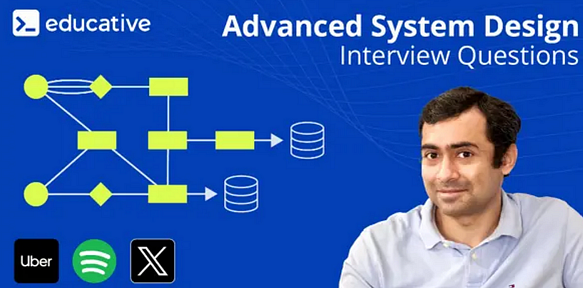
5. Grokking the Advanced System Design Interview — Built for Senior Engineers
If you’re targeting staff engineer, tech lead, or principal engineer roles, basic system design answers won’t get you the offer. Interviewers at this level expect a deep command of distributed systems, event-driven architectures, and production-scale engineering decisions.
This course is specifically designed for that audience.
What this course offers:
- Advanced topics including event-driven architectures, microservices, and service mesh patterns
- Deep dives into caching strategies, consistent hashing, sharding, and replication
- Production-level scalability challenges that rarely appear in beginner-focused resources
- Ideal preparation for senior engineer, tech lead, and staff engineer interview loops
If you’ve already passed the basics and need to level up for senior roles, this is the resource to reach for.
Join here: Grokking Advanced System Design Interview
6. Grokking Dynamic Programming Interviews — Conquer the Most Dreaded Topic in Interviews
Dynamic programming is consistently the topic candidates fear most — and companies use it precisely because it reveals the quality of a candidate’s logical thinking. There’s no shortcut around it, but there is a smarter way to learn it.
Rather than throwing problems at you and hoping patterns emerge, this course structures DP learning the way it should be taught: by building mental models first, then applying them.
Why you should take this course:
- Breaks complex DP problems into recognizable, learnable patterns
- Covers both bottom-up (tabulation) and top-down (memoization) approaches
- Includes Blind 75 DP problems with clear, step-by-step solutions
- Shows real-world applications of DP, helping concepts stick beyond the interview
One of the best investments you can make if DP has historically been your weak spot.
Join here: Grokking Dynamic Programming Interviews

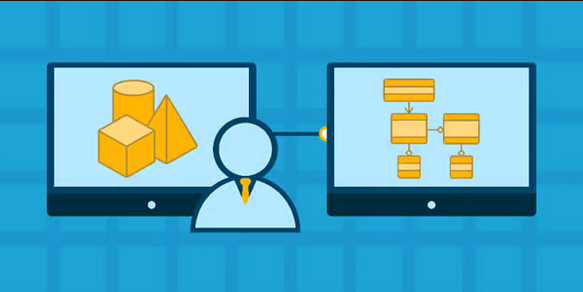
7. Grokking the Low Level Design Interview Using OOD Principles — Don’t Overlook Object-Oriented Design
Low-level design (LLD) is one of the most underestimated parts of the technical interview process, especially for backend and software engineering roles. Many candidates spend all their time on DSA and system design, then get caught flat-footed when asked to design a parking lot system or a vending machine.
This course makes sure that doesn’t happen to you.
Why this course matters:
- Teaches SOLID principles and OOP best practices in a concrete, applied way
- Walks through how to design maintainable, extensible real-world software
- Includes hands-on exercises for common LLD interview problems
- Essential for candidates targeting backend-heavy roles at Amazon, Google, and similar companies
Understanding object-oriented design well separates good candidates from great ones at the backend interview level.
Join here: Grokking the Low Level Design Interview Using OOD Principles
8. Grokking the Machine Learning Interview — For Data, AI, and ML Roles
As AI and data engineering go mainstream, the interview process for these roles has matured significantly. You can no longer walk into an ML interview armed with just Python knowledge — companies now expect you to reason clearly about data pipelines, model design, probability, and ML system architecture.
This course covers all of it in one place.
What this course covers:
- SQL, Python, and data structures as they apply to data and ML roles
- Probability, statistics, and ML concepts tested at FAANG/MAANG companies
- Hands-on projects to build real-world experience alongside interview prep
- Tailored for data engineers, AI researchers, and ML engineers targeting top companies
One of the most comprehensive ML interview prep resources I’ve found.
Join here: Grokking the Machine Learning Interview

9. Mock Interviews on Educative — Practice Under Real Conditions
Here’s the uncomfortable truth: you can study every resource on this list and still freeze up in an actual interview if you haven’t practiced under real conditions. Reading about how to solve problems is fundamentally different from solving them live, under time pressure, with someone watching.
Educative’s mock interview feature closes that gap, and it’s one of the most underused tools on the platform.
How mock interviews help you prepare:
- Simulate real interview conditions including time pressure and problem difficulty
- Instant feedback on your solutions and approach
- Includes behavioral interview questions, which are increasingly weighted in hiring decisions
- Builds the confidence and composure that makes the difference on interview day
This is the practice environment that turns preparation into performance.
Join here: Mock Interviews on Educative
10. Grokking the Behavioral Interview — Technical Skills Alone Won’t Get You the Offer
I saved this for last because it’s the most overlooked part of interview prep — and often the deciding factor. Candidates who sail through the technical rounds sometimes lose the offer because they can’t articulate their experience, communicate their impact, or handle conflict and failure questions with maturity.
Behavioral interviews are now a structured part of the hiring process at virtually every major tech company, and they deserve the same preparation as the technical rounds.
Why this course is essential:
- Teaches the STAR methodology (Situation, Task, Action, Result) in a practical, actionable way
- Includes real behavioral interview questions sourced from FAANG company interviews
- Helps you frame answers confidently without sounding rehearsed or robotic
- Addresses common pitfalls that trip up even strong technical candidates
Don’t let the non-technical round undo all the preparation you put into the technical ones.
Join here: Grokking the Behavioral Interview
Final Thoughts
That’s my list of the 10 best programming interview resources for 2026, all from Educative.io. After going through 30+ resources across multiple platforms, these stood out for their quality, depth, and practical focus.
The best interview prep strategy combines all the dimensions that modern interviews test: coding patterns, system design, AI design, dynamic programming, OOD, behavioral preparation, and real practice through mock interviews. These ten resources cover every one of those areas.
You’ll need an Educative subscription to access them — it runs around $14.99/month and covers 1,200+ courses. There’s a 7-day free trial to get started, and they’re currently running a 50% discount.

Good luck with your preparation. The market is competitive right now, but the candidates who prepare smart — not just hard — are the ones getting the offers.
Other Educative Resources You May Like:
- Review — Udemy vs Educative? Which is better in 2026?
- Top 6 System Design and API Design Interview Courses
- Review — Is Grokking the Low Level Design Interview Using OOD Principles on Educative Worth it?
- Top 5 Educative Courses to learn Essential Tech Skills in 2026
- 5 Best Educative.io Courses to Learn Cloud Computing in 2026
- Is Grokking the Coding Interview Pattern in Java on Educative worth It?
- 5 Best Educative.io Courses to Learn Generative AI and ChatGPT
- 11 Best Educative Courses for Coding Interviews and development
- Is Educative.io Courses worth it in 2026? Review
- 5 Grokking Courses on Educative.io for Cracking Coding Interviews
- 5 Best Educative.io Courses to Learn Artificial Intelligence
Which of these will you tackle first? Drop a comment below!
All the best for your interview prep. If you have questions or want a personalized study plan recommendation, ask away in the comments.
P.S. — Educative also has a Premium plan with cloud lab access, which is especially valuable if you’re preparing for Coding and System Design interviews in 2026 or want to learn AI Engineering and ALL Engineering.
Educative Unlimited: Excel with AI-Powered Learning

I Tried 30+ Programming Interview Resources: Here Are My Top 10 Recommendations for 2026 was originally published in Javarevisited on Medium, where people are continuing the conversation by highlighting and responding to this story.
This post first appeared on Read More