

I Tried Bugfree.ai for System Design Interviews — LeetCode for System Design
I found Leetcode for System Design and It’s awesome
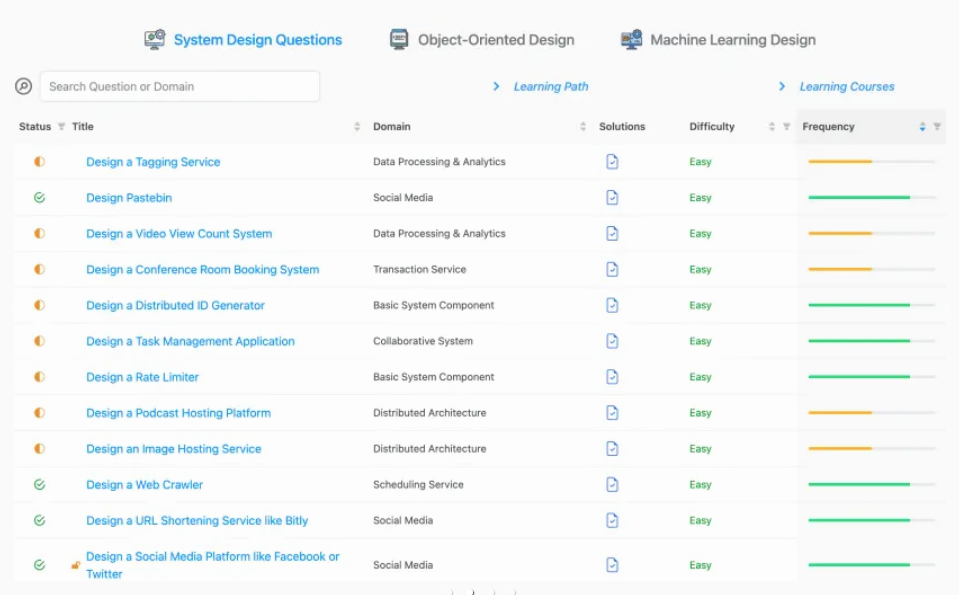
If you’re preparing for system design interviews — especially for FAANG or top-tier tech roles — you’ve likely been searching for the right platform to practice on.
I’ve tried various resources to learn system design, like ByteByteGo, Design Guru, Exponent, Educative, Codemia.io, and Udemy which have many great System design courses.
But one thing I always missed was interactive online practice — something like LeetCode where you can solve problems, get evaluated in real time, and track your progress on a leaderboard.
That search led me to Bugfree.ai, a platform that brands itself as “LeetCode for System Design.” It promises a mix of mock interviews, structured question practice, real-time AI feedback, and more.
Master System Design & Behavioral Interviews Like Leetcode
But does it actually deliver? I spent time with the platform to find out. Here’s my honest take.
What Is Bugfree.ai?
Bugfree.ai is an AI-driven platform built specifically for system design interview preparation. Rather than just offering reading material or video walkthroughs, it takes an interactive, practice-first approach.
Here’s what it offers:
- 150+ system design challenges spanning API design, high-consistency systems, job schedulers, ML-infused pipelines, and much more
- AI mock interviews that simulate real interview scenarios — including follow-up questions and scoring feedback on communication, clarity, and diagrams
- Structured learning materials including checklists, design frameworks, guided walkthroughs, and score tracking over time
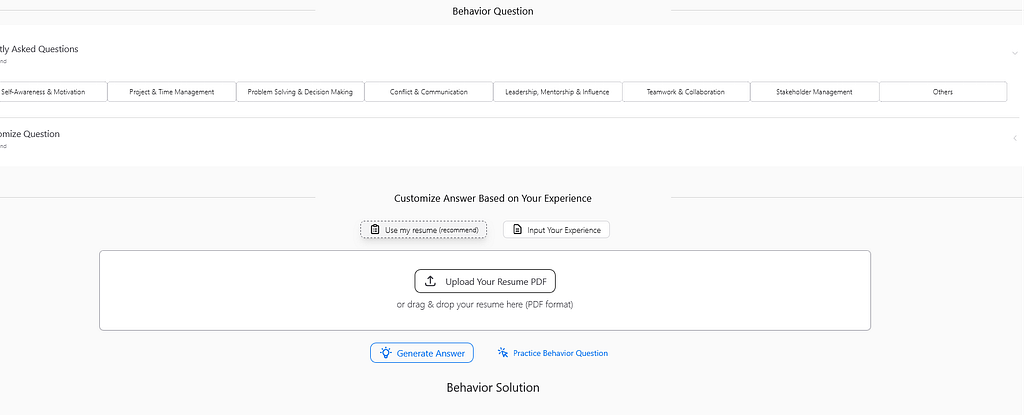
- Additional features like behavioral interview prep, a resume builder, and coded walkthroughs of common algorithm problems
What’s Good About Bugfree.ai?
After spending time with the platform, here are the strengths that stood out most.
1. AI-Powered Mock Interviews with Instant Feedback
This is Bugfree.ai’s headline feature — and it lives up to the billing. The AI simulations feel realistic, prompting follow-up questions just like a real interviewer would. Feedback covers your diagrams, communication style, and written structure.
I’ve seen users note that practicing with the AI improved not just their system design fluency, but also their clarity in articulating complex ideas under pressure.
2. A Large and Constantly Updated Question Bank
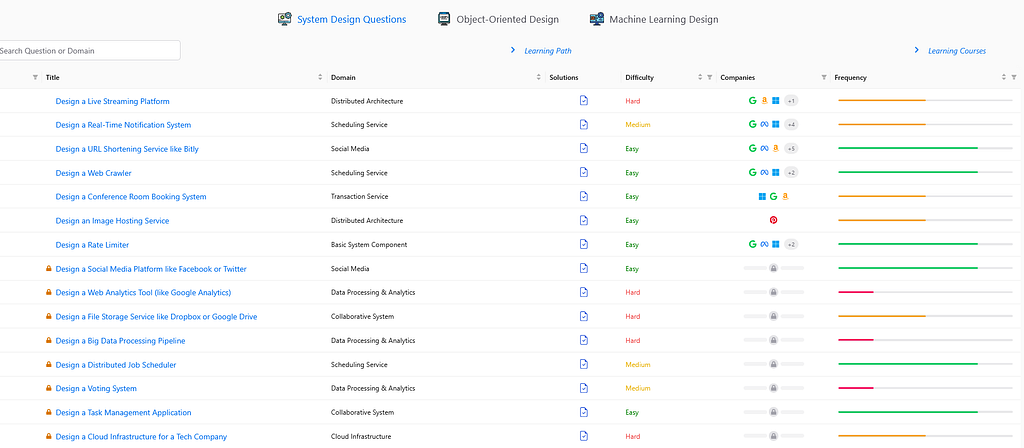
With 150+ system design problems — from URL shorteners to real-time notification systems — the question bank is substantial. Crucially, it’s updated regularly to reflect current industry trends, so you’re not practicing on outdated material.
3. Structured Learning and Frameworks
Many platforms throw you into problems without a framework for approaching them. Bugfree.ai includes checklists, guided solutions, and structured design frameworks that help you develop a repeatable process — something that matters enormously in actual interviews.
4. Progress Tracking
Built-in performance tracking lets you measure your improvement over time. This makes preparation more intentional and gives you clear visibility into where you still have gaps.
5. Fully Online and Self-Paced
No scheduling, no waiting for a mentor to be available. Bugfree.ai is available whenever you are, making it a genuinely flexible option for engineers with busy schedules.
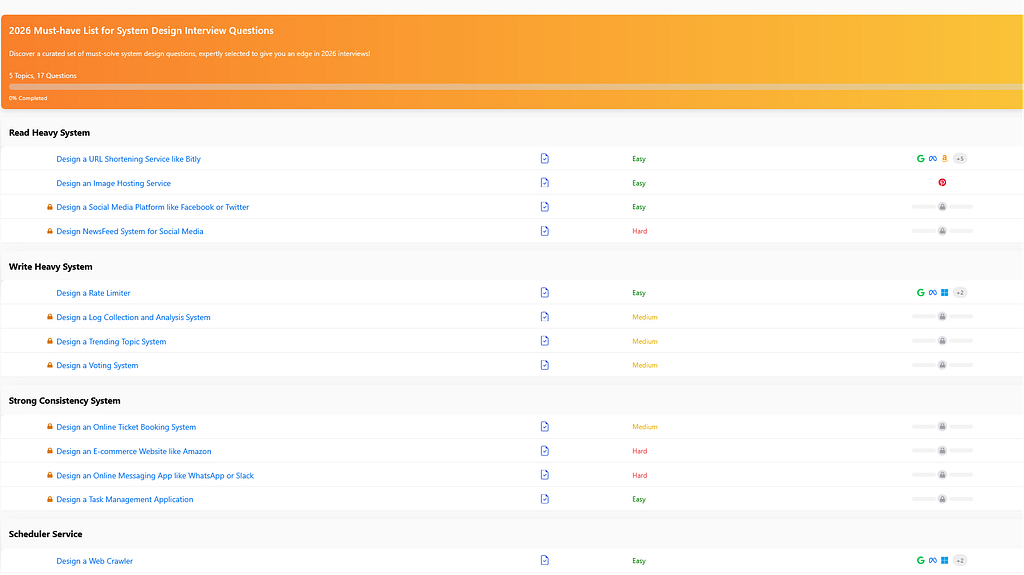
You can see their curated list of must solve system design questions for 2026 here.
What Could Be Better?
No platform is perfect. Here are the limitations worth knowing before you commit.
1. Full Access Is Behind a Paywall
While specific pricing isn’t prominently listed, the most valuable features — AI mock interviews and detailed walkthroughs — are locked behind paid tiers. For budget-conscious self-learners, this is worth factoring in.
2. No Human Mentorship
AI feedback is useful, but it can’t fully replace the nuance and insight of a live, experienced mentor during a complex system design discussion. If you’re targeting senior or staff-level roles, you may want to supplement with peer mock interviews or coaching.
3. Less Depth on Architecture Narratives
Bugfree.ai excels at question-based practice, but it doesn’t offer the deep narrative-style architecture instruction you’d find on ByteByteGo, Design Guru, or Educative. It assumes you’re coming in with baseline knowledge.
4. No Standalone DSA Practice
If you’re also preparing for coding rounds alongside system design, Bugfree.ai won’t cover that. You’ll need a separate platform like LeetCode for algorithm and data structure prep.
But they do have behavioral interview questions which is also rare to find.
How Does Bugfree.ai Compare to Other System Design Interview Platforms?
System design prep doesn’t have to be a single-platform choice. Here’s how Bugfree.ai stacks up against the major alternatives.
1. Bugfree.ai
- AI-powered mocks that simulate realistic system design interviews
- Instant feedback on diagrams, communication, and solution structure
- Large, frequently updated repository of system design problems
- Structured frameworks, walkthroughs, and progress tracking
- Fully self-paced — no scheduling required
- No live mentorship or human feedback
- No coding (DSA) practice included
2. ByteByteGo
- Visual, diagram-first lessons that simplify complex system concepts
- Deep case studies on real-world systems like Twitter and YouTube
- Excellent for visual learners building conceptual foundations
- Both text-based books and video content available
- Less interactive — no real-time mocks or written submissions
3. DesignGurus.io (Grokking Series)
- Pattern-based learning approach covering caching, rate limiting, indexing, and more
- Interactive lessons with quizzes and coding playgrounds
- Strong for building structured conceptual understanding
- No AI feedback loops or dynamic mock interviews — primarily static learning
4. Educative.io (Grokking the System Design Interview)
- Interactive, guided scenarios with quizzes and text-based walkthroughs
- Broad coverage of system design topics and frameworks
- Beginner-friendly with a lot of scaffolding
- No AI-driven feedback, mock interviews, or real-time performance tracking
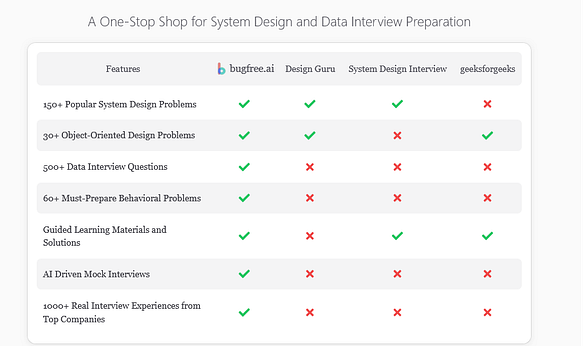
Here’s a visual comparison to help you decide:
Which System Design Interview Platform Is Right for You?
The best platform depends entirely on where you are in your preparation and what you need most.
- Use Bugfree.ai if you want real-time AI feedback, hands-on mock interview experience, and want to simulate interview pressure to improve delivery and clarity.
- Use ByteByteGo if you want rich visual breakdowns of large-scale systems and deep conceptual understanding before moving to practice.
- Use DesignGurus.io if you want a structured, pattern-driven approach to system architecture with frameworks you can internalize and reuse.
- Use Educative.io if you want interactive, guided walkthroughs with a gentle entry point into system design scenarios and principles.
Final Verdict — Is Bugfree.ai Worth It?
Yes — if you’re serious about mastering system design through realistic, iterative practice in leetcode stle. For engineers targeting FAANG-level system design rounds, Bugfree.ai offers something most platforms simply don’t: genuine interactive practice with immediate, structured feedback.
It’s particularly strong for:
- Engineers preparing for FAANG or top-tier tech system design rounds
- People who learn best by doing rather than reading or watching
- Those who already have baseline system design knowledge and are ready to write and refine solutions under pressure
That said, it works best as part of a broader preparation strategy. If you’re starting from scratch conceptually, begin with ByteByteGo or DesignGurus.io to build your foundations, then use Bugfree.ai to stress-test and sharpen your skills through practice.
If you’re on a tight budget or prefer mentor-led coaching, consider combining Bugfree.ai with free resources like YouTube and public engineering blogs before committing to a paid plan.
Ready to Get Started?
You can explore the platform and try AI mock interviews here:
→ Explore Bugfree.ai and try AI mock system design interviews
For deeper conceptual preparation alongside your practice, consider pairing it with:
- ByteByteGo’s system design course and books for visual clarity and architectural depth
- DesignGurus.io’s text-based frameworks for structured, pattern-based concept learning
Bugfree.ai takes a bold, interactive approach to system design prep. It’s not a complete solution on its own — but used strategically, it’s one of the most effective tools available for turning conceptual knowledge into interview-ready performance.
Good luck with your system design interviews. If you have any questions or doubts, feel free to drop them in the comments.
P.S. — If you’re only going to do one thing right now, go join Bugfree.ai and start practicing. Make it a goal and you’ll be a noticeably better software engineer on the other side.
Master System Design & Behavioral Interviews Like Leetcode

I Tried Bugfree.ai for System Design Interviews — LeetCode for System Design was originally published in Javarevisited on Medium, where people are continuing the conversation by highlighting and responding to this story.
This post first appeared on Read More