
I Tried 50+ AI, LLM, and Agentic AI Courses on Educative: Here Are My Top 15 Recommendations for 2026
Educative has quietly become one of the best platforms for learning practical AI skills in 2026 — here’s a complete guide to their top courses, why the platform stands out, and how to get the most value from their subscription (with Fenzo, Educative Go, and AWS Cloud Labs)
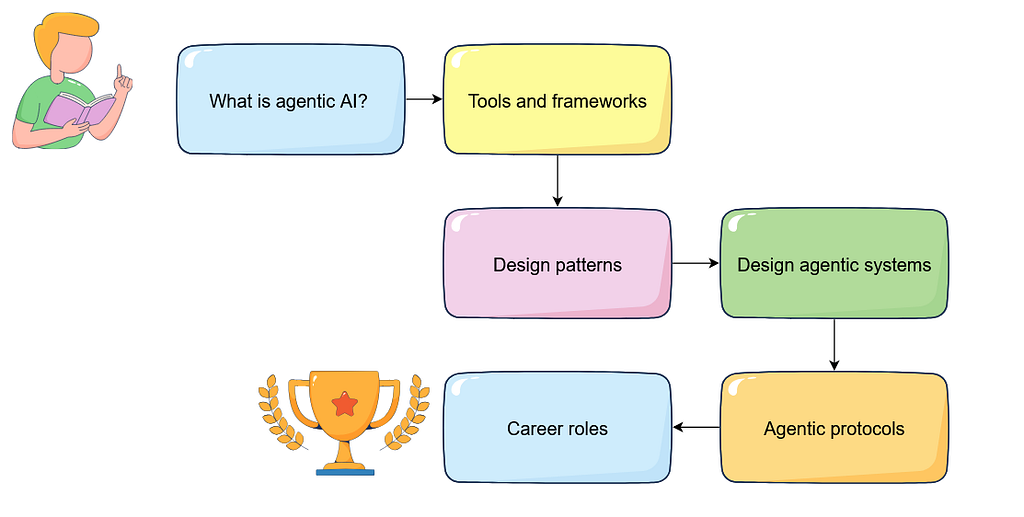
Hello friends, If you’re serious about building AI skills in 2026 — whether that’s designing agentic systems, mastering LLMs, implementing RAG pipelines, or deploying on AWS — Educative deserves your full attention.
While most people default to video-based platforms, Educative takes a fundamentally different approach: every course is fully interactive and text-based, with live coding environments embedded directly in the browser.
You don’t watch someone else code — you write and run code yourself, right inside the course. No local setup. No environment headaches. Just learning.
In 2026, as AI moves from hype to infrastructure, Educative has assembled what is arguably the most focused and technically rigorous catalog of AI courses available on any online learning platform.
Their coverage spans the full modern AI stack: Generative AI fundamentals, Large Language Models, Retrieval-Augmented Generation, Agentic AI systems, MCP, prompt engineering, vector databases, LangChain, fine-tuning, and more.
This article covers everything you need to know — the best courses by skill level and topic, the platform’s standout features including the Fenzo, their AI Mentor for technical learning, Educative Go, their new mobile app for byte size learning, and AWS Cloud Labs, and how to access all of it through the Educative Unlimited plan.
- Educative Unlimited: Excel with AI-Powered Learning
- Fenzo – Generate personalized tech tutorials, instantly.
- Educative Go: Learn to Code & Coding Interview Prep
- Cloud Labs | Educative
Why Educative Stands Out in 2026
A lot of us know Educative as a go-to place for coding interview preparation but in last few years, Educative has quietly become one of the best platforms for learning practical AI skills.
Before we get into the courses, it’s worth understanding what makes Educative different from other platforms.
1. Fully Interactive, Browser-Based Learning
This is Educative’s most defining feature. Unlike Udemy or Coursera where you watch video lectures and then switch to a separate IDE, Educative courses include live coding environments, interactive quizzes, and runnable code playgrounds embedded directly in each lesson.
You read a concept, immediately write code to apply it, and see the output, all in the same window. For technical learners, this dramatically reduces friction and significantly improves retention.
2. Text-Based Format That Respects Your Time
Educative’s courses are written, not recorded. This might sound like a downside until you realize that well-written technical prose is faster to consume, easier to search, and far more scannable than a 20-minute video lecture.
You can skim, revisit specific sections, and search across course content instantly. For experienced developers who just need to fill specific gaps, this is a major advantage.
3. Educative Go — Learn on the Go
Educative Go is the Educative’s mobile app, designed to bring the full Educative learning experience to your phone.
In 2026, when developers are constantly context-switching between meetings, commutes, and deep work sessions, the ability to pick up a course on your phone and continue it seamlessly on your desktop is genuinely valuable.
Educative Go preserves your progress, supports interactive exercises where possible, and makes it easy to move through text-based content during downtime. It’s one of the more thoughtfully built learning apps available for technical education.
Educative Go: Learn to Code & Coding Interview Prep
4. Cloud Labs — Hands-On Cloud Practice
One of Educative’s most powerful features for cloud and AI learners is their Cloud Labs — real, provisioned AWS environments accessible directly through the platform.
Instead of incurring personal AWS charges or juggling account credentials, you get pre-configured cloud environments to practice deploying models, building serverless pipelines, and working with AWS services in a controlled, cost-free setting.
For anyone pursuing AI engineering roles that involve cloud infrastructure, this feature alone justifies the subscription cost. You can find more about it here
5. Educative Unlimited — One Subscription, Everything
This is what I like most, rather than paying per course, Educative Unlimited gives you access to the platform’s entire catalog — hundreds of courses — under a single subscription.
The 2-year plan offers the best per-month value and is particularly smart if you’re planning a structured multi-month learning roadmap (which, given the breadth of courses below, you should be).
For anyone serious about AI skill development in 2026, the math on Unlimited versus buying individual courses is straightforward.
Educative Unlimited: Excel with AI-Powered Learning
The 15 Best Educative Courses for AI, LLM, and Agentic AI in 2026
Now, let’s see the best Educative courses you can join to learn AI, LLm and Agentic AI in 2026. Here’s a structured breakdown of the most valuable courses on the platform, organized by the skills they build.
I have divided into different sections or categories like Agentic AI, LLM Engineering, Generative AI, Prompt Engineering, RAG etc so that you can focus on one particular skill and then move to next skill only when you master the first one.
1. Agentic AI — The Hottest Skill of 2026
Agentic AI — autonomous systems that can plan, reason, use tools, and execute multi-step workflows — is the defining frontier of AI engineering in 2026. Educative’s catalog here is exceptional.
1. Agentic System Design
This is the flagship course for anyone who wants to move beyond building simple AI features and start designing real, production-grade agentic systems. I
t covers the architectural patterns behind autonomous AI agents: how to structure planning loops, handle tool use, manage state and memory, design for reliability and failure recovery, and orchestrate multi-agent workflows.
The course is deeply practical — you’ll work through real system design problems and implement agents from scratch, not just configure existing frameworks.
If you want to understand why agentic systems are built the way they are, not just how to use a library, this is the place to start.
Best for: Software engineers and architects who want to design production agentic systems from first principles.
Here is the link to join this course : Agentic System Design
Agentic System Design – AI-Powered Course
2. Master Agentic Design Patterns
Think of this as the companion course to Agentic System Design. Where the system design course focuses on architecture, this one focuses on patterns — the repeatable, battle-tested approaches that make agentic systems reliable and maintainable in production.
It covers patterns like ReAct, Plan-and-Execute, self-reflection, tool augmentation, and multi-agent collaboration.
Understanding these patterns is what separates developers who can build a demo from developers who can build something that works at scale.
Best for: Developers who already have some agentic AI exposure and want to formalize their pattern knowledge.
Here is the link to join this course : Master Agentic Design Patterns
Master Agentic Design Patterns – AI-Powered Course
3. Mastering MCP: Building Advanced Agentic Applications
Model Context Protocol (MCP) is rapidly becoming the standard interface for connecting AI agents to external tools, data sources, and services.
This course goes deep on MCP — covering both the protocol fundamentals and the advanced patterns needed to build agentic applications that integrate reliably with real-world systems.
If you’re building agents that need to interact with APIs, databases, file systems, or external services, understanding MCP at this depth is increasingly non-negotiable.
Best for: Developers building production agentic applications that integrate with external systems.
Here is the link to join this course : Mastering MCP: Building Advanced Agentic Applications
Mastering MCP: Building Advanced Agentic Applications – AI-Powered Course
4. Build AI Agents Using Google ADK
Google’s Agent Development Kit (ADK) is one of the most powerful frameworks for building agentic AI applications in 2026.
This course provides a hands-on, project-based walkthrough of building real agents using ADK — covering agent orchestration, tool integration, memory management, and deployment.
If you’re working in Google Cloud environments or prefer Google’s tooling ecosystem, this is an essential practical resource.
Best for: Developers who want to build agents using Google’s official framework and tooling.
Here is the link to join this course — Build AI Agents Using Google ADK
Build AI Agents Using Google ADK – AI-Powered Course
2. LLMs and Generative AI — From Foundations to System Design
Building on top of language models requires understanding them properly. These courses cover the full spectrum from conceptual foundations to production system design.
5. Essentials of Large Language Models: A Beginner’s Journey
The clearest, most accessible introduction to how large language models actually work — from tokenization and attention mechanisms to pre-training, fine-tuning, and inference.
This course doesn’t assume a PhD in machine learning; it’s genuinely beginner-friendly while being technically honest.
If you’re new to LLMs and want a solid conceptual foundation before jumping into applied work, start here.
Best for: Developers and engineers who are new to LLMs and want to understand the fundamentals before building with them.
Here is the link to join this course — Essentials of Large Language Models: A Beginner’s Journey
Essentials of Large Language Models: A Beginner’s Journey – AI-Powered Course
6. Generative AI Essentials
A practical, broad-coverage introduction to the Generative AI landscape — covering text, image, code, and multimodal generation.
This course gives you the vocabulary, mental models, and hands-on exposure needed to work productively with modern generative AI systems.
It’s particularly well-suited as a companion to the more specialized courses further down this list.
Best for: Anyone who wants a solid, practical grounding across the full generative AI landscape.
Here is the link to join this course — Generative AI Essentials
Generative AI Essentials – AI-Powered Course
7. Generative AI Handbook
A comprehensive reference course that covers generative AI concepts in depth — architectures, training approaches, evaluation methods, safety considerations, and deployment patterns.
Think of it as the technical reference you return to repeatedly as you encounter new concepts in other courses and projects. Less a linear learning experience and more a richly organized knowledge base.
Best for: Developers who want a comprehensive reference resource to complement their applied work.
Here is the link to join this course — Generative AI Handbook
8. Grokking the Generative AI System Design
In the same tradition as Educative’s celebrated “Grokking” series, this course approaches generative AI from a system design perspective — exactly the framing you need when preparing for technical interviews or designing real production systems.
It covers how to architect AI-powered applications at scale: latency management, cost optimization, reliability patterns, evaluation frameworks, and the tradeoffs between different architectural choices.
Best for: Senior engineers, tech leads, and anyone preparing for AI engineering interviews at top companies.
Here is the link to join this course — Grokking the Generative AI System Design
Grokking the Generative AI System Design – AI-Powered Course
3. RAG — Retrieval-Augmented Generation
RAG has become the dominant architecture for grounding LLM applications in real, current, domain-specific knowledge. These courses cover it from foundational to advanced.
9. Fundamentals of Retrieval-Augmented Generation with LangChain
The most practical entry point into building RAG systems. This course teaches you to build retrieval-augmented pipelines using LangChain — covering document loading and chunking, embedding strategies, vector store integration, retrieval patterns, and how to wire it all together into a working application.
LangChain remains the most widely used RAG framework in production environments, making this course directly applicable to real-world projects.
Best for: Developers ready to build their first serious RAG application using the industry’s most popular framework.
Here is the link to join this course — Fundamentals of Retrieval-Augmented Generation with LangChain
Fundamentals of Retrieval-Augmented Generation with LangChain – AI-Powered Course
10. Advanced RAG Techniques: Choosing the Right Approach
Basic RAG is straightforward. Production RAG is hard. This course covers the techniques that matter when your retrieval quality needs to improve: query rewriting, hybrid search, re-ranking, multi-hop retrieval, contextual compression, self-query retrieval, and evaluation frameworks for measuring what’s actually working.
If your RAG system isn’t giving users accurate, relevant answers, this course will show you why and how to fix it.
Best for: Developers who have built a basic RAG system and need to improve its accuracy, reliability, and performance.
Here is the link to join this course — Advanced RAG Techniques: Choosing the Right Approach
Advanced RAG Techniques: Choosing the Right Approach – AI-Powered Course
11. Master Knowledge Graph Retrieval-Augmented Generation with Neo4j
Graph RAG is one of the most powerful evolutions of the RAG architecture, using knowledge graphs to represent relationships between entities and dramatically improve retrieval quality for complex, interconnected domains.
This course teaches you to build Graph RAG systems using Neo4j, covering knowledge graph construction, Cypher queries, and how to integrate graph retrieval into LLM pipelines.
For anyone building AI applications in domains like healthcare, legal, finance, or enterprise knowledge management, this is a genuinely differentiating skill.
Best for: Advanced practitioners who want to push RAG quality beyond what vector-only retrieval can achieve.
Here is the link to join this course — Master Knowledge Graph Retrieval-Augmented Generation with Neo4j
Master Knowledge Graph Retrieval-Augmented Generation with Neo4j – AI-Powered Course
4. Tools, Frameworks, and Applied AI Engineering
Now, let’s see some interactive courses to learn essential AI tools, and frameworks like Claude Code, Codex, Replit etc.
12. Claude Code: Workflows and Tools
Claude Code is Anthropic’s agentic coding tool, and it’s transforming how developers interact with their codebases. This course teaches you how to work with Claude Code effectively — structuring workflows, using tools intelligently, managing context, and integrating Claude Code into real development processes.
As AI-assisted coding becomes a baseline expectation in software teams, fluency with the best tools in this space is increasingly valuable.
Best for: Developers who want to use Claude Code effectively in their daily workflow and understand its deeper capabilities.
Here is the link to join this course — Claude Code: Workflows and Tools
Claude Code: Workflows and Tools – AI-Powered Course
13. Build AI Chatbots with Open-Source LLMs, LangChain, Streamlit, Agentic RAG
A project-forward course that takes you from zero to a fully functional, deployable AI chatbot — using open-source LLMs, LangChain, Streamlit, and Agentic RAG.
This is the kind of course that produces real portfolio projects. You’ll build something you can actually demo to an employer or ship to users, while learning the integration patterns that production AI applications rely on.
Best for: Developers who want to build and deploy a complete, working AI application they can show in a portfolio.
Here is the link to join this course — Build AI Chatbots with Open-Source LLMs, LangChain, Streamlit, Agentic RAG
Build AI Chatbots with Open-Source LLMs, LangChain, and Streamlit – AI-Powered Course
14. Vector Databases: From Embeddings to Applications
Vector databases are the infrastructure layer that makes semantic search, RAG, and recommendation systems possible at scale.
This course covers the full picture — what embeddings are and how they’re generated, how vector search works, how to evaluate and choose between options like Pinecone, Weaviate, and pgvector, and how to integrate vector storage into real AI applications.
Understanding this layer deeply makes you significantly more effective at every other topic on this list.
Best for: AI engineers who want to understand the storage and retrieval infrastructure that underpins modern AI applications.
Here is the link to join this course — Vector Databases: From Embeddings to Applications
Vector Databases: From Embeddings to Applications – AI-Powered Course
15. Fine-Tuning LLMs Using LoRA and QLoRA
When prompt engineering and RAG aren’t enough, fine-tuning is the answer. LoRA (Low-Rank Adaptation) and QLoRA have made it feasible to fine-tune large models on consumer hardware and reasonable cloud budgets.
This course teaches you the full fine-tuning workflow — dataset preparation, training configuration, evaluation, and deployment — using these parameter-efficient techniques.
For anyone building domain-specific AI applications, this knowledge unlocks a powerful additional tool.
Best for: ML engineers and AI practitioners who want to customize LLM behavior for specific domains or tasks.
Here is the link to join this course — Fine-Tuning LLMs Using LoRA and QLoRA
Fine-Tuning LLMs Using LoRA and QLoRA – AI-Powered Course
5. Prompt Engineering — The Foundation of Everything
Prompt Engineering is one of the most important skills for developers to master in 2026. It’s the difference between success and failure with AI tools. Remmeber, garbage in, garbate out. AI ouputs are like that, you give them good input in the form of good prompt and you get good output, otherwise its frustration.
15. All You Need to Know About Prompt Engineering
Effective prompting is the first skill every AI practitioner should master, and Educative’s course on the topic is the most comprehensive text-based resource I’ve found.
It covers zero-shot and few-shot prompting, chain-of-thought reasoning, prompt chaining, system prompt design, output formatting, and the patterns that consistently produce reliable results across different model families.
Whether you’re calling an API directly or orchestrating complex agent workflows, better prompts mean better outcomes.
Best for: Anyone working with LLMs who wants to systematically improve the quality and reliability of their model interactions.
Here is the link to join this course — All You Need to Know About Prompt Engineering
All You Need to Know About Prompt Engineering – AI-Powered Course
Suggested Learning Paths
Not sure where to start? Here are three structured paths depending on where you are right now.
If you’re new to AI: Start with Generative AI Essentials → Essentials of Large Language Models → Prompt Engineering → RAG Fundamentals with LangChain → Agentic System Design.
If you’re an experienced developer moving into AI engineering: Start with Grokking Generative AI System Design → Agentic System Design → Master Agentic Design Patterns → Advanced RAG Techniques → Vector Databases → Fine-Tuning with LoRA.
If you want to specialize in Agentic AI: Agentic System Design → Master Agentic Design Patterns → Mastering MCP → Build AI Agents with Google ADK → Agentic RAG Chatbots → Graph RAG with Neo4j.
I know, there are a lot of words, a lot of things and concepts to learn but just sticking with main them like the 5 I have shared in this article, is key to success.
Getting the Most Value: Educative Unlimited
All of the courses above — and hundreds more — are accessible through a single Educative Unlimited subscription.
The 2-year plan offers the best value and makes particular sense if you’re planning to work through multiple courses across a structured learning roadmap. Given the pace at which the AI field is moving, having ongoing access to new and updated content — without paying per course — is a significant practical advantage.
What you get with Educative Unlimited:
- Unlimited access to the full course catalog (hundreds of courses)
- All interactive coding environments included
- AWS Cloud Labs for hands-on cloud practice
- Access via browser on desktop and the Fenzo mobile app
- Progress synced seamlessly across devices
- New courses and updates included as they’re added
For developers who are serious about building AI skills in 2026, this subscription is one of the most cost-effective investments available.
Educative Unlimited: Excel with AI-Powered Learning
They are also running a big 55% discount now as part of their AI April promotion, which means, now is the best time to join Educative and learn these essential AI skills.
Conclusion
That’s a full guide to the best Educative courses for AI, LLM, and Agentic AI in 2026. Whether you’re just starting out with generative AI or you’re an experienced engineer ready to go deep on agentic system design, MCP, Graph RAG, or LLM fine-tuning, there is genuinely excellent material here.
What sets Educative apart from every other platform in this space is the combination of interactive, text-based courses, real coding environments, AWS Cloud Labs, and the Fenzo mobile app — all under one subscription. It’s not the flashiest platform in online education, but it is one of the most effective for technically rigorous, hands-on learning.
The best place to start is Agentic System Design if you want to build something cutting-edge, or Generative AI Essentials if you’re building your foundations.
Either way, the Unlimited subscription ensures you’re never paying per course as your learning evolves.
Good luck — and build something real.
Other Awesome Resources from Educative.io You may like
- 5 Best Courses and Projects to Learn AI and ML in 2026
- 5 Projects You can Build to become an AI Engineer
- Top 5 Courses to learn AI and LLM Engineering in 2026?
- Top 5 Programming Language to Learn in 2026
- 10 Best Tech Interview Prep resources for developers
- 10 Best Educative Courses for Software Engineers
- Top 5 Interactive Courses to Build AI Agents in 2026?
- 10 Best AWS Labs You can do to Learn Cloud Better
- Is Educative Unlimited worth hit? Review
- 10 AI Coding/Vibe Coding Tools Every Developer Should learn
- Top 5 Grokking Courses on Educative.io for Cracking Coding Interviews
- Top 5 Educative Courses to Take in 2026
- Review: Is Educative’s Grokking the Generative AI System Design Worth
- 5 Best Educative.io Courses to Learn Generative AI and ChatGPT in 2024
- 5 Best Educative.io Courses to Learn Cloud Computing in 2026
Thanks for reading this article so far. If you like these AI, Agentic AI, Prompt Engineering and LLM Engineering courses then please share with your friends and colleagues. If you have any questions or suggestions feel free to leave a comment.
P. S. — If you want to do just one thing at this moment, I suggest to start with Agentic System Design, this is one heck of a course and must for any senior engineer. It will not just help you to understand Agentic System better but also help you on interviews.
Agentic System Design – AI-Powered Course

I Tried 50+ AI, LLM, and Agentic AI Courses on Educative: Here Are My Top 15 Recommendations for… was originally published in Javarevisited on Medium, where people are continuing the conversation by highlighting and responding to this story.
This post first appeared on Read More