
A step-by-step preparation guide for System Design Interview — including the resources, practice questions, and mock interview platforms that actually work in 2026.
Let me be honest with you about something most interview prep articles won’t say: system design interviews are not primarily a test of what you know. They’re a test of how you think.
I learned this the hard way. I failed my first system design interview at Google despite having spent weeks reading about distributed systems. I knew what a load balancer was. I understood caching.
I could explain CAP theorem. And yet I completely fell apart when the interviewer put a blank whiteboard in front of me and said, “Design Twitter.”
What went wrong wasn’t knowledge. It was process. I had no framework for structuring my thinking, no disciplined approach to requirements, no practiced method for navigating tradeoffs out loud. I was improvising, and it showed.
The second time around — after preparing the right way — I cleared system design rounds at both investment banks and startups. This article is the complete guide I wish I’d had before that first Google interview.
What Interviewers Are Actually Evaluating?
Before any preparation can be effective, you need to understand exactly what the interviewer is looking for. This isn’t obvious, and most candidates get it wrong.
Here’s what a senior engineer at Google, Meta, or Amazon is actually assessing when they give you a system design question:
Can you design a system that meets real requirements and scales? Not a theoretically perfect system — a practical one that works for the given constraints. Examples: design Twitter, design a vending machine, or design a trade position aggregator.
Can you design for extensibility? Your design should be pluggable — it should not paint itself into a corner or make it impossible to add features later.
Can you evaluate alternatives and make principled tradeoffs? Which database is the right choice and why? Which protocol fits this use case? What’s the right scaling approach? The interviewer wants to see you reason through options, not just land on an answer.
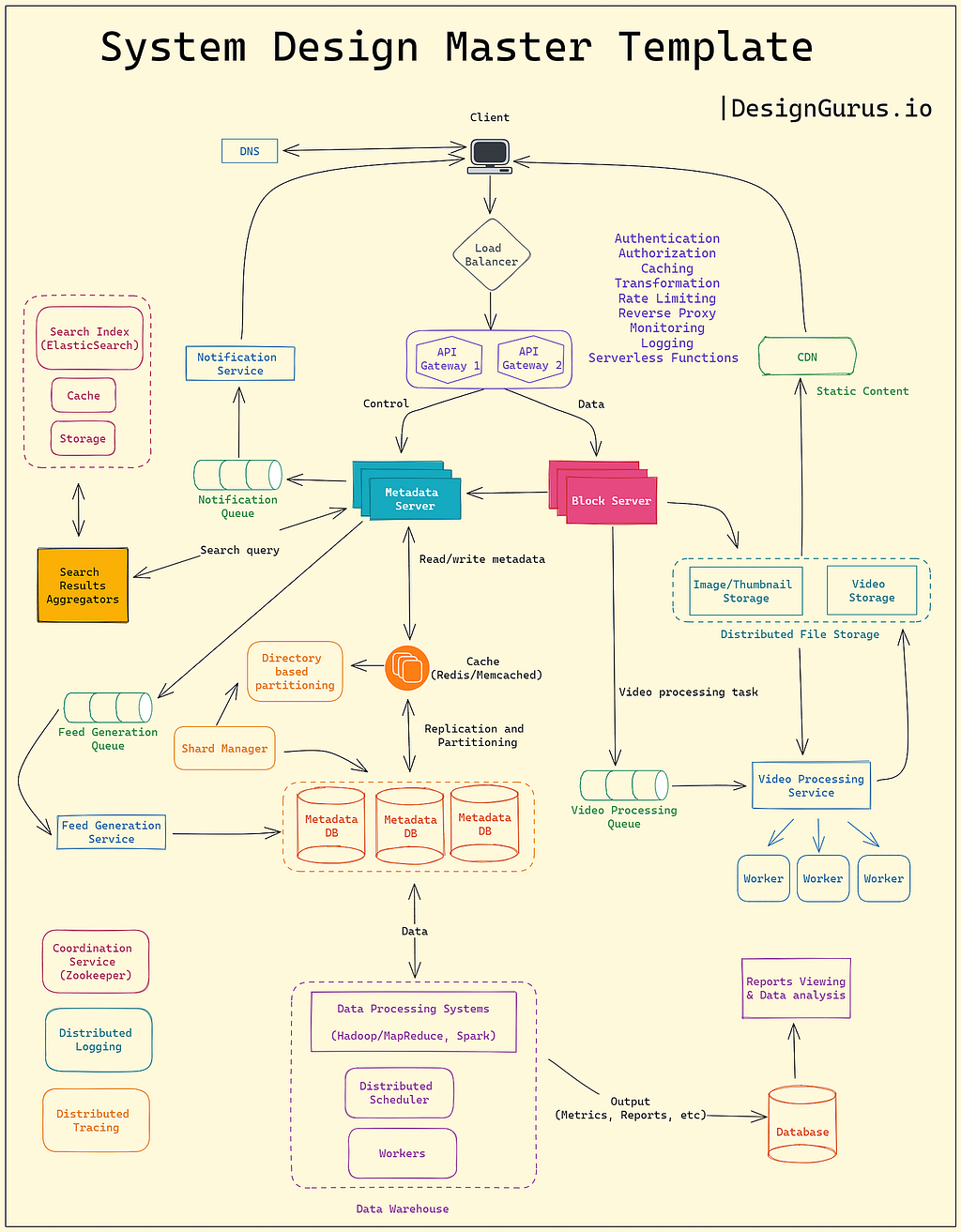
Do you understand the essential building blocks? Load balancers, APIs, caches, databases, message queues, CDNs, network protocols, monitoring and analytics, CAP theorem — these are the vocabulary of system design, and you need to be fluent in them.
The good news: all of this can be learned and practiced. None of it requires genius. It requires a structured preparation approach and enough deliberate practice to internalize the patterns.
The Four-Step System Design Interview Preparation Framework
Here is the exact process I followed after my Google failure. It works not just for 2026 but for any system design interview cycle, because it’s built around fundamentals rather than trends.
Step 1: Master the Essential System Design Concepts
You cannot navigate a system design interview without a solid understanding of the core building blocks. Every single system design question you’ll encounter in a real interview relies on some combination of these components.
Here’s what to study, and why each one matters:
1. Load Balancers
You cannot have a distributed system without a load balancer to distribute incoming requests across multiple nodes. Load balancing ensures proper resource utilization and eliminates single points of failure.
While you’re studying load balancers, spend equal time understanding API Gateways and — critically — the difference between a load balancer and an API gateway. I have been asked this question directly in interviews multiple times. It seems like a minor distinction until you’re asked to explain it under pressure.
2. Caching
Caching is usually the first performance lever you should reach for in any system. Most production systems are read-heavy, and a well-placed cache can reduce database load by orders of magnitude.
The nuances matter here: understand not just what caching is, but which eviction policy fits which use case. Least Recently Used (LRU), Least Frequently Used (LFU), and write-through versus write-back caching all have different tradeoffs. Knowing when to apply each one is what separates a good answer from a great one.
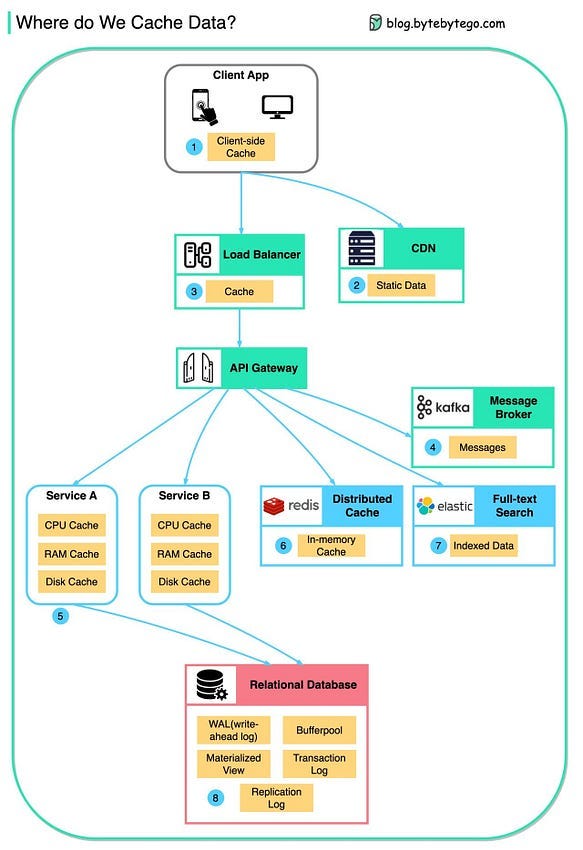
The ByteByteGo System Design course by Alex Xu has excellent material on caching strategies and is worth working through for this topic specifically.
3. Databases
There is no non-trivial system without a database. Whether you’re storing financial transactions, user profiles, product catalogs, or analytics events — you need a data store, and your choice of which one matters enormously.
Study SQL versus NoSQL, understand different database types and their query patterns, and make sure you understand how the CAP theorem shapes the tradeoffs you’re making when you choose a database. Sandeep covers this well in his System Design course on Udemy if you want a structured reference.
4. Message Queues
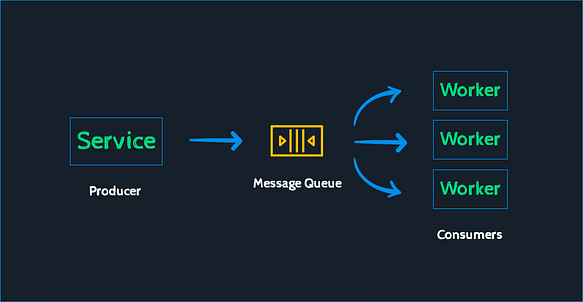
Asynchronous messaging is the backbone of modern microservices architecture. Message queues let you decouple services, handle spikes in load, and process tasks that don’t need to block the user’s journey.
The classic example: instead of making 500 individual database inserts, you write to a queue and perform a single bulk insert. Know your tools — RabbitMQ, ActiveMQ, Apache Kafka — and understand when each makes sense.
Educative.io’s Grokking Modern System Design for Software Engineers & Managers covers message queues alongside every other essential system design topic in a way I found genuinely useful for interview preparation.
5. CDNs
When your user base is geographically distributed, the physics of network latency become a real constraint. CDNs solve this by maintaining copies of your content in data centers closer to users — reducing latency and improving reliability. Understanding when and how to use a CDN is a standard part of any large-scale system design answer.
6. Analytics and Monitoring
Here’s something no interviewer will explicitly tell you: monitoring is always a requirement, even when it’s not stated. Every interviewer wants to see that you’ve thought about observability.
User login events, payment failures, API error rates, server resource utilization — all of this needs to be captured, stored, and made actionable. Know tools like Grafana and Prometheus.
Know the difference between real-time analytics and batch analytics. Proactively include monitoring in your design and watch your interviewer’s face change.
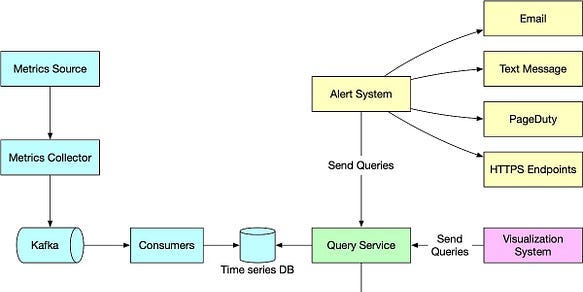
Alex Xu covers monitoring in depth in both his book and ByteByteGo course.
7. Network Protocols
Different use cases demand different protocols. Real-time systems have different requirements than batch processing systems.
Understanding TCP vs UDP, when to use WebSockets versus HTTP polling, and how to think about network protocol tradeoffs is essential for any system design involving real-time communication.
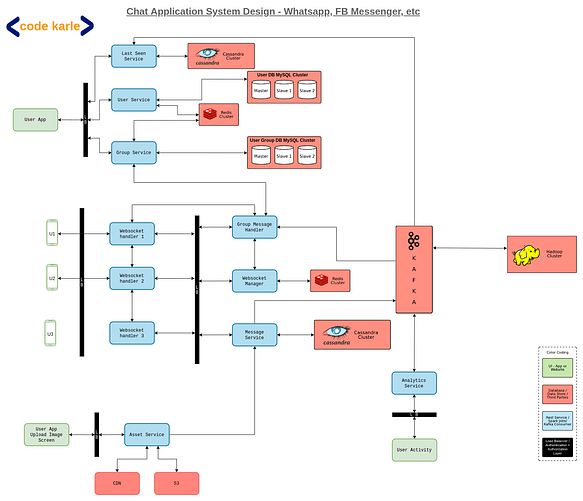
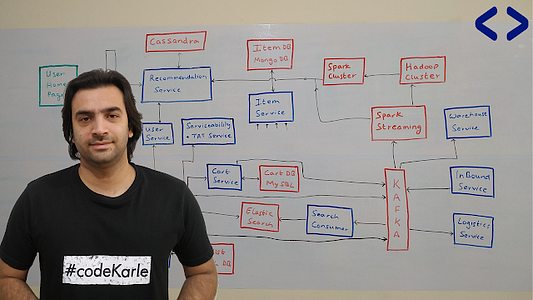
CodeKarle’s System Design course on Udemy covers all of these concepts with real-world examples and concrete tradeoff analysis — it’s one of the most practically useful resources for this step of the preparation.
Step 2: Learn from Tech Giants
This step won’t produce immediate interview results, but it is the single most effective thing you can do to develop genuine long-term system design intuition.
The engineering blogs of major technology companies document real problems at real scale — and the innovative, often counterintuitive solutions their teams developed. Reading these builds a mental model library that you can draw on when designing systems under interview pressure.
The three I found most valuable:
If you prefer video to reading, Mastering the System Design Interview by Frank Kane — Frank is a former Amazon hiring manager — is one of the best courses for learning how real systems are designed and what FAANG interviewers actually look for.

Step 3: Solve Frequently Asked System Design Questions
Once you understand the concepts, you need to apply them. Most system design interviews at major companies revolve around five to eight common problem archetypes. If you know them cold, you’re in a strong position for the majority of interviews.
Here are the most frequently asked system design questions, with solution links for reference:
- How to design Twitter?
- How to design a chat system like WhatsApp or Facebook Messenger?
- How to design Ticketmaster?
- How to design an efficient Parking Lot?
- How to design a URL shortener like TinyURL?
- Airbnb System Design
- Uber System Design
- WhatsApp System Design
For each of these, don’t just look at the solution — practice explaining your approach out loud. The ability to articulate your reasoning is as important as the design itself.
Codemia.io has become my go-to resource for structured system design practice. It’s essentially a LeetCode for system design, with 120+ problems, editorial solutions, and a community of engineers working through the same questions. For sheer breadth of practice problems, nothing else comes close.
For a course-based approach that works through these case studies in depth, this course by CodeKarle covers most of these problems and explains not just the solutions but the underlying reasoning — which is what you need to apply when you encounter a question you haven’t seen before.
Also worth bookmarking: Grokking the System Design Interview on DesignGurus.io — a course that has helped over 60,000 engineers crack their system design interviews. The structured, pattern-based approach is particularly effective for building the kind of systematic thinking that interviewers reward.
Step 4: Mock Interviews — The Step Most People Skip
This is the step that made the biggest difference for me, and it’s the one most candidates skip because it’s uncomfortable. That discomfort is exactly the point.
Reading about system design and actually doing a system design interview are completely different cognitive experiences. In a real interview, you have to speak your reasoning out loud, respond to follow-up questions in real time, manage your time across requirements, design, deep-dive, and wrap-up — all while being evaluated by someone who has seen hundreds of these interviews. You cannot simulate this by reading alone.
The most effective platforms for system design mock interviews in 2026:
Codemia.io — Live mock interviews with FAANG engineers at a significantly lower price point than most alternatives. The interviewers provide real, actionable feedback that surfaces blind spots you won’t discover on your own.
Bugfree.ai — 150+ system design questions and 30+ behavioral questions with AI-powered feedback. A good complement to live mock interviews for high-volume practice.
tryExponent — Offers 1-on-1 coaching, structured system design interview courses, and runs Pramp, a free peer-to-peer mock interview service for engineers practicing data structures and system design.
DesignGurus.io Mock Interviews — ~$239 for a session with a former Facebook engineer and DesignGurus founder. More expensive than the alternatives, but the quality of feedback from someone who has conducted hundreds of FAANG-level interviews is genuinely worth it if you’re targeting top-tier companies.
The goal is to complete at least three to five mock interviews before your real interview date. Time yourself. Practice driving the conversation rather than waiting for the interviewer to prompt you. Get comfortable with the discomfort.
Six Common Mistakes That Kill System Design Interviews
After going through this process myself and observing others prepare for these interviews, the same mistakes appear repeatedly. All of them are fixable with deliberate practice.
- Not driving the interview.
The interviewer is not going to lead you through your design. You need to take ownership of the structure and the narrative.
2. Not asking clarifying questions.
Every real-world system design starts with requirements gathering. Jumping straight to drawing boxes is a red flag. Spend the first few minutes asking about scale, constraints, and priorities.
3. Not structuring your approach.
A disorganized answer, even if it contains good ideas, signals poor engineering judgment. Follow a consistent structure: requirements → high-level design → deep dive → scaling considerations → tradeoffs.
4. Running out of time.
This interview has roughly 40 minutes of active design time. If you’ve never practiced under a clock, you will run out of time in a real interview. Time your mock sessions.
5. Not considering requirements thoroughly.
Designing the wrong system perfectly is worse than designing the right system imperfectly.
6. Not exploring alternatives.
Great system designers don’t just propose a solution — they consider alternatives, articulate the tradeoffs, and explain why they chose what they chose. This is what senior-level thinking looks like.
The Best System Design Resources for 2026
For a complete preparation toolkit, here are the resources I recommend:
- Grokking the System Design Interview — DesignGurus.io (60,000+ engineers have used this to pass their SDI)
- Grokking Modern System Design for Software Engineers & Managers — Educative.io
- ByteByteGo System Design Course by Alex Xu — excellent visual explanations
- CodeKarle’s System Design Interview Course — Udemy
- Mastering the System Design Interview by Frank Kane — Udemy
- Codemia.io — 120+ System Design Problems + Mock Interviews
- System Design Interview Course — Exponent
- Bugfree.ai — AI-Powered System Design Practice
- Web Application & Software Architecture 101 — Educative.io
- Software Design and Architecture Specialization — Coursera
- Pragmatic System Design — Udemy
Conclusion
System design interviews are winnable. They reward preparation, pattern recognition, and clear structured thinking — all of which can be deliberately developed.
The four-step framework works: master the concepts, learn from tech giants, solve the classic questions, and do real mock interviews. Follow it seriously over four to six weeks and you will be a fundamentally different candidate than you are today.
If you’re just getting started, begin with Grokking the System Design Interview for structured concept coverage and Codemia.io for problem practice. Add mock interviews as your interview date approaches.
All the best with your interviews. The tens of thousands of dollars in annual salary that a senior role offers are absolutely worth the six weeks of focused preparation it takes to get there.
All the best for your System Design interview !!

System Design Interview Guide: 10+ Must-Know Topics and Concepts was originally published in Javarevisited on Medium, where people are continuing the conversation by highlighting and responding to this story.
This post first appeared on Read More