
My favorite place to learn System Design for Senior Software Engineers
Hello friends, for years, I’ve been searching for the perfect system design course.
Not the beginner courses that teach basic concepts. Not the academic resources that are more theory than practice. I wanted something built specifically for senior developers who already know how to code, understand architecture fundamentals, and want to genuinely master system design at an expert level.
After testing dozens of courses, reading multiple books, and working through countless design problems, I finally found it: ByteByteGo.
System Design · Coding · Behavioral · Machine Learning Interviews
And after weeks of using it intensively, I can confidently say it’s the best system design resource I’ve encountered for senior developers.
Let me explain why.
The Problem with Most System Design Courses
Before diving into why ByteByteGo is different, let me explain why I was frustrated with everything else.
Most system design courses treat you like a junior developer. They spend hours on basic concepts:
- What is DNS?
- What is a load balancer?
- What is a database?
For a senior developer, this is wasted time. You already understand these fundamentals.
Some courses are too academic. They focus on theoretical frameworks without showing how to apply them to real problems.
Others are too narrow. They teach system design for one specific domain (web apps, mobile, databases) but don’t cover the breadth a senior engineer needs.
Many are outdated. The system design landscape changes every year. New technologies emerge. Design patterns evolve. A course that was great in 2022 might be missing critical 2025 patterns.
I’ve read the books:
- System Design Interview — An Insider’s Guide by Alex Xu (excellent book, the gold standard)
- System Design Interview — Volume 2 (great follow-up)
- Machine Learning System Design Interview (specialized, valuable)
- Coding Interview Patterns (solid DSA resource)
- Generative AI System Design Interview (timely and relevant)
- Object Oriented Design Interview: An Insider’s Guide (design patterns focus)
- Mobile System Design Interview (specialized domain)
- Designing Data-Intensive Applications (the bible for backend systems)
These books are excellent. I own and reference all of them. But books are static. They can’t evolve with the industry. By the time a book is published, some content is already becoming outdated.
I needed something living, breathing, constantly updated, and specifically designed for the way senior developers actually learn.
That’s when I discovered ByteByteGo.
System Design · Coding · Behavioral · Machine Learning Interviews
What ByteByteGo Actually Is?
ByteByteGo is not just a course. It’s a comprehensive system design learning ecosystem built by Alex Xu, the same engineer who wrote the System Design Interview books.
If you think “oh, it’s just a video course,” you’re missing what makes it special.
ByteByteGo provides:
- lessons that are dense with information (not fluff)
- Interactive diagrams that show system architecture in real-time
- Real-world case studies from companies like Netflix, YouTube, Discord, Uber
- Deep dives into specific technologies and patterns
- Constantly updated content that evolves with the industry
- Multiple specializations: general system design, ML system design, OOD (Object-Oriented Design), Generative AI systems, and more
- Lifetime access with continuous updates included
Most importantly: It’s designed for people who already know how to code and think architecturally.
The good thing is that they are now offering 50% discount on their lifetime plan, which provides best value. If you are a senior engineer, I highly recommend their lifetime plan to you.
Why ByteByteGo Is Perfect for Senior Developers?
Here are a couple of reasons why ByteByteGo is a great resource for senior software developers:
1. No Wasted Time on Fundamentals
The course assumes you understand:
- Basic networking (TCP/IP, HTTP, DNS)
- Database concepts (SQL, NoSQL, indexing)
- Server architecture (caching, load balancing)
- Big O notation and algorithm efficiency
It jumps straight into the thinking patterns that separate junior architects from senior ones.
2. Focuses on Real-World Trade-Offs
This is where ByteByteGo shines. It doesn’t just teach “how to design a system.” It teaches:
- When to use SQL vs. NoSQL (not just “what’s the difference”)
- How to make trade-off decisions under real constraints
- Why companies chose specific technologies and what trade-offs they accepted
- Cost, latency, consistency, availability implications of each choice
As a senior developer, you know that every architectural decision is a trade-off. ByteByteGo respects that complexity.
3. Learning from Real Systems
The course deeply analyzes real companies:
- How does YouTube handle video recommendations?
- How does Netflix stream video to millions simultaneously?
- How does Discord handle real-time messaging at scale?
- How does Uber coordinate riders and drivers?
These aren’t hypothetical examples. They’re deep dives into actual systems built and operated by world-class engineers.
4. Covers the Full Spectrum
ByteByteGo doesn’t just teach web backend systems. It covers:
- Coding Patterns for algorithms and DSA
- Machine Learning System Design for ML engineers (designing recommendation systems, visual search, ranking)
- Object-Oriented Design patterns (like Parking Lot Design)
- Generative AI System Design (the newest frontier)
- Mobile system design considerations
Whether you’re a backend engineer, ML engineer, mobile engineer, or full-stack architect, there’s content for you.
5. Continuously Updated
Here’s something books can’t do: evolve.
ByteByteGo continuously adds new content and updates existing content. Since I started using it, they’ve added:
- Generative AI system design deep dives
- New real-world case studies
- Updated infrastructure patterns
- Emerging technology discussions
The platform grows with the industry.
6. Visuals That Actually Teach
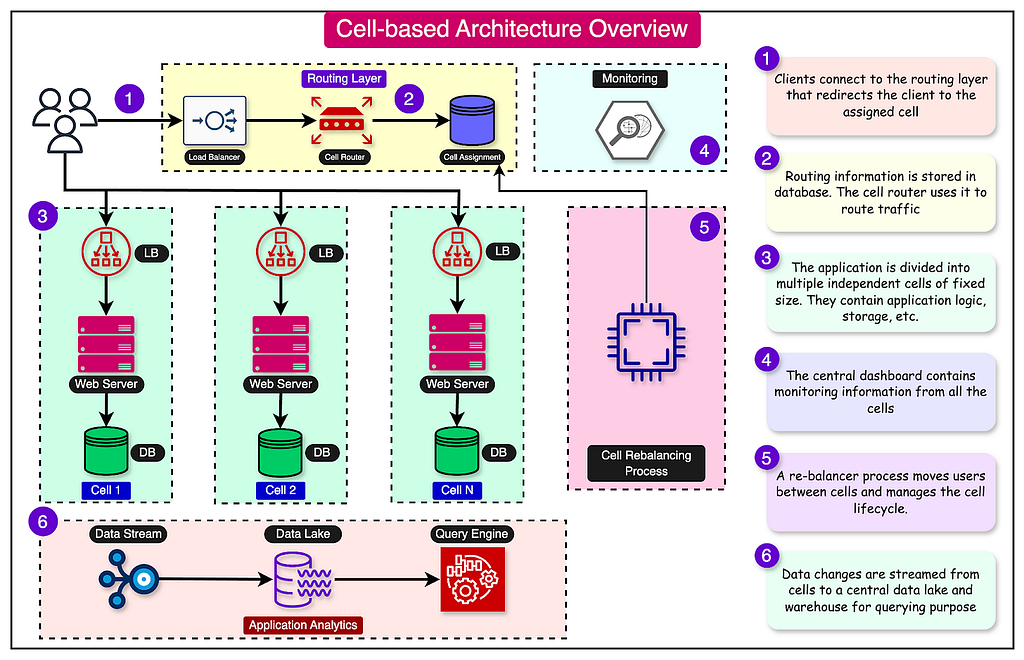
Most system design resources rely on text descriptions or simple diagrams. ByteByteGo uses animated, interactive visuals that show:
- How data flows through a system
- How components communicate
- Why bottlenecks emerge
- How to scale specific parts
For senior developers who think visually and architecturally, these visuals are gold.
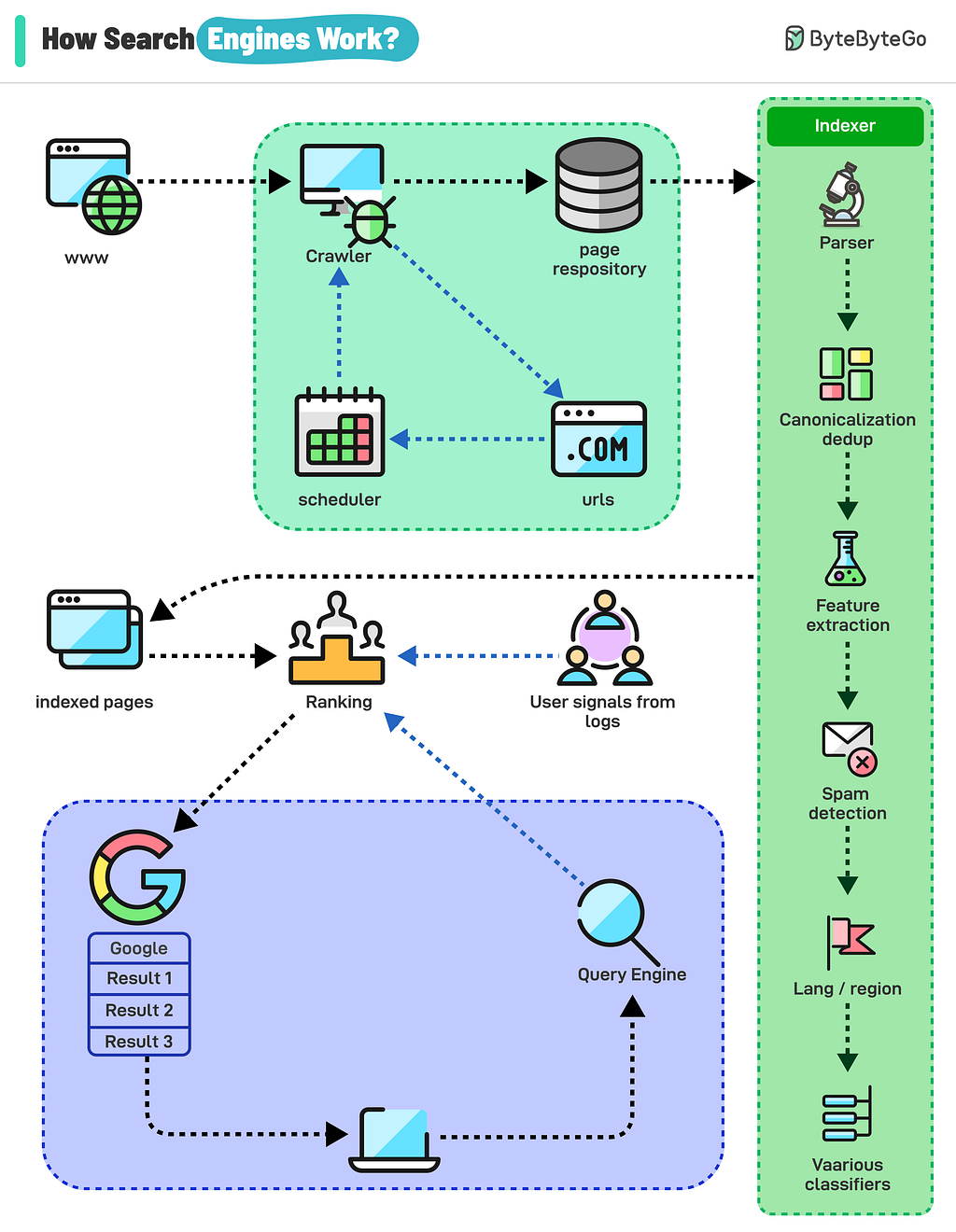
Here is one such example:
My Experience Using ByteByteGo
I’ve been using ByteByteGo intensively for the past few weeks, and here’s what surprised me most:
I learned things I didn’t know I didn’t know.
I’ve been doing system design for years. I’ve built distributed systems, worked at scale, mentored junior engineers. I thought I knew this stuff cold.
But watching ByteByteGo’s deep dive on Video Recommendation Systems revealed gaps in how I think about ML infrastructure at scale. It made me rethink how I’d approach certain problems.
System Design · Coding · Behavioral · Machine Learning Interviews
The Object-Oriented Design section taught me patterns I use regularly but couldn’t articulate systematically. Now I have a framework to discuss them.
The Generative AI System Design content is timely and sophisticated. As someone building with LLMs, this was incredibly valuable.
System Design · Coding · Behavioral · Machine Learning Interviews
How ByteByteGo Compares to the Books?
I still value the books I mentioned:
- System Design Interview volumes are the gold standard written references
- Designing Data-Intensive Applications is the bible for data systems
- Machine Learning System Design Interview is excellent for ML engineers
- Generative AI System Design Interview covers the newest frontier
But here’s the honest truth:
Books are static. ByteByteGo is alive.
A book published in 2022 is already reflecting 2022 best practices. By 2025, some content is outdated or incomplete.
ByteByteGo updates continuously. New patterns are added. Emerging technologies are covered. Real-world case studies are refreshed.
For a senior developer, this is critical. You need resources that evolve as the industry evolves.
Combined approach: Use the books for deep, comprehensive understanding. Use ByteByteGo for staying current, learning real-world applications, and reinforcing patterns through video.
System Design · Coding · Behavioral · Machine Learning Interviews
The ByteByteGo Content That Resonated Most with Me
Here are few of my favorite things when it comes to ByteByteGo:
1. The Real-World Case Studies
Reading Alex Xu break down how actual companies solved problems is invaluable. It’s not “here’s the textbook answer.” It’s “here’s how Netflix actually does it, and here’s why they made those specific choices.”
2. The Trade-Off Discussions
Senior developers need to understand trade-offs. ByteByteGo explicitly teaches:
- Consistency vs. availability
- Latency vs. cost
- Complexity vs. reliability
- Speed to build vs. performance
Every senior engineer decision involves these trade-offs.
3. The Infrastructure Deep Dives
ByteByteGo goes deeper than “use a cache” or “use a database.” It discusses:
- Specific caching strategies and when they fail
- Database sharding approaches and their implications
- Message queue design patterns
- Load balancing algorithms and real-world performance
This depth is rare in online courses.
4. The Evolution of Thinking
The course teaches not just the answer, but how to think about the problem. As a senior developer, I value this approach. You’re learning frameworks that apply beyond the specific problem.
Pricing and Access
ByteByteGo offers flexible pricing options:
- Annual subscription: ~$249/year (excellent value)
- Lifetime access: $499 For serious commitment
Use code JALJAD to get 10% discount on any plan.
Affiliate link: ByteByteGo (with 10% off)
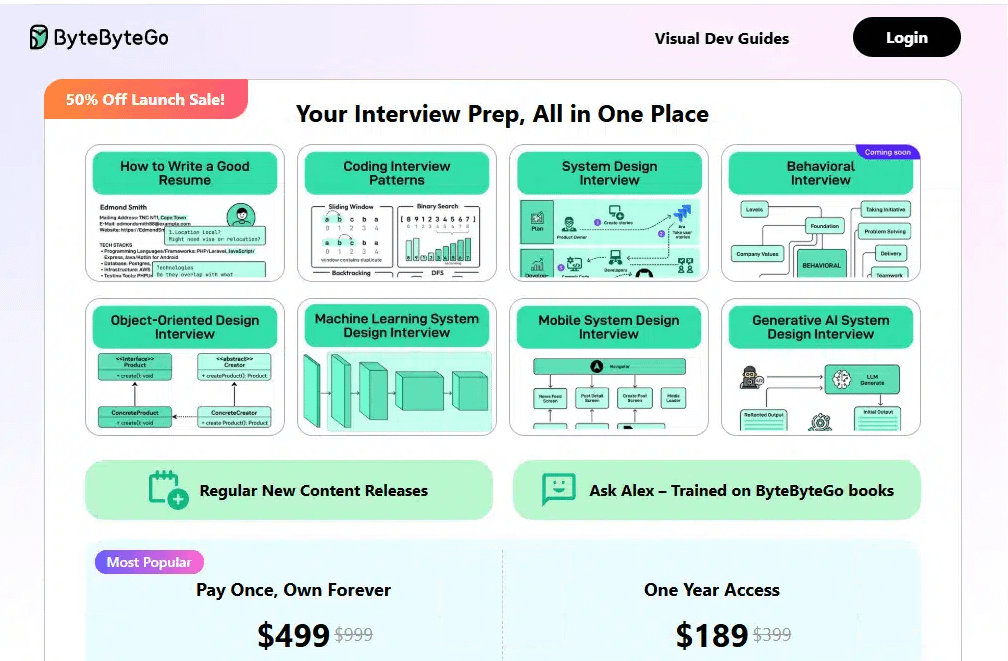
Starting with a 50% discount is a steal. You can evaluate if it’s right for you with very low financial risk.
For senior developers, the investment pays for itself immediately if you’re preparing for senior engineer interviews, want to level up your architecture thinking, or need to stay current with modern system design patterns.
Who Should Use ByteByteGo?
ByteByteGo is Perfect for:
- Senior engineers preparing for staff/principal engineer interviews
- Architects responsible for system design decisions
- Tech leads mentoring teams on design patterns
- ML engineers building large-scale systems
- Engineers transitioning to new domains (e.g., backend engineer learning ML systems)
- Anyone wanting to master system design deeply
Also valuable for:
- Mid-level engineers aspiring to senior roles
- Bootcamp graduates wanting to understand real-world systems
- Anyone building distributed systems professionally
Less critical for:
- Junior developers (start with the fundamentals first)
- People not building systems (frontend-only, data analysis, etc.)
My Final Recommendation
After years of searching, testing courses, reading books, and working with senior engineers, I can confidently say ByteByteGo is the best system design resource for senior developers in 2026.
It’s not perfect for everyone (juniors might find it overwhelming), but for senior engineers, it’s exactly what I’ve been looking for.
The combination of:
- Dense, senior-level content
- Real-world case studies
- Interactive visuals
- Continuously updated material
- Reasonable pricing
- Lifetime access
…makes it exceptional.
My advice:
- Start with ByteByteGo’s lifetime plan (use code JALJAD for 10% off)
- Read the System Design Interview books for deep, comprehensive reference material
- Supplement with Designing Data-Intensive Applications for backend system mastery
- Use domain-specific resources (ML System Design, Generative AI, Mobile) based on your focus
This combination positions you as a master of system design.
Final Thoughts
System design mastery is one of the most valuable skills a senior engineer can have. It separates senior engineers from mid-level engineers. It’s what distinguishes architects from developers.
For years, I relied on books, personal experience, and mentoring to develop this skill. While those are all valuable, they’re incomplete.
ByteByteGo fills the gaps that books can’t fill — the real-world thinking, the continuously updated content, the interactive learning, the visual explanations.
If you’re a senior developer serious about mastering system design, ByteByteGo is the resource you’ve been looking for.
Start with the lifetime plan (use code JALJAD for 10% off), pick the specialization that matches your goals, and commit to deep learning.
System Design · Coding · Behavioral · Machine Learning Interviews
Your career will thank you.
P.S. — If you’re preparing for senior engineer interviews specifically, combine ByteByteGo with Alex Xu’s books. The videos teach the thinking; the books provide the comprehensive reference. Together, they’re unbeatable.
Also, don’t just consume content passively. For every concept you learn, design a system using that pattern. Build it (even just on a whiteboard). The real mastery comes from application, not just consumption.
Good luck!

I Found the Perfect System Design Resource for Senior Developers and It’s Awesome was originally published in Javarevisited on Medium, where people are continuing the conversation by highlighting and responding to this story.
This post first appeared on Read More