
Following Linux 7.0 in April and the stable point releases since, Linux 7.1 is now available as a major feature release in the 7.x series.
You get a bunch of upgrades with this, ranging from a new NTFS driver that landed after four years of development all the way to a bugfix for a long-standing audio issue on the Steam Deck OLED.
And, if you remember our reporting from a few months ago, then this release also formally drops i486 CPU support from the kernel build system.
What’s new in this release?
Intel’s Flexible Return and Event Delivery (FRED) is now enabled by default in Linux, having previously required a manual fred=on boot flag. The switch was held back until publicly available hardware could be properly evaluated, and the code has since been tested thoroughly enough to flip from opt-in to opt-out.
Phoronix reports that people running Intel Core Ultra Series 3 “Panther Lake” should see real gains here, particularly on I/O-heavy workloads like databases, networking applications, and audio processing.
The crypto subsystem picks up some Intel QAT additions too. For QAT Gen4 and Gen5 hardware, basic Zstd compression offload is now available. The Gen6 version, intended for the Diamond Rapids platform, gets a native Zstd implementation covering both compression and decompression.
The amd-pstate driver gains CPPC Performance Priority, Dynamic EPP (Energy Performance Preference), and Raw EPP with this release for more granular control over power and performance on modern AMD Ryzen and EPYC hardware.
Similarly, the AMDgpu driver sees several changes this cycle, including SMU 15.0.8 IP support, DCN 4.2 display updates, a new DebugFS interface for monitoring 64-bit PCIe registers, and a fix for a GPU page fault triggering on non-4K page size kernel builds.
And, after four years of work, a new NTFS driver has landed in the mainline kernel. We covered its development last December, when it was still working its way toward integration.
Linus Torvalds called the merge the “ntfs resurrection,” though he briefly un-pulled the code over a Git structure issue before accepting a revised pull request. The new driver is available via the NTFS_FS Kconfig switch, and NTFS3 is still around for now.
Finally, we have the newly introduced support for 12 new SoCs, including Qualcomm’s Glymur, Mahua, Eliza, and IPQ5210, Axis ARTPEC-9, Microchip’s LAN9691 and PIC64GX, Renesas RZ/G3L, NXP S32N79, Rockchip’s RV1103B, and ARM’s Zena and Corstone-1000-A320.
Should you install this?
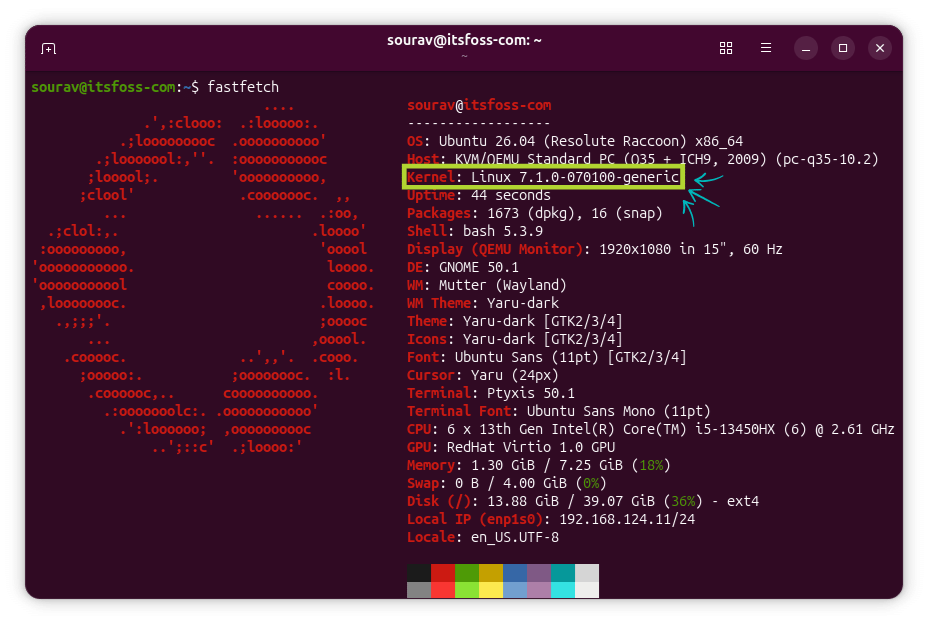
It depends. If something in this release addresses a gap you had with earlier kernels, it’s worth the upgrade. You can download the tarball from the official website and get started installing it on something like Ubuntu.
For the rest of us, it depends on the distribution one is using. Not every distro will be providing this release upgrade. Rolling releases like Arch Linux and more frequently updated distros like Fedora and its derivatives will be picking this up soon.
Others on distros like Debian or Linux Mint likely won’t see it on their computers.
Suggested Read 📖: Proton Drive Now Has a CLI

This article first appeared on Read More