
My favorite Data Structures and Algorithms books for Developers in 2026
Hello everyone — I’ve spent years reading algorithm books, some because I needed to prepare for interviews, some because I genuinely wanted to become a better programmer.
After going through 20+ books on algorithms and data structures, I can tell you this: most of them are either too dense to finish, too shallow to matter, or too academic to translate into practical coding skill.
A handful are genuinely exceptional. These are the 10 that actually changed how I think about code.
Before I dive in, let me share something I’ve come to believe strongly: algorithms are not just for interview prep.
Every time you open a HashMap, use a binary search, or wonder how Google returns results in milliseconds — that’s algorithms at work.
The programmers who understand what’s happening under the hood are the ones who build better systems, debug faster, and think more clearly under pressure.
💡 If you want to combine your book reading with hands-on practice, the Data Structures and Algorithms: Deep Dive Using Java course on Udemy is one of the best companions to any book on this list.
Top 10 Algorithm Books for Programmers in 2026
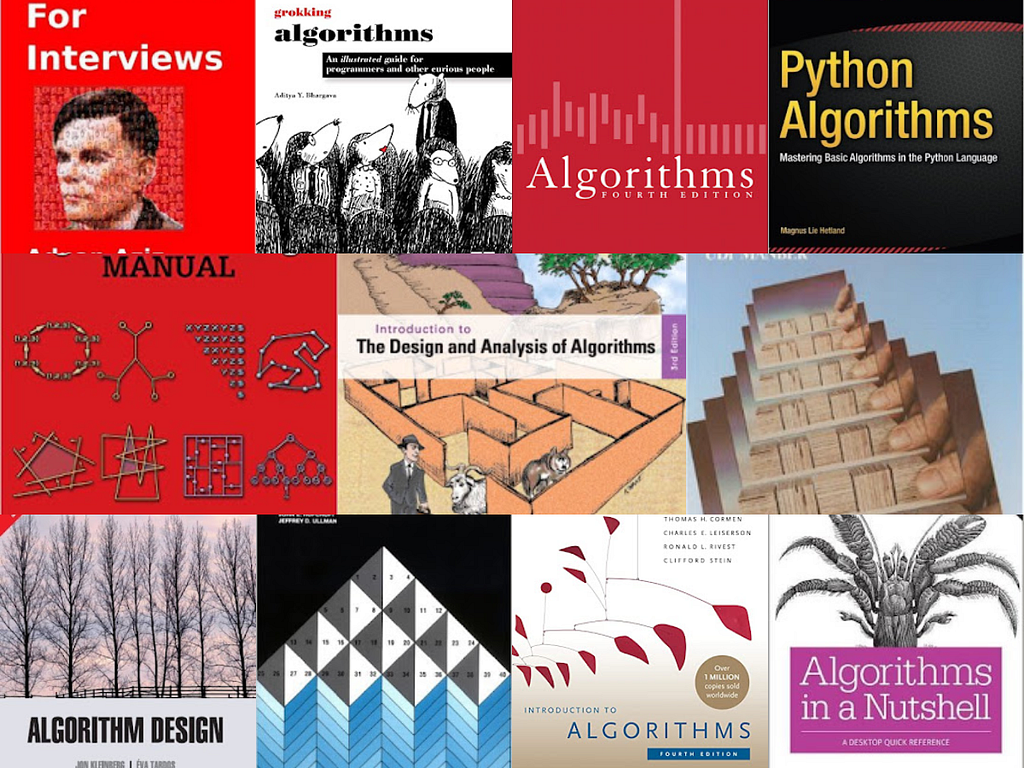
Without any further ado, here are 10 algorithms books I liked most and the ones which provide most value. I have ordered them based upon how good I found them in terms of readability, diagrams, and coverage. . The first books is especially highly recommended for first time readers of algorithms.
1. Grokking Algorithms by Aditya Bhargava
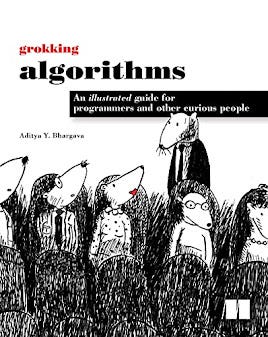
If you only read one algorithm book in 2026, make it this one.
I put Grokking Algorithms at the top of this list because it does something no other algorithm book manages: it makes a genuinely complex topic feel approachable without dumbing it down.
When I was grinding through CLRS and Sedgewick and hitting walls, picking up this book felt like someone finally turned the lights on.
The size alone is refreshing — lean and clean compared to the thousand-page doorstops that dominate the field. But what really hooked me was Aditya’s visual approach: diagrams on nearly every page, real-world examples I could actually relate to (“how does Facebook find my profile when I log in?”), and explanations that build intuition before they build notation.
The chapter on Dynamic Programming and the Knapsack problem is alone worth the price of the book. Before reading it, dynamic programming felt like magic. After, it felt like a natural extension of recursion and divide-and-conquer — which is exactly what it is. If DP is your weak point, start here.
What you’ll learn:
- Binary search, arrays, linked lists, and selection sort — from first principles
- Recursion and the call stack — explained visually
- Quicksort and divide-and-conquer
- Hash tables, graphs, and breadth-first search
- Dijkstra’s algorithm and greedy algorithms
- Dynamic programming and the Knapsack problem
- K-nearest neighbors and a taste of machine learning
Best for: Beginners and intermediate programmers who want to finally understand algorithms, not just memorize them. Python-focused but concepts apply everywhere.
Grokking Algorithms: An Illustrated Guide for Programmers and Other Curious People
2. Introduction to Algorithms (4th Edition) by Cormen, Leiserson, Rivest & Stein
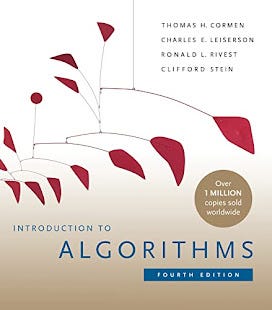
Every serious programmer should own this book. Just don’t expect to read it cover to cover.
CLRS — named after its four authors Cormen, Leiserson, Rivest, and Stein — is the gold standard in computer science algorithms. Now in its 4th edition, it covers sorting, searching, graph algorithms, dynamic programming, and much more with rigorous mathematical depth.
This is the textbook that computer science programs around the world build their algorithms courses around, and MIT offers free accompanying lectures here.
The honest caveat: this book is dense, and some chapters are genuinely difficult to read. Don’t start here — start with Grokking Algorithms above, then use CLRS as the deep reference you return to when you want to truly understand the theory behind what you’re implementing.
Pairing it with an online course like Data Structures and Algorithms: Deep Dive Using Java on Udemy is the best of both worlds — the course builds understanding quickly, CLRS deepens it permanently.
Best for: Computer science students, experienced programmers who want the authoritative reference, anyone preparing for research or graduate-level work
→ Get Introduction to Algorithms (4th Ed)
Introduction to Algorithms, fourth edition
3. Algorithms (4th Edition) by Robert Sedgewick & Kevin Wayne
This was my preferred algorithm resource for years, and for Java programmers specifically, it still might be the single best book available.
What sets Sedgewick and Wayne apart from CLRS is the balance between theory and implementation. You get the mathematical rigor and you get working Java code for every algorithm discussed.
The book is language-specific (Java), which sounds like a limitation but actually reduces friction enormously — seeing an algorithm in a language you already know lets you focus on the algorithm rather than the syntax.
Even better: there are two free companion Coursera courses — Algorithms Part 1 and Algorithms Part 2 — taught by Sedgewick himself. Taking these courses alongside the book is one of the most effective ways to truly internalize algorithms. You can also read the 4th Edition online for free here.
Best for: Java programmers who want a thorough, implementation-focused algorithms resource
→ Get Algorithms 4th Edition by Sedgewick
4. The Algorithm Design Manual by Steven Skiena
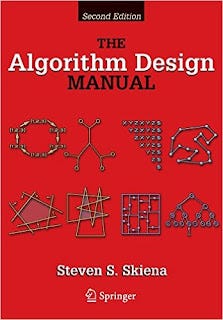
This book has been on my shelf for nearly a decade and I still return to it. That’s the best endorsement I can give.
Skiena’s key differentiator is the “war stories” — real-world accounts of problems he encountered in practice and how algorithm thinking solved them. Where most algorithm books feel academic, this one feels like apprenticeship. You see the thought process behind choosing an algorithm, the false starts, and the insight that finally worked.
The code is in C, but it’s readable without deep C expertise. What matters more is the emphasis on problem-solving intuition — the skill of looking at an unfamiliar problem and knowing which algorithmic family to reach for. That intuition is what separates great engineers from good ones, and this book builds it better than anything else I’ve read.
Best for: Experienced programmers targeting senior roles at top companies, anyone who wants to develop genuine algorithmic intuition beyond pattern memorization
→ Get The Algorithm Design Manual
5. Algorithm Design by Kleinberg & Tardos
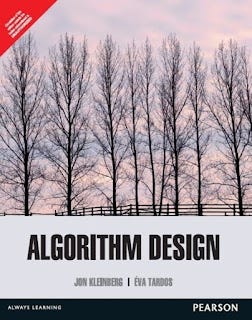
This is the book you read after you’ve mastered the fundamentals. Think of it as the graduate-level continuation of CLRS.
Kleinberg and Tardos take a different approach — instead of cataloguing algorithms by type, they organize the book around design techniques: greedy algorithms, divide and conquer, dynamic programming, network flow, NP-completeness.
The emphasis throughout is on how to design algorithms for new problems, not just how to apply known ones.
It’s not an intro book and shouldn’t be treated as one. Read it after you’re comfortable with Sedgewick or CLRS. When you’re ready, it’s exceptional.
Best for: Experienced engineers, graduate students, anyone who wants to design novel algorithms rather than just apply existing ones
→ Get Algorithm Design by Kleinberg & Tardos
6. Algorithms for Interviews by Adnan Aziz
Written specifically with programming interviews in mind, this book takes a refreshingly different approach to teaching algorithms — through the lens of “how does this help me solve the problem in front of me right now?”
What I appreciate is the clarity of objective. Every algorithm is presented with interview applicability in mind. The examples are engaging (the cover itself, drawn entirely from thumbnails of famous faces, demonstrates a real algorithm discussed in the book), and the problem-solving approach Aziz teaches generalizes well beyond the examples given.
Combine it with the Grokking the Coding Interview: Patterns for Coding Questions course on DesignGurus.io for interactive pattern-based practice alongside the theory. Use code GURU for 30% off their All Courses Bundle.
Best for: Developers actively preparing for technical interviews at FAANG or top-tier companies
→ Get Algorithms for Interviews
Algorithms For Interviews: A Problem Solving Approach (Volume 1)
7. Algorithms in a Nutshell — O’Reilly
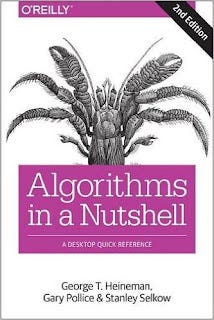
If you’re a working programmer who needs a practical, no-heavy-math reference to algorithms, this is your book.
O’Reilly’s Algorithms in a Nutshell presents every algorithm in a consistent pattern: motivation, pictures, pseudocode, and then working implementations in C, C++, Java, and Ruby.
It also includes benchmarks showing actual measured performance, not just theoretical complexity. For engineers who need to make real trade-off decisions about which algorithm to use in production, that empirical grounding is invaluable.
It won’t give you the theoretical depth of CLRS, but it will give you something arguably more useful for day-to-day work: clear, implementable knowledge of which algorithm fits which problem.
Best for: Practicing software engineers who need a practical reference, developers who want to learn algorithms without heavy mathematics
→ Get Algorithms in a Nutshell
Algorithms in a Nutshell: A Practical Guide
8. Introduction to Algorithms: A Creative Approach by Udi Manber
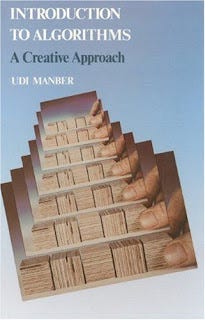
The title says it all — this book is about developing a creative approach to algorithm problems, not just memorizing solutions.
Manber’s book is packed with hundreds of problems and examples specifically designed to build problem-solving ability rather than pattern recognition.
If you find yourself struggling with problems you’ve never seen before — the ones where no memorized algorithm quite fits — this is the book that develops the instinct to figure them out from first principles.
It’s particularly well-suited for self-study, with clear progressions from simple to complex and exercises that genuinely stretch your thinking.
Best for: Engineers who want to develop original problem-solving ability, self-taught programmers building a rigorous foundation
→ Get Introduction to Algorithms: A Creative Approach
Introduction to Algorithms: A Creative Approach
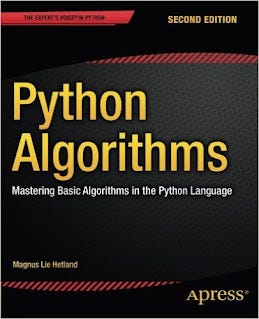
9. Python Algorithms by Magnus Lie Hetland
Algorithms are language-agnostic — but learning them in a language you already know dramatically reduces friction. For Python developers, this is the book.
Magnus Lie Hetland (also the author of the popular Beginning Python) covers the full range of standard algorithms with Python implementations throughout.
The book gives particular attention to graph algorithms, which are among the most practically useful and most commonly tested topics in interviews and real-world engineering.
In 2026, with Python being the dominant language for AI, data science, and backend development, having a Python-native algorithm resource is more valuable than ever.
Best for: Python developers who want to learn algorithms in their primary language, data scientists building a stronger CS foundation
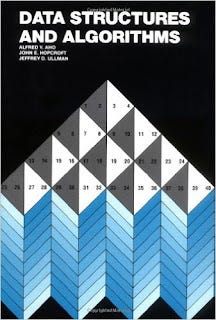
10. Data Structures and Algorithms by Aho, Ullman & Hopcroft
A classic that earned its place through enduring quality. Aho, Ullman, and Hopcroft’s joint work remains one of the cleanest, most readable introductions to data structures and algorithms available — particularly valued by programmers who find the heavy mathematical notation in CLRS off-putting.
It won’t replace CLRS as a reference, but as a readable introduction that covers the fundamentals clearly without drowning you in proofs, it’s hard to beat. If you’ve tried other algorithm books and bounced off the notation, try this one.
Best for: Developers who want a mathematically lighter introduction to data structures and algorithms, anyone who found CLRS inaccessible on first read
My Top Course Recommendation (Bonus)
Reading builds knowledge. Coding builds skill. After working through any of these books, the best next step is structured hands-on practice.
The course I recommend most alongside these books is Data Structures and Algorithms: Deep Dive Using Java on Udemy.
Data Structures and Algorithms: Deep Dive Using Java
It covers arrays, linked lists, stacks, queues, trees, hash tables, sorting, and searching — all implemented from scratch in Java, with clear explanations of time and space complexity at every step. You can typically get it for under $15 on Udemy’s regular sales.
If you’re Python-focused, pair your books with the Master the Coding Interview: Data Structures + Algorithms course by Andrei Neagoie — excellent coverage with Python examples and strong interview-focused framing.
Master the Coding Interview: Data Structures + Algorithms
And if DP is your weak spot after reading Grokking Algorithms, add the Grokking Dynamic Programming Patterns for Coding Interview course from DesignGurus.io — the best interactive DP prep I’ve found. Use code GURU for 30% off their All Courses Bundle.
Grokking Dynamic Programming Patterns for Coding Interviews
Conclusion
There are two kinds of programmers: those who understand algorithms and those who don’t. The difference shows — in code quality, in debugging speed, in system design thinking, and in interviews.
You don’t need to memorize every formula or finish every book on this list. But investing seriously in even two or three of these books will change how you think as an engineer.
The effect isn’t immediately visible — but over months and years, the improvement in your problem-solving, coding instinct, and technical communication compounds in ways that no framework tutorial ever will.
Start with Grokking Algorithms. Build from there.
P.S. — Algorithms are language-agnostic, which means everything you learn from any of these books applies to Java, Python, C++, or whatever language you choose. Pick the book that fits your experience level, commit to implementing what you read, and the improvement in your thinking will follow. It always does. If you need a platform for practice, you can also combine this with ByteByteGo and Algomonster, both are great for practice algorithmic problems and learning coding patterns.
- System Design · Coding · Behavioral · Machine Learning Interviews
- AlgoMonster: The Most Structured Way to Prepare for Coding Interviews

I’ve Read 20+ Books on Algorithms — Here Are My Top 10 Recommendations for 2026 was originally published in Javarevisited on Medium, where people are continuing the conversation by highlighting and responding to this story.
This post first appeared on Read More