
My favorite place to learn coding interview patterns for FAANG
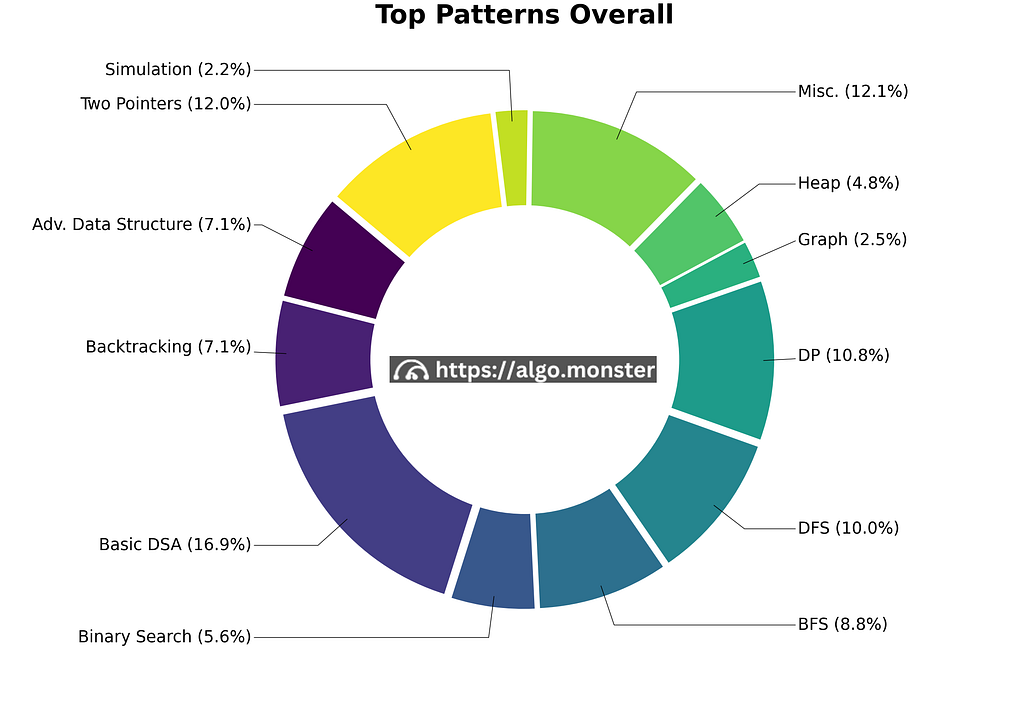
Hello friends, if you’ve ever tried to prepare for a FAANG coding interview by grinding random LeetCode problems, you know the feeling. You solve one problem, feel okay about it, move to the next, feel lost again, and after 200 problems you’re still not sure if you’re actually ready.
That’s because grinding problems without a framework doesn’t build skill — it builds anxiety.
The engineers who crack FAANG interviews don’t know more problems than you. They know the patterns — the underlying structures that make apparently different problems actually the same problem in disguise.
Once you see a sliding window problem, a graph traversal, or a dynamic programming recurrence, you know how to approach every variant of it.
That insight is exactly what AlgoMonster is built around — and after using it, I can confidently say it’s the most structured and efficient coding interview prep resource I’ve found.
AlgoMonster: The Most Structured Way to Prepare for Coding Interviews
🎯 Quick verdict: AlgoMonster is absolutely worth it. 48 curated patterns by Google engineers, 231 problems, 679 illustrations, and a clear framework for approaching any interview question. Currently 70% off — click here to subscribe.

The Problem With How Most People Prepare?
Most coding interview platforms — LeetCode, HackerRank, and others — give you thousands of problems and leave you to figure out the patterns yourself.
The sheer volume is overwhelming, the feedback loop is slow, and you end up solving problems without truly understanding why one approach works and another doesn’t.
What the best engineers figured out is that FAANG interviews are not testing whether you’ve seen the specific problem before.
They’re testing whether you can recognize which category of problem you’re looking at and apply the right technique.
Master the patterns and you can solve problems you’ve never seen.
That’s the shift AlgoMonster makes.
What Is AlgoMonster?
AlgoMonster was created by a group of Google engineers who all had the same experience: they used LeetCode for their own interview prep and found it lacking in structure.
So they built the platform they wished had existed — focused entirely on the patterns that actually appear in FAANG interviews, not on volume for its own sake.
The result is a platform that combines curated patterns with an interactive workspace, skills analysis, and company-specific question sets — all designed to get you interview-ready in the most efficient path possible.
One of my favorite features is this decision flowchart — it guides you on which pattern to apply in which scenario, so you stop guessing and start recognizing:
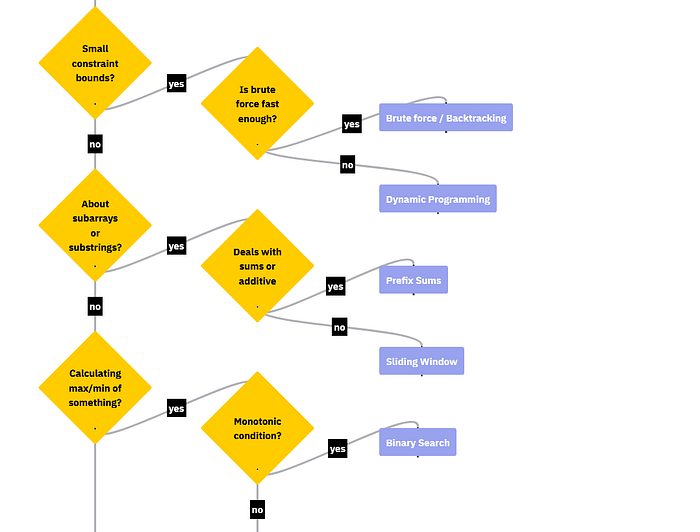
That flowchart alone is worth more than hours of random problem grinding. → Explore AlgoMonster
AlgoMonster: The Most Structured Way to Prepare for Coding Interviews
What Makes AlgoMonster Different?
There are many coding interview prep platforms like ByteByteGo, DesignGuru, Exponent, Educative , Bugfree.ai, and Udemy which have many great coding interview and DSA courses then what makes Algomonster so spcial?
Here is what worked for me:
48 Carefully Curated Patterns — Not 2,500 Random Problems
This is the core of AlgoMonster and what makes it genuinely different. Instead of giving you a fire hose of unorganized problems, the platform teaches you 48 fundamental patterns — curated by Google engineers who actually interview candidates at the company.
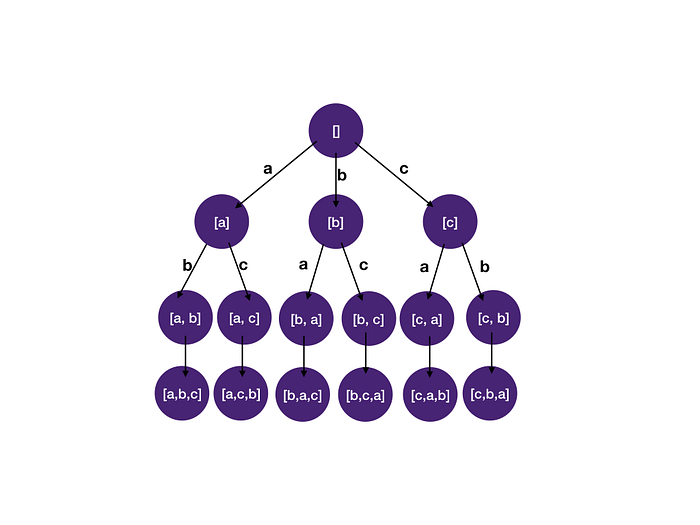
Every pattern includes clear instructions, illustrations explaining why it works, and problems that apply it. The patterns cover:
- Binary Search — and all its variations
- Depth First Search and Breadth First Search
- Two Pointers and Sliding Window
- Backtracking and Dynamic Programming
- Priority Queue / Heap and Monotonic Stack
- Graph algorithms including Topological Sort and Union-Find
- And dozens more across every topic that appears in FAANG interviews
By the numbers:
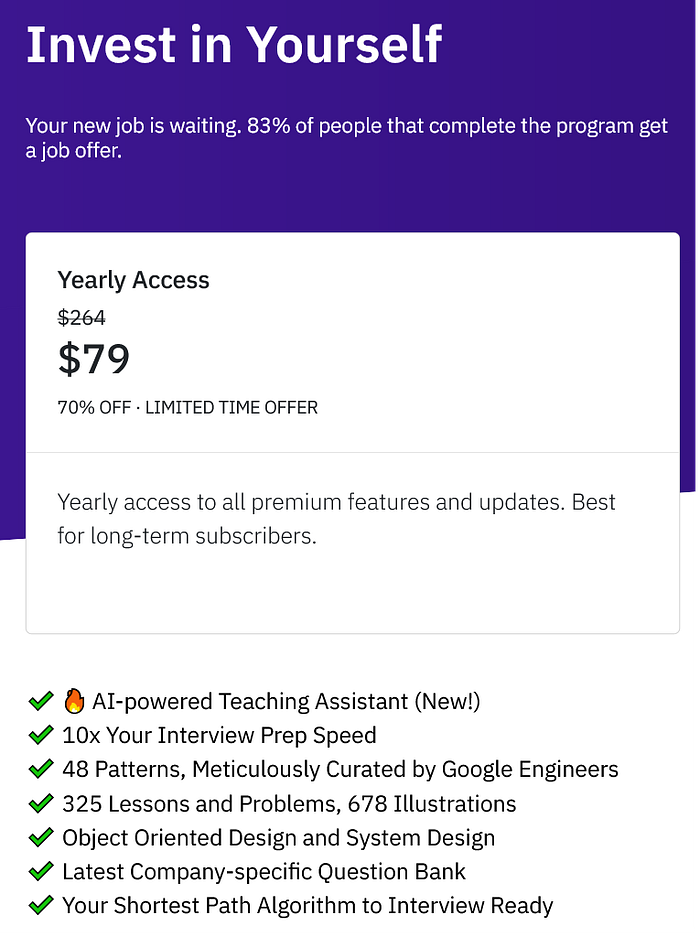
- 48 patterns, meticulously curated by Google engineers
- 231 lessons and problems
- 679 illustrations to make abstract concepts visual and intuitive
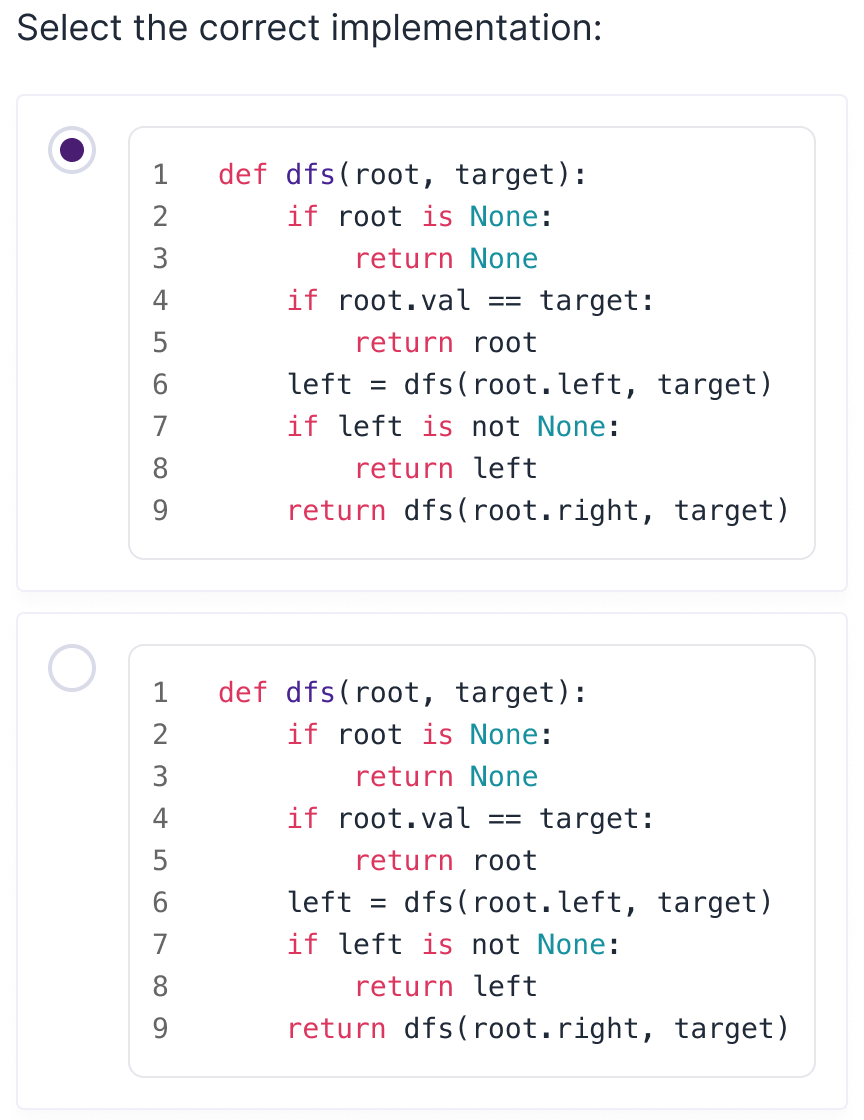
Interactive Workspace — Code in Your Browser
Every problem on AlgoMonster is interactive. You write and run code directly in the browser — no switching tabs, no setup, no friction.
The advanced code editor gives you real-time feedback on your solutions with test cases that tell you exactly what’s passing and what isn’t.
This hands-on, in-browser experience is closer to the actual interview environment than reading solutions ever could be. You’re doing, not just watching.
Language support: Python, Java, JavaScript, C++, Go, Racket, and Haskell — so you practice in the language you’ll interview in.
No Videos — Just Active Learning
This is a deliberate design choice I actually appreciate.
AlgoMonster has no video content. The founders believe videos encourage passive consumption — you watch someone else solve a problem and feel like you learned something, when actually you’ve just observed learning.
Instead, AlgoMonster uses text, interactive exercises, and 679 diagrams and illustrations to explain concepts.
You read, you code, you practice.
That active engagement is why students report retaining what they learn here better than from video-heavy platforms.
Personalized Skills Analysis
As you work through the curriculum, AlgoMonster tracks your performance pattern by pattern and builds a skills chart showing exactly where you’re strong and where you need more work.
If you’re flying through binary search problems but struggling with graph traversals, the chart tells you — so you can allocate your remaining prep time to the areas that will actually move the needle.
Company-Specific Question Sets
AlgoMonster includes dedicated sections for Amazon, Microsoft, Google, and Twitter (now X), with detailed breakdowns of the types of questions each company focuses on in their online assessments and interviews.
Instead of generic preparation, you can tailor your final sprint to the specific company you’re interviewing with.
The Learning Experience in Practice
Here’s what the learning flow actually looks like:
- Learn the pattern — read the explanation, understand the intuition behind why it works
- Study the illustrations — 679 diagrams make abstract concepts concrete and visual
- Solve the problems — apply the pattern in the interactive workspace, get instant feedback
- Track your progress — the skills chart shows your pattern-by-pattern performance
- Review company questions — in the final weeks, focus on company-specific problem sets
One user described the experience well: “I felt super lost and discouraged grinding LeetCode. AlgoMonster gave me a curated list of things to study with everything in one place. I feel much more confident in my skills now.”
Another put it even more clearly: “Use AlgoMonster to learn the patterns. The internet has no shortage of problems — but it’s a daunting task to see the big picture without a framework. Interviews are centered around a small set of patterns. Learn these building blocks and you can apply them to any problem.”
That second quote is exactly right. That’s the whole insight.
AlgoMonster: The Most Structured Way to Prepare for Coding Interviews
AlgoMonster vs. the Alternatives
Now, let’s compare Algomonster with popular coding interview preparation resources like LeetCode, HackerRank, AlgoExpert and Educative:
AlgoMonster vs. LeetCode
LeetCode has 2,500+ problems and is the most widely used coding interview platform. But that volume is also its weakness: without structure, you end up grinding randomly and hoping the problem you practiced shows up.
AlgoMonster’s 48 curated patterns cover the underlying structure of almost every LeetCode problem — so instead of memorizing solutions, you develop genuine problem-solving ability.
AlgoMonster vs. AlgoExpert
AlgoExpert (by Clement Mihailescu) is also pattern-focused and high quality. Its differentiator is 100+ hours of video explanations for learners who prefer watching over reading.
AlgoMonster’s differentiator is the interactive text-and-illustration approach that forces active engagement. Both are good — your preference for video vs. interactive text will determine which fits better.
AlgoMonster vs. HackerRank
HackerRank is widely used for company assessment platforms, but it’s not designed around FAANG interview preparation. If your target is a FAANG company, AlgoMonster is the more purposefully designed resource.
If your target is a specific company that uses HackerRank for their assessment, practice there as well — but use AlgoMonster to build your pattern foundation first.
AlgoMonster vs. Educative-99
Educative-99 is a similar pattern-based approach — focusing on 26 essential patterns across 99 problems. AlgoMonster is slightly broader (48 patterns, 231 problems) and has the advantage of its visual flowchart and company-specific question sets. Both are worthwhile; AlgoMonster covers more ground.
AlgoMonster: The Most Structured Way to Prepare for Coding Interviews
Is AlgoMonster Worth It? My Honest Verdict
Yes — unambiguously.
If you’re preparing for FAANG interviews and feel overwhelmed by the volume and randomness of traditional LeetCode grinding, AlgoMonster is exactly the structured alternative you need.
The 48 patterns give you a framework that makes you genuinely better at solving novel problems, not just familiar with problems you’ve seen before.
The interactive workspace, 679 illustrations, personalized skill tracking, and company-specific question sets make it a complete, self-contained preparation environment for coding interviews.
At $79/year (currently 70% off), it’s also one of the most affordable premium coding interview resources available. That’s less than the cost of a single technical interview coaching session — for a full year of access to a curated, Google-engineer-designed curriculum.
→ Join AlgoMonster Now — 70% Off
Who Should Use AlgoMonster?
AlgoMonster is ideal if you:
- Are targeting FAANG or top-tier tech companies
- Feel lost or overwhelmed grinding random LeetCode problems without a framework
- Learn better from text, diagrams, and interactive exercises than from watching videos
- Want a structured, time-efficient path to interview readiness
- Want to develop genuine problem-solving ability rather than just solution memorization
AlgoMonster may not be your primary resource if you:
- Strongly prefer video-based learning (consider AlgoExpert or a Udemy DSA course alongside it)
- Are also preparing for system design rounds (pair AlgoMonster with ByteByteGo or DesignGurus for that)
- Need DSA fundamentals built from scratch before working on patterns (start with a structured DSA course first, then come to AlgoMonster)
Final Word
That’s all about how Algomonster can help you learn and master coding interview patterns. And, as I have said before, the secret to cracking FAANG coding interviews isn’t grinding 2,500 LeetCode problems.
It’s recognizing that most interview questions are variations of a small set of fundamental patterns — and building the pattern recognition to identify which technique applies to any problem you encounter.
AlgoMonster is built entirely around that insight, by people who’ve been on both sides of FAANG interviews. The 48 patterns, the interactive workspace, the decision flowchart, and the progress tracking make it the most structured and efficient coding interview preparation resource I’ve found.
If you’re serious about your next technical interview, stop grinding randomly. Start here.
P.S. — AlgoMonster is currently offering 70% off their annual subscription. At $79/year, it’s one of the best-value coding interview investments available. Click here to subscribe before the discount ends.


I Found the Perfect Resource to Master Coding Interview Patterns and Its Awesome was originally published in Javarevisited on Medium, where people are continuing the conversation by highlighting and responding to this story.
This post first appeared on Read More