
Our brains are not meant to be locked in for eight straight hours during a work/school day. That’s not how these little pink sponges work, no matter what hack productivity gurus on YouTube might try to sell you.
What works is cutting the friction around your workflow, and staying on top of the mental nerfs you already carry, plus the ones that pile up over the day. There’s a whole ecosystem built around fixing that, ranging from break reminder apps, Kanban boards, to Pomodoro timers and phone-to-desktop bridges.
On GNOME, you don’t need to leave your desktop to get most of this. The extension ecosystem already covers timers, notes, clipboard history, and phone syncing, without asking you to juggle five different subscriptions.
Here are eight extensions worth having, plus a native GNOME feature that handles some of this for free.
1. GSConnect
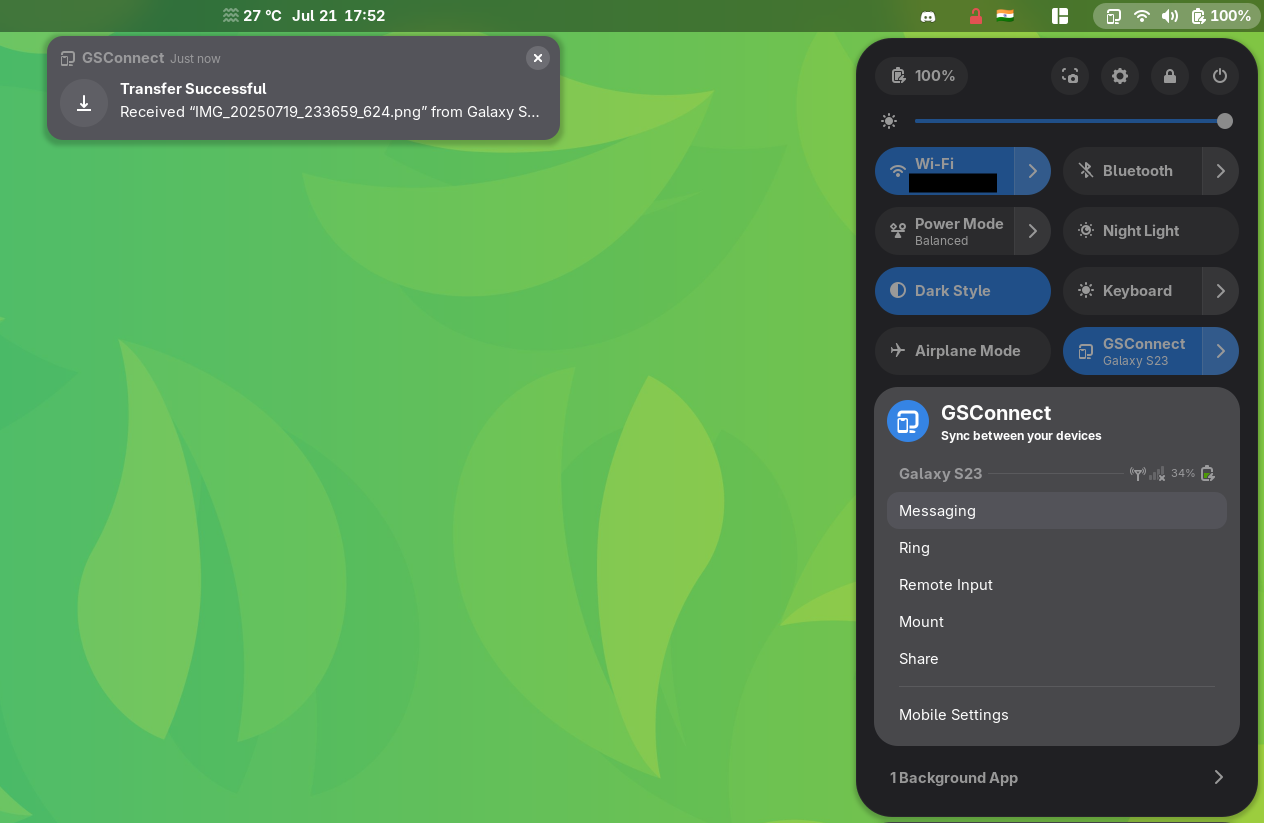
Every time your phone buzzes, and you have to pick it up just to check what it was, that’s a small amount of time taken away from whatever you were doing. GSConnect gets rid of that by putting your phone’s notifications right on your desktop, so you can glance, decide it’s not urgent, and stay exactly where you were.
Of course, this could also go the other way, making you waste more of your time, but that’s on you. ☠️
It’s a full implementation of KDE Connect built specifically for GNOME Shell. Beyond notifications, you get SMS from your keyboard, a synced clipboard between your phone and your Linux machine, and file sharing that goes both directions.
2. Caffeine
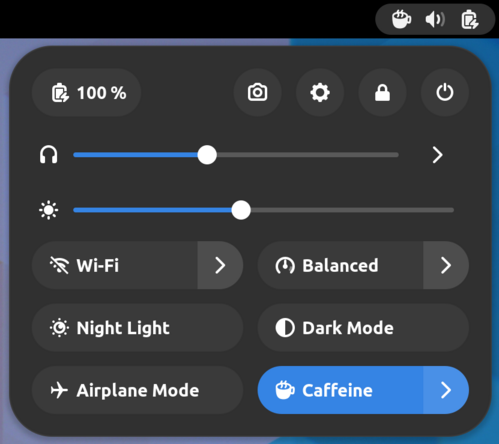
Caffeine does one thing. It stops your screen from dimming, locking, or suspending while it’s switched on. Click the coffee cup icon in the top bar, and GNOME leaves your screen alone until you turn it back off.
It sounds minor until you’re three slides into a presentation and the screen goes black, or you’re deep into a long article and the lock screen interrupts you mid paragraph. You can also scroll on the panel icon to toggle it, and there’s command line support if you’d rather script it.
Alternatively, you could fully disable system suspend via the Settings menu under the Power page (inside Power Saving), but that’s not a good idea if you are running a laptop that needs to be functional during long sessions without AC power.
3. ddterm
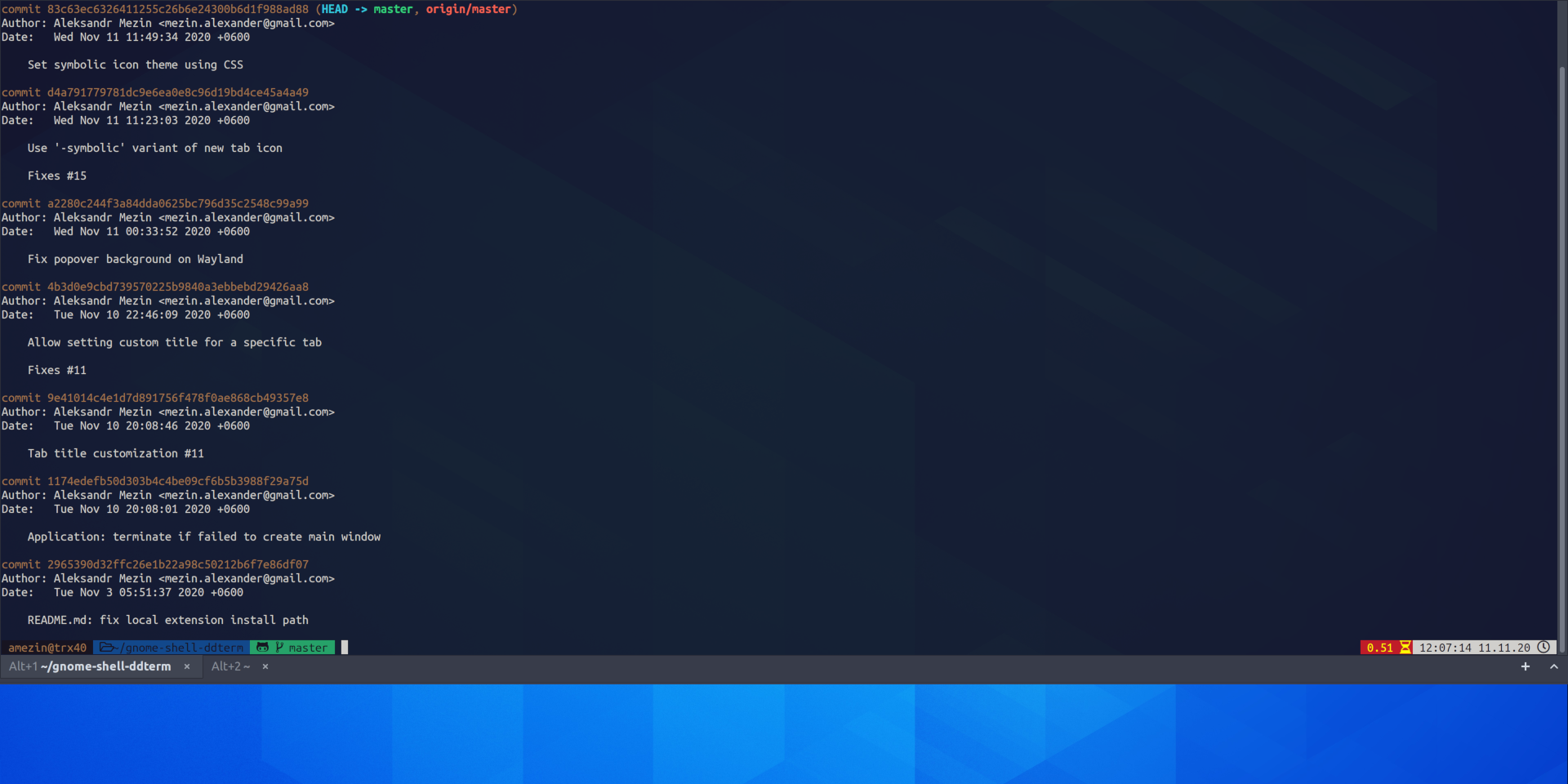
Hit a keyboard shortcut, and a terminal slides down from the top of the screen. Hit it again, and it slides back up. With ddterm, you don’t need to switch through workspaces or hunt for a terminal window buried under everything else.
Restart your session and every tab comes right back, and resizing is just a matter of dragging on the outer edge. The preferences panel covers the rest if you go looking for it.
It also runs natively on Wayland, which isn’t something every drop-down terminal extension can claim, and its development has stayed consistent for years now, with a steady flow of releases rather than long stretches of silence between updates.
4. Clipboard Indicator
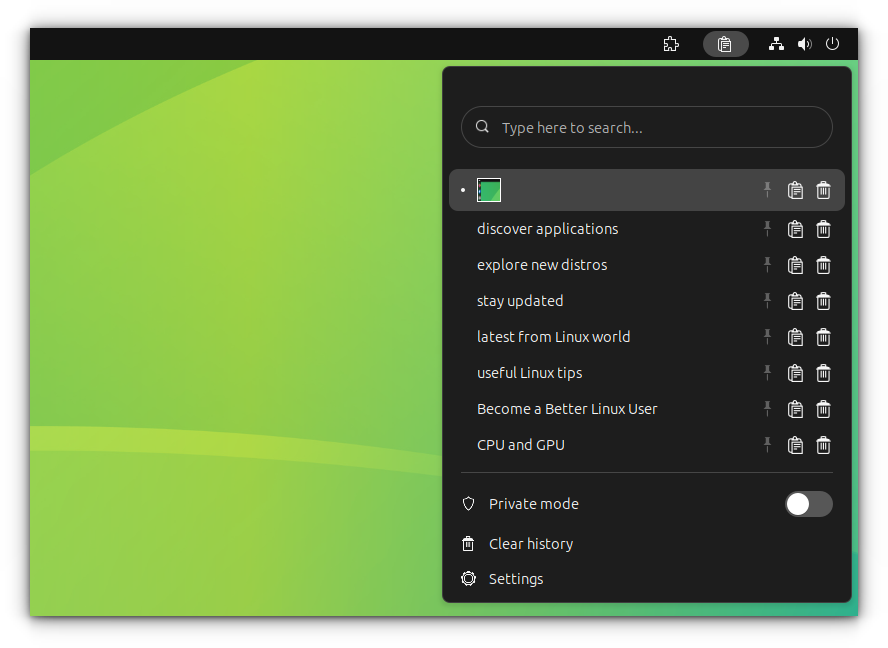
Clipboard Indicator keeps a searchable history of everything you copy, text and images both, so you’re not relying on memory or copying the same thing twice.
The feature list goes further than most clipboard managers bother with. Pin entries to keep them at the top, tag them to stay organized, search with regex if you need precision, and edit an entry directly from the menu instead of copying it out, fixing it, and copying it back in.
For anyone handling sensitive information, a private mode pauses history tracking on demand, and specific apps like password managers can be excluded from tracking entirely.
5. Advanced Alt-Tab Window Switcher
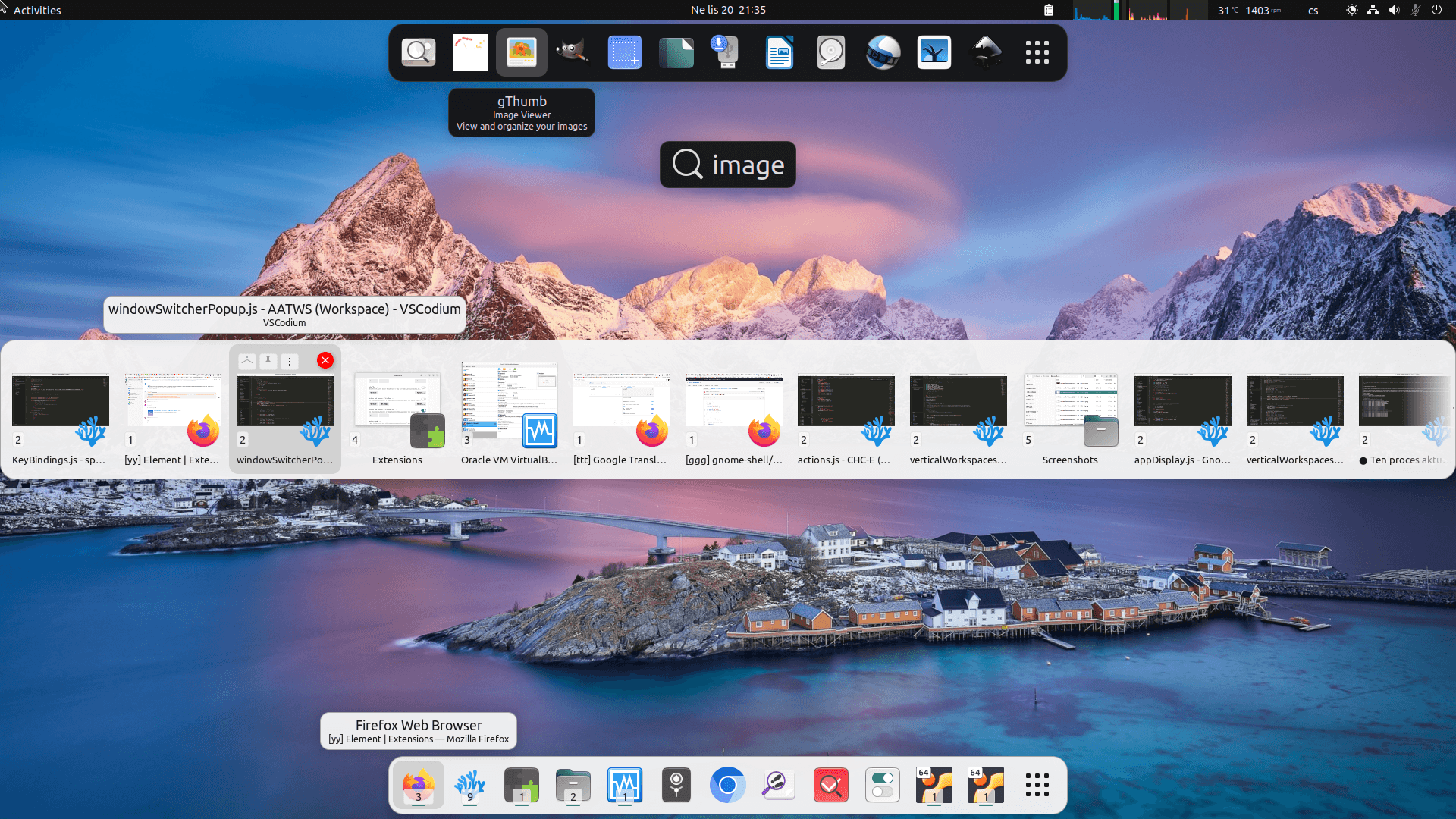
GNOME’s default Alt+Tab is fine until you have a dozen windows open and no way to tell them apart at a glance.
Advanced Alt-Tab Window Switcher or AATWS replaces all three of GNOME’s built-in switchers with one that actually helps you find what you’re looking for. This includes filtering, sorting, and a type-to-search mode that matches by title, app name, or even the executable behind it.
It’s not limited to switching either. Close windows, move them between workspaces or monitors, pin one always on top, or launch a new instance of an app, all without leaving the switcher.
For anyone whose workflow is spread across multiple monitors with a lot of windows open at once, this cuts out most of the clicking and squinting that the stock switcher makes you do.
6. Tiling Shell
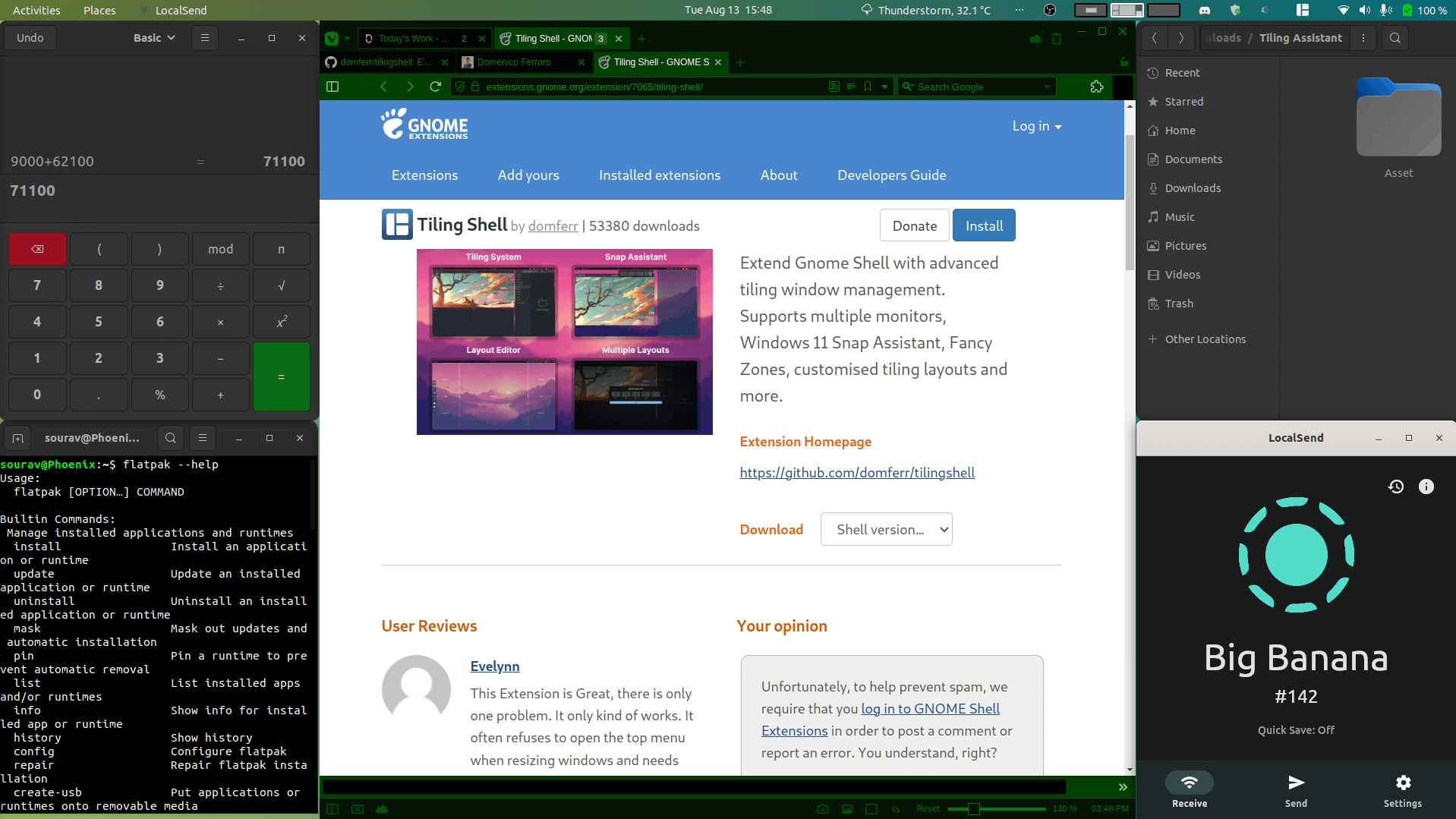
Tiling Shell brings proper tiling window management to GNOME, going well past the basic two column split GNOME ships with by default. Drag a window and a snap assistant shows you where it’ll land, with a built in editor for building your own layouts from scratch.
Layouts aren’t rigid either. Span a window across multiple tiles, resize adjacent tiled windows together, and set a different layout for each workspace on each monitor.
Keyboard shortcuts handle the tiling too, so dragging windows around with the mouse is optional rather than being a neccessity.
7. Cronomix
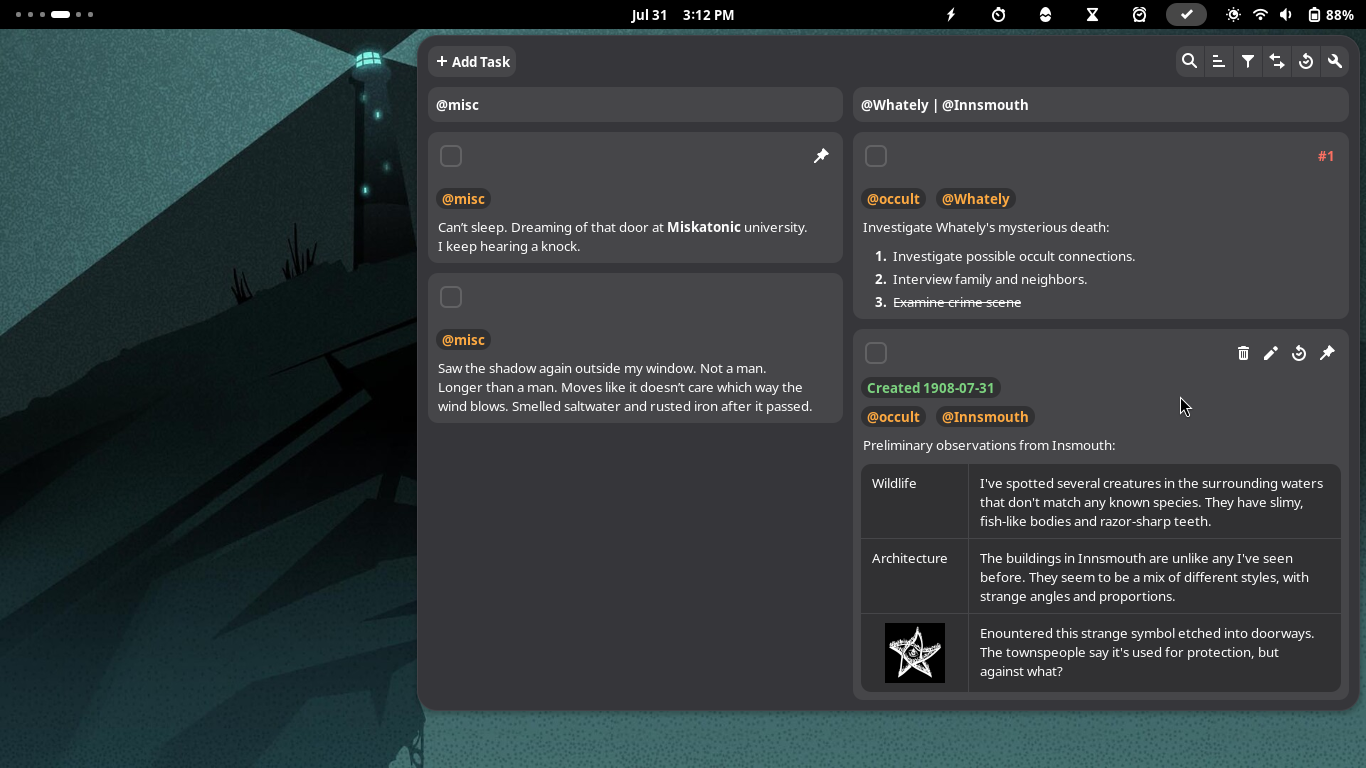
Most productivity extensions do one job. Cronomix does several. Timer, stopwatch, Pomodoro tool, alarm, to-do list, time tracker, and even flashcards, all bundled into a single dropdown instead of five separate tools competing for your attention.
The Pomodoro and timer functions cover the classic work-then-break rhythm, while the to-do list and time tracker give you somewhere to actually log what you did with the time instead of making guesses at the end of the day.
It follows a very different approach compared to the single-purpose extensions elsewhere on this list.
8. Notes With History
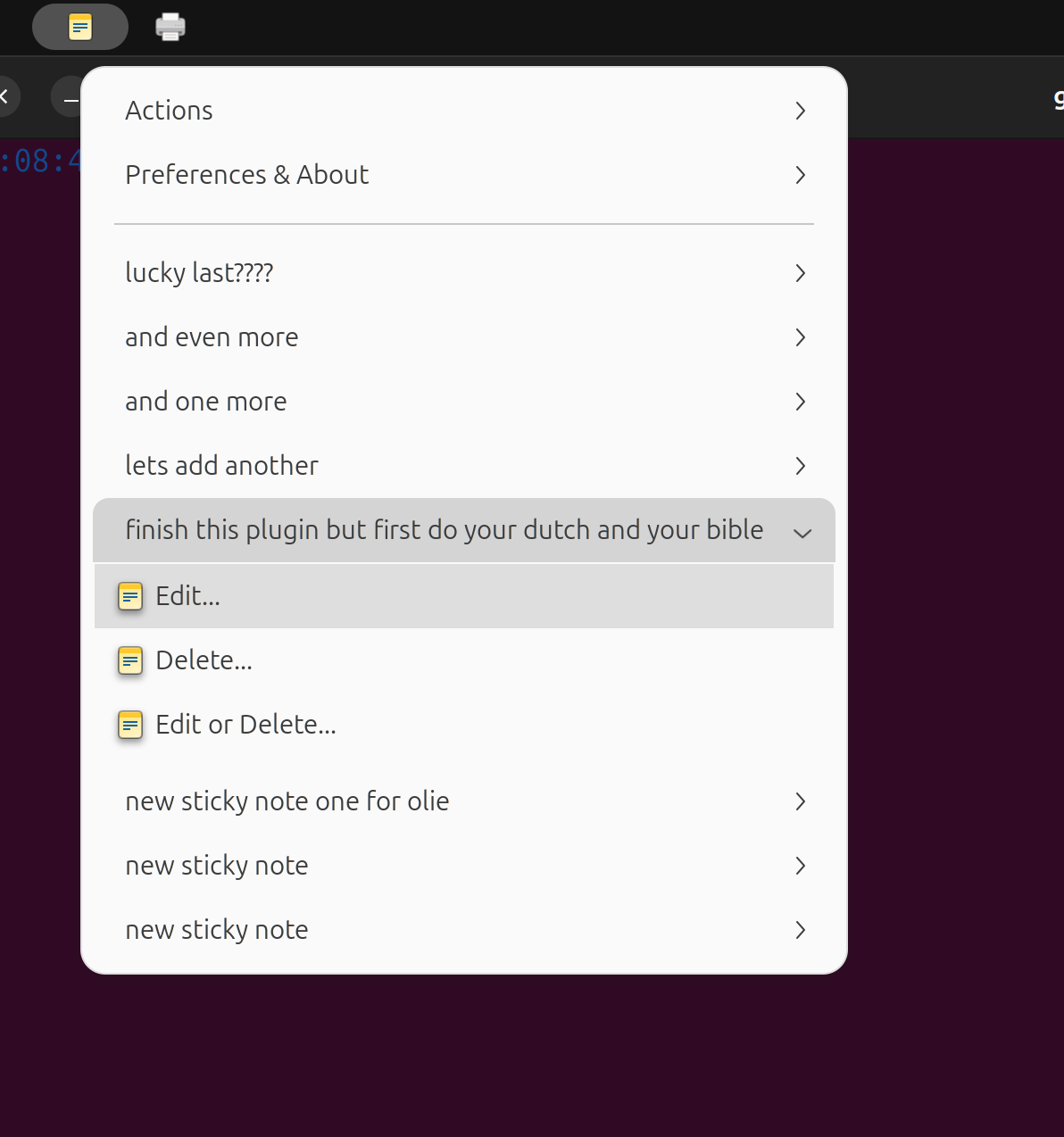
A lot of the sticky note extensions on GNOME haven’t been touched in years, and installing one on a modern system usually means finding out the hard way. Notes With History puts a menu of notes in your panel instead of scattering note windows across your screen.
Click the icon, pick a note, and it’s all there. 📝
Notes can be reordered to keep the most relevant ones near the top, and the panel icon itself is customizable so it’s easy to spot at a glance.
9. Freon
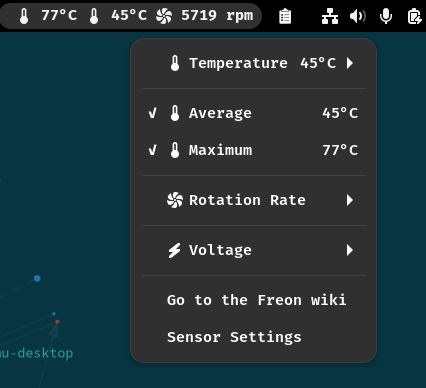
A sluggish system without an obvious cause can be very annoying, especially when you are in the middle of a time-sensitive task with your manager breathing down your neck.
Freon puts important system stats like CPU, disk, and GPU temperature, alongside fan RPM and voltage info, right in the top bar for you to quickly figure out if there’s a system-wide slowdown or an app that’s misbehaving.
You can pick which sensors to show, switch between Celsius and Fahrenheit, and set the refresh rate for the metrics display. Though you will need your GPU manufacturer’s driver installed to get GPU readings.
Bonus Tip ✨
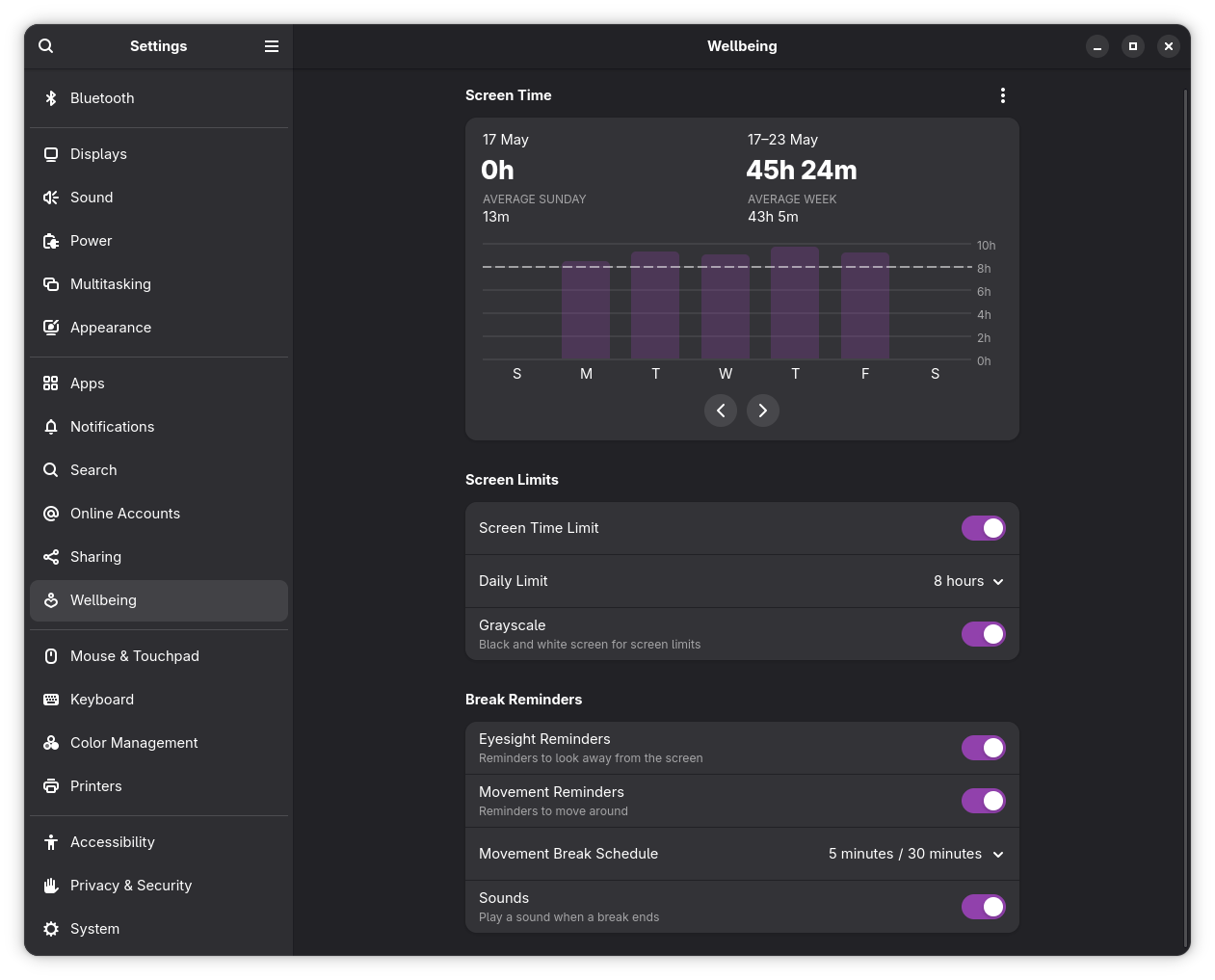
If you don’t want to install anything at all, GNOME has a few tricks up its sleeve, tucked inside Settings. Since GNOME 48, there’s a Digital Wellbeing section that handles screen time and break reminders natively.
It tracks how much time you spend on screen each day and compares it against previous days and weeks.
You can set a daily screen time limit that triggers a notification once you hit it, with an option to turn the screen grayscale afterward as a nudge to step away. There are also built-in eyesight and movement break reminders.
It’s not as configurable as something like Cronomix or a dedicated break reminder extension, but if you’re already on GNOME 48 or later, the most basic productivity features are sitting right there waiting to be turned on.
Suggested Read 📖: Wireless file transfers are incredibly convenient, especially between Linux and Android devices.

This article first appeared on Read More