
How ByteByteGo’s visual explanation and Codemia’s AI driven online practice prepare you best for System Design Interviews in 2026
Hello everyone — system design interviews are widely regarded as the hardest round in the tech hiring process. And honestly, that reputation is earned.
Unlike coding interviews, where a problem has a correct answer you can verify by running tests, system design is entirely open-ended.
You’re asked to design WhatsApp, Twitter, Spotify, a URL shortener, or a parking lot or, payment system, and you’re being evaluated not on whether you got the “right” answer (there isn’t one), but on how you think, how you make trade-offs, and whether you can communicate a coherent, scalable architecture under time pressure.
In 2026, with AI handling more routine coding tasks, system design has become one of the most important differentiators between developers. It’s a skill that demonstrates architectural thinking, deep technical knowledge, and real production experience — things that are genuinely hard to automate.
When I started my system design preparation, I quickly realized two things:
First: Concepts and visuals matter enormously. I needed to truly understand distributed systems, caching, load balancing, consistency models, and scalability patterns — not just be vaguely familiar with them.
Second: Practice matters even more than concepts. Reading about how systems work is completely different from being able to design one on the spot, explain your choices, and handle follow-up questions from an interviewer who’s probing your assumptions.
That’s when I discovered the combination that became my secret weapon: ByteByteGo for conceptual depth + Codemia.io for hands-on practice. Together, they got me four offers — including two FAANG-level roles — and I want to share exactly why this pairing works so well.
- System Design · Coding · Behavioral · Machine Learning Interviews
- Codemia | Master System Design Interviews Through Active Practice
The Problem With How Most People Prepare for System Design
Most engineers preparing for system design do one of two things:
They read theory — blog posts, engineering blogs, the System Design Primer — and feel like they’re making progress.
Then they sit in a mock interview, get asked to design a rate limiter, and completely freeze because understanding concepts and being able to design systems on the fly are completely different skills.
Or they jump straight to grinding system design interview questions without the conceptual foundation to explain why their choices are good, or when they’d make different trade-offs. They produce answers that sound rehearsed, not reasoned.
The preparation strategy that actually works requires both — and that’s exactly what this combination delivers.
What is Rate Limiter? How does it work
Part 1: ByteByteGo — Visual Learning That Actually Sticks
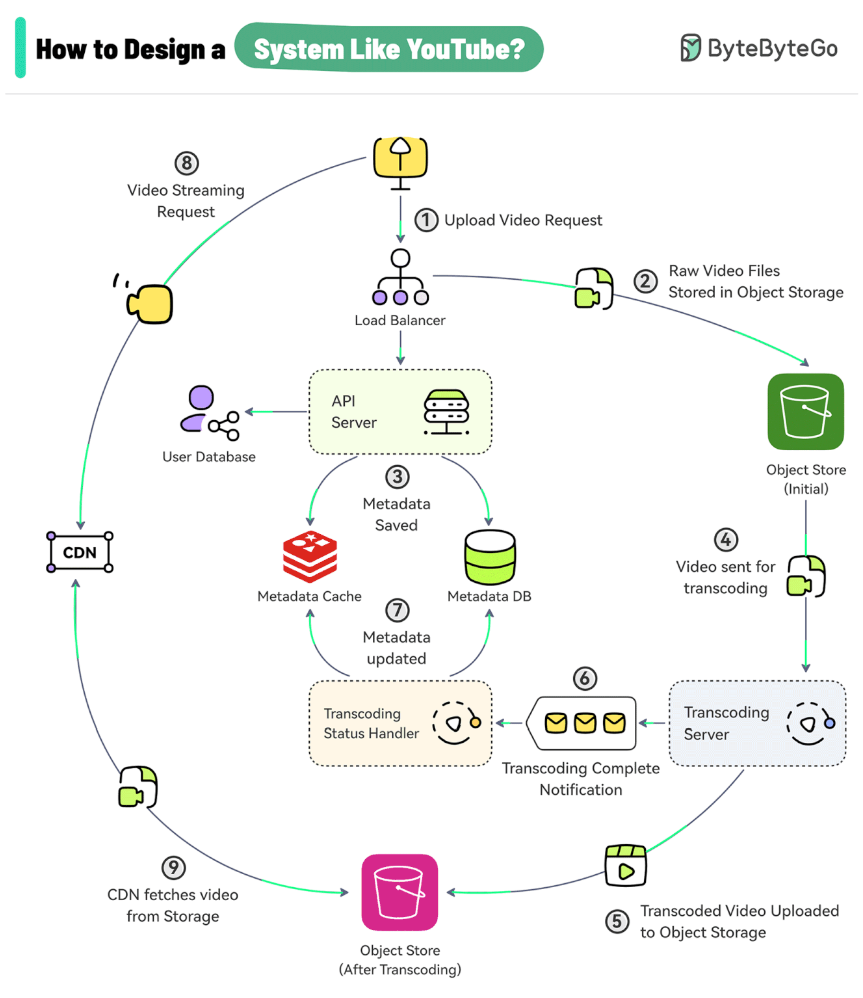
If you’ve ever struggled to follow a dense textbook on distributed systems, you already know the problem: the concepts are abstract, the diagrams are sparse, and nothing quite clicks into a coherent mental model.
ByteByteGo solves this better than any resource I’ve found. Created by Alex Xu — author of the System Design Interview books — it’s built entirely around one insight: visual diagrams make complex system design concepts genuinely intuitive.
Instead of endless walls of text, you get beautifully crafted illustrations that show you how real systems actually work:
- How Twitter handles millions of tweets per second?
- How Uber’s matching system processes real-time location data?
- How to design a scalable messaging queue that doesn’t become a bottleneck?
- How Netflix handles video delivery to hundreds of millions of users simultaneously?
- How payment systems achieve consistency across distributed databases?
The diagrams are so clear and intuitive that they stick in your memory long after you’ve read them. In an interview setting, that’s invaluable — you can sketch clean diagrams on a whiteboard and articulate trade-offs like an architect because you’ve actually internalized the patterns, not just memorized them.
What I also love about ByteByteGo is its focus. It doesn’t scatter your attention across unrelated topics — it goes deep on system design, software architecture, and scalability. Every resource on the platform is directly applicable to what interviewers actually test.
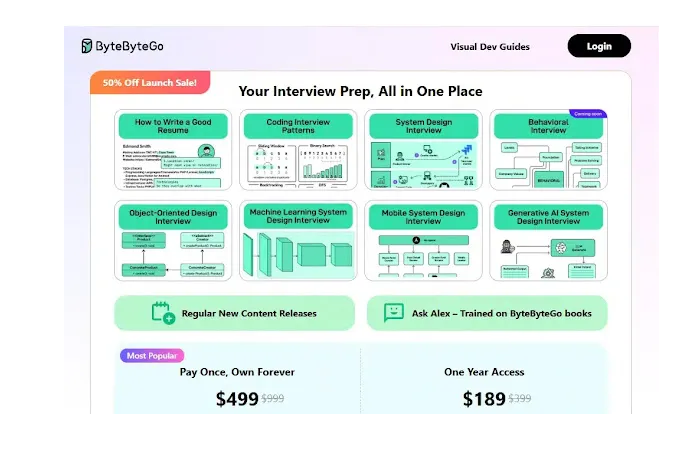
🔥 ByteByteGo is currently offering a Lifetime Plan at 50% off — one of the rarest discounts they’ve ever offered. I’ve been using the platform for nearly four years and have only seen one comparable deal. If you’re serious about system design preparation, this is genuinely exceptional value.
Here is the link to Join ByteByteGo Lifetime Plan at 50% Off
Part 2: Codemia.io — Hands-On Practice That Simulates Real Interviews
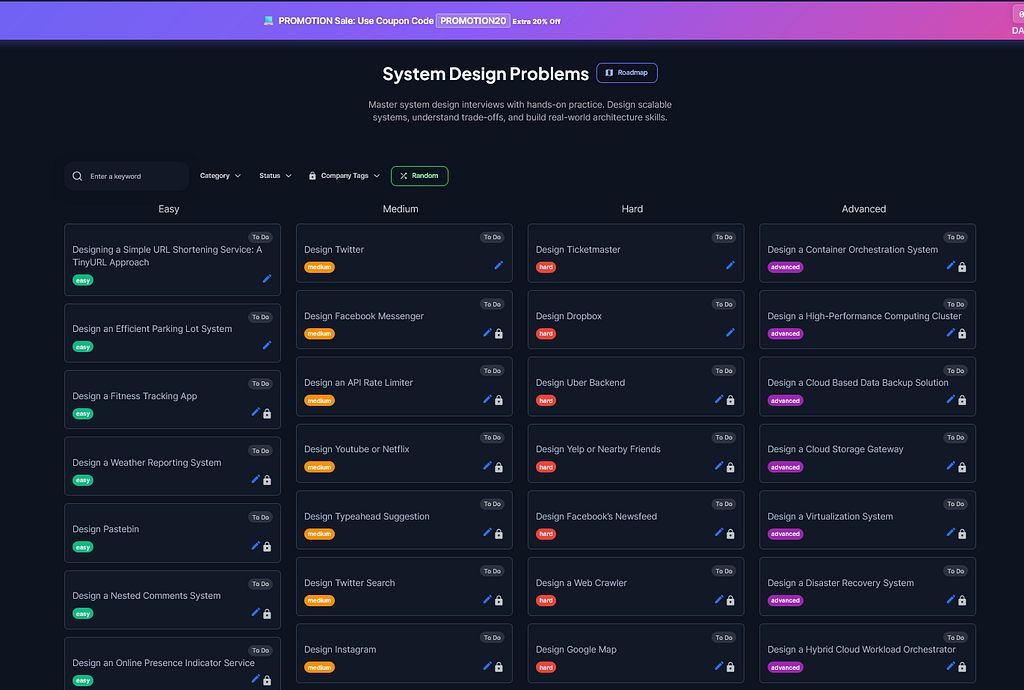
While ByteByteGo built my conceptual foundation, Codemia.io gave me the practice environment I needed to actually perform under interview conditions.
Codemia is specifically built for system design interview preparation — it’s the closest thing to LeetCode for system design that exists. Instead of reading solutions, you build them.
You take an open-ended system design problem, construct a solution including architecture diagrams and component decisions, and then get AI-driven feedback that evaluates your answer and helps you refine it.
The features that made the biggest difference in my preparation:
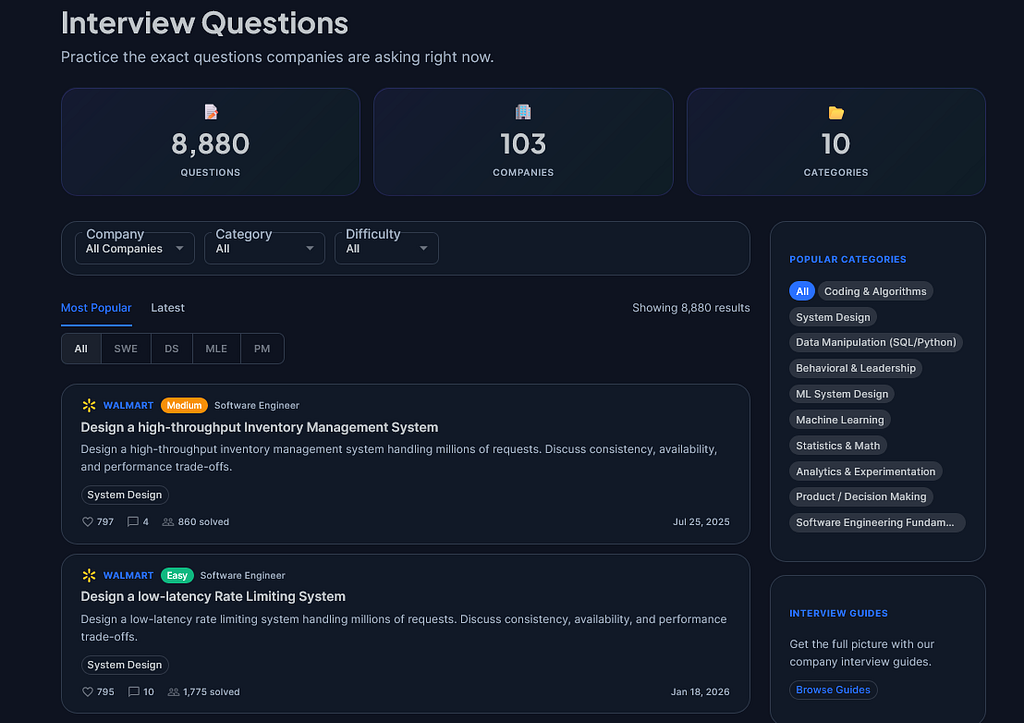
Practice mode with real company problems: Design Netflix, build a scalable payment system, design a ride-sharing backend, architect a real-time notification system. These are the actual problems that appear in FAANG interviews — not textbook examples.
AI-driven feedback: You submit your design and get specific, actionable feedback on what you got right, what you missed, and how to communicate your decisions more clearly.
This feedback loop is what accelerates improvement faster than any other approach I’ve tried.
Step-by-step guides for approaching open-ended problems: One of the hardest parts of system design interviews is knowing where to start when faced with a blank whiteboard. Codemia’s structured approach to open-ended problems gave me a repeatable framework that I could apply to any question.
Progress tracking: You can see which areas of system design you’re strong in and which need more work — so your preparation time is directed at the gaps that will actually move the needle.
The experience that mattered most: Codemia simulates the interview environment. You’re not passively consuming — you’re actively producing under time pressure. The reps you build here translate directly to confidence in the real interview.
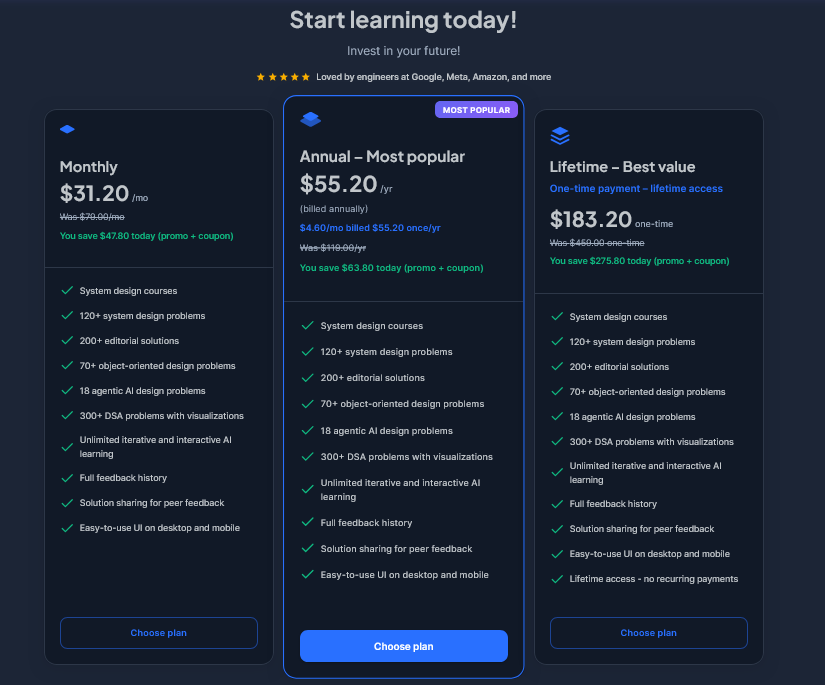
💡 Codemia.io is also currently offering 50% off annual plans — a great time to join if you’re starting your system design preparation.
Here is the link to Join Codemia.io and Start Practicing System Design
Why This Combination Works — The Perfect Prep Loop?
The reason ByteByteGo + Codemia.io combination is so effective comes down to how they complement each other:
ByteByteGo = Clarity and Foundation You understand system design concepts deeply, through visual diagrams that make abstract patterns concrete.
ByteByteGo’s knowledge base is comprehensive — you can find visual explanations for virtually every system design and software architecture concept you’ll encounter in an interview.
This isn’t surface-level familiarity; it’s the kind of deep understanding that lets you reason about trade-offs rather than recite memorized answers.
System Design · Coding · Behavioral · Machine Learning Interviews
Codemia.io = Application and Performance
You practice applying those concepts to real-world problems under interview conditions, get AI feedback that refines your approach, and build the muscle memory for structuring your thinking on the spot.
Together, they create the preparation loop that actually produces results:
Learn → Apply → Get Feedback → Refine → Repeat
Most engineers do the “Learn” part reasonably well. The failure point is skipping directly from learning to a real interview without the middle steps. Codemia.io closes that gap.
What This Preparation Actually Produces?
By the time I reached my final-round interviews, something had changed in how I approached system design problems. I wasn’t retrieving memorized solutions — I was genuinely thinking like an architect.
I could explain why I chose a particular database — what consistency guarantees it provides, what trade-offs it requires, when I’d choose differently.
I could describe how I’d handle scaling bottlenecks before the interviewer asked. I could confidently push back when an interviewer suggested a modification and explain why my approach was better for the stated constraints.
That’s the difference between preparation that gives you knowledge and preparation that gives you judgment. ByteByteGo and Codemia.io together build both.
The outcome: four offers, including two FAANG-level roles in 2026.
System Design · Coding · Behavioral · Machine Learning Interviews
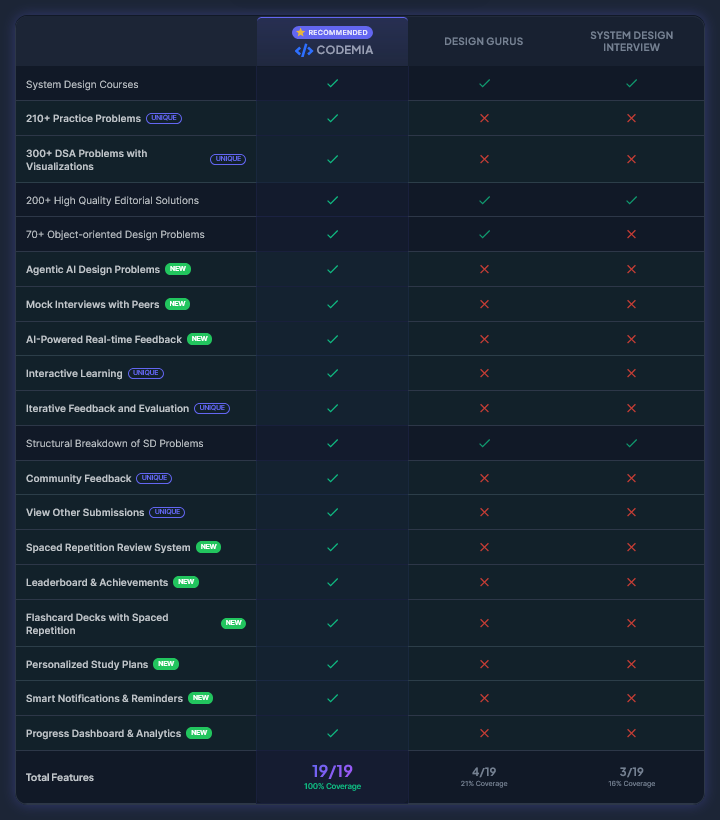
Here is a full breakdown of different features of Codemia.io and how it compares to other popular system design prep resources like DesignGurus.io and Educative’s System Design Interview course.
How to Use This Combination Effectively?
Here’s the preparation structure that worked for me:
Weeks 1–3: Build the Foundation with ByteByteGo
Work through ByteByteGo’s core system design concepts — caching, load balancing, database scaling, message queues, consistency models, CAP theorem, and the major architectural patterns. Don’t rush this phase. The visual diagrams need time to cement into genuine understanding.
Weeks 4–6: Start Practicing on Codemia.io
Begin with simpler system design problems on Codemia. Use the guides to develop your approach framework. Submit solutions and study the AI feedback carefully — it will show you gaps you didn’t know you had.
Weeks 7–9: Integrate Both
When Codemia practice reveals a conceptual weakness, return to ByteByteGo for the visual reinforcement. When ByteByteGo introduces a new pattern, immediately find a Codemia problem where you can apply it. This back-and-forth is where real mastery develops.
Final 2 Weeks: Interview Simulation
Codemia’s timed practice mode. Pure production under simulated interview pressure. The goal here isn’t learning new concepts — it’s converting what you know into confident, structured performance.
The Rare Discounts Currently Available
Both platforms are running significant limited-time discounts right now:
ByteByteGo Lifetime Plan — 50% Off
I’ve been using ByteByteGo for four years and this is one of the only major discounts I’ve ever seen outside of Black Friday.
The Lifetime Plan gives you permanent access to everything — current content and all future updates.
For a resource you’ll return to repeatedly throughout your career, this is exceptional value.
System Design · Coding · Behavioral · Machine Learning Interviews
Codemia.io Annual Plan — 50% Off
Codemia’s annual discount makes active system design practice more affordable than most single Udemy courses.
Given that this is where you build the actual performance skills that get you offers, it’s among the highest-ROI investments in your interview preparation.
Both discounts are time-limited. If you’re planning to take system design preparation seriously this year, this is the moment to commit to both.
https://codemia.io/pricing?via=javarevisited
Final Word
System design interviews separate the engineers who understand distributed systems from those who’ve just read about them. The preparation strategy that works isn’t reading more or grinding more — it’s building genuine architectural thinking through a combination of deep conceptual learning and real practice under interview conditions.
ByteByteGo gives you the visual, intuitive understanding of how systems work at scale. Codemia.io gives you the practice reps to turn that understanding into confident performance when it counts.
This combination doesn’t just prepare you for interviews — it makes you a better architect. The ability to think about systems at scale, articulate trade-offs clearly, and design for the constraints that actually matter is a skill that compounds throughout your career.
Start with ByteByteGo to build the foundation. Move to Codemia to build the performance. Get the offers.
P.S. — If you want to take one action right now, join ByteByteGo while the 50% Lifetime discount is active and start building your system design foundation today. Add Codemia.io once you have the concepts under your belt and want to start converting knowledge into interview performance. That sequence — foundation first, practice second — is what produces offers.
System Design · Coding · Behavioral · Machine Learning Interviews

I Found The Perfect Combo to Prepare for System Design Interview in 2026 and Its Awesome was originally published in Javarevisited on Medium, where people are continuing the conversation by highlighting and responding to this story.
This post first appeared on Read More