
How to become an AI Engineer by using hands-on courses on AI, LLM and Agentic AI Engineering
Hello everyone — Agentic AI is the most important emerging skill in software engineering right now. Not just in AI circles, but across the entire tech industry.
We’ve moved past the era where building with AI meant calling the ChatGPT API to generate text. In 2026, companies are racing to deploy AI agents that can plan multi-step tasks, use tools, browse the web, write and execute code, call external APIs, coordinate with other agents, and complete complex workflows with minimal human intervention.
The engineers who can build, orchestrate, and deploy these systems are commanding some of the highest salaries in tech.
The challenge: most online learning platforms haven’t caught up with this shift. Their “AI” courses teach you to call an LLM API. Genuinely good Agentic AI engineering education is still relatively rare — which is exactly why Towards AI Academy’s Agentic AI Engineering course caught my attention.
Production AI Agents Course: Learn Agent Engineering
In this review, I’ll tell you exactly what the course covers, who it’s built for, why the instructor’s credentials matter, and whether it’s worth your time and money — plus a look at the broader Towards AI Academy platform for engineers who want the complete picture.
Why Agentic AI Engineering Is the Skill That Matters Most in 2026?
Before getting into the platform review, it’s worth understanding why agentic AI has emerged as the most important technical skill of 2026.
Traditional LLM applications are essentially stateless: user sends a message, LLM generates a response, done. Agentic systems are fundamentally different.
An agent can:
- Break a complex goal into sub-tasks and execute them in sequence
- Use tools (web search, code execution, database queries, API calls) to complete tasks
- Maintain memory across a conversation or workflow
- Coordinate with other specialized agents in a multi-agent pipeline
- Recover from failures and adapt based on intermediate results
This is why companies like Anthropic, OpenAI, Google, Microsoft, and hundreds of startups are all investing heavily in agentic infrastructure. And it’s why the MCP (Model Context Protocol) ecosystem — which lets agents interact with external tools and services — has exploded in 2026.
Engineers who understand how to architect, build, and deploy these systems are genuinely in short supply. The Agentic AI Engineering course from Towards AI is one of the best resources I’ve found to close that gap.
The Course: Agentic AI Engineering by Paul Iusztin
You must be wondering, who Is Paul Iusztin? The instructor matters enormously in an emerging field like agentic AI, because you need someone who has actually built these systems at scale — not someone who learned from a YouTube video last month.
Paul Iusztin is the co-author of The LLM Engineer’s Handbook alongside Maxime Labonne — one of the most widely recommended books on LLM engineering, covering the full production stack from embeddings to fine-tuning to RAG to agents.
He built his reputation through hands-on work with production LLM systems and has become one of the most trusted voices in the LLM engineering community.
When Paul teaches agentic AI, he’s teaching from the same mindset that shaped The LLM Engineer’s Handbook: practical, production-first, deeply technical, and focused on the patterns that actually work when you’re shipping to real users.
If you haven’t read The LLM Engineer’s Handbook, it’s genuinely one of the best resources for LLM engineering and pairs perfectly with this course.
→ Get The LLM Engineer’s Handbook on Amazon
What the Agentic AI Engineering Course Covers?
The Agentic AI Engineering course is designed for computer science students, ML engineers, and full-stack developers who need to integrate agentic AI into real products.
Core curriculum:
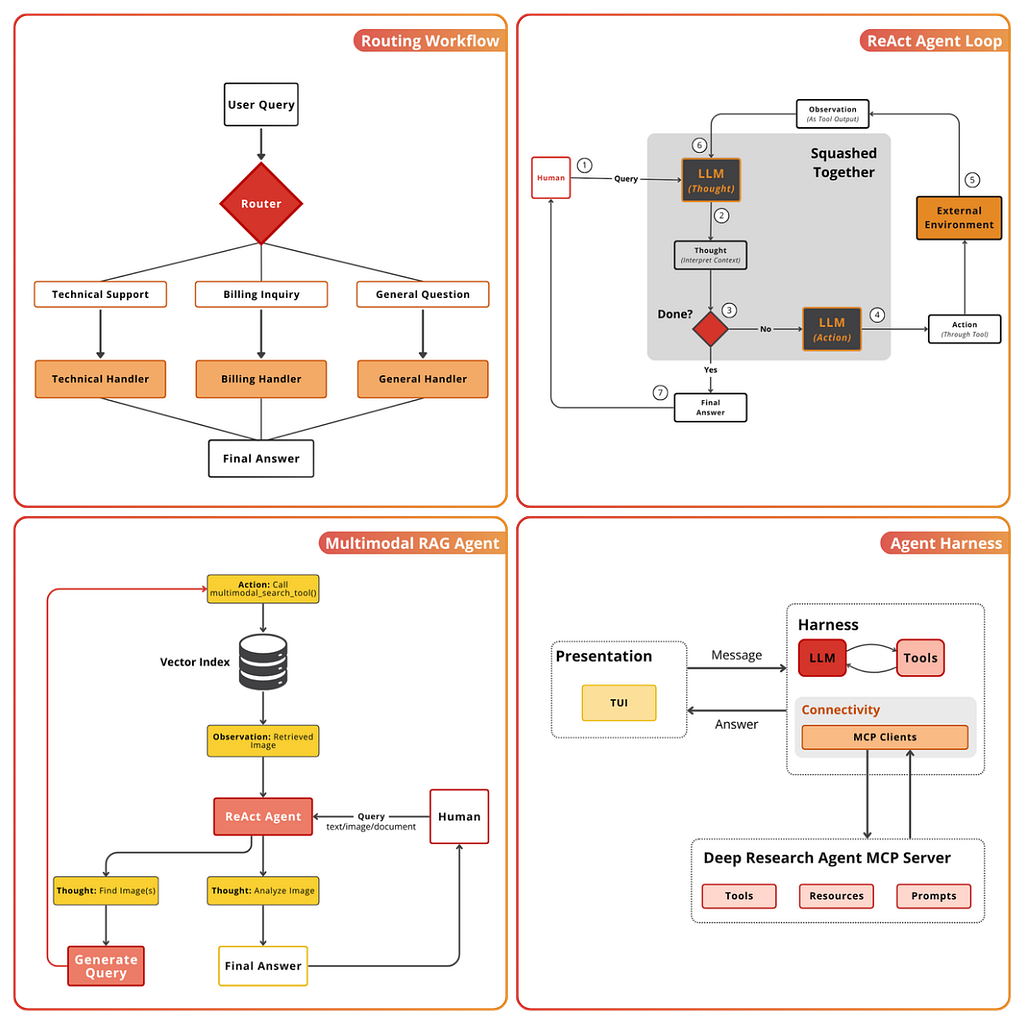
- Agent architecture fundamentals — how agents reason, plan, and execute multi-step tasks
- Tool use and function calling — enabling agents to interact with external APIs, databases, web search, and code execution
- Memory systems — giving agents context that persists across conversations and sessions
- Multi-agent orchestration — designing pipelines where multiple specialized agents collaborate
- RAG in agentic context — retrieval-augmented generation as the memory backbone for knowledge-intensive agents
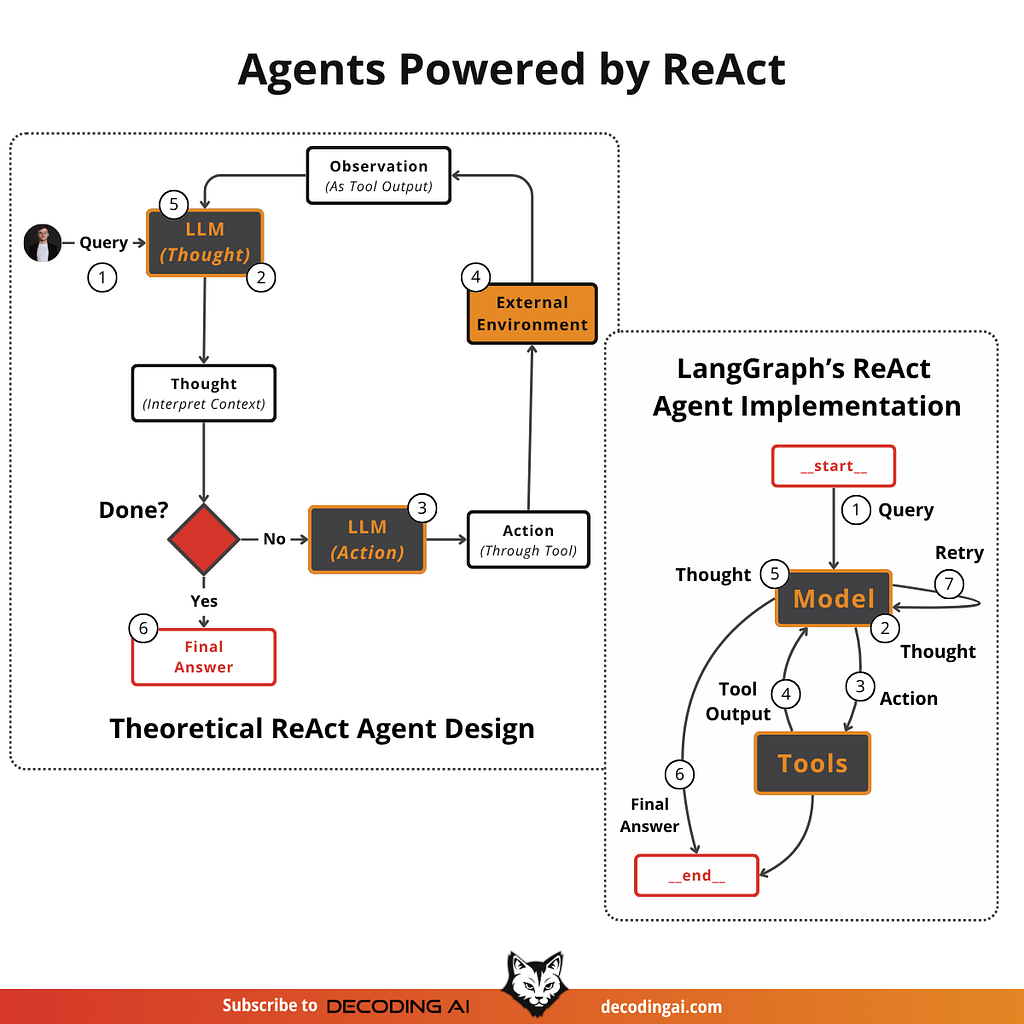
- LangGraph and agent frameworks — the current industry-standard tools for building stateful, graph-based agent workflows
- Production deployment — how to ship agents that are reliable, observable, and cost-effective at scale
- Evaluation frameworks — how to measure whether your agents are actually working correctly
- MCP integration — connecting agents to the growing ecosystem of external tools and services
What makes this course different from generic “AI agent” tutorials:
Paul doesn’t just show you how to chain a few LLM calls together and call it an agent. He teaches the architectural thinking that makes agent systems actually work in production — where failures cascade, costs escalate, latency matters, and you can’t just restart the system every time something goes wrong.
The production emphasis throughout is the signature of someone who has shipped these systems, not just built demos.
→ Join Agentic AI Engineering by Paul Iusztin
Who Should Take This Course?
This course is the right fit for:
- Software engineers transitioning to AI engineering who want to specialize in agentic systems rather than basic LLM integration
- ML engineers who understand models but want to build the application layer on top of them
- Full-stack developers building AI-powered products who need to go beyond chatbot-style applications
- Technical leads and architects designing AI systems for their teams or companies
- LLM engineers who’ve done RAG and fine-tuning and want to add agentic orchestration to their skillset
This course is probably not the right fit for:
- Complete beginners with no Python experience (start with Towards AI’s Beginner Python for AI Engineering first)
- People who want business-level AI without writing code (try Master AI for Work instead)
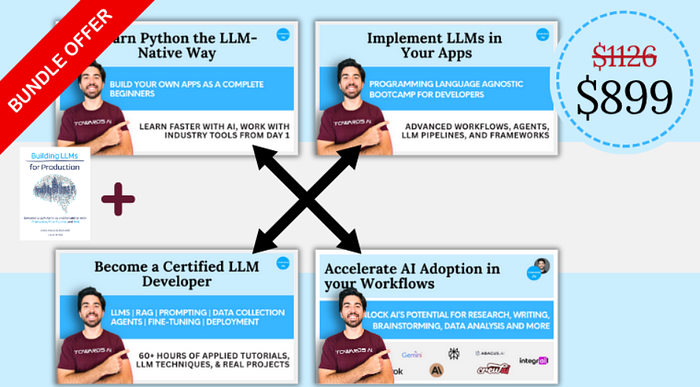
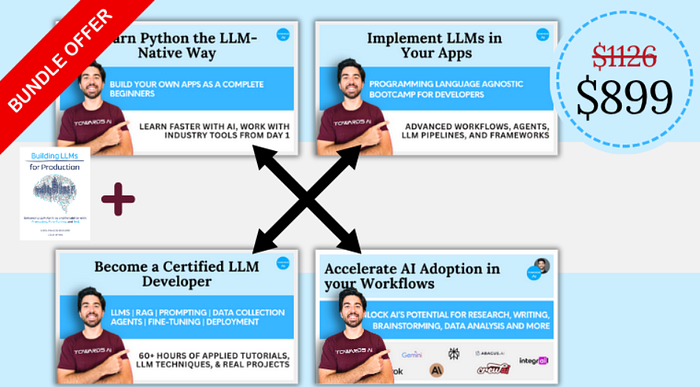
By the way, If you don’t want to pick and choose, get Get it All! From Novice to Expert Bundle, this bundle is the all-access option that takes you from beginner to advanced AI developer.
Get it all! From Novice to Expert
The Broader Towards AI Academy Platform
Towards AI Academy was founded by Louie Peters and Louis-François Bouchard — also co-authors of Building LLMs for Production.
The academy has grown directly from Towards AI’s reputation as one of the most respected AI publications online, which means the curriculum is shaped by people who are deeply embedded in the current state of the field.
What distinguishes the platform from competitors:
Industry-first, not theory-first:
Every course is built around what’s actually used in production AI systems in 2026, not what’s mathematically elegant or academically interesting. If you want deep math-heavy ML theory, university programs are better suited. If you want to build and ship things, Towards AI is exactly right.
Constantly updated:
AI moves faster than almost any field. Towards AI refreshes their material frequently — the Agentic AI Engineering course reflects the current state of agent frameworks, MCP, and LangGraph, not the landscape from two years ago.
Practitioner instructors:
Paul Iusztin is the perfect example. These aren’t academics explaining research papers — they’re engineers who have built production systems and are teaching from that experience.
The Complete Path: Get It All! Bundle
If you’re serious about making the Software Engineer → AI Engineer transition in 2026, the single best option on Towards AI Academy isn’t the Agentic AI Engineering course alone — it’s the Get it All! From Novice to Expert Bundle.
Get it all! From Novice to Expert
Here’s why this bundle is the highest-value option available:
The bundle gives you access to their complete AI curriculum — from Python basics through LLM fundamentals, full-stack AI engineering, production LLM deployment, and Agentic AI Engineering.
You don’t have to decide which course to start with or worry about gaps between courses. You get the entire structured path from wherever you are now to senior AI engineer competency.
What’s included:
- Python for AI Engineering — build the Python foundation for AI work
- 10-Hours LLM Fundamentals — understand how GPT, Claude, and Llama models actually work
- Full Stack AI Engineering — end-to-end LLM application development
- Building LLMs for Production — deploy and scale LLMs in real-world production environments
- Agentic AI Engineering — the crown jewel for 2026
- Master AI for Work — applying AI in professional workflows
This structured progression means you’re not guessing at the right order or filling in gaps with random tutorials. It’s a complete, coherent path.
The bundle is more of an investment than a single course — but compared to a coding bootcamp ($10,000–$20,000) or a university course ($2,000–$8,000), it’s remarkable value for a production-focused AI engineering curriculum that’s actually current.
→ Get the Complete Novice to Expert Bundle
What Could Be Better?
There are still few things which could be done better and like any honest reviews I think its worth mentioning the gaps alongside the strengths:
Price point:
Individual courses and the bundle are priced at a premium compared to platforms like Udemy. The quality justifies it, but it’s worth knowing upfront. The bundle especially is an investment — though the value is genuine.
Self-paced discipline required:
The material is self-paced with no cohort structure or deadlines. Your progress is entirely on you. For engineers with strong self-discipline, this is a feature. For those who benefit from external accountability, it’s worth noting.
Less math-heavy:
If your goal is deep understanding of transformer mathematics or ML research, Towards AI’s applied approach won’t fully satisfy that. It’s explicitly industry-focused rather than research-focused.
Final Verdict: Is Towards AI a Good Place to Learn Agentic AI Engineering in 2026?
Yes — it’s one of the best.
The Agentic AI Engineering course by Paul Iusztin is the most production-focused agentic AI curriculum I’ve found from any platform. The instructor’s credentials — co-author of The LLM Engineer’s Handbook, practitioner with real production LLM experience — ensure you’re learning from someone who has shipped these systems, not someone who learned from documentation.
The broader Towards AI Academy platform reinforces that quality across every course: industry-first, constantly updated, taught by practitioners.
My recommendation:
If you’re a developer who specifically wants to master agentic AI systems — start with the Agentic AI Engineering course and pair it with The LLM Engineer’s Handbook for the production LLM engineering depth that underlies agentic systems.
If you want the complete Software Engineer → AI Engineer transition in one structured package — get the Novice to Expert Bundle. It’s the highest-value option on the platform and takes you from Python fundamentals all the way through agentic AI engineering in one coherent curriculum.
The AI revolution isn’t waiting. The engineers building agentic systems today are defining how software gets built tomorrow. Use code javin15 for 15% off and start now.
→ Join Agentic AI Engineering by Paul Iusztin
→ Get the Complete Novice to Expert Bundle
P.S. — If you’re going to do one thing at this moment, go join the Get it All! From Novice to Expert Bundle and follow Towards AI’s AI curriculum to build real, production-grade AI engineering skills. This is one of the best way to become an AI Engineer in 2026, you will thank yourself later.
Get it all! From Novice to Expert

Is Towards AI Academy a Good Place to Learn Agentic AI Engineering in 2026? Review was originally published in Javarevisited on Medium, where people are continuing the conversation by highlighting and responding to this story.
This post first appeared on Read More