
As a product manager, you’ve probably dreamt of having an autonomous, self-organizing team. The kind that works without micromanagement or rigid oversight and still delivers strong results.

In reality, few teams actually get there. Often, something breaks along the way. The team may not feel empowered enough, or team members may be afraid to make decisions because of limited resources.
I’ve worked with and observed dozens of teams over the years. During this time, one pattern consistently stood out: the most autonomous teams I’ve ever seen were also the ones that had the most rules and restrictions.
Counterintuitive at first. Genius in practice.
The failure of “just be autonomous” product teams
The most common — and most naive — way to encourage autonomy is to simply tell the team to organize itself. In slightly better cases, the team is also given a clear objective.
It usually sounds something like this: “Your goal is to deliver this feature or improve this metric by 10 percent this quarter. Organize yourselves to make it happen.”
On paper, it sounds reasonable. The team gets a clear goal and the freedom to figure out how to achieve it. But in practice, it rarely works that way.
Teams commonly fail by:
- Not doing what management expected them to do
- Making decisions they’re not authorized to make
- Disrupting other teams by deviating from established processes
- Asking for permission on things they should be able to decide on their own
And the list goes on.
Yes, you can run retrospectives and adjust the process each time something breaks. But that takes time. A lot of it. And many teams don’t last long enough for those iterations to pay off.
You need a better approach.
The common misconception about rules and autonomy
Rookie scrum masters and managers tend to think that rules limit autonomy. In this view, autonomy means removing constraints and letting teams figure things out as they go.
In my experience, the opposite is true.
Rules create the clarity teams need to perform their best:
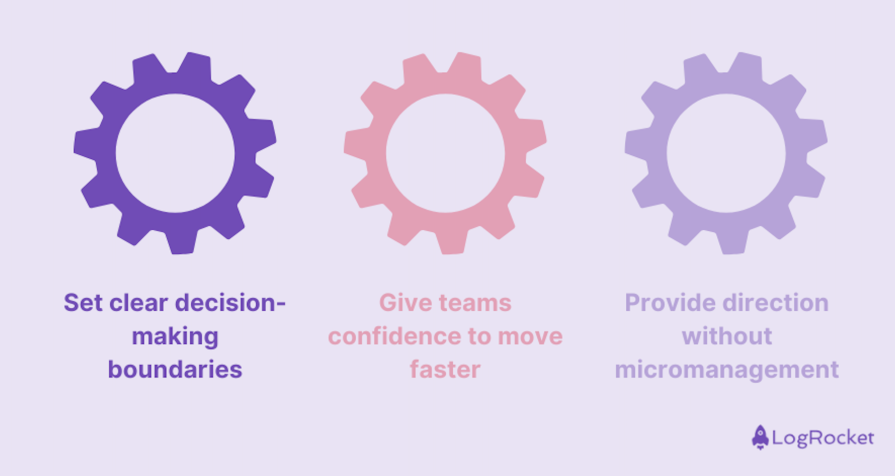
Rules set clear decision-making boundaries
Rules clearly define what falls within a team’s scope of ownership and what doesn’t.
For example, a rule might state: Decisions about the development process are owned by the team. However, the release process belongs to DevOps. All teams must also run regression tests before release.
This approach gives teams real ownership of how they work while setting explicit limits on what they can change. Instead of guessing or negotiating scope on the fly, teams know exactly where they have authority and where they don’t.
Rules give teams confidence to move faster
Clear rules let team members move faster and act with confidence.
Teams can make decisions without second-guessing their authority because it’s clearly outlined in the rulebook. They no longer waste time asking, “Can I do this, or Do I need approval?”
Leadership benefits as well. When rules clearly define what teams cannot do and the principles everyone must follow, managers can trust that teams won’t accidentally break anything essential.
Rules provide direction without micromanagement
Rules also guide teams on where to focus their self-organization efforts.
For example, if there’s a strict set of rules for handling tech debt but very few guidelines for conducting user research, the signal is clear. User research is an area where the team is expected to define its own approach.
That type of direction is essential because product development is too complex to tell teams to “self-organize” around every dimension of it. Some areas benefit from standardization.
How to build a truly autonomous product team
The first step to building a truly autonomous team isn’t hiring the right people or delivering an inspirational speech from a leadership guru. It’s about defining what true autonomy means in your context and setting clear rules to support it.
Your definition of autonomy — and the rules that follow from it — should answer questions like:
- Which decisions the team can make and execute independently
- Which decisions require consultation
- Which decisions are fully out of scope
- How the team is expected to interact with other teams and the broader organization
- What individual contributors can decide on their own versus what requires full team alignment
- Which changes, risks, or issues the team can handle independently and which ones must be escalated
- Which organizational principles are fixed and not open to interpretation
You can call these rules, principles, guidelines, or a code of conduct. The label matters less than the clarity they provide.
Once these boundaries are in place, you can assemble a team and see it perform. Early on, it’ll likely be messy. Some rules will be misunderstood. Others will turn out to be too strict or too lax. That’s okay.
Treat those issues like any other product problem. Discuss them in retrospectives, identify what needs to change, and update your rulebook accordingly. Over time, your team will perform better and become increasingly autonomous thanks to the clarity and comfort rules provided.
A useful side effect of having explicit rules is that retrospectives become far more tangible. Instead of vague debates, you can point to specific guidelines, propose targeted changes, and walk away with clear improvements. This dramatically increases the odds that the retrospective actually leads to better outcomes.
Closing thoughts: Why constraints enable real autonomy
People often worry that rules lead to micromanagement. I disagree.
Micromanagement happens when you feel the need to look over people’s shoulders and question what they do because there are no clear guidelines about what your team owns and where autonomy stops.
Ironically, the happiest and highest-performing team I’ve worked with was the one with a hundred or so specific rules in place.
Those rules gave comfort. No one had to wonder whether they were allowed to make a decision. No one worried about hidden expectations or unpredictable backlash for acting independently. Everything was clearly defined.
They also created comfort for leadership. Because their concerns and constraints were reflected in the rulebook, they could step away and trust the team to deliver.
It’s time to move past the simplistic idea that freedom comes from removing structure. Real autonomy doesn’t come from the absence of rules — it’s the result of clear, intentional constraints.
Featured image source: IconScout
The post Why more rules can actually increase team autonomy appeared first on LogRocket Blog.
This post first appeared on Read More