
What it takes to overcome obstacles and drive positive impact inside systems that resist change.

Over the past years, I’ve spoken with many design students about life-centred design, responsible innovation, and bringing non-human perspectives into the design process. These ideas tend to resonate deeply. Many students are drawn to design precisely because they want to create positive social and environmental change.
What design programs rarely prepare students for is how little agency designers often have once they enter professional practice. And this challenge doesn’t disappear with experience. When my co-author Steve ‘Doc’ Baty and I toured our book Designing Tomorrow, the most common question we heard was not what designers should do differently — but how to drive positive change in the face of resistance.
How to get buy-in from bosses, managers, co-workers, clients, partner organisations — or whoever pays the bills — is a deceptively difficult problem. It’s why the third part of Designing Tomorrow, which focuses on partnerships, may be its most important. Across three chapters, we explore collaboration, buy-in, and the shift from doing good work to becoming a strategic leader.
This article, co-written with Steve ‘Doc’ Baty, distils those chapters into six practical strategies for driving positive change from within organisations.
#1—Understanding how an organisation operates
Driving change requires effective collaboration within the organisation and with external partners. Understanding how an organisation operates is the precursor for assembling those collaborators.
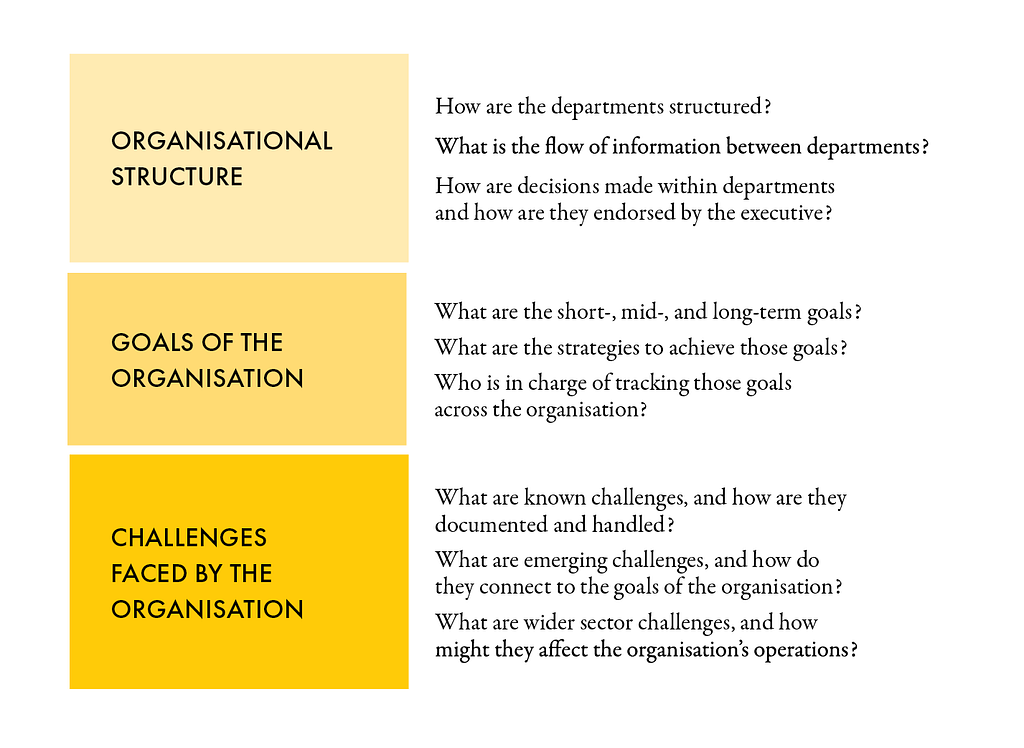
There are three parts to understanding an organisation. The first part relates to how the organisation is structured, including its department and decision-making processes.
The second part is to have a thorough understanding of the organisation’s goals and how it positions itself to achieve these goals through its strategic plan.
The third part concerns the challenges the organisation faces. By understanding those challenges, we are able to align positive change projects with them and select partners that bring complimentary skills to the collaboration.
Put together these three parts contribute to the organisation’s DNA. They drive the culture and behaviour and enable or hinder the adoption of new ways of working.
If we understand the DNA, we can alter it, for example, by bringing perspectives from different departments together, reconfiguring perspectives and opening up new possibilities.
#2—Strategic alignment with KPIs
Change in organisations starts and stops with key performance indicators (KPIs). A new initiative that doesn’t align with an organisation’s metrics is not likely to be supported by management.
Designers may not be the ones setting an organisation’s KPIs, but we can use the power of KPIs by articulating how a proposed initiative aligns with them.
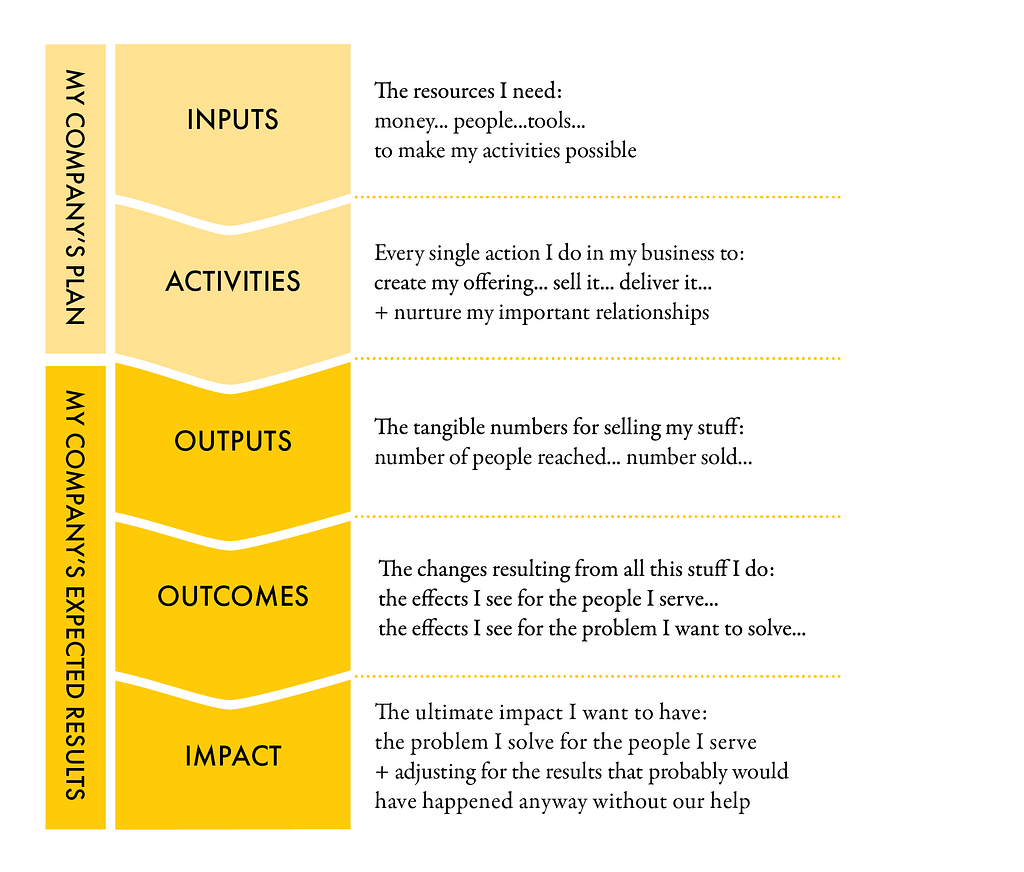
In the Theory of Change framework, KPIs are the things that can be measured—captured in the ‘outcomes’ section of the framework. We can use this as a starting point and look for inspiration from other organisations and sectors.
For example, Patagonia is a company that successfully employs KPIs to drive positive change. In addition to tracking their business’s carbon footprint, they measure water usage, energy consumption, waste production, proportion of products made using recycled or organic materials, and the number of employees and suppliers engaged in sustainability initiatives.
If it is not possible to align a proposal with existing KPIs, we may be able to turn to external rating schemes. For example, many organisations refer in some way or another to the United Nations’ Sustainable Development Goals (SDGs), which comprise measurable targets and indicators.
Designers might even be able to shape an organisation’s KPIs, especially at times when a company updates their strategic plan. To do this, we can employ strategic design tools like a systems map or impact ripple canvas, identifying the things that matter and that should be measured.
We can use design activities to bring together the relevant actors to explore how a different set of KPIs would establish measurable principles to drive the desired behaviour and organisational culture and help our organisation fare better in the future.
Importantly, we need to ask ourselves (and our organisation) whose benefit should be measured and how. What are the things we want to change in our system? How can we achieve this change? Who are entities that may have been overlooked and are negatively affected by existing KPIs? The answers to these questions become the starting point for creating powerful and far-reaching change metrics.
Expanding your systems map can be a good method of identifying entities who may be being overlooked. They’re often represented outside existing system boundaries, and treated as external to the things the organisation cares about. Extending the system boundary is also a good opportunity to ask questions about the organisation’s scope of impact.
#3—Making a business case
To successfully argue for organisational change, designers need to be able to speak the language of management and understand the forces that drive markets and economies. (That’s one of the reasons why business and economics principles should be taught in design programs.)
Business decisions are often driven by cost efficiency arguments. Countering those arguments requires hard data, not emotional storytelling. This doesn’t need to be financial data or involve complex modelling; it can emerge from analysing similar business cases and providing economics-driven alternative options.
The core of a successful business case is a persuasive business model. Designers are already assisting organisations with developing their business models—largely enabled by the introduction of the business model canvas as a tool for customer-led innovation.
The extended triple layered business model canvas holistically integrates economic, environmental, and social concerns. It adds two layers to the original canvas.
The environmental layer uses a life cycle perspective to determine the environmental impact of a product or service, placing functional value at its centre. The canvas includes building blocks for use phase, end-of-life, and distribution considerations. Instead of cost structure and revenue streams, it considers environmental impacts and benefits.
The social layer places social value at the centre, and its building blocks include local communities and societal culture. Instead of cost structure and revenue streams, here the focus is on social impact and benefits.
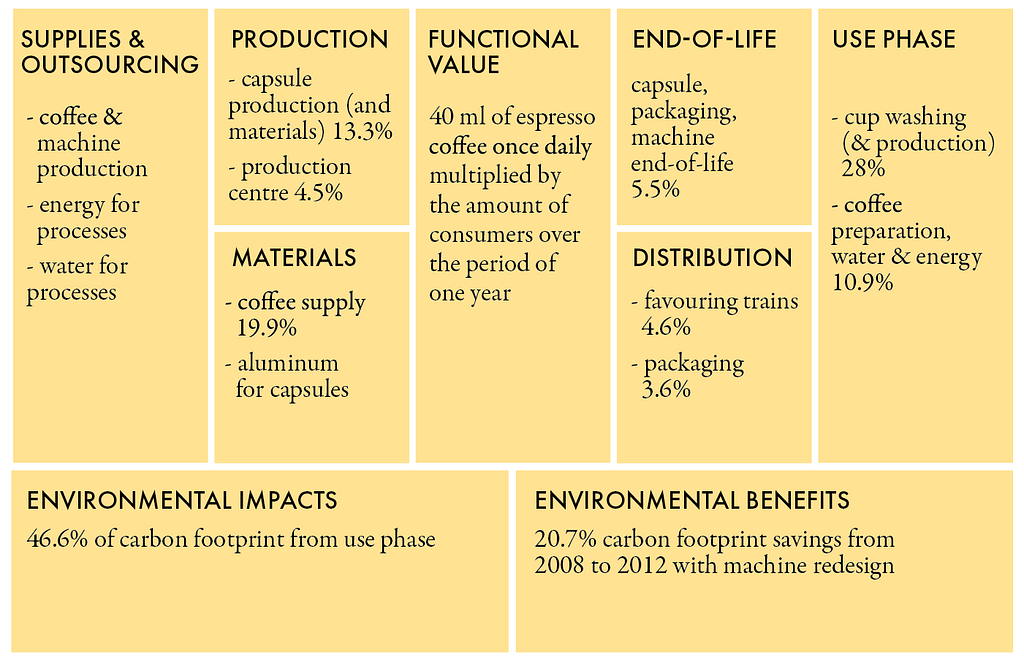
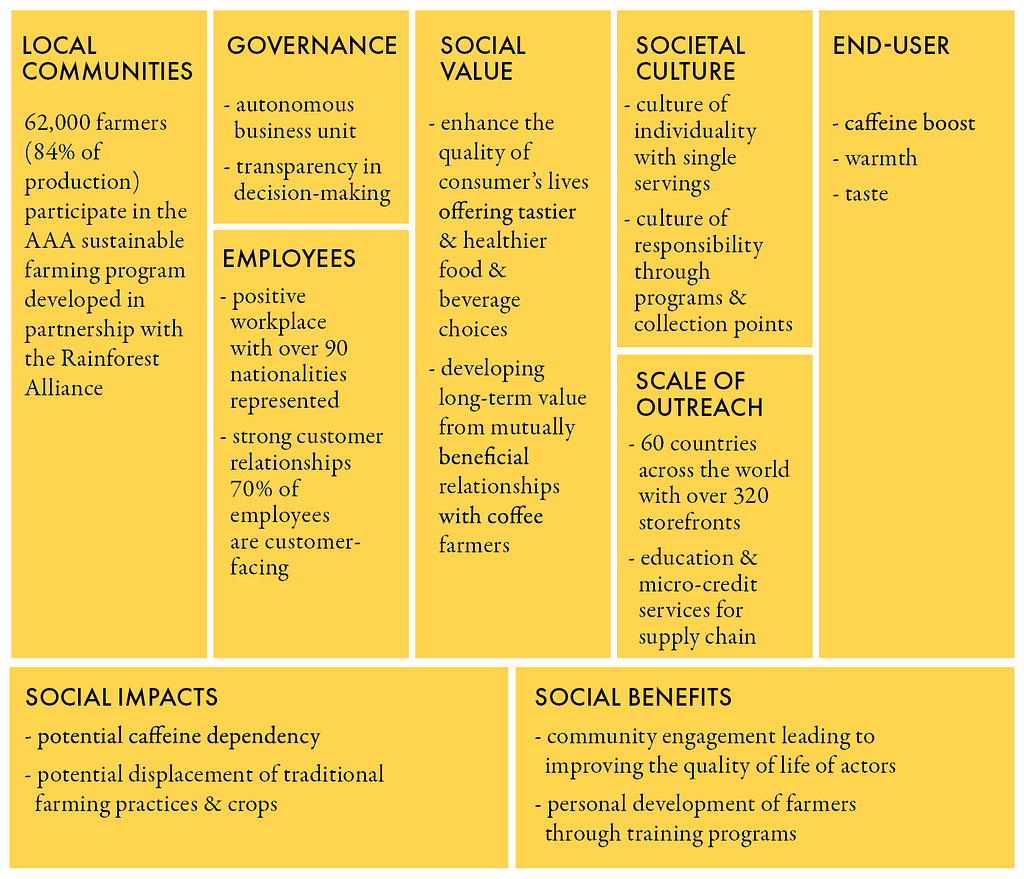
A persuasive business case integrates business model considerations with the operational goals of an organisation (strategies #1 and #2). It visualises both the opportunity and the risks of not implementing the change.
Hartmut Esslinger, founder of frog design, in his book The Fine Line recounts facing many cynical CFOs, asking him what he would do if they opposed his firm’s proposal. His response was for the CFOs to imagine what their competitors would do with the idea and how that would affect the company’s bottom line within three years.
#4—Using the power of consumers
One way to get management’s attention is to highlight the risk of losing customers — or missing emerging segments — to competitors.
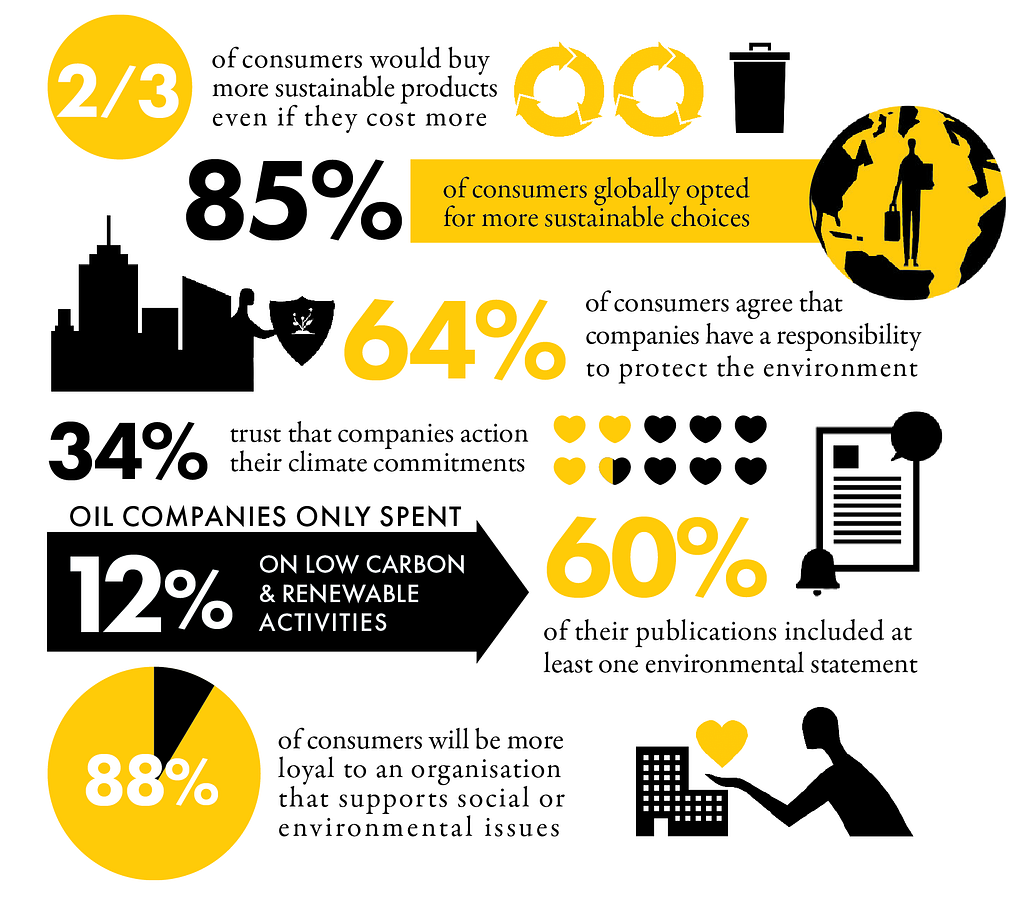
In the European Union, 56 percent of consumers pay attention to the environmental impact of products and services. Two thirds of consumers say that they would buy more sustainable products even if they were more expensive.
Globally, 85 percent of people reported having shifted their purchase behaviour by opting for more sustainable choices. Attitudes vary across generations and countries, with younger people more likely to seek out sustainable alternatives.
Three quarters of consumers say they will stop buying from companies that behave poorly towards the environment, employees, or the community in which they operate. Close to two thirds of consumers agree that companies have a responsibility to protect the environment, but only one third trust that companies act on their climate commitments.
#5—Forming strategic alliances
‘Alone we can do so little; together we can do so much.’ —Helen Keller
The Collective Impact Forum helps organisations reap the benefits of collective action. Based on their work with communities, they developed a collective framework, setting out five conditions for aligning the different end goals of partners.
These conditions support collaboration amongst governments, business, and other organisations. The framework acknowledges that no single organisation can solve a large-scale problem on its own: a collective effort is needed to create meaningful and lasting change.
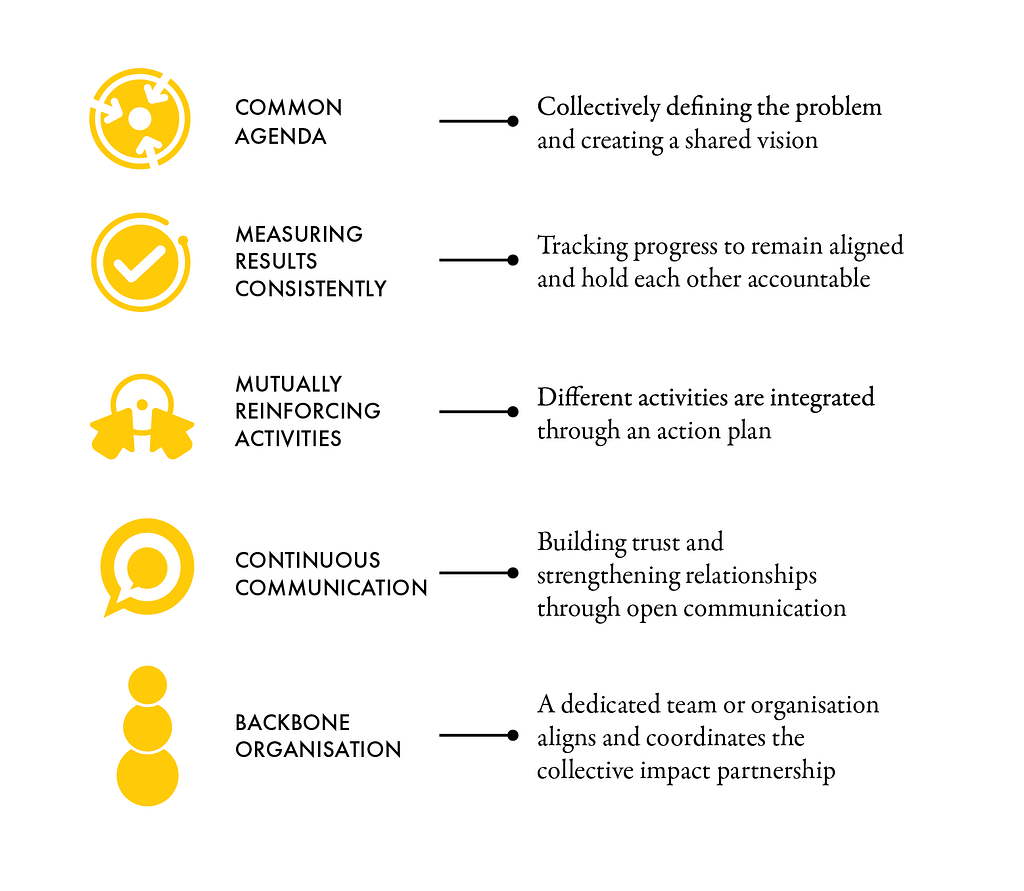
To develop the conditions, designers can run a participatory systems mapping session to identify a common agenda, use the Theory of Change canvas to create shared measurements, and employ futuring tools like backcasting to formulate a mutually reinforcing action plan.
The backbone organisation plays a key role in aligning and coordinating the collective impact partnership. But this doesn’t necessarily need to involve establishing a new organisation, and we don’t need to wait for permission. The role can be allocated to an existing team or a specifically assembled group of representatives from across the organisation.
#6—Starting with small change that compounds over time
A massive shift is required to move away from the exploitation of natural resources and the systems that reinforce inequality and social fragmentation. For decades, the global economy has been shaped by neoliberalism, prioritising private profit over our shared social and ecological wellbeing.
Changing this feels overwhelming — especially for designers driven by an ambition to create positive social and environmental change, yet constrained at every step by systems that resist it.
This tension doesn’t exist only at an individual level. Through her work with entrepreneurs, Kari Enge, founder of Rank & File, has observed a recurring pattern: organisations rarely feel they have enough time or budget to implement meaningful change. As a result, action is often deferred — pushed into an indefinite future when the necessary resources are assumed to appear.
This is where organisations fall over, time and time again. They look for ways to make a large, immediate change, failing to understand that positive change can start small and compound over time.
GO Foundation, is an Australian organisation that supports Indigenous children in their education so that they can see themselves as the kind of person who finishes school: someone who takes on further education and embarks on a career while also maintaining their connection to culture and Country.
The foundation started with a small number, but those kids became role models to inspire others to make different choices for themselves. Each child going through this transformation influences more and more around them.
If the founders of the GO Foundation, when they started the organisation, had said, ‘helping just a few kids isn’t worth it, we should wait until we can help 100 or 1,000’, they would have missed out on years of impactful support or never created any change at all.
The key to successful change in the face of obstacles is to look for these kinds of impactful, small changes. The things we can do right now—as individuals and organisations—that have a compounding effect over time.
This requires us to be selective and focus our energies on the actions that begin to affect change, however small.
In fictional stories about time travel, the protagonists often worry that some tiny action they make will radically change the future. Yet, here we are in the present, thinking nothing we do can make a difference.
Reversing this perspective can imbue a great sense of empowerment: we can look for the small changes we can make now to deliver an impactful effect in the future.
This can start small, by focusing on what sits within our direct control: actions we can take without waiting for permission.
Like changing the language we use — replacing the colonial term stakeholders with actors; creating a systems map to surface potential unintended consequences; or forming a collective of like-minded colleagues and making space for conversations about driving positive impact.
Systems rarely invite change — designers build the conditions for it, one small step at a time.
Thank you for reading this article. We would love to hear from you in the comments what strategies have worked for you, or where you have faced resistance and how the ideas from this article may have applied to those situations.
Authors: Martin Tomitsch is a Professor and Head of the Transdisciplinary School at the University of Technology Sydney and a founding member of the Life-centred Design Collective. Steve Baty is a strategic designer with over 25 years experience as a business founder, keynote speaker, awards judge, conference organiser, and inaugural CEO of the Australian Design Council.
Acknowledgement: This article is partially based on chapters 10–12 of Designing Tomorrow. AI was used for generating the alt text for the illustrations and diagrams, brainstorming title and subtitle options, and improving the flow of some sentences.

The dilemma of agency in design was originally published in UX Collective on Medium, where people are continuing the conversation by highlighting and responding to this story.
This post first appeared on Read More