
Discuss children’s preference on avatar design
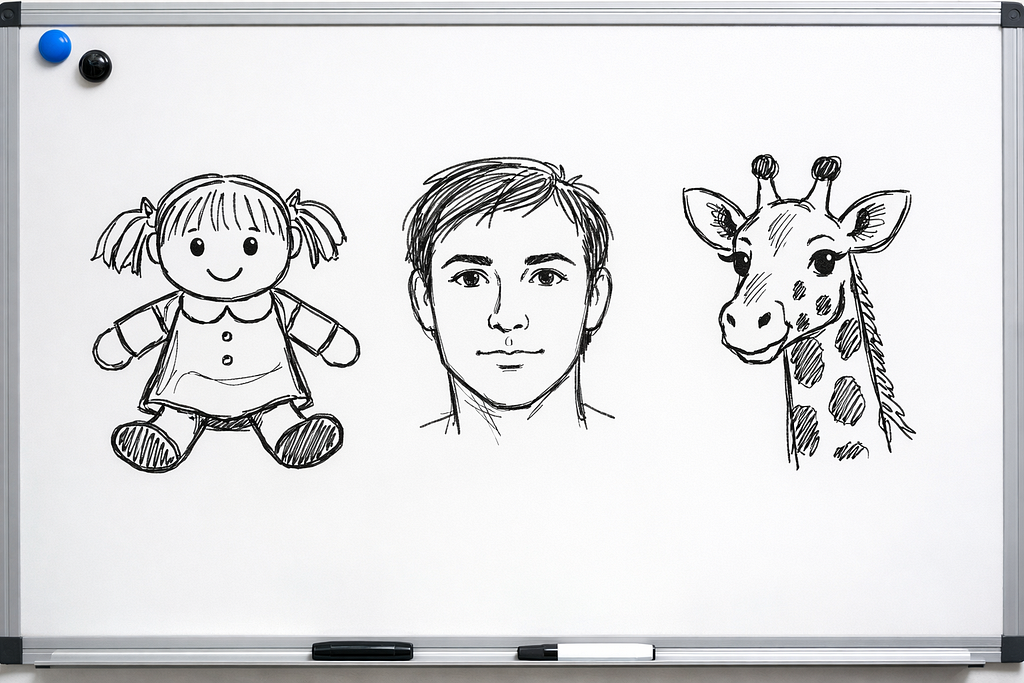
As a developer in a children’s hospital, I’ve designed some playful VR simulations for young patients. We try to avoid serious medical settings because there are still concerns about using VR in serious clinical contexts. Instead, we use VR in two main ways: making tedious treatments more engaging through gamification, and providing distraction during painful moments. It’s become pretty common, and it’s effective.
But when these simulations need avatars, there’s always that one question: What should they look like? An animal character? A cartoon character? Another human?
This matters more than you’d think. In VR, kids’ emotions intensify. They’re still figuring out what’s real and what’s not, so getting the details wrong can cause real confusion and discomfort.
Here’s what I learned from the research:
Not too real, not too fake
Research tested three VR avatars with kids: a human, a giraffe, and a Muppet. I thought the Muppet would win because it’s cute (well, I think so) and familiar to kids.
The giraffe won.
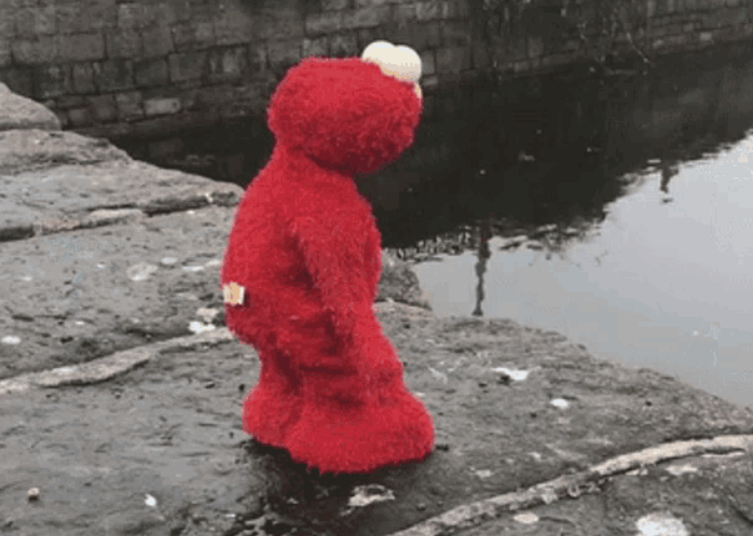
Researchers think social realism is one reason. Social realism means how closely something matches what kids experience in real life. A human has high social realism (kids see humans daily). A giraffe has moderate social realism (it exists, but kids don’t encounter one up close). A Muppet has low social realism (it’s a fantastical TV character, not a living being).

The giraffe hit the sweet spot: real enough to be believable, special enough to be exciting. As one kid said, “I have never seen one so it’s really cool.”
The human character’s high social realism created its own problem. Because humans’ brains are so good at identifying faces, kids noticed and commented on every imperfection: “weird hair,” “big head.” They also found the eye movements unsettling.
Kids found the Muppet “weird” and “creepy” because “it’s not a real thing.” When children are still learning to separate fantasy from reality, encountering something contradictory can be unsettling. However, kids who recognized the Muppet from Sesame Street actually responded positively, which means prior exposure might help.
Still, it’s hard to predict each child’s experience with specific characters. A safe design principle is to choose something with moderate social realism. It’s clearly non-human, clearly plausible, and doesn’t trigger that uncomfortable “this shouldn’t exist” or “something’s off” feeling.
Getting the proportions right
Okay, so let’s say we pick a character with moderate social realism, like a fox. How should we design its appearance? Most designers are aware of uncanny valley effects and avoid hyper-realistic designs. So what if we make it cute and cartoon-like with bigger eyes and head?
Well, it turns out that kids aren’t fans of exaggerated proportions either. Feng’s research showed that children’s preference declined as eye size enlarged. The reason is likely the same: exaggerated proportions conflict with kids’ understanding of the world. Research with young adults showed that a 25% eye size increase can be optimal, suggesting small tweaks might help. However, more research is needed to determine if this applies to children as well.
When designing the appearance, consistency is crucial. If you choose a cartoon style, commit fully across the entire body, not just the face. Mixing realistic bodies with cartoonish features creates the kind of mismatch that makes kids uncomfortable.
Movement matters
Besides appearance, many kids commented on avatars’ behaviors. Interestingly, they mentioned movement first and appearance second, showing the importance of behavioral realism.
Kids made comments about all kinds of movements, including head movements and facial expressions. But among all their observations, eyes were the most critical feature. They assessed realism mainly through eye behavior. For instance, they found avatars creepy because of “unsettling eye movement,” staring, or unnatural blinking speed. They also wanted avatars to “acknowledge their existence by making eye contact.”
However, realism alone isn’t enough. Consistency matters. A cartoon fox with hyper-realistic blinking will still feel off. Behavioral realism needs to match visual realism. Designers need to find the balance between all elements.
Keep distance in mind
Compared to adults, kids showed more attempts to interact with avatars. They wanted to play with them and touch them. Some expressed disappointment that avatars felt “fake” because they couldn’t physically interact with them.
Not all applications need direct avatar interaction. For experiences where interaction isn’t intended, distance design can help. Well-designed distance can improve both visual and behavioral realism. It not only prevents unwanted interactions but also keeps certain imperfect features from being too noticeable.
Distance design is relatively new compared to traditional media. On flat screens, characters maintain a certain distance from users. However, in VR, characters share the same space as kids.
In real life, people naturally keep some distance from one another. Hall’s proxemics theory (1966) explains this: people maintain different zones of personal space depending on their relationship and social context. Studies show people maintain similar distance zones in VR. When approaching others, they typically stay within social space range (1.22–3.65m), which is consistent with Hall’s theory. (1 unity unit in VR = 1 meter)

However, some studies find people keep much larger distances in VR than in real life, which is around 160% farther. This might be because distance perception works differently in virtual environments.
These differences are normal. They can stem from environmental settings, age range, or users’ prior VR experience. The safest design principle is to position avatars slightly farther away and allow kids to close the gap if they want.
In VR, kids’ emotions intensify because characters share the same space, making everything feel more real. This makes designing avatars trickier than it looks.
It’s not just about making something cute. We need to understand how children process reality and what triggers their “something’s wrong” feeling. Kids are still in their developmental phase, learning what’s real and what’s not. Being cautious helps us avoid triggering discomfort and confusion.
And remember: consistency is key. Pick your level of realism and stick to it across appearance, movement, and distance. Otherwise, your design is just “creepy” and “weird”.
Reference:
- Segaran, K., Ali, A. Z. M., & Hoe, T. W. (2021). “Does avatar design in educational games promote a positive emotional experience among learners?” https://journals.sagepub.com/doi/10.1177/2042753021994337
- Bailey, J. O., & Schloss, I. (2023). “‘Awesomely freaky!’ The impact of type on children’s social-emotional perceptions of virtual reality characters.” https://dl.acm.org/doi/fullHtml/10.1145/3544548.3581501
- Nolte, D., Hjoj, R., Sánchez Pacheco, T. et al. Investigating proxemics behaviors towards individuals, pairs, and groups in virtual reality. Virtual Reality 29, 58 (2025). https://doi.org/10.1007/s10055-025-01127-y
- Kim, I., Sung, J. New proxemics in new space: proxemics in VR. Virtual Reality 28, 85 (2024). https://doi.org/10.1007/s10055-024-00982-5

Giraffe, muppet, or human? was originally published in UX Collective on Medium, where people are continuing the conversation by highlighting and responding to this story.
This post first appeared on Read More