
Will AI agents kill design as we know it?
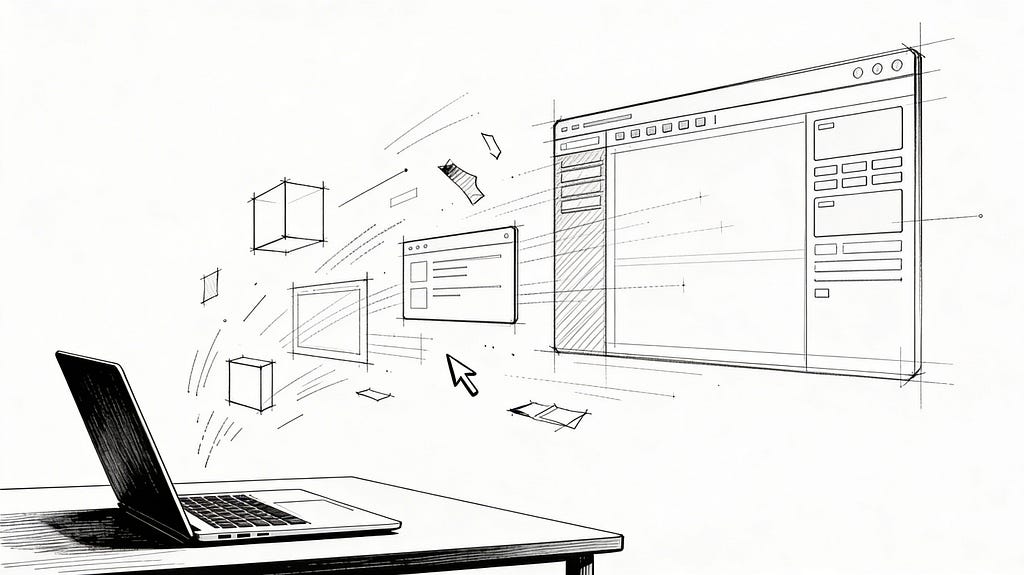
At the end of February a report by Citrini Research caused major shockwaves through the software industry, sending the stock prices of heavyweight SaaS organisations like Atlassian and Slack to nosedive. The Citrini Report follows AI’s current trajectory and projects that 2028 will bring a self-inflicted corporate doom loop: AI makes software so cheap to build that SaaS companies will cannibalise themselves out of business.
The report is a deliberately provocative wake-up call, taking an extreme scenario and playing it out to its logical conclusion. It focuses on the macro economic fallout, but overlooks a quieter, more fundamental disruption, the dismantling of the cognitive environment in which every knowledge worker operates on a day-to-day basis, the user interface.
A SaaS extinction?
That user interface lives inside the SaaS products that power almost every knowledge worker’s day, the Jiras, the Salesforces, the Slacks. Software we lease but never own (a market now worth $390 billion globally and growing), are typically customised to support enterprise systems and workflows at scale. Although it’s unlikely any organisation would ever use anything close to all the features on offer. We are presented with a bloated, feature-rich product for which we pay a premium.
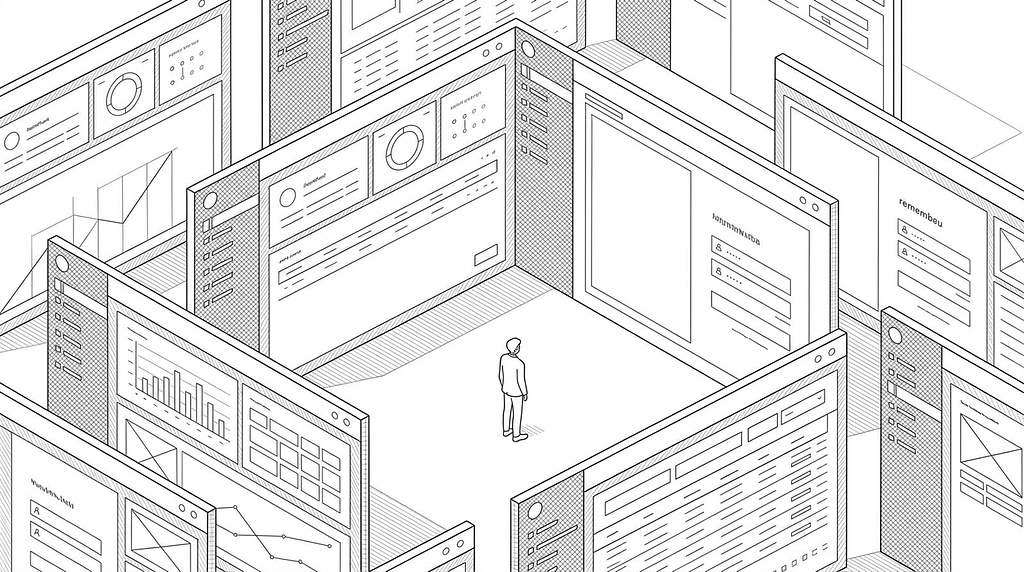
Ultimately, these products succeed through a combination of locking in customers and sheer enterprise inertia. Friction has been carefully engineered into the offering to make leaving difficult; this holds true for both B2B and consumer-facing SaaS solutions.
Over time, the product interfaces have largely grown more complex, tight delivery timelines compound UX debt, designers sweep new features into overflow menus, progressive disclosure is overutilised to nest and conceal functions; the mental model for these products shifts toward being product-centric rather than user-centric.
Prolonged daily usage enables users to become familiar with navigating these interfaces, and unless there is a radically simpler and cheaper option, switching will negatively impact productivity. However, with the recent proliferation of AI agents, this friction becomes a non-issue. They don’t care about familiarity; they bypass the UI completely. This ‘Agentic Bypass’, agents outmanoeuvring the engineered friction, is what kicks off the doom loop outlined in the Citrini report.
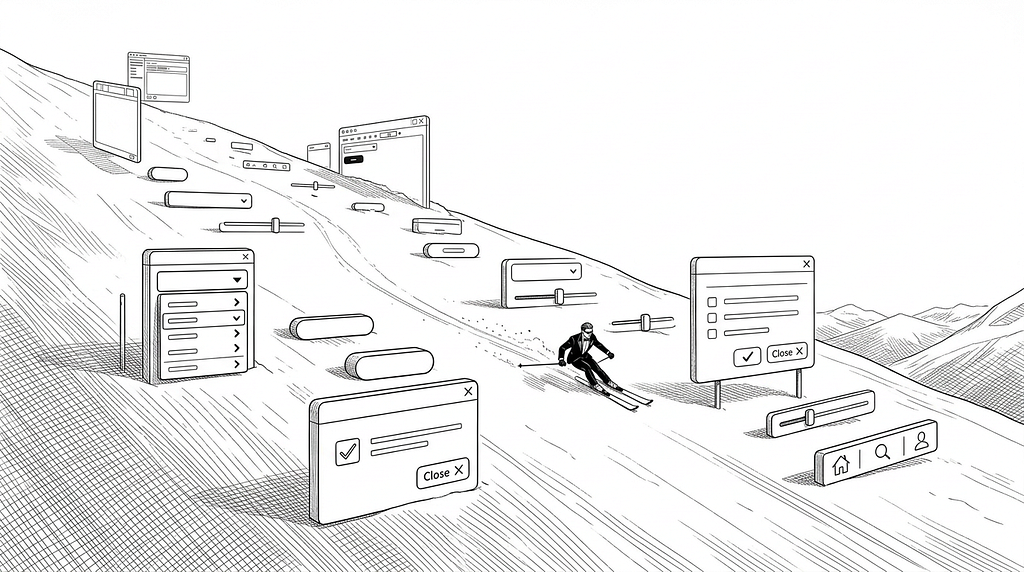
“Agents don’t care about familiarity, they bypass the UI completely.”
As users continue to interface more closely with agents, we are seeing them move beyond task completion into fulfilling more complete roles, like full software development. As Box CEO Aaron Levie put it, we may soon have “about 100 times more agents than we have people”, and those agents will not be navigating Jira to do their jobs.
For example, if I wanted to integrate new user data pipelines to generate nightly reports, I no longer need to rely on my SaaS vendor or an internal team to build new features, I can just ask an agent to build it for me. What once took weeks, now is available in minutes.
Most importantly, I wouldn’t need to interface with a complex product-centric UI. Which raises the question every designer in the industry is quietly asking: what happens to design in a world where the interface designs itself?
The interface built for one
In an agentic world, the knowledge worker’s job becomes more decision-oriented an agent would increasingly become their primary system interface. The agent would understand the user’s preferences and context, collaboratively determining what needs to be done, it might spin up a dashboard if they need to better understand some insights or collate an idea board for inspiration to generate new concepts.
This paradigm of generating personalised interfaces and experiences on-the-fly is akin to how YouTube and Facebook curate personalised content feeds. We already accept that two people opening YouTube see entirely different content based on their needs. The next logical step is that two people interfacing with an enterprise tool will see entirely different interfaces based on their needs, preferences and contexts. Could this mean there will be no common UI for a product?
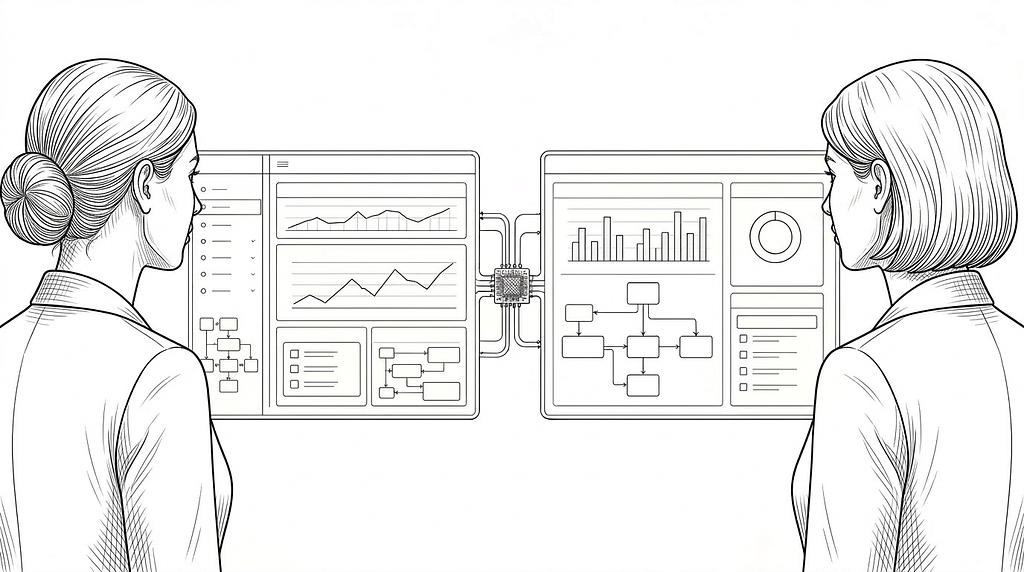
“Two people opening the same enterprise tool. Two completely different interfaces.”
The zero-floor UI
Common UIs won’t completely disappear in favour of a purely agent interface, humans will still need exploratory system interfaces to navigate and action upon complex information. These UIs may not be like the bloatware we see today, but a baseline that encapsulates the product’s very core features, a “Zero-Floor UI”, an agentic starting point.
If you want more advanced features, the agent could build on top of the zero-floor, over time users with different preferences might see a completely different UI to suit their needs than someone who only uses the tool occasionally.
What might this mean for product-centric interfaces? Excel is a prime example, it’s an archaic legacy data interface, layered with complex functions. It’s been a mainstay of data exploration toolkits due to its incumbent presence and corporate familiarity. In the future, would I need to know how to operate this tool or would I simply ask an agent for the outcome I’m seeking, cleaned data, a visualisation, or an answer drawn on the data set.
The way we operate shifts to an ‘Outcome First Computing’ model, where only the decisions matter and the tools become irrelevant as they’re easily interchangeable and disposable. The interface becomes a by-product of user intent.
Is design dead?
In short, no. Design is about understanding and creating solutions to problems, that’s not going to change, but core design activities are changing.
In 2025, Andrej Karpathy coined ‘vibe coding’, the ability to prompt a UI into existence. Now, in 2026, the conversation has shifted further to ‘agentic engineering’ meaning these systems are shipping straight to production. As designers, we must realise that even vibe coding and shipping products feels very much like a stepping stone, a moment in time.
We are moving from interface making to algorithmic systems design. If the agent is generating the UI on-the-fly, the designer’s job evolves to define the system constraints, ethical guardrails, the brand and the accessibility baselines. We become the directors of the algorithm, not the architects of the screen.
The interface is no longer waiting to be designed. It is being summoned into existence.
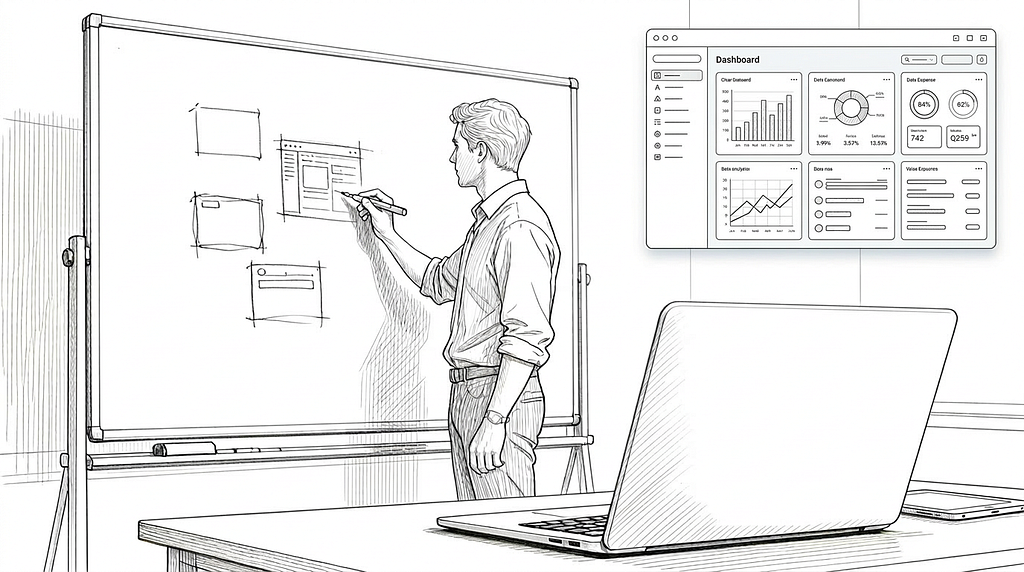
“We become the directors of the algorithm, not the architects of the screen.”
Imagine a data analyst at a whiteboard, they sketch a rough dashboard and begin to verbally describe what they need to understand from last week’s customer billing data. Their agent observes this via a laptop webcam, it begins to ask clarifying questions, provokes further thought and then starts to realise the sketch into a live dashboard, already connected to the data, ready to interrogate, already tailored to the way they prefer to see and understand the information for that specific moment. The designer was never in the room.
Yet the experience only worked because, somewhere upstream, a designer had already been there, setting the boundaries the agent could not cross, defining the principles it had to stay true to. The UI as a static destination is dying. But the role of the designer, as the author of the constraints that shape intelligence, has never been more consequential. We are no longer designing screens. We are designing the intelligence that designs for us.

The last interface was originally published in UX Collective on Medium, where people are continuing the conversation by highlighting and responding to this story.
This post first appeared on Read More