
I Tried 30+ Books on Software Architecture: Here Are My Top 9 Recommendations for Aspiring Architects in 2026
My favorite books for Software Architects and Solution Architects
I’ve been a Java full stack developer for over 15 years.
And for the last decade, a significant chunk of that time has gone into trying to answer one question that I keep getting from senior developers: “How do I stop being a good developer and start becoming an architect?”
The honest answer is that it’s not a promotion you get — it’s a mindset shift you make. And books, more than any course or certification, are what triggered that shift for me.
Not because reading is magic, but because the right books force you to think at a different level — away from classes and methods, toward components and trade-offs and non-functional requirements and why systems fail.
I’ve read more than 30 books in this space over the years. Most were useful. A handful were genuinely transformative. A few were dry academic texts that explained concepts without ever making them stick.
What follows are the nine I’d recommend today — reordered by how I’d actually read them, with honest assessments of who each one is for.
Before we start, if you want to complement your reading with hands-on learning, check out these excellent resources:
- ByteByteGo — System Design videos, case studies, and a framework for interviews.
- Design Gurus — Interactive system design problems and mock interviews.
- Exponent — Mock interviews and system design lessons from FAANG engineers.
- Educative — Text-based, interactive system design courses.
- Codemia.io — A Newer platform focused on real-world design prep.
- Udemy — Great for budget-friendly system design and architecture courses.
System Design · Coding · Behavioral · Machine Learning Interviews
The Mindset Shift Nobody Talks About
Before the list, a quick observation worth making explicit.
Developers think at a low level of abstraction — how should this method be named? What does this class do? How do I handle this edge case? That precision is valuable and necessary.
Architects think at a high level — how should these components communicate? What are the consistency trade-offs in this database choice? How does this decision affect the system’s behaviour five years from now when the team has turned over?
The books below force the second kind of thinking. Some of them also reinforce the first, because a good architect never stops being a good developer. But all of them will expand what you see when you look at a system.
The 9 Best Software Architecture Books for 2026
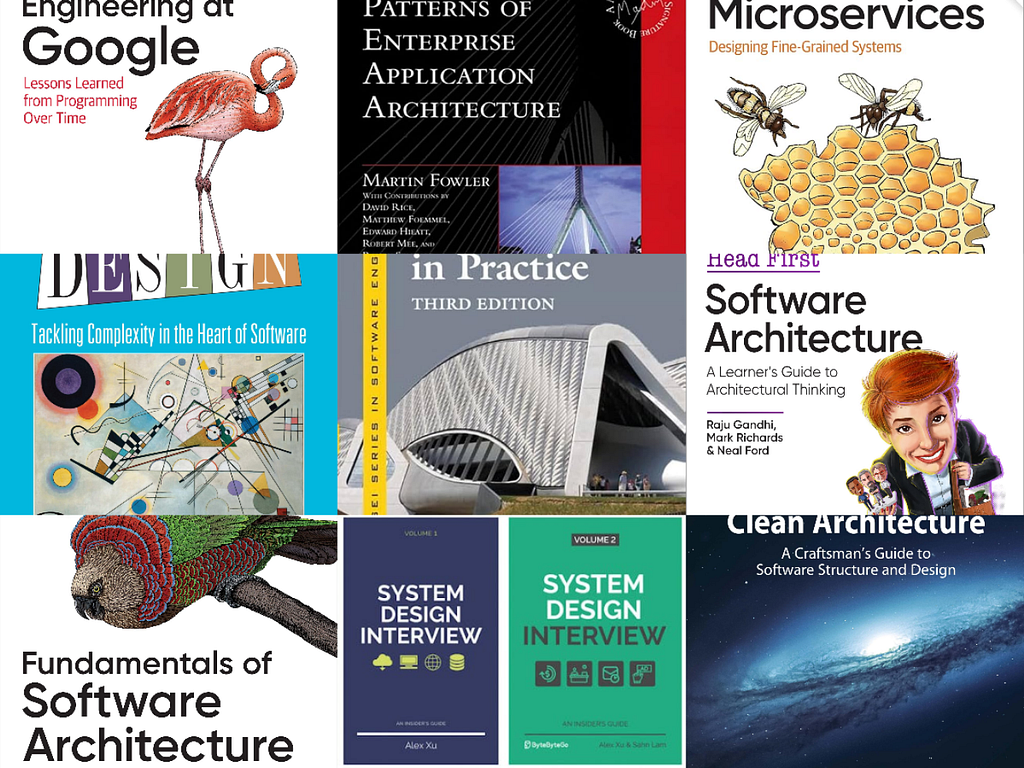
Without any further ado, here are the 9 books aspiring software architects and senior engineers can read in 2026:
1. Clean Architecture: A Craftsman’s Guide to Software Structure and Design — Start Here
By Robert C. Martin (Uncle Bob)
If you only read one book on this list, make it this one.
Uncle Bob — also the author of Clean Code and Clean Coder, two of the most important books any professional programmer can read — has distilled years of experience building and rebuilding software systems into a cohesive architectural philosophy. This is not a book of patterns and diagrams. It’s a book about why certain architectural decisions create systems that remain maintainable and adaptable over time, and why others create systems that calcify into expensive liabilities.
You’ll learn SOLID design principles not as abstract rules but as practical tools for making architectural decisions. You’ll understand the difference between architecture and detail — and why confusing the two is one of the most expensive mistakes a development organisation can make. You’ll come away with a framework for evaluating every architectural option you encounter by asking: does this keep options open, or does it close them?
What you’ll learn:
- SOLID design principles applied at the architectural level
- The distinction between policy and detail — and why it matters more than most developers realise
- How to structure systems so that business rules are independent of databases, frameworks, and UIs
- Practical trade-off evaluation for competing architectural options
- The vocabulary and conceptual frameworks every aspiring architect needs
Read this first. Everything else on this list will land more deeply because of it.
👉 Get Clean Architecture on Amazon

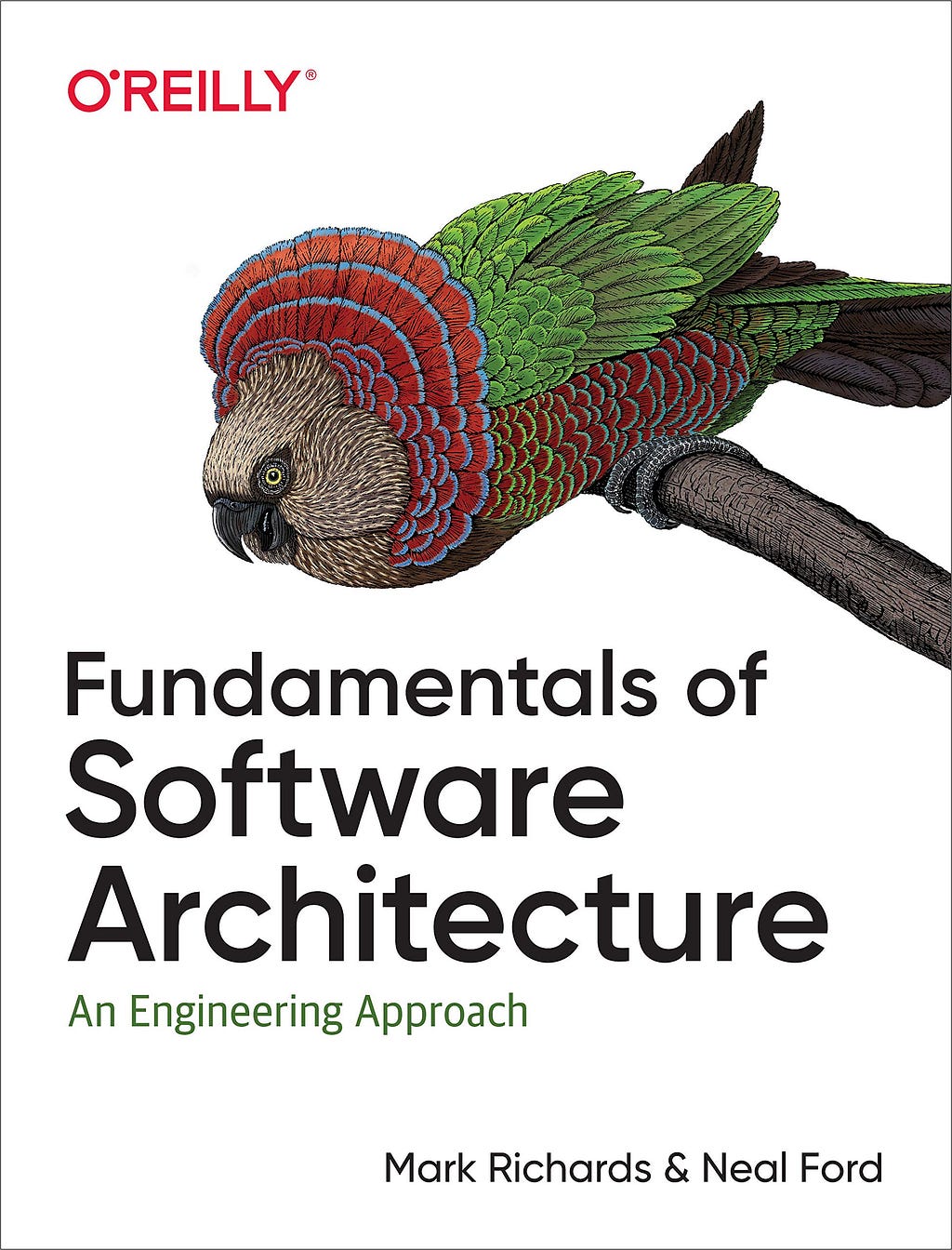
2. Fundamentals of Software Architecture: An Engineering Approach — Best Comprehensive Reference
By Mark Richards & Neal Ford — 4.6/5 from 846 ratings
This is the book the software architecture space has needed for a long time — and it’s the one I’d recommend as the primary reference for anyone making the transition from senior developer to architect.
Mark Richards and Neal Ford are both working practitioners who teach architecture for a living, and it shows in the quality of the material. Where many architecture books are theoretical and abstract, this one is systematic and concrete.
It covers architectural characteristics (availability, scalability, testability, deployability), architectural patterns (layered, event-driven, microservices, space-based), component determination, diagramming, and how to present architectural decisions to stakeholders.
What makes it stand out from older books in this space is its modern perspective. The last decade of distributed systems, cloud-native architectures, and AI-driven workloads is reflected throughout. It also covers the soft skills — negotiation, team management, presenting to executives — that get almost no attention in technical books but matter enormously to an architect’s actual effectiveness.
What you’ll learn:
- Architectural characteristics and how to define them for a given system
- Major architectural patterns with their trade-offs explained clearly
- How to determine and design components with clean boundaries
- Diagramming and communicating architecture to different audiences
- The soft skills — negotiation, influence, stakeholder management — that define architect effectiveness
👉 Get Fundamentals of Software Architecture on Amazon
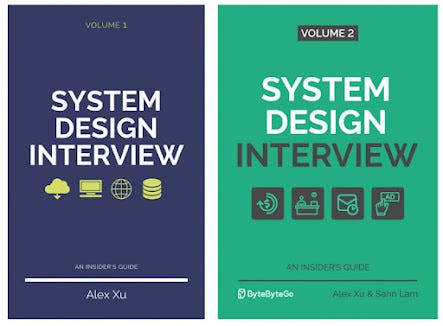
3. System Design Interview — An Insider’s Guide — Best for Interview Preparation and Practical Concepts
By Alex Xu — ByteByteGo
Don’t let the “interview” framing fool you. This is one of the most practically useful books on system design and software architecture available — and it’s significantly more accessible than the academic alternatives.
Alex Xu walks through how to design real systems — URL shorteners, news feeds, notification systems, distributed cache, chat applications — with a level of concrete detail that most architecture books avoid. Along the way you learn load balancing, caching strategies, rate limiting, API gateway design, database sharding, and the kinds of trade-offs that real architects make daily.
The second volume covers more advanced territory including cloud computing, modern microservices patterns, and distributed systems at scale. Buy both. If you prefer digital content with additional resources, ByteByteGo includes both volumes plus ongoing content.
What you’ll learn:
- How to approach designing any large-scale system from first principles
- Core infrastructure components — load balancers, caches, API gateways, message queues
- Key trade-offs: SQL vs NoSQL, client-side vs server-side processing, consistency models
- Real-world system designs for the kinds of applications millions of people use every day
- A repeatable framework for thinking about scale, reliability, and performance simultaneously
👉 Get System Design Interview Volume 1 on Amazon
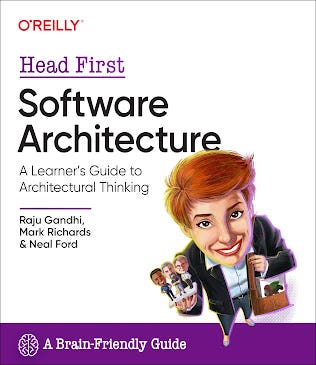
4. Head First Software Architecture — Best for Visual Learners
By Raju Gandhi, Mark Richards & Neal Ford
Head First books don’t need much introduction. Having read Head First Design Patterns, Head First Object-Oriented Analysis and Design, Head First Java, and Head First Python, I know exactly what this series delivers: dense, practical knowledge packaged in a visual, engaging format that makes abstract ideas concrete faster than any traditional textbook.
This one is no exception. Created by Raju Gandhi and the same Mark Richards and Neal Ford who wrote Fundamentals of Software Architecture — one of the most influential duos in the modern architecture space — this book covers the distinction between architecture and design, the relationship between code, components, and architectural styles, and how architects navigate ambiguity and make decisions under uncertainty.
If you find traditional architecture books dry or struggle to connect abstract principles to concrete problems, start here. It’s also a genuinely good complement to Fundamentals of Software Architecture for readers who want the same authors’ thinking in a different format.
What you’ll learn:
- The distinction between architecture and design — and where one ends and the other begins
- How architectural styles (monolithic, microservices, event-driven) differ in practice
- How to evaluate and communicate architectural decisions
- The architect’s process for navigating trade-offs and uncertainty
- Key insights on software architecture in a visual, memorable format
👉 Get Head First Software Architecture on Amazon
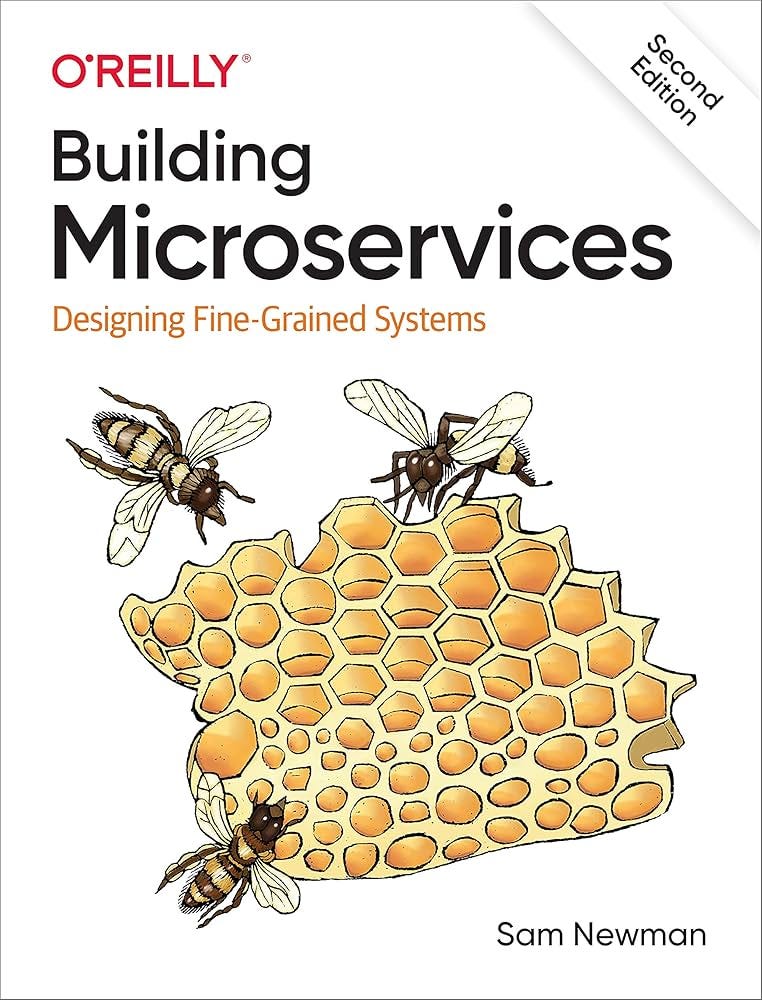
5. Building Microservices: Designing Fine-Grained Systems — Best for Modern Distributed Systems
By Sam Newman — 2nd Edition
The second edition of this book is the definitive guide to microservices architecture, and it’s one you should be reading with the second edition specifically — there are significant changes from the first that reflect how the field has matured.
Microservices now power the systems you use every day — Uber, Netflix, Amazon, and every major cloud-native application. Understanding how to design, decompose, deploy, and operate them isn’t optional for a modern software architect.
Sam Newman covers the full picture: service boundaries, inter-service communication, deployment, security, resilience, and the organisational patterns (Conway’s Law and all its implications) that make or break microservices adoption in real teams.
For developers who want to go from reading to building, I’d also recommend the Master Microservices with Spring Boot and Spring Cloud course by Ranga Karnam on Udemy — one of the best practical implementations of what this book teaches.
What you’ll learn:
- How to identify and define service boundaries using domain-driven principles
- Communication patterns between services — synchronous and event-driven
- Deployment, testing, and monitoring strategies for distributed systems
- Security and resilience patterns for production microservices
- The organisational dynamics that determine whether microservices succeed or fail
👉 Get Building Microservices on Amazon
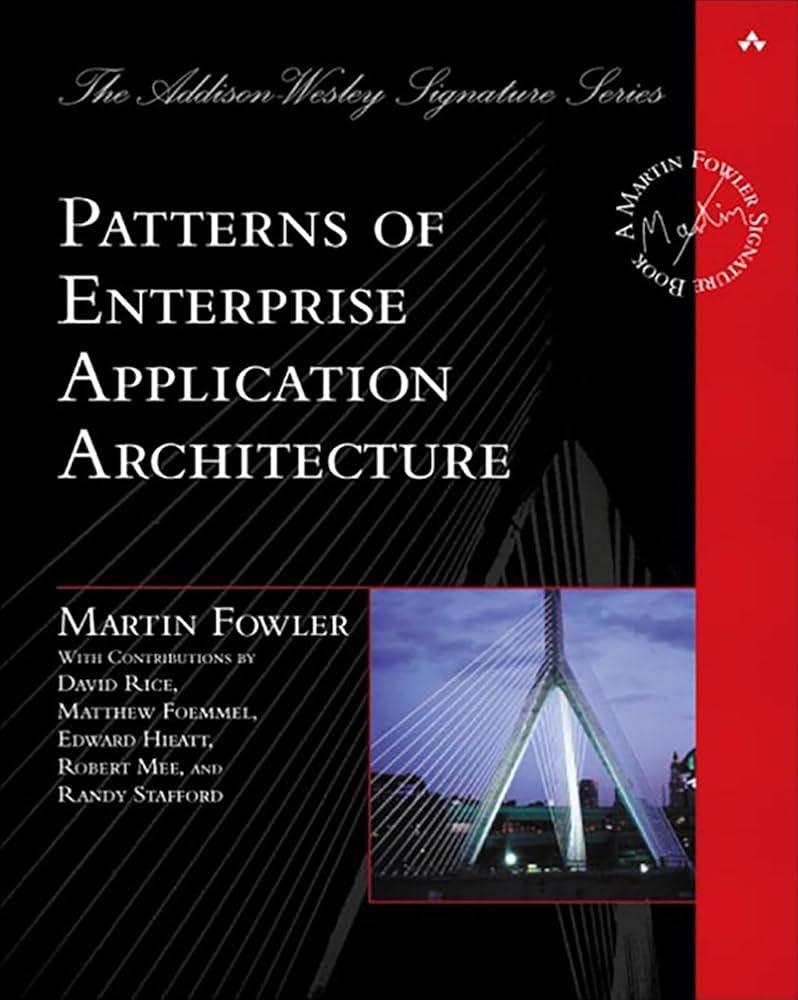
6. Patterns of Enterprise Application Architecture — Best Classic Reference
By Martin Fowler
Some books date badly. This one doesn’t.
Martin Fowler is one of my favourite authors in the software development space — clear, precise, grounded in decades of real practice — and this book is one of the reasons why.
It extends the vocabulary of design patterns from the GoF book into the domain of enterprise application architecture: layering strategies, domain logic patterns, data source patterns, web presentation patterns, and concurrency.
If you’ve ever used a framework like Spring, Hibernate, or Rails and wondered why certain structural decisions were made — why the repository pattern exists, why the unit of work pattern looks the way it does, what active record actually is — this book answers those questions from first principles.
Understanding the patterns behind the frameworks means you can evaluate, extend, and design alternatives rather than just consume what you’re given.
Pair it with the Basics of Software Architecture and Design Patterns course on Udemy if you want an active learning complement.
What you’ll learn:
- Layering strategies for enterprise applications and their trade-offs
- Domain logic patterns — Transaction Script, Domain Model, Table Module
- Data source and object-relational mapping patterns underlying modern frameworks
- Web presentation patterns and their evolution
- The architectural foundations behind Spring, Hibernate, and similar frameworks
👉 Get Patterns of Enterprise Application Architecture on Amazon
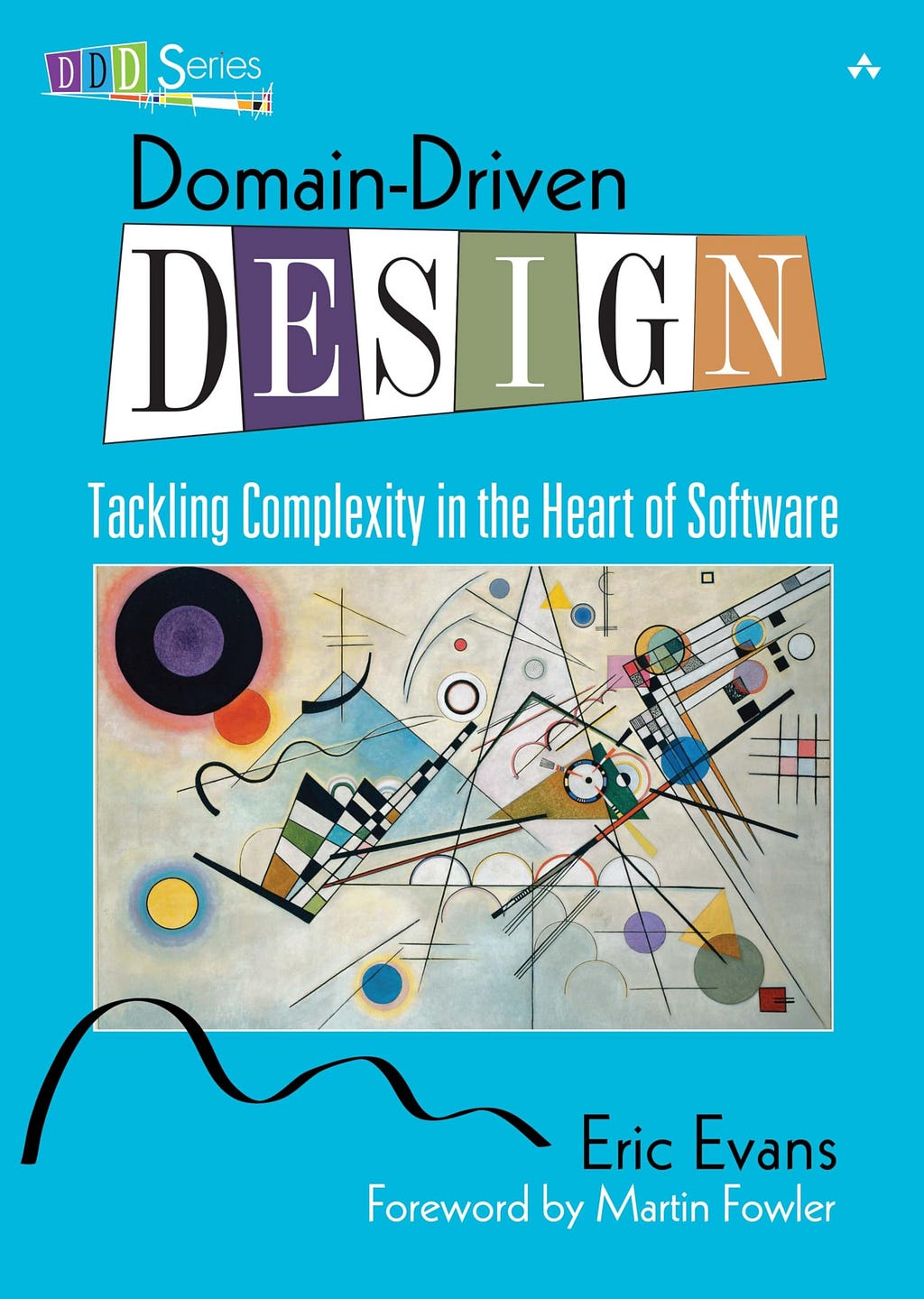
7. Domain-Driven Design: Tackling Complexity in the Heart of Software — Best for Developers Ready to Think Like Architects
By Eric Evans
This is the hardest book on the list to read — and also one of the most important.
Eric Evans’ Blue Book, as it’s known, introduced the vocabulary and methodology of Domain-Driven Design: bounded contexts, ubiquitous language, aggregates, entities, value objects, domain events, and the strategic design patterns that help large teams coordinate on complex systems without creating an unmaintainable mess.
These concepts have become foundational to modern microservices design, cloud-native architecture, and any serious approach to managing complexity at scale.
I’d put this one at #7 rather than #1 not because it’s less important — it may be the most important book on this list — but because it requires 3–5 years of real-world development experience to fully appreciate. The problems Evans describes are not beginner problems.
They’re the problems you encounter when you’ve been building serious software for years and start to feel the weight of decisions that didn’t seem important at the time.
When you’re ready for it, this book will change how you see every system you work on.
What you’ll learn:
- Bounded contexts and how to use them to manage complexity in large systems
- Ubiquitous language and why shared vocabulary between developers and domain experts is an architectural decision
- Aggregates, entities, value objects, and the building blocks of a clean domain model
- Strategic design patterns for coordinating between teams on complex systems
- The conceptual foundation underlying modern microservices decomposition
👉 Get Domain-Driven Design on Amazon
8. Software Architecture in Practice — Best Textbook Foundation
This is the academic text on the list — more abstract than the others, more structured than the others, and more useful as a reference than as a cover-to-cover read.
What makes it worth including is the quality of its stories and historical anecdotes. I’ve always believed that stories are how humans actually absorb lessons about what to do and what to avoid — and this book has them in abundance. Real incidents, real systems, real architectural decisions and their consequences.
The conceptual framework it provides for understanding quality attributes — availability, modifiability, performance, security, testability, usability — is the most rigorous treatment of non-functional requirements I’ve found in a single book.
If you want to pair it with structured instruction, Coursera’s Software Architecture online course is a solid complement.
What you’ll learn:
- Quality attribute frameworks — availability, modifiability, performance, security — as first-class architectural concerns
- Historical case studies and architectural decisions from real systems
- Architectural tactics for achieving specific quality attributes
- How to evaluate and document architecture systematically
👉 Get Software Architecture in Practice on Amazon

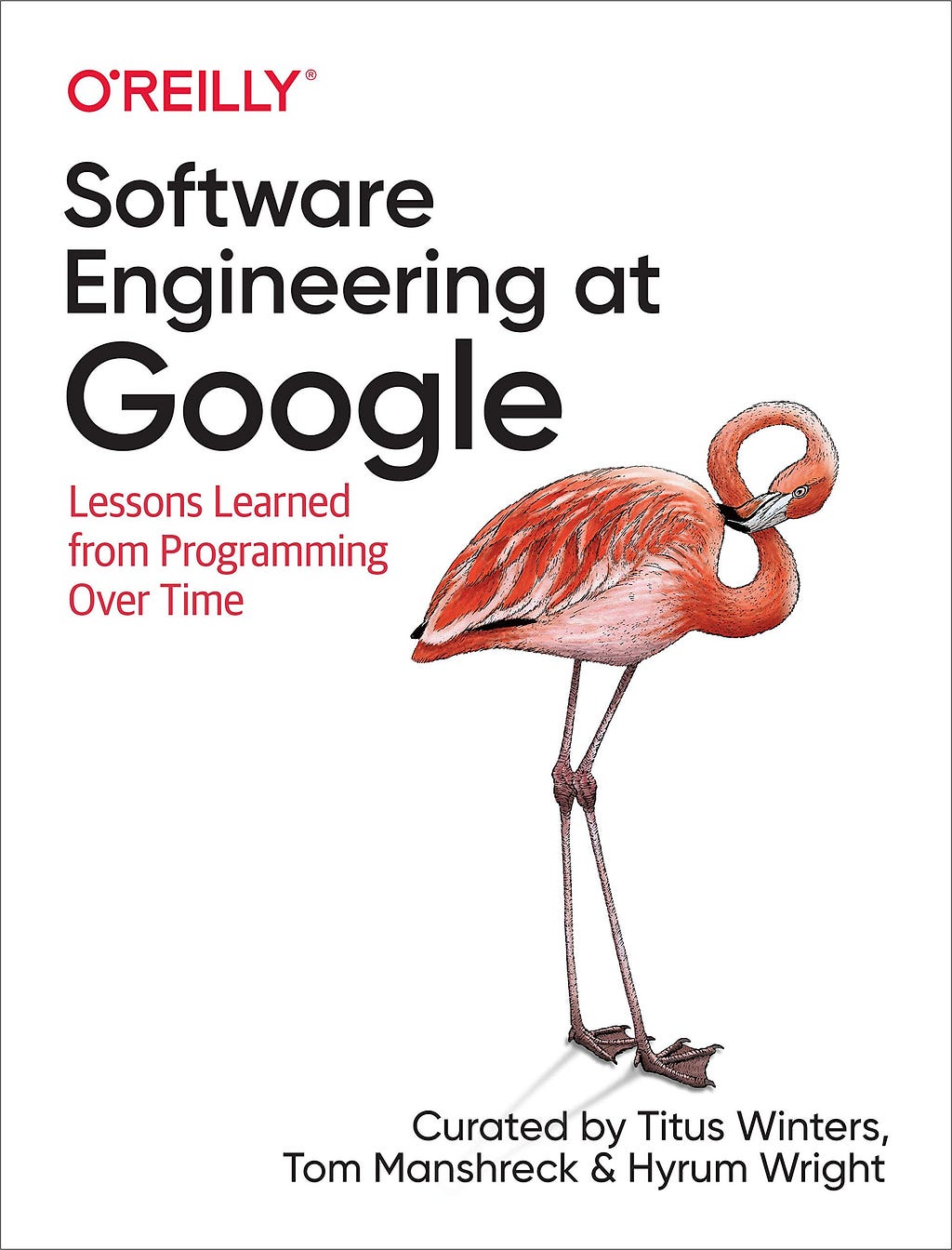
9. Software Engineering at Google: Lessons Learned from Programming Over Time — Best for Understanding Engineering at Scale
By Titus Winters, Tom Manshreck & Hyrum Wright — 4.6/5 from 677 ratings
Every aspiring architect should read at least one book about how a company that operates at genuine hyperscale actually builds and maintains software. This is that book.
Written by engineers who built and evolved Google’s internal engineering practices, it covers the difference between programming (writing code that works) and software engineering (building systems that work over time, across teams, as requirements change).
The three central questions it forces you to grapple with — how does time affect your system? how does scale affect your engineering practices? what trade-offs are you making implicitly? — are exactly the questions architects need to answer.
It doesn’t tell you what Google does and instruct you to copy it. It explains why certain practices emerged at Google’s scale, which lets you evaluate which aspects apply to your context and which don’t. That’s more useful than any checklist.
What you’ll learn:
- The critical distinction between programming and software engineering
- How Google’s engineering culture, processes, and tooling evolved to handle scale
- How time affects software sustainability and what that means for architectural decisions
- The implications of scale on team structure, code ownership, and technical practice
- Informed trade-off making for design and development decisions
👉 Get Software Engineering at Google on Amazon
Final Thoughts
Becoming a software architect isn’t a title you receive — it’s a way of thinking you develop. These nine books are the fastest legitimate path I know to that way of thinking.
They will expand what you see when you look at a system. They will give you the vocabulary to articulate trade-offs you’ve always intuited but couldn’t explain.
They will help you make decisions that hold up five years later when the requirements have changed, the team has turned over, and the technology has evolved.
Start with Clean Architecture. Keep going from there.
All the best with your software architecture journey !!
If you want to do just one thing at this moment, I suggest go and read Head First Software Architecture, you will thank me later.
Head First Software Architecture: A Learner’s Guide to Architectural Thinking

I Tried 30+ Books on Software Architecture: Here Are My Top 9 Recommendations for Aspiring… was originally published in Javarevisited on Medium, where people are continuing the conversation by highlighting and responding to this story.
This post first appeared on Read More