
Focus on these 20% of topics and get 80% of the results — the exact playbook top candidates are using in 2026.
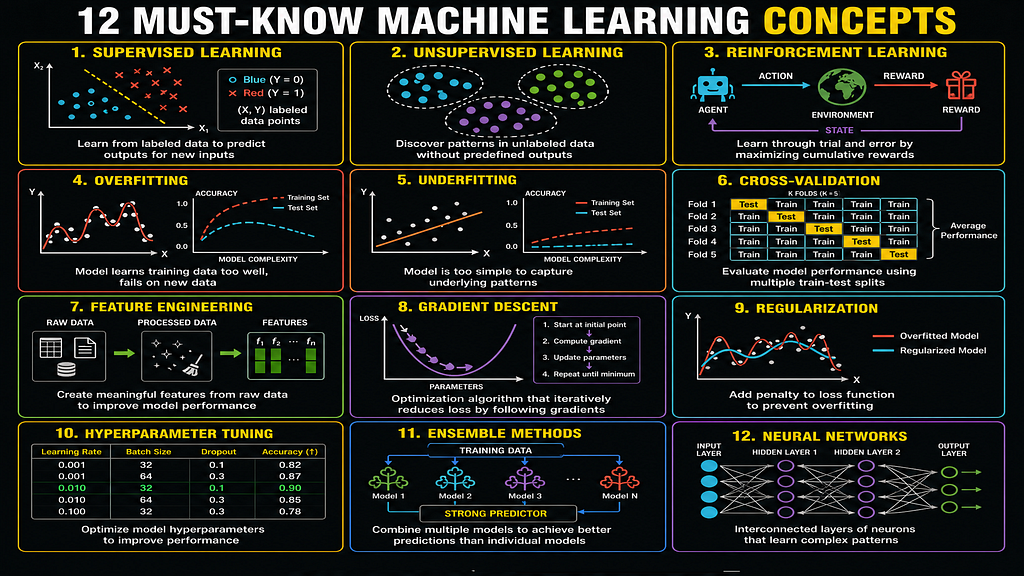
Hello everyone — after sitting through multiple AI, ML, and GenAI interviews over the past year, one thing has become unmistakably clear to me: 80% of interview success comes from just 20% of focused prep.
This isn’t really a secret. I’ve seen this pattern repeat across nearly every interview I’ve given in my career, but it’s far more pronounced in AI/ML interviews than it ever was in traditional Java or backend developer interviews.
When it comes to preparing for AI/ML Engineer interviews, most people spread themselves too thin — reading every research paper that drops, chasing every new framework, or grinding hundreds of random LeetCode problems with no clear strategy.
The truth? Recruiters and hiring managers don’t care about the fluff. They care about whether you can code, build, design systems, and explain clearly. And in 2026, there’s an additional layer: whether you understand how AI itself has changed the systems you’re being asked to design.
If you’re just starting out, I highly recommend Hands-On Machine Learning with Scikit-Learn, Keras & TensorFlow to give yourself a structured roadmap before diving into the 20% prep that actually moves the needle.
Now let’s break down the 20% that actually matters in 2026 — with resources for each.
What’s Different in 2026
Before the breakdown, it’s worth being honest about how the bar has moved. AI/ML interviews in 2026 aren’t testing the same thing they tested even a year ago.
System design rounds increasingly ask you to design things that simply didn’t exist as standard questions before: a RAG pipeline for enterprise document search, an LLM gateway with rate limiting and cost allocation, a multi-tenant AI agent orchestration platform, or a real-time fraud detection system using streaming inference.
Even the classic questions have a 2026 twist — “design a recommendation engine” now usually means collaborative filtering plus semantic embeddings plus an LLM re-ranker, not a simple matrix factorization model.
System Design · Coding · Behavioral · Machine Learning Interviews
Interviewers also increasingly care more about evaluation methodology than architecture diagrams. Knowing where the LLM fits in your system and where deterministic logic should take over matters more than drawing a clean box diagram.
They want to hear about cost, latency, guardrails, and monitoring — not just “here’s my service layer.”
None of this changes the fundamentals below. It just raises the ceiling on what “knowing the fundamentals” means.
Focus on the 20% That Actually Matters
The interviewers aren’t coming from another planet, and the interview hasn’t fundamentally changed shape going from Software Engineer to ML Engineer or AI Engineer. Most of the same core skills still apply — they’re just applied to different systems now.
1. Coding + Problem Solving
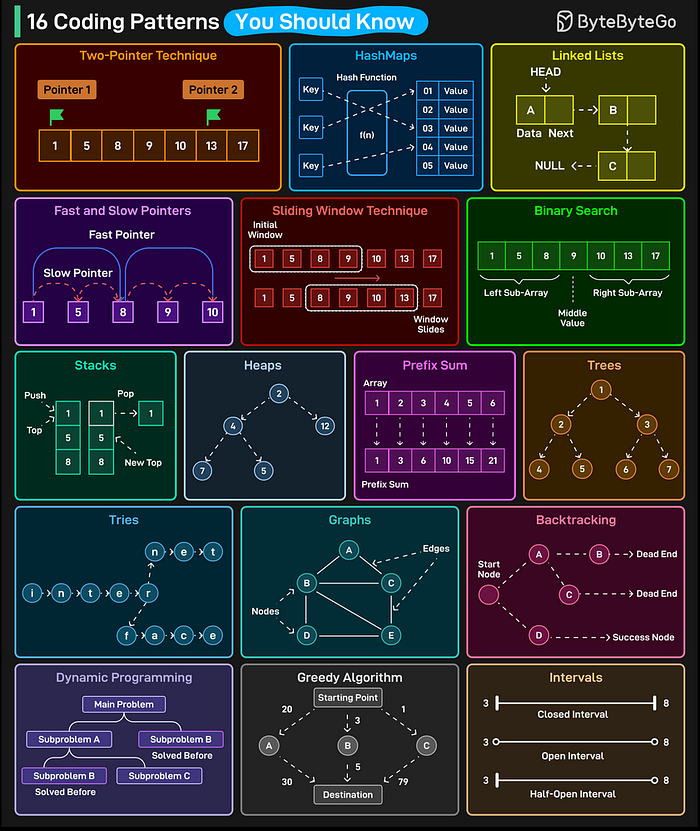
DSA is still king. You’ll face arrays, binary search, sliding window, two-pointer techniques, graphs, and matrix problems. Don’t skip this — even AI-focused roles open with a standard coding round more often than not.
- 📘 Resource: Algomonster and ByteByteGo — great for practicing patterns and coding questions based on patterns like two-pointers, sliding window, prefix sum, etc.
- 🎯 Course: Mastering Data Structures & Algorithms using C and C++ or Java Data Structures & Algorithms + LEETCODE Exercises on Udemy, depending on whether you’re more comfortable with C/C++ or Java examples.
At a bare minimum, get familiar with the 19 coding patterns shared by ByteByteGo. They also have all the coding problems based on those patterns in a list called ByteByteGo 101, which I highly recommend alongside Blind 75 and Monster 50 from AlgoMonster.
2. End-to-End Projects (Now With an Agentic Lens)
Again, you don’t need 20 Kaggle medals. Instead, focus on 2–3 solid, deployed projects:
- A RAG-powered chatbot
- A multimodal app (image + text)
- A speech summarizer
- A multi-step agentic workflow (meeting scheduling, code review, email campaigns)
That last one matters more in 2026 than it did even last year. Interviewers are explicitly probing for whether you’ve built something agentic — a system that plans, uses tools, and takes action rather than just responding to a prompt. If your portfolio is entirely single-turn chatbots, you’re behind the curve.
Make sure to document your projects well on GitHub and write about them on LinkedIn or Medium. A well-documented project with a clear write-up beats five undocumented notebooks every time.
If you need help with project ideas or sample projects, check out project-based courses on Udemy like The Complete Agentic AI Engineering Course (2026), where you’ll build 8 real-world projects with OpenAI Agents SDK, CrewAI, LangGraph, AutoGen, and MCP — exactly the kind of project that signals you understand where the industry is heading.
If you prefer books, The LLM Engineering Handbook by Paul Iusztin and Maxime Labonne is also a great resource to build AI/LLM-related projects from.
3. System Design (ML + GenAI) — The Make-or-Break Round
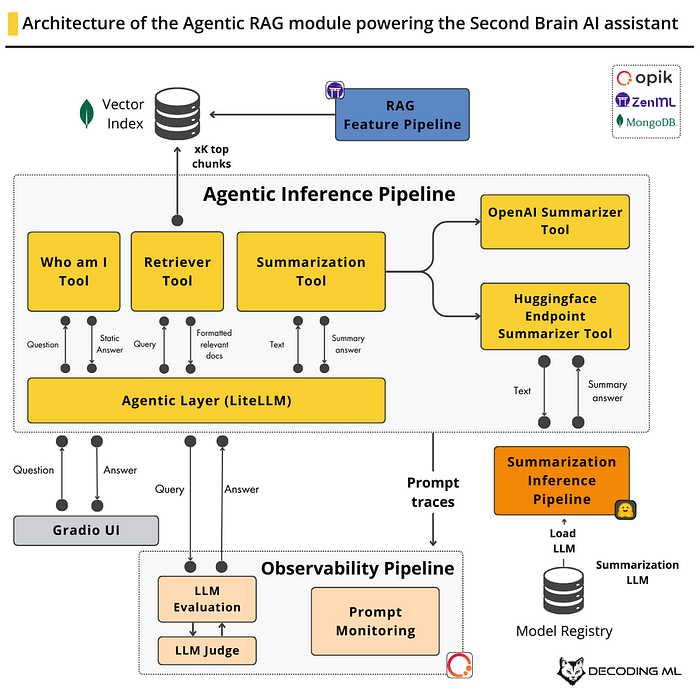
Interviews now often go well beyond algorithms — they test whether you can design scalable AI systems:
- Serving LLMs at scale
- Designing vector DB pipelines
- Balancing cost vs. latency in inference
- Designing an end-to-end RAG service (ingestion, indexing, retrieval, generation, evals, tracing, guardrails)
- Designing a multi-tenant AI agent orchestration platform
- Designing an LLM gateway with rate limiting, cost allocation, and model routing
This is genuinely the make-or-break section of the interview, especially for mid and senior roles.
What’s changed in 2026 is the depth expected here: interviewers want you to talk about feature freshness monitoring, canary deployments with auto-rollback, prompt caching, and model tiering (when do you route to a small distilled model vs. a large LLM?) — not just a high-level architecture diagram.
The single biggest addition to this round is evaluation methodology. Knowing how you’d validate a model offline, run an A/B test, and define rollback criteria now matters as much as the architecture itself.
The only way to clear this round is practicing it out loud, explaining your reasoning as you go — not silently sketching boxes.
Here are some free and paid resources to prepare for ML and GenAI System Design interviews:
- 📘 Resource: Designing Machine Learning Systems (Chip Huyen)
- 📘 Resource: Machine Learning System Design Interview
- 📘 Resource: Introduction to Machine Learning Interviews Book (Chip Huyen) — Free
- 🎯 Course: System Design for AI/ML Engineers on ByteByteGo
- 🎯 Course: Building Recommender Systems with Machine Learning and AI
- Designing Machine Learning Systems: An Iterative Process for Production-Ready Applications
- Machine Learning System Design Interview
- AI Engineer Agentic Track: The Complete Agent & MCP Course
4. Core Theory
This is another important section that’s a must for ML/AI interviews, because it tests your grasp of key concepts like Transformers and embeddings — the building blocks underneath everything you’ve built.
You don’t need to memorize every formula, but you must deeply understand:
- Embeddings
- Transformers
- Fine-tuning vs. prompting
- Evaluation metrics (BLEU, ROUGE, perplexity, AUC, NDCG, etc.)
- Where deterministic systems should take over from an LLM in a hybrid architecture — a distinction interviewers increasingly probe for in 2026
If you need resources, here’s where to start:
- 📘 Book: Deep Learning by Ian Goodfellow
- 🎯 Course: Deep Learning Specialization by Andrew Ng (Coursera)
5. How You Explain Your Projects?
At the moment, there still aren’t that many people who deeply understand AI, LLMs, or ML systems — which is a genuine opportunity for you to stand out as an expert. There’s no better way to do that than by explaining your projects in real detail.
Don’t throw buzzwords around. Explain what your project actually does, what its real-world impact was, and how you built it — including the trade-offs you made and what broke along the way.
In 2026, interviewers are explicitly asking behavioral-style follow-ups on technical projects: “Tell me about a time you reduced hallucinations or cost in production” or “Walk me through a before-and-after cost breakdown.” Be ready to go there.
Interviewers care more about clarity and impact than your tech stack. A well-explained project beats a flashy but poorly communicated one, every time.
Ignore the 80% That Wastes Time
Doing the right things moves you forward. Doing the wrong things also pushes you backward — and if you keep doing the wrong things, you won’t move anywhere no matter how hard you’re working.
To truly succeed, you need to do the right things and actively avoid what wastes your time. Here’s what to skip when preparing for AI/ML interviews, unless you genuinely have months to spare:
- Reading every new GenAI research paper without ever implementing anything from it.
- Blindly memorizing formulas from obscure ML algorithms you’ll never actually use.
- Spending months on Kaggle competitions instead of building deployable apps.
- Over-optimizing your resume without projects to back it up.
- Learning every framework — master 1–2 well. (PyTorch, LangChain, Hugging Face, n8n)
By cutting out these time sinks — which can easily eat up to 80% of your prep time — you set yourself up to actually succeed on your next AI/ML interview.
The 2026 AI/ML Interview Mindset
If you’re stuck, stop chasing everything. Focus on the 20% of prep that directly proves you can:
- Code → Solve algorithm problems under pressure
- Build → Ship real, deployable ML/GenAI apps — ideally including at least one agentic system
- Design systems → Architect scalable, cost-efficient, observable AI infrastructure
- Explain clearly → Communicate impact and trade-offs with confidence
That’s what actually gets you hired in 2026. The questions have gotten harder and the systems being tested have gotten more complex, but the underlying preparation strategy hasn’t changed: focus on the few things that actually demonstrate competence, and skip the rest.
Want a structured way to get there? Start with The AI Engineer Course 2025: Complete AI Engineer Bootcamp on Udemy or the Machine Learning Specialization on Coursera. Both give you practical + interview-focused prep.
Final Thoughts
Breaking into AI/ML doesn’t require endless grinding. It requires focus. Nail the fundamentals, ship meaningful projects — including at least one that demonstrates agentic, tool-using behavior — design systems with cost and evaluation in mind, and explain your work clearly. Do that, and you’ll already be ahead of 90% of candidates in the hiring pipeline.
The bar has moved in 2026, but it hasn’t moved in a direction that rewards more grinding. It’s moved toward depth, evaluation thinking, and systems that act rather than just predict. The 20% that matters has simply gotten a little more specific.
If you want to accelerate your prep, check out:
- 📘 Introduction to Machine Learning Interviews Book by Chip Huyen (free)
- 🎯 Udemy’s Machine Learning & AI Bootcamp
- 🎓 Coursera’s Deep Learning Specialization
Because the right 20% of prep + the right resources = your best shot at landing that AI/ML role in 2026.
Good luck with your interviews — and remember, focus beats volume every time.
P. S. — If you are looking for resource to learn and master Agentic AI, I highly recommend you to join Agentic AI Engineering by Paul Iustzin, author LLM Engineer’s Handbook. It’s a gem and you will thank me later.
Production AI Agents Course: Learn Agent Engineering

The AI Engineer Interview Playbook for 2026 was originally published in Javarevisited on Medium, where people are continuing the conversation by highlighting and responding to this story.
This post first appeared on Read More