
As apps become more context-aware, the designer’s job is shifting from shaping screens to shaping systems.
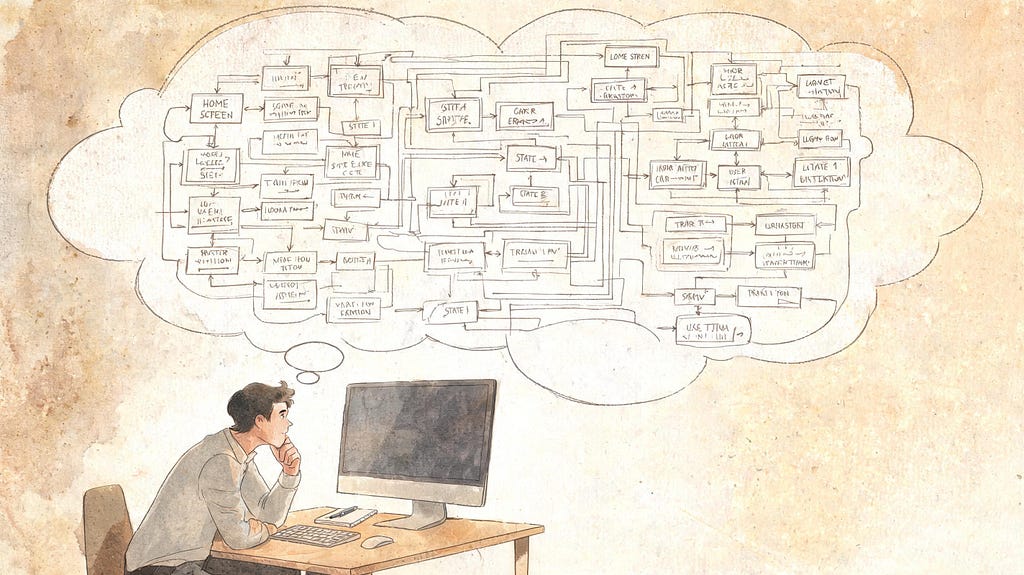
Apple made a clear shift with their AI strategy at WWDC 2026: Siri now draws on Gemini models through a Google partnership, and their Intelligence Framework gained a selection of new features. These headlines didn’t immediately feel that remarkable. They read more like AI engineering updates, but within this announcement lay changes that matter to designers. Today the design community is very much focused on craft and taste, but with these changes it’s likely to take a back seat to being able to deliver a high-quality platform embedded experience.
Taste is having a moment
Over the last year there has been a renewed interest in delivering highly polished and ambitious visuals in app design. There is real value in well-crafted experiences, when properly executed high-craft is a powerful skill, and it’s really having a moment. Organizations want their values to echo through their app experiences and are pushing on visuals to help differentiate themselves and establish a genuinely unique identity.
At the same time design craft is becoming increasingly cheaper and commoditised through generative AI. Polished screen designs, motion animations and foundations of design systems are no longer as time intensive to produce and are abundant even in solo engineered apps. That is why the conversation has now shifted to ‘taste’. The idea of conscious judgements that set a coherent design direction from the underlying principles to the resulting visual form, and taste is a very human quality accrued through real experience over time.
This moment might be shorter lived than expected, as we enable agents to execute more tasks on our behalf, screen-based flows fold in on themselves to intents, replaced by API calls and lightweight confirmations. Here the beautifully crafted experience still matters, but it’s not where the experience lives.
As designers continue to rapidly evolve their skills in an AI first world, taste judgement can elevate the experience but only so far and the real differentiator in app design becomes the overall experience architecture, and how flexible and robust apps are in embedding into the platform.
Apple’s WWDC announcements are a clear signal of where app design is headed, and the skills designers will need to bring to the table.
Apple pushes design from screen to system
Apple’s big move is providing more contextual hooks for platform based AI like Siri to invoke app functions. Thsi means Siri can call your app even when it’s not launched, and your app can also get more user context on other available app services. This is a large shift for a platform that was very restrictive in how the apps manifested on the operating system, especially in iOS where apps are walled gardens with intentionally limited inter-operability.
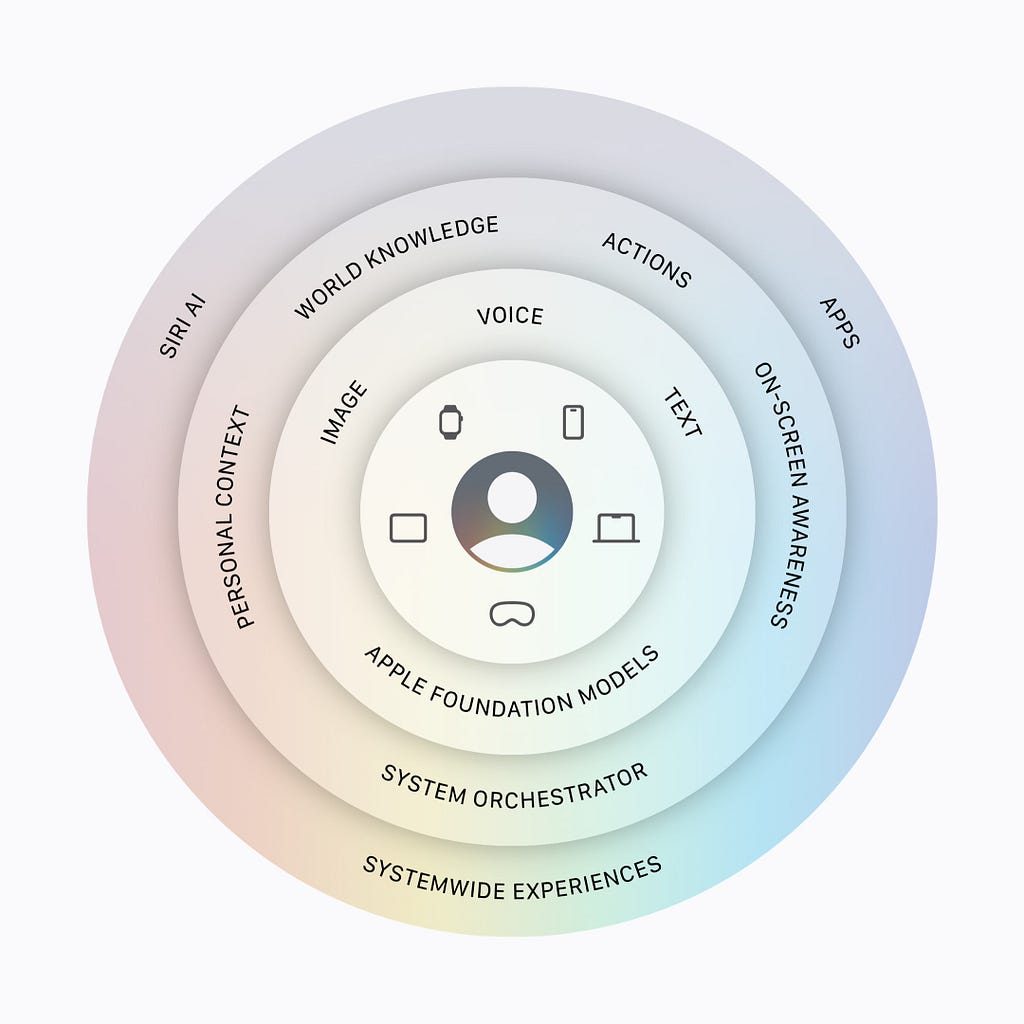
From a designers perspective platform level inter-operability is no longer an optional after-thought, it’s now part of the core experience. There are three noteworthy platform behaviours worth understanding:
- Siri accrues knowledge about user intents through actions and context, which allows it to trigger an app function at the appropriate moment.
- The platform has on-screen contextual awareness through your app, so it knows what you mean when you say ‘this’ or ‘that’ when referring to something on screen.
- Screen-less experiences where app plug-ins can be invoked by the platform without the user ever having to open your app.
To better illustrate how this plays out, let’s say I have an app called ‘Meemer’ that can take a short video clip to create an animated gif with subtitles. In a world where the app has all the appropriate hooks I could take a video in my camera app, then say to Siri “Make this into a funny Meemer sepia-style gif and email it to Bob”. The user never opens the ‘Meemer’ app, at most the user would get a confirmation screen before the gif in the email is sent.
What makes this significant is the scale of its reach, Apple’s platform hooks mean that even users who have never deliberately engaged with AI will encounter it seamlessly through apps they already use. This is pushing AI further into the everyday.
“In the platform driven experience, the systems thinking designer has the clear advantage”
Crucial skills and forgotten tools
Being able to think beyond the screen edge and take on that system thinking is the skill that will serve designers well in this next chapter. The UI will continue to be important, but more and more will be defined through the contexts that shape a response or a system agent that only reveals pertinent information.
This shift requires a different toolkit. Job Stories in particular are a great way to articulate the tasks users are seeking to complete coupled with a contextual trigger. Understanding the users’ real world context, what’s happening in the moment — these are questions that matter even more when they can be the primary drivers of app interaction.
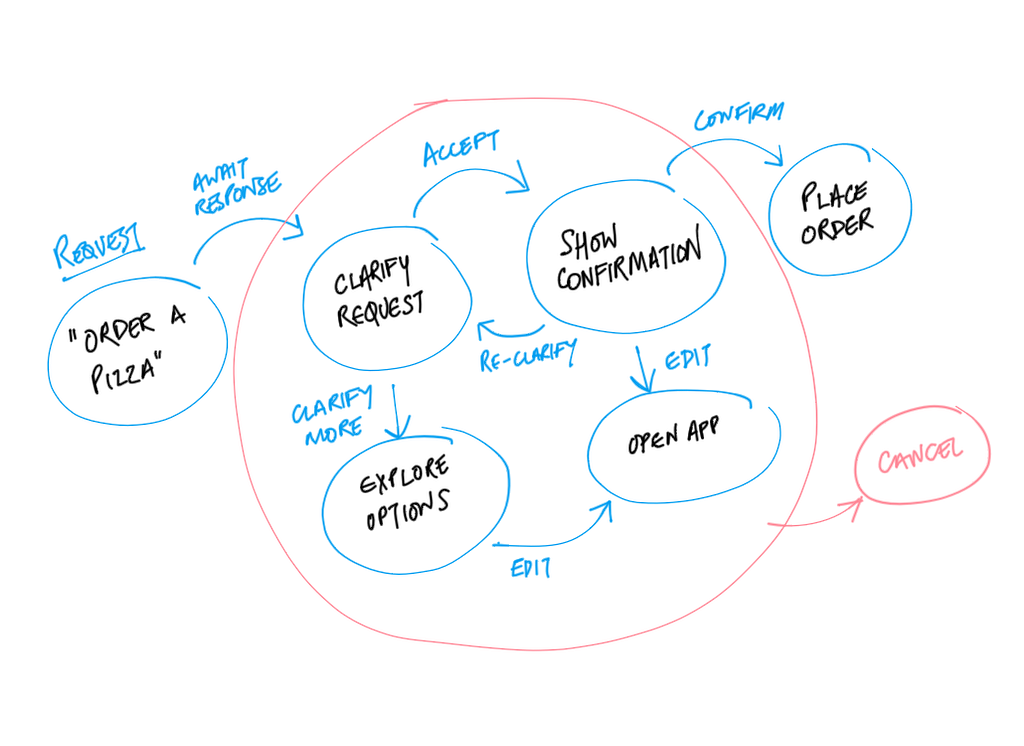
Other underused but vital tools are flow diagrams and state charts. State charts in particular are very powerful in that they can represent complexity in systems by capturing attributes and conditional transitions without resulting in a linear sequence of screens.
Ultimately systems thinking and platform based design is very much about understanding user needs at the right moment. The only way to get the real insights is to spend time running effective user research with real people and not just relying on AI approximations.
Taste is the skill of this moment. Systems thinking is the skill that will become indispensable in the next chapter of design. Designers who start building that capability now will be the ones setting the standard when the shift arrives in full.
Related and further reading
- AI is coming for our design jobs, but it can’t touch taste, by Andrea Grigsby on uxdesign.cc
- What Does “Taste” in Design Actually Mean? by Atul Chhabra
- What’s new in Apple Intelligence, overview of Apple Intelligence changes with a selection of videos from WWDC 2026.
- The Foundation Models Framework, Apple’s session on the model changes behind the new experience layer.

Why systems thinking is becoming the most important UX skill was originally published in UX Collective on Medium, where people are continuing the conversation by highlighting and responding to this story.
This post first appeared on Read More