
The prefect resource for System design and Coding Interview Preparation
Hi there, I’ve been preparing for and studying system design interviews for years. I’ve used ByteByteGo, read Alex Xu’s books, gone through DesignGurus and Educative courses, watched hours of YouTube content, done many peer interviews at Exponent, and read dozens of engineering blogs.
And I’ve always had the same frustration: all of that is great for learning system design, but none of it actually prepares you for performing in a system design interview.
Reading about how to design Twitter is not the same as sitting in a 45-minute interview, thinking through the problem out loud, getting follow-up questions, and being evaluated on clarity, structure, and your diagrams.
That gap — between understanding system design and being able to demonstrate it under pressure — is what most resources completely ignore.
Then I found Bugfree.ai. And it’s genuinely the most useful system design interview prep resource I’ve come across.
Master System Design & Behavioral Interviews Like Leetcode
What Is Bugfree.ai?
Bugfree.ai brands itself as “LeetCode for System Design” — and that framing is exactly right. The same way LeetCode gives you a structured, repeatable environment to practice algorithm problems, Bugfree.ai gives you a structured, repeatable environment to practice system design problems.
Here’s what the platform offers:
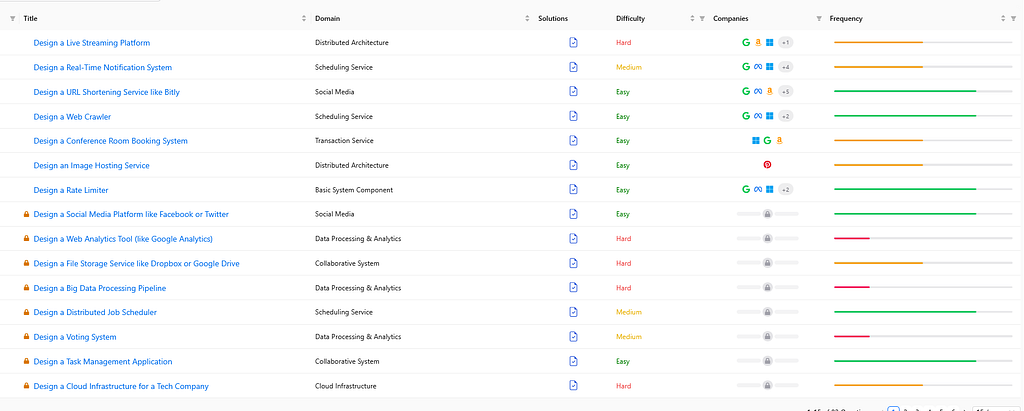
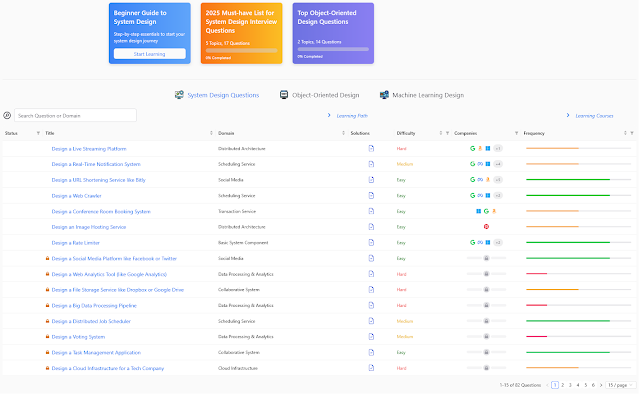
- 150+ system design challenges spanning a wide range of domains: API design, high-consistency systems, job schedulers, real-time notification systems, ML-infused pipelines, distributed databases, and more
- AI-powered mock interviews that simulate real interview scenarios — including follow-up questions, real-time feedback on your communication and diagrams, and scoring you can track over time
- Structured learning material including checklists, design frameworks, guided walkthroughs, and step-by-step solutions
- Progress tracking so you can see where you’re improving and where you’re still weak
- Behavioral interview prep and a resume builder as bonus features
And, if you are excited about these features and particularly system design problems asked on your favorite companies then go ahead and → Try Bugfree.ai Free
Why This System Design Interview Platform Is Different?
Most system design resources are passive. You read an explanation of how to design YouTube. You watch a video about consistent hashing. You study a diagram of a distributed cache. All useful — but fundamentally passive.
Bugfree.ai forces you to produce rather than consume.
You pick a problem, you design a solution, you get evaluated. That’s the only way to actually develop system design skill rather than just system design knowledge.
Here’s what makes each feature genuinely valuable:
AI Mock Interviews With Instant Feedback
This is the standout feature. The AI simulates a real system design interview — asking follow-up questions just as a human interviewer would, probing your assumptions, pushing back on your choices.
When you’re done, you get scored and get specific feedback on what you communicated well and what you didn’t.
Many people have noted that practicing with the AI improved not just their system design fluency but their ability to explain technical decisions clearly in English — a real skill gap that most engineers only discover when they’re sitting across from an interviewer.
150+ Problems With Frequent Updates
The question bank covers everything from URL shorteners and rate limiters to complex ML pipelines and real-time data systems. Crucially, it’s actively updated to reflect industry trends — so you’re practicing the types of questions that are actually showing up in interviews in 2026, not problems that were popular three years ago.
- System Design Interview Question: Design URL Shortener
- Rate Limiter System Design Interview Question (Solved)
Structured Frameworks and Walkthroughs
One of the hardest parts of system design interviews isn’t the content — it’s knowing how to structure your answer. Bugfree.ai provides frameworks and checklists that give you a repeatable approach to any system design problem, regardless of the specific domain.
Progress Tracking Over Time
Unlike static resources, Bugfree.ai lets you see how your performance is changing. Are your diagram scores improving? Are you getting faster at identifying bottlenecks? Is your communication getting clearer? That measurability makes your prep more effective and more motivating.
Master System Design & Behavioral Interviews Like Leetcode
What Could Be Better?
I believe in honest reviews, so here’s what I think the platform could improve:
Cost: Full access — including AI mock interviews and detailed walkthroughs — is gated behind paid tiers. For self-learners on a tight budget, this is a consideration. That said, the value is genuine and the pricing is competitive with alternatives.
No human mentorship: AI feedback is surprisingly good, but it can’t fully replace the nuance and insight of a live mentor during a genuinely complex architectural discussion. If you have access to a senior engineer who can review your designs, that’s still the gold standard.
Less narrative depth than some alternatives: Bugfree.ai is strong on practice but not as strong on deep conceptual teaching. Resources like ByteByteGo and DesignGurus.io go deeper on the “why” behind architectural decisions. Ideally you use both.
No DSA prep: If you’re also preparing for coding rounds alongside system design, you’ll need a separate platform for that. Bugfree.ai is focused entirely on design.
Master System Design & Behavioral Interviews Like Leetcode
How Bugfree.ai Compares to Other System Design Resources?
Here’s an honest comparison of the platforms I’ve used:
Bugfree.ai — Best for Active Practice
- AI-powered mock interviews that simulate realistic system design rounds
- Instant feedback on diagrams, communication, and structure
- 150+ diverse, regularly updated system design problems
- Structured frameworks and guided walkthroughs
- Progress tracking over time
- Fully online and self-paced
Best used for: Engineers who are ready to practice designing systems under pressure and want feedback on how they’re actually performing
Master System Design & Behavioral Interviews Like Leetcode
ByteByteGo — Best for Visual Learning and Concepts
- Visual, diagram-first lessons that simplify complex distributed systems concepts
- Deep case studies on real-world systems (Twitter, YouTube, Netflix)
- Excellent for building foundational understanding before you start practicing
- Text-based books and video content
- Less interactive — no real-time mocks or answer evaluation
Best used for: Building conceptual clarity and understanding the “why” behind architectural decisions before you practice
System Design · Coding · Behavioral · Machine Learning Interviews
DesignGurus.io (Grokking Series) — Best for Pattern-Based Learning
- Pattern-based approach (caching, rate limiting, indexes, consistency)
- Interactive lessons with quizzes and structured walkthroughs
- Strong for building systematic understanding of recurring design patterns
- No AI feedback or dynamic mock interviews
Best used for: Developers who want a structured, pattern-first curriculum for system design concepts
Educative.io — Best for Beginners and Guided Learning
- Interactive, text-based guided scenarios with quizzes
- Broad coverage of system design topics and frameworks
- Beginner-friendly with significant scaffolding
- No AI-driven feedback or performance tracking
Best used for: Engineers new to system design who need structured guidance through foundational concepts before they practice
Educative Unlimited: Excel with AI-Powered Learning
Which Platform Is Right for You?
The honest answer is that these platforms aren’t competitors — they’re complements. Here’s how I’d sequence them:
Start with ByteByteGo or DesignGurus.io to build your foundational understanding. Learn the concepts, study the patterns, understand how real-world systems are designed and why.
Then move to Bugfree.ai once you have that foundation. Now you’re ready to practice performing — designing under time pressure, articulating your reasoning, handling follow-up questions, and getting scored on the things interviewers actually evaluate.
That combination — conceptual foundation plus active practice plus AI feedback — is the most effective system design interview preparation I’ve found.
Educative Unlimited: Excel with AI-Powered Learning
Final Verdict: Is Bugfree.ai Worth It?
Yes — unambiguously, for engineers serious about cracking FAANG-level system design rounds.
The gap that Bugfree.ai fills — active practice with real feedback under interview conditions — is the gap that most system design resources completely ignore.
Reading about system design and practicing system design are fundamentally different activities. Bugfree.ai is the only platform I’ve found that makes the practice genuinely realistic.
It’s particularly valuable for:
- Engineers targeting FAANG or top-tier tech companies where system design rounds are rigorous
- Developers who understand system design conceptually but struggle to perform under interview pressure
- Anyone who learns best by doing rather than by reading or watching
If you’re also preparing for coding rounds, you’ll need a separate platform for DSA. And if you’re completely new to system design, build your conceptual foundation first before jumping into practice. But if you’re ready to start practicing — Bugfree.ai is where to go.
→ Explore Bugfree.ai and Try AI Mock System Design Interviews
Master System Design & Behavioral Interviews Like Leetcode
The Winning Combination
If you want the most complete system design interview preparation available, combine these three:
- ByteByteGo — for visual, deep conceptual understanding
- DesignGurus.io — for structured, pattern-based learning and frameworks
- Bugfree.ai — for active practice, AI mock interviews, and performance feedback
That’s the system design prep stack I’d recommend to any engineer targeting a senior role in 2026.
P.S. — If you’re going to do one thing today for your system design interview prep, join Bugfree.ai and start practicing. Reading and watching will only get you so far. Active practice with real feedback is what actually moves the needle — and Bugfree.ai is the best tool I’ve found for exactly that.
Master System Design & Behavioral Interviews Like Leetcode

I Found the BEST Resource for System Design Interviews and It’s Awesome was originally published in Javarevisited on Medium, where people are continuing the conversation by highlighting and responding to this story.
This post first appeared on Read More