
I Read 20+ AI and LLM Books: Here Are My Top 11 for Software Engineers Transitioning to AI Engineering in 2026
My favorite AI And LLM Engineering books for 2026
Hello everyone — Artificial Intelligence is no longer a futuristic idea. It’s already reshaping how we write code, build products, and run businesses. And in 2026, transitioning into AI engineering is one of the smartest career moves a software developer can make.
The explosion of Large Language Models like GPT, Claude, and Gemini has created urgent demand for engineers who can deploy, fine-tune, and build applications around these models.
But becoming an AI Engineer isn’t just about knowing Python libraries. It requires understanding LLMs, machine learning systems, data pipelines, production-grade deployments, prompt engineering, and increasingly — agentic AI systems.
The good news? You don’t need to go back to school. After reading 20+ books on AI, ML, and LLM engineering, I’ve identified the 11 that are genuinely worth your time — and for each one, I’m also recommending a companion course to accelerate your learning.
💡 If you prefer courses over books, start with The AI Engineer Course 2026: Complete AI Engineer Bootcamp on Udemy — one of the most comprehensive resources for making the Software Engineer → AI Engineer transition.
The AI Engineer Course 2026: Complete AI Engineer Bootcamp
11 Best Books to Become an AI Engineer in 2026
Without any further ado, here are the best AI and LLM Engineering books software engineers can read in 2026:
1. AI Engineering by Chip Huyen
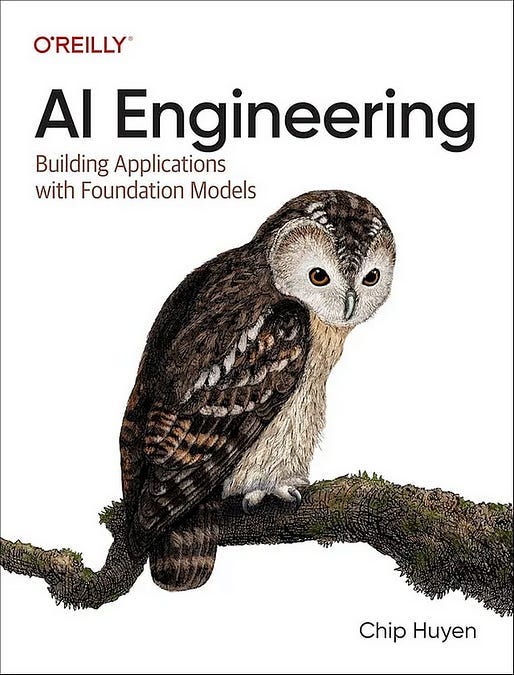
Start here. This is the definitive book for understanding what it actually means to engineer AI systems that work in the real world.
Chip Huyen — Stanford lecturer and founder of Claypot AI — breaks down the end-to-end lifecycle of machine learning systems, from model development to deployment and monitoring.
Before reading this book, I spoke with working AI Engineers to understand what their role actually involves. Most are responsible for building multi-agent chatbots using LLMs.
One friend told me his entire previous AI Engineering job involved building LLM agents — no traditional ML at all. This book covers exactly that world: MLOps, real-time ML, data-centric AI, and the production challenges that textbooks never address.
Companion course: AI Engineering & LangChain — Build Production AI Apps on Udemy — the most practical complement to Huyen’s conceptual framework.
→ Get AI Engineering by Chip Huyen
2. The LLM Engineering Handbook by Paul Iusztin and Maxime Labonne
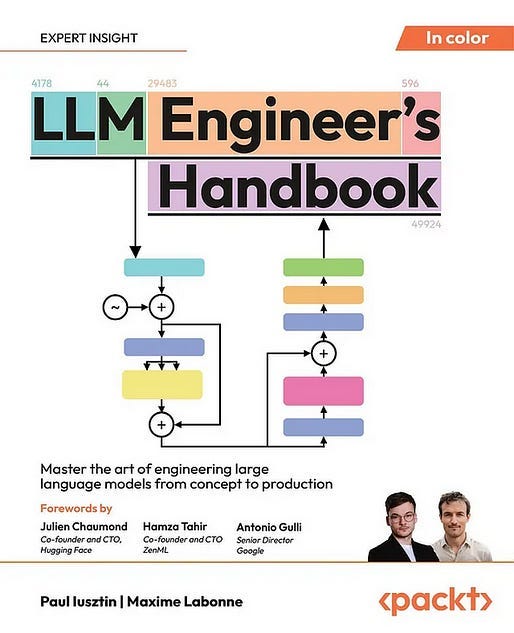
If you want to understand the entire LLM stack — embedding models, vector databases, prompt chaining, and Retrieval Augmented Generation (RAG) — this is your book.
I found this on Reddit and the authors have done an exceptional job making the content practical and hands-on. I’m currently on chapter six and loving how the content is structured.
Paul Iusztin and Maxime Labonne cover everything from LangChain and OpenAI APIs through RAG, fine-tuning, evaluations, and agents. For developers who love going deeper and applying more robust models, this handbook is essential.
Companion course: LangChain — Develop LLM Powered Applications with LangChain on Udemy — directly reinforces the LangChain and RAG coverage in this handbook with hands-on coding.
→ Get The LLM Engineering Handbook
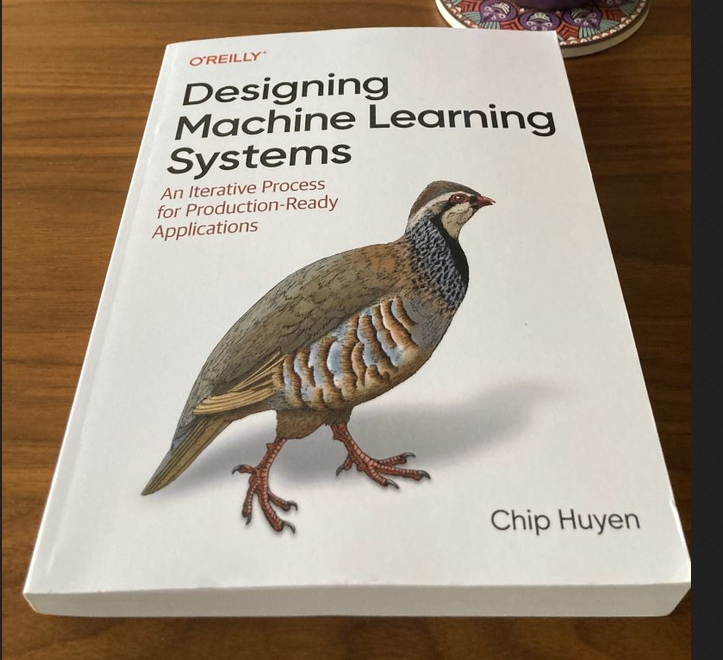
3. Designing Machine Learning Systems by Chip Huyen
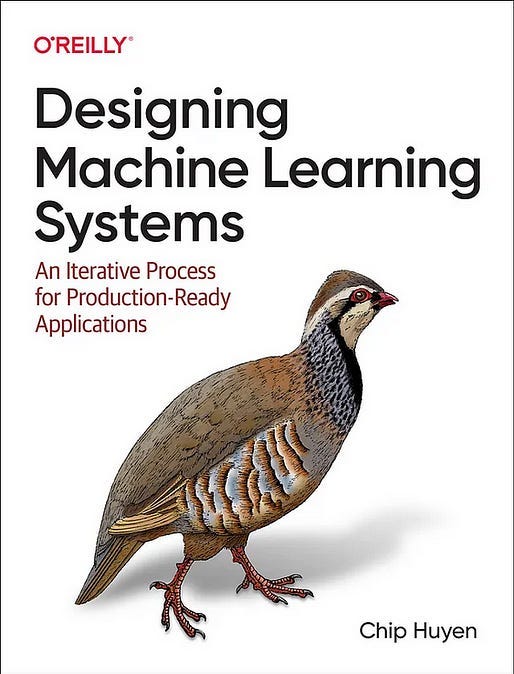
Another Chip Huyen recommendation — and it’s a great companion to AI Engineering above. Where that book focuses on using existing models in development, this one bridges the gap between ML theory and software engineering practice, walking you through building scalable, maintainable ML pipelines.
Fair warning: it’s not a code-heavy book. There’s minimal code throughout. But the conceptual content on data pipelines, model deployment, scalability, and software design for ML is excellent and widely referenced in AI engineering discussions on Reddit and HN alike.
Companion course: Machine Learning Specialization by Andrew Ng on Coursera — provides the foundational ML understanding that makes the system design concepts in this book immediately applicable.
→ Get Designing Machine Learning Systems
4. Building LLMs for Production by Louis-François Bouchard and Louie Peters
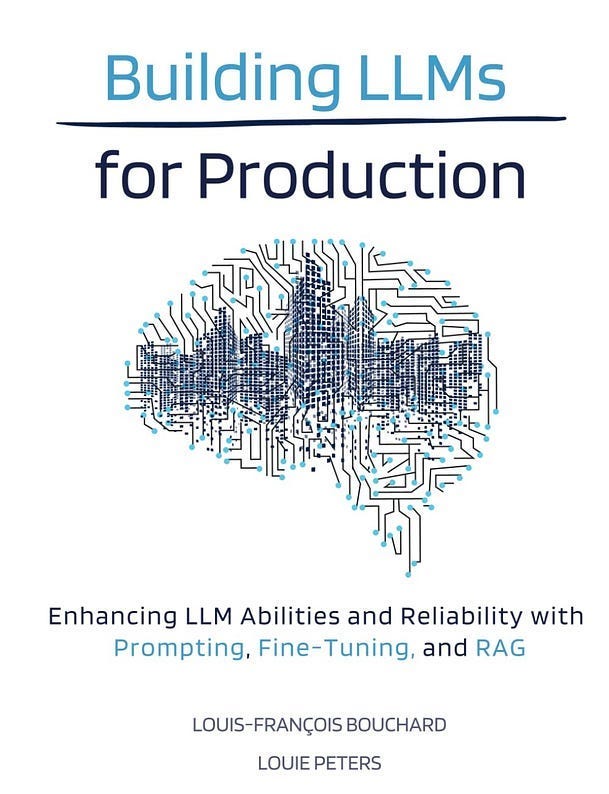
If you want to understand what it actually takes to build and deploy an LLM in production — not just a demo, but a real system — this is the book that answers that question.
Louis-François Bouchard and Louie Peters cover everything from choosing the right architecture to scaling LLMs in production: infrastructure, prompt tuning, inference optimization, and evaluation frameworks. This is specifically for software developers and engineers interested in real-world LLM deployments, not researchers.
Companion course: Complete Generative AI Course With LangChain and HuggingFace on Udemy — brings the production GenAI concepts in this book to life with hands-on LangChain and HuggingFace practice.
→ Get Building LLMs for Production
5. Build a Large Language Model (from Scratch) by Sebastian Raschka, PhD
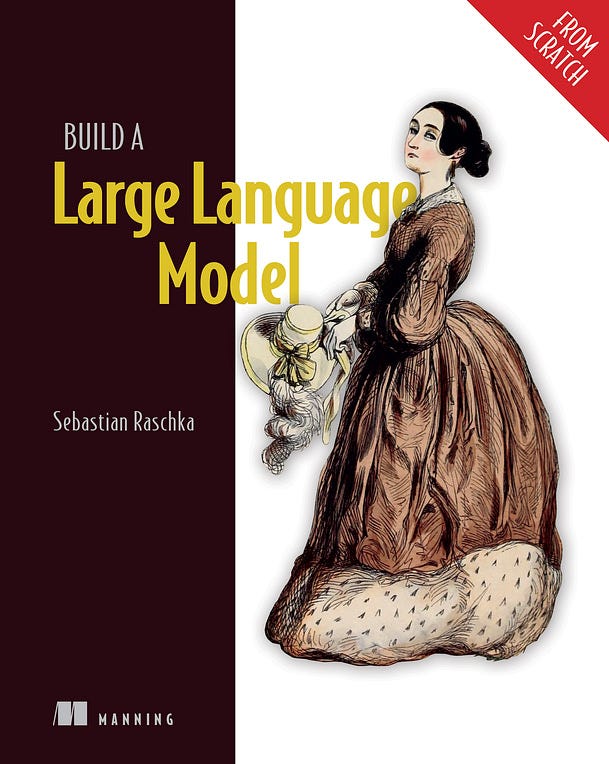
If you want to understand the internals of how LLMs like GPT are actually built — this is your book.
Sebastian Raschka demystifies transformers, attention mechanisms, and training pipelines with working code examples throughout. You’ll understand tokenizer implementation, training loops, and the architectural decisions that make modern LLMs work.
Understanding how models are built at this level makes you dramatically more effective at using, fine-tuning, and debugging them in production.
Companion course: Deep Learning Specialization by Andrew Ng on Coursera — provides the neural network and transformer theory that makes the hands-on code in this book genuinely click.
→ Get Build a Large Language Model (from Scratch)
6. Hands-On Large Language Models: Language Understanding and Generation
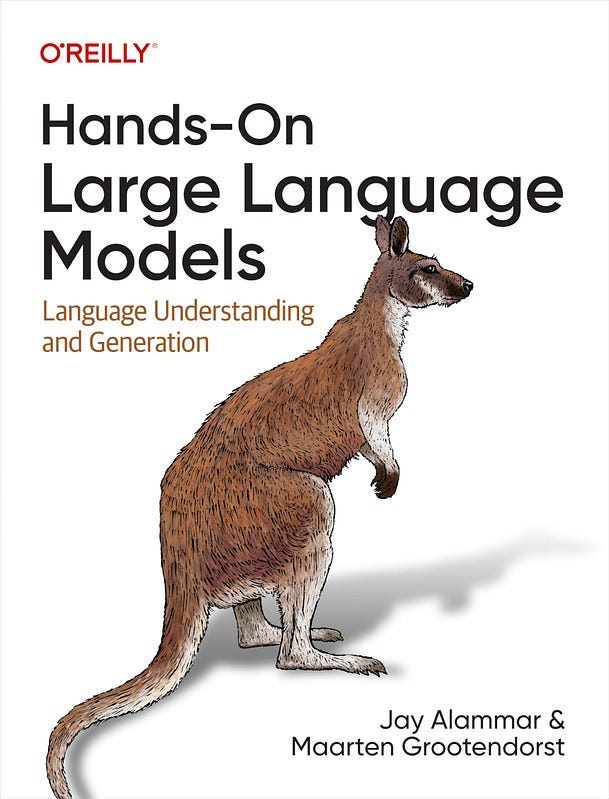
Ideal for hands-on learners who want to implement, fine-tune, and scale real LLMs.
This book teaches you how to work with pretrained models like BERT, GPT, and T5 through the HuggingFace ecosystem — covering fine-tuning, deployment, and inference optimization.
If you’re building custom AI features into your applications and want to go beyond calling the OpenAI API to actually working with models directly, this book bridges that gap.
Companion course: IBM Generative AI Engineering Professional Certificate on Coursera — covers HuggingFace, fine-tuning, and RAG with hands-on labs that complement the practical coverage in this book.
→ Get Hands-On Large Language Models
7. Prompt Engineering for LLMs
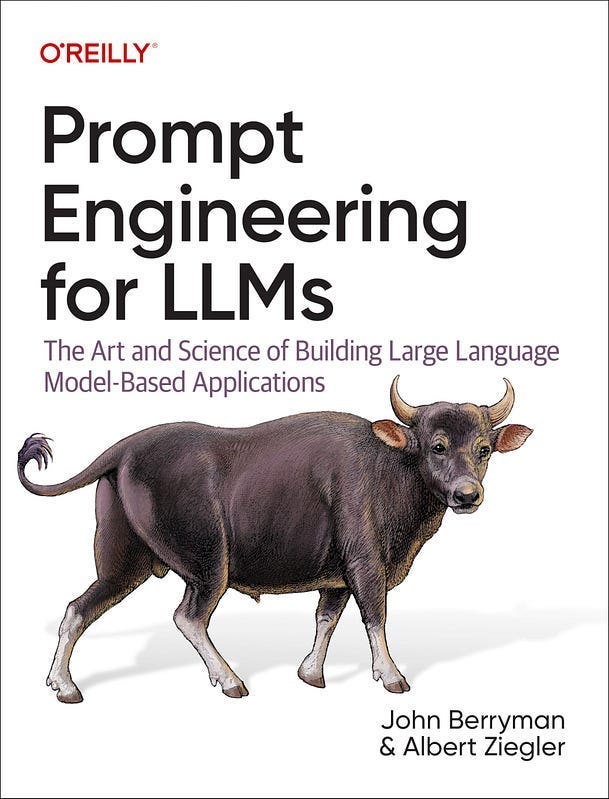
Prompt engineering is emerging as one of the most critical differentiating skills for AI application developers. You can get gold or garbage from LLMs — it all depends on how you prompt them.
This book dives into prompt types, chaining techniques, and optimization strategies to get the best results from models like GPT-4. It covers prompt templates, few-shot prompting, instruction tuning, and evaluation techniques.
I recommend this to every software engineer — including Java developers who have never touched ML — because prompting skill is immediately applicable regardless of your background.
Companion course: The Complete Prompt Engineering for AI Bootcamp 2026 on Udemy — the most practical hands-on course for implementing the prompting techniques covered in this book.
→ Get Prompt Engineering for LLMs
8. Building Agentic AI Systems
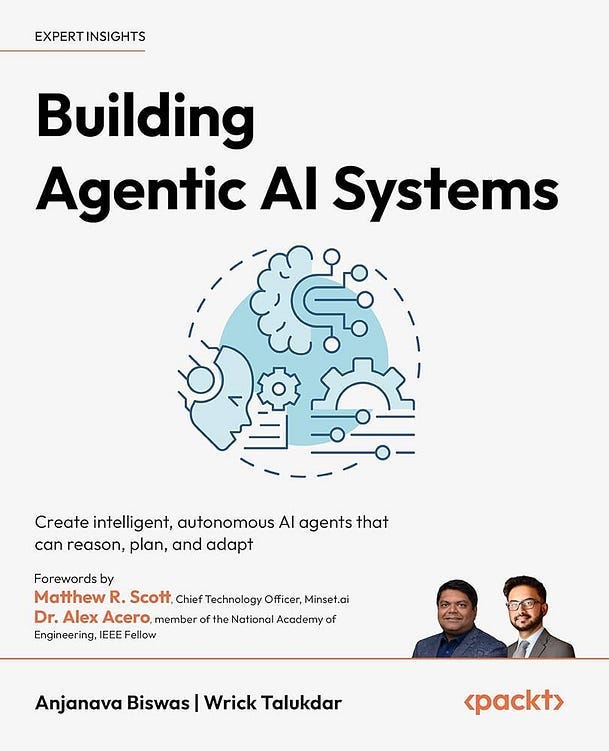
Agentic systems are the next evolution of LLM applications — AI agents that can plan, reason, and act autonomously. If you’ve seen AI coding agents do in minutes what a developer takes a week to build, you already understand why this matters.
With the rise of MCP (Model Context Protocol) and growing ecosystems of MCP servers that integrate LLMs with databases, IDEs, and other tools, building agentic AI is rapidly becoming a core skill for AI Engineers.
This book provides a deep dive into architectures and use-cases for agent-based systems, covering multi-agent coordination, memory systems, long-term reasoning, and open-ended task execution.
Companion course: The Complete Agentic AI Engineering Course (2026) on Udemy — 8 production projects using OpenAI Agents SDK, CrewAI, LangGraph, AutoGen, and MCP. The perfect hands-on complement to this book’s architectural depth.
→ Get Building Agentic AI Systems
9. Prompt Engineering for Generative AI
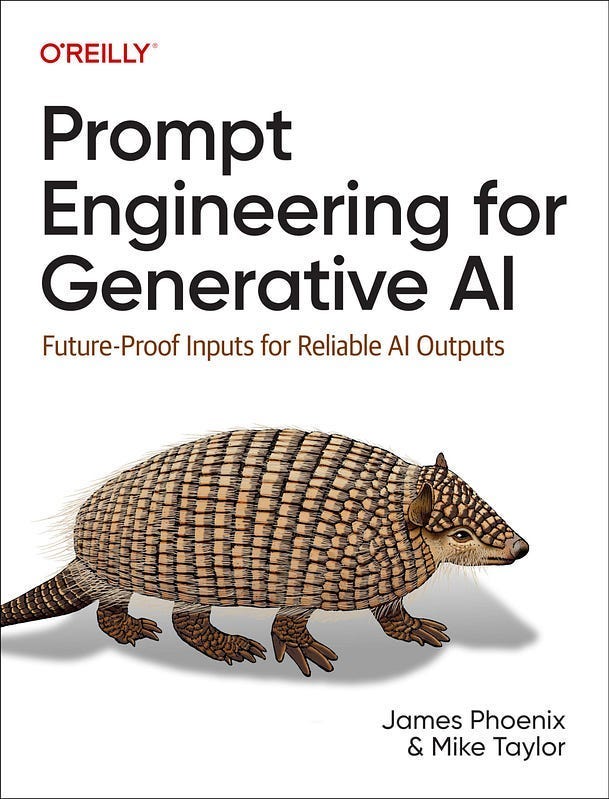
Where book #7 focuses on prompting for text-based LLMs, this one takes a broader view — covering prompt engineering across text, image, and code generation.
If you’re working with GPT-4, DALL-E, Midjourney, or GitHub Copilot, this book shows you how to guide outputs effectively across different modalities. The multimodal prompting coverage is particularly relevant in 2026 as AI applications increasingly combine text, image, and code generation in single workflows.
Companion course: ChatGPT — Prompt Engineering for Developers on Udemy — covers practical multimodal prompting for ChatGPT, DALL-E, and code generation tools that complement this book’s broader scope.
→ Get Prompt Engineering for Generative AI
10. The AI Engineering Bible
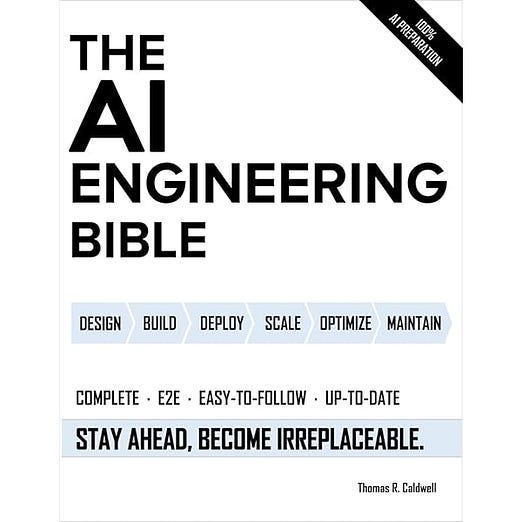
The most comprehensive single-volume guide to the full AI engineering stack — covering foundational models, vector databases, LLM workflow orchestration, and tools like LangChain and LlamaIndex.
This book is ideal for senior software engineers transitioning to a Principal AI Engineer role. It covers RAG, LLMOps, open-source models, tooling, and full-stack AI development in a way that goes broader than any other book on this list. Think of it as the encyclopedia you reference throughout your AI engineering career.
Companion course: LLM Engineering: Master AI, Large Language Models & Agents on Udemy — covers the full LLM engineering stack including RAG, agents, and LangChain with hands-on implementation that brings this book’s comprehensive coverage to life.
→ Get The AI Engineering Bible
11. Generative AI System Design Interview (Bonus)
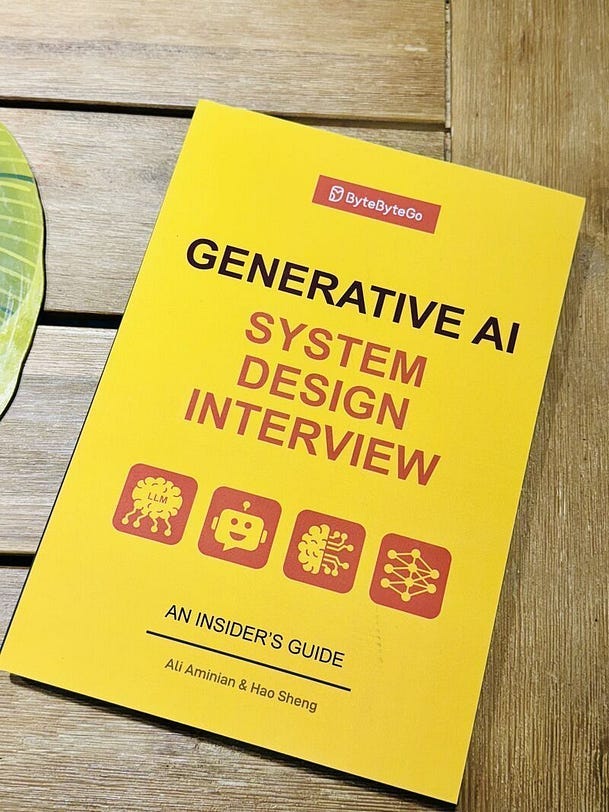
The lucky 11th — and genuinely one of my favorites on this list for senior engineers.
From the ByteByteGo team (written by Ali Aminian and Hao Sheng), this book complements their ML System Design Interview book but focuses specifically on generative systems. Where that book covers search and recommendation systems, this one centers on GenAI system design with 10 real-world GenAI design questions, in-depth solutions, a 7-step framework for tackling GenAI design interviews, and 280+ diagrams to demystify complex GenAI systems.
For tech leads and senior engineers who are responsible for designing AI applications — or who are interviewing for roles that require that skill — this book is essential.
Companion course: ByteByteGo System Design Courses — the visual, diagram-first system design content from Alex Xu’s platform directly complements the GenAI design framework in this book.
→ Get Generative AI System Design Interview
Recommended Reading Order
If you’re transitioning from Software Engineer to AI Engineer:
- AI Engineering (Chip Huyen) — understand the role
- The LLM Engineering Handbook — master the LLM stack
- Designing Machine Learning Systems — think in systems
- Prompt Engineering for LLMs — immediately applicable skill
If you want to go deep on LLMs specifically:
- Build a Large Language Model from Scratch — understand the internals
- Hands-On Large Language Models — implement and fine-tune
- Building LLMs for Production — ship to real users
If you’re targeting agentic AI:
- The LLM Engineering Handbook — LLM foundation
- Building Agentic AI Systems — the architecture
- The AI Engineering Bible — complete reference
If you’re a senior engineer targeting AI architect or tech lead roles:
- AI Engineering — the big picture
- Designing Machine Learning Systems — system design thinking
- Generative AI System Design Interview — interview-ready GenAI design
Final Word
Becoming an AI Engineer in 2026 isn’t about memorizing ML algorithms — it’s about engineering intelligence into your software. These 11 books give you the theoretical foundations, hands-on skills, and production knowledge to build state-of-the-art AI applications.
The companion courses alongside each book mean you’re not just reading — you’re implementing.
Whether you’re building your own LLM-based chatbot, launching an AI startup, or transitioning into an AI-focused role at your company, this reading list will put you ahead of the curve.
Start with one. Pair it with the course. Build something. That’s how the transition happens.
P.S. — If you’re new to AI and want a foundation before diving into these books, start with The AI Engineer Course 2026: Complete AI Engineer Bootcamp on Udemy. The course gives you the practical foundation that makes every book on this list land faster and make more sense.
The AI Engineer Course 2026: Complete AI Engineer Bootcamp

I Read 20+ AI and LLM Books: Here Are My Top 11 for Software Engineers Transitioning to AI… was originally published in Javarevisited on Medium, where people are continuing the conversation by highlighting and responding to this story.
This post first appeared on Read More